

Panel Cart
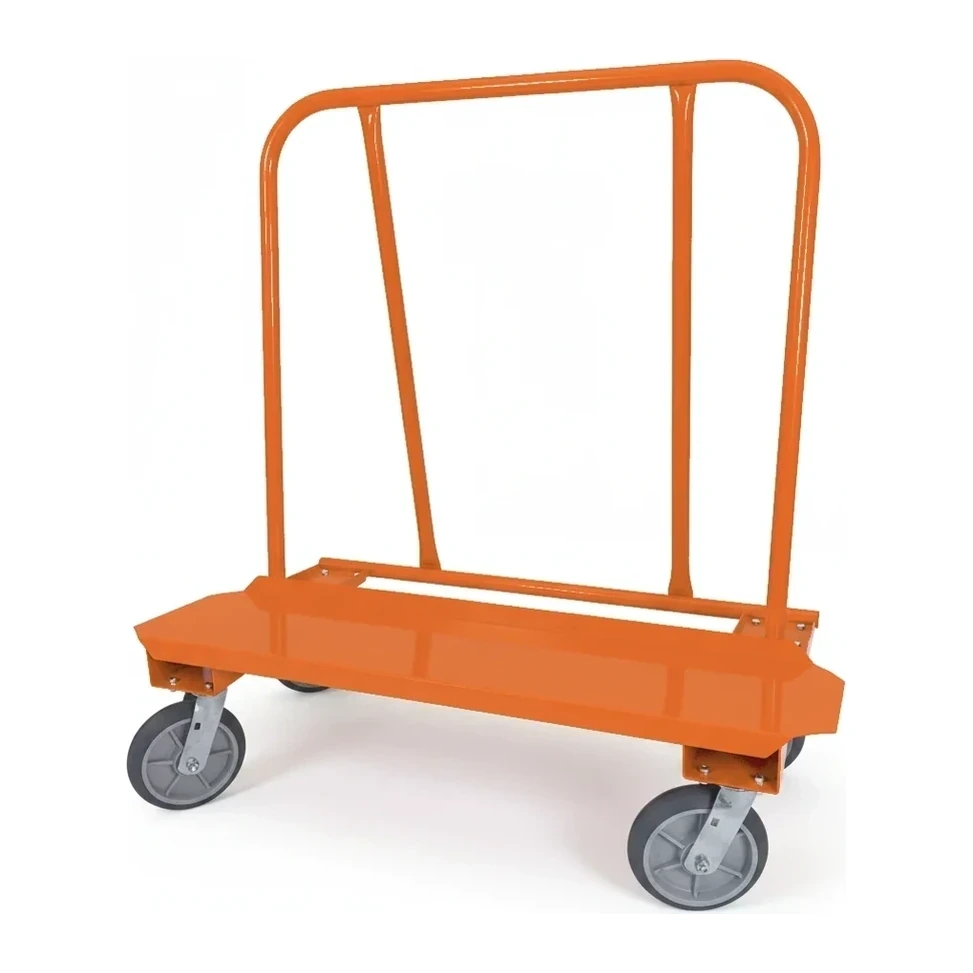
A panel cart is a specialized material handling cart designed to transport large, flat sheet goods in a vertical or near-vertical orientation. Also known as panel carriers, drywall carts, or A-frame carts, these devices feature angled support frames that cradle sheet materials during movement. Panel carts are essential in construction, warehousing, and manufacturing environments where bulky, unwieldy sheet goods require safe, efficient transport.
Fonctionnement
Panel carts utilize an A-frame or dual-sided angled support structure that holds sheet materials in a balanced, vertical position. The operator loads panels against the padded or rubberized contact surfaces, which distribute weight and prevent material damage. Wheels or casters at the base allow the loaded cart to be maneuvered by pushing or pulling, with the vertical orientation keeping the load's center of gravity low and stable. Most designs incorporate a handlebar or grip area for control, and the angled frame geometry prevents panels from sliding off during transport. The cart's footprint remains compact relative to the size of materials being moved, enabling navigation through doorways, corridors, and congested work areas where horizontal transport would be impractical.
Types et variantes
- A-Frame Panel Cart
- Traditional design with symmetrical angled sides forming an A-shape, providing balanced support for panels loaded from either direction
- Single-Sided Panel Cart
- Features one vertical or angled support surface with panels loaded from one side, often with a kickstand or support leg for stability
- Adjustable Angle Cart
- Includes variable angle settings to accommodate different panel sizes and weights, with locking mechanisms to secure the desired position
- Heavy-Duty Panel Carrier
- Reinforced construction with larger wheels and higher weight capacity for industrial sheet materials such as metal or dense composites
- Folding Panel Cart
- Collapsible design that folds flat for storage and transport when not in use, common in facilities with limited storage space
Spécifications clés
| Spécification | Plage typique | Signification |
|---|---|---|
| Load Capacity | Data not available | Maximum weight of sheet materials the cart can safely transport, typically ranging from 500 to 2,000 pounds depending on construction |
| Panel Height Capacity | Data not available | Maximum height of sheet goods the support frame can accommodate, commonly 4 to 12 feet to handle standard building materials |
| Frame Width | Data not available | Inside width between support surfaces, determining maximum panel width that can be transported, typically 48 to 72 inches |
| Wheel Type and Size | Data not available | Caster or wheel configuration affecting maneuverability and terrain capability, with larger wheels suited for rough surfaces |
Comment l'industrie le dimensionne
The panel cart equipment class is not differentiated by size bands in industry classification systems, as the fundamental function remains consistent across all cart dimensions. Each cart is designed for a specific range of panel sizes and weights, and the cart's physical dimensions do not change its core capability of transporting sheet materials. Selection is based on the specific dimensions and weight of materials to be transported rather than on standardized size categories.
Applications
- Transporting drywall and gypsum board on construction sites
- Moving plywood, OSB, and other sheet lumber in warehouses and lumberyards
- Handling glass sheets and mirrors in glazing and manufacturing facilities
- Transporting composite panels, rigid insulation, and cladding materials
- Moving metal sheets, plastic panels, and other flat fabrication materials
- Delivering large artwork, signage, and display panels in commercial settings
Sécurité et opération
- Ensure load weight does not exceed the cart's rated capacity to prevent tipping or structural failure
- Load panels evenly and secure materials if necessary to prevent shifting during transport
- Maintain clear sightlines by positioning loads to allow the operator to see the path of travel
- Inspect wheels, casters, and frame integrity regularly to identify wear or damage before use
- Use proper body mechanics when pushing or pulling loaded carts, keeping loads close to the body and avoiding sudden movements on inclines
Normes et certifications
- OSHA · 29 CFR 1910.176
- Establishes general requirements for handling materials, including the use of appropriate equipment and safe manual handling practices
- ANSI · ANSI MH16.1
- Provides specifications for industrial carts and trucks used in material handling, including design and performance criteria
- ASME · ASME B56.10
- Safety standard for manually propelled high-lift industrial trucks, applicable to certain manually operated material handling equipment
Questions fréquentes
What is the difference between a panel cart and a standard hand truck?
Can panel carts handle both drywall and heavier materials like plywood?
How does wheel configuration affect panel cart performance?
Why are panel carts also called A-frame carts?
Équipements connexes
Parcourir par fabricant
Sources
Chaque spécification est vérifiée par rapport aux données publiées par le fabricant, avec la source liée pour référence.
Tous les modèles
4 modèles · Chaque spécification citée à la source