

Machinery Skate
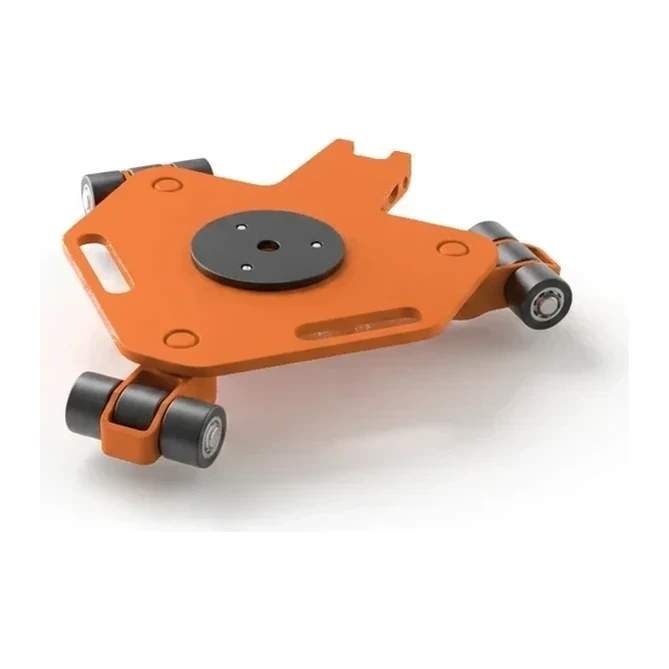
A machinery skate is a low-profile wheeled platform designed to support and roll heavy machinery, equipment, and structural loads across level surfaces. These compact rigging tools allow controlled horizontal movement of loads weighing several tons without the need for overhead lifting equipment. Machinery skates are fundamental to plant relocation, equipment installation, and maintenance operations across industrial facilities.
Fonctionnement
Each machinery skate consists of a steel frame housing multiple rollers or wheels, typically configured in tandem or swivel arrangements. The load rests directly on the top surface of the skate, which may feature a steel plate, urethane pad, or adjustable saddle. Skates are positioned beneath the load at strategic balance points, typically four or more per move, and the equipment is then pushed or pulled across smooth, level floors. Some designs incorporate swivel turntables for directional changes, while others use fixed roller orientation for straight-line moves. The low-profile design, often just a few inches in height, minimizes the lift required to position skates beneath loads. Loads are distributed across multiple contact points between the skate and floor, reducing point loading. Operators typically use pry bars, hydraulic jacks, or load-moving systems to inch loads into position, with the skates allowing gradual, controlled movement rather than sudden shifts.
Types et variantes
- Straight-Line Roller Skate
- Fixed roller orientation for movement in a single direction, offering maximum stability and load capacity for linear moves.
- Swivel Turntable Skate
- Rotating top plate allows directional changes during moves, providing maneuverability in tight spaces at the cost of some capacity.
- Combination Skate Set
- Pairs of fixed and swivel skates used together: typically swivels at one end for steering, fixed at the other for tracking.
- Low-Profile Toe Jack Skate
- Integrated hydraulic toe jack within the skate frame, allowing lifting and rolling in a single unit without separate jacking equipment.
- Nylon or Urethane Roller Skate
- Non-marring roller material designed for finished floors, cleanrooms, or applications where steel wheels would damage surfaces.
Spécifications clés
| Spécification | Plage typique | Signification |
|---|---|---|
| Load Capacity per Skate | Various capacities sized in tons | The maximum static load rating for a single skate; total move capacity equals the combined rating of all skates in the set. |
| Overall Height | 2-6 inches | Vertical clearance required beneath the load; lower profiles reduce jacking height but may limit roller size. |
| Roller Configuration | Tandem, tri-roller, swivel turntable | The arrangement and count of load-bearing wheels determines directional capability and floor contact area. |
| Top Surface | Steel plate, urethane pad, V-saddle | The load-contact interface; material and shape affect grip, surface protection, and compatibility with load geometry. |
Comment l'industrie le dimensionne
The machinery skate industry sizes equipment by load capacity per skate, expressed in tons. Skates rated 0-6 ton handle rolling light shop machines across a slab. Standard skates rated 6-15 ton are the workhorse for moving CNCs, press brakes, and transformers on four skates. Heavy-duty skates rated 15 ton and up, including 20, 30, and 40-ton models, serve heavy plant relocation with sets rated 20 ton and up per skate. Operators select skate capacity based on the total load weight divided by the number of contact points, with appropriate safety margin for uneven weight distribution.
Applications
- Relocating CNC machines, lathes, mills, and metal fabrication equipment within manufacturing facilities
- Moving transformers, generators, and electrical switchgear during utility plant maintenance and upgrades
- Positioning printing presses, injection molding machines, and other production equipment during facility layouts
- Transporting HVAC units, boilers, and mechanical systems across equipment rooms and rooftops
- Adjusting positions of heavy dies, molds, and tooling in metalworking and plastics plants
- Facilitating plant decommissioning and factory relocation by mobilizing entire production lines
Sécurité et opération
- Calculate total load weight and distribution to ensure each skate operates within its rated capacity with adequate safety factor.
- Verify floor condition, levelness, and load-bearing capacity; machinery skates require smooth, level, structurally sound surfaces.
- Secure loads to prevent shifting during movement; use blocking, strapping, or cribbing as appropriate for load geometry.
- Coordinate team communication and establish controlled movement speed; sudden stops or direction changes can destabilize loads.
- Maintain clear pathways free of debris, cords, and personnel; establish exclusion zones around moving loads to prevent crush injuries.
Normes et certifications
- ASME · B30.1
- General safety standard for rigging operations, including guidance on load handling and equipment selection applicable to machinery moving.
- OSHA · 1926.251
- Rigging equipment for material handling standard covering safe practices for moving heavy loads in construction and industrial settings.
Questions fréquentes
How many machinery skates are needed for a typical equipment move?
What is the difference between swivel and straight-line machinery skates?
What floor conditions are required for machinery skate operation?
How is load capacity per skate determined when sizing a machinery skate set?
Équipements connexes
Parcourir par fabricant
Tous les modèles
37 modèles · Chaque spécification citée à la source