

Angle Grinder
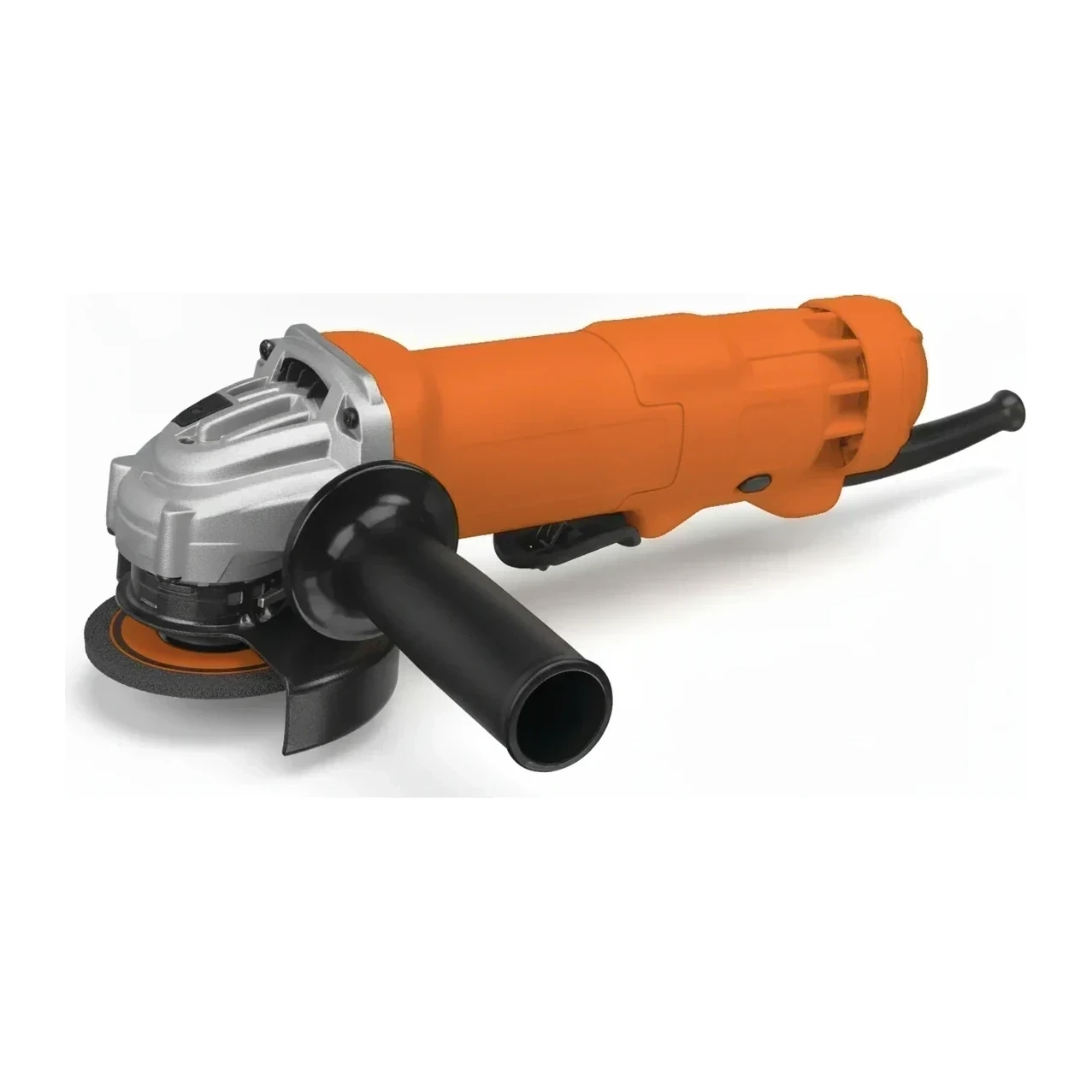
An angle grinder is a hand-held power tool that spins an abrasive wheel at high speed on a spindle set 90 degrees to the motor. It cuts, grinds, and cleans metal, concrete, and masonry depending on the wheel fitted.
Cat classes
Choisissez une classe de taille — la capacité et la portée varient selon la gamme.
Fonctionnement
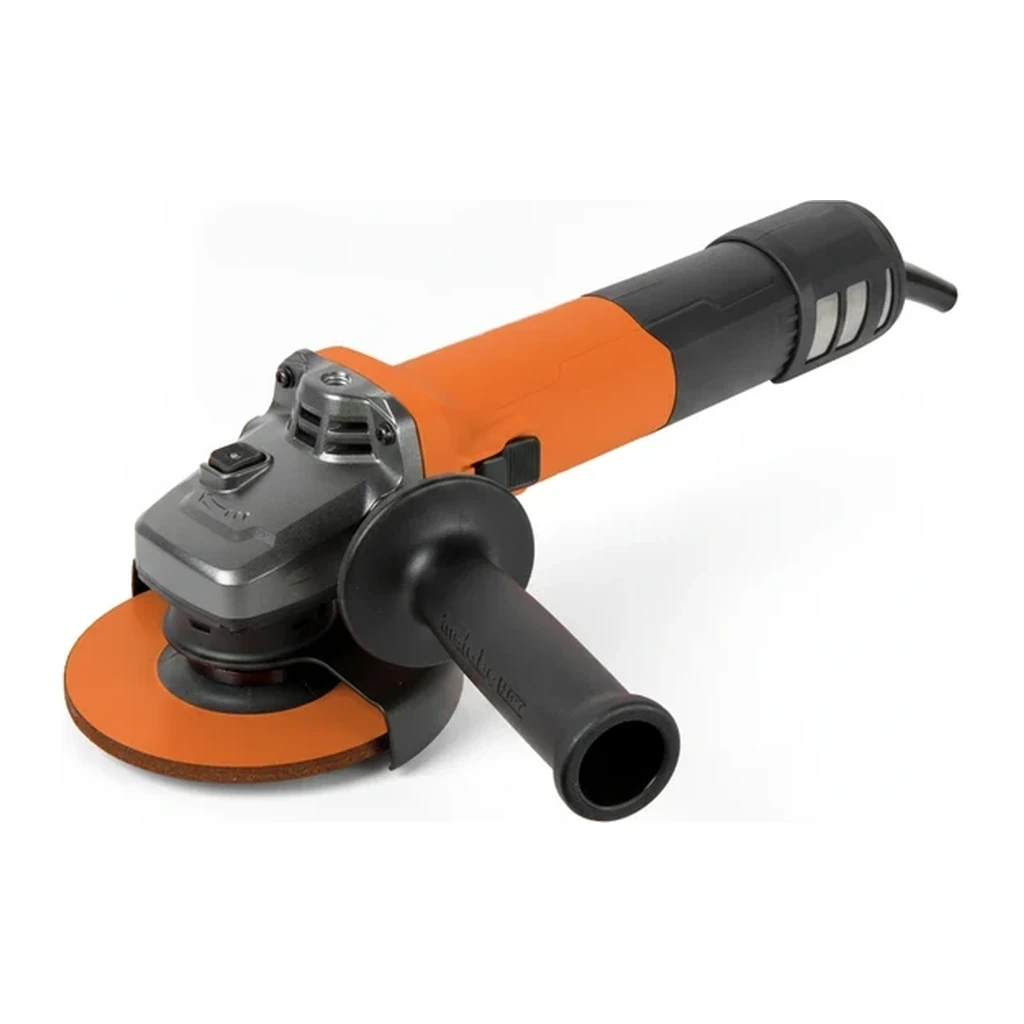
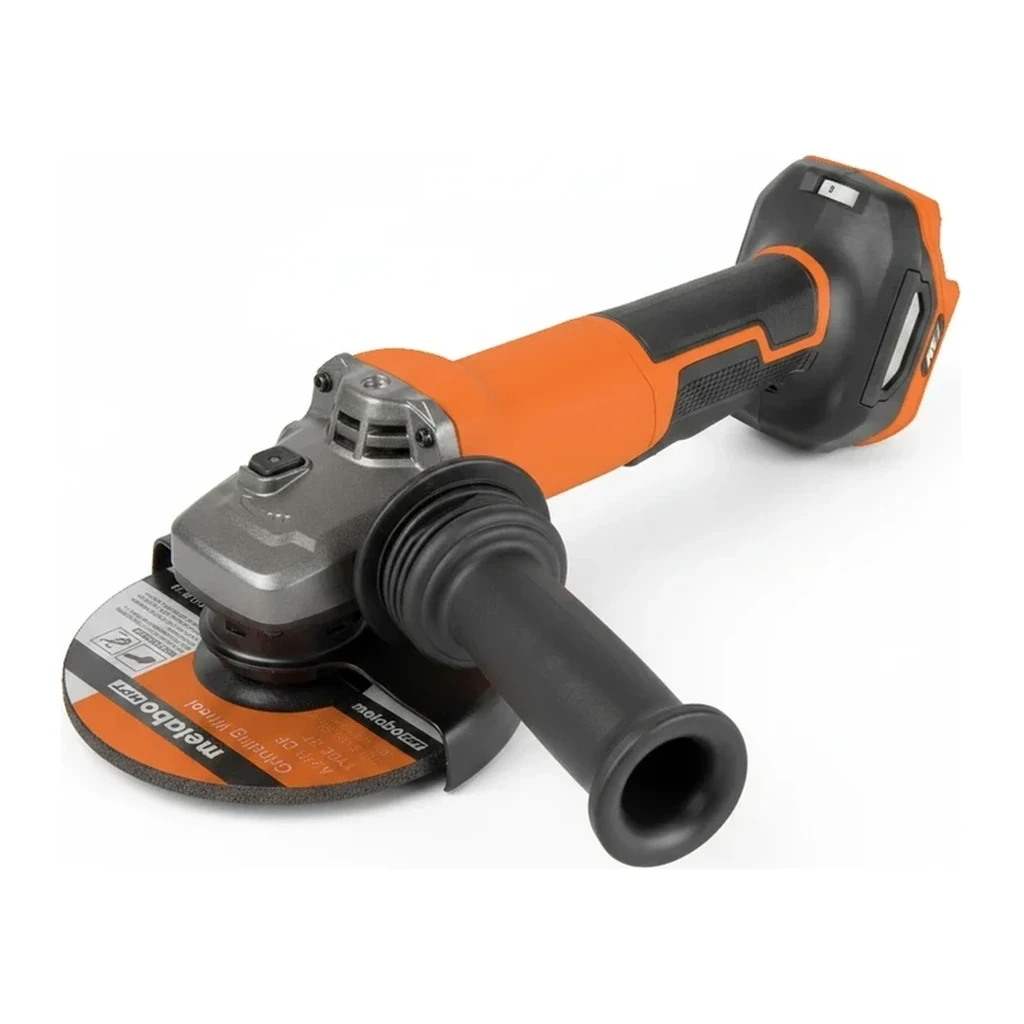
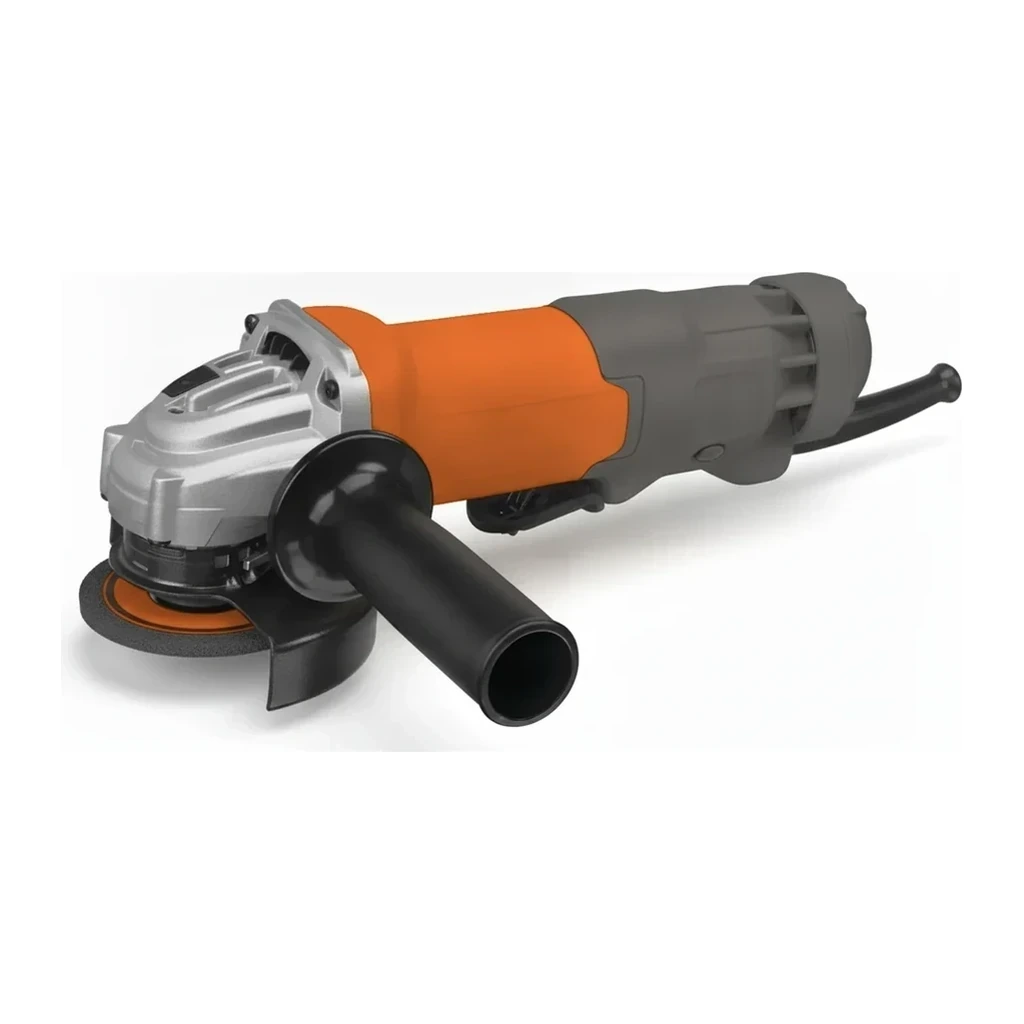
The motor drives a right-angle gearbox that turns the spindle at 8,500–11,500 RPM on common sizes. Interchangeable discs do the work: bonded abrasive wheels for cutting and grinding, flap discs for blending, wire wheels for cleaning, and diamond blades for masonry. A guard covers the rear half of the wheel and a side handle gives two-hand control against the reaction torque.
Types et variantes
- 4-1/2 to 5 in grinders
- One-handed machines for cutting rebar, weld cleanup, and work in tight spots.
- 6 to 7 in grinders
- Two-hand tools for deeper cuts and more surface per pass in steel prep and concrete edge work.
- 9 in and up grinders
- Heavy machines for deep cuts through thick steel, block, and pipe where small wheels cannot reach.
- Cordless grinders
- Battery models for mobile cutting and grinding.
Spécifications clés
| Spécification | Plage typique | Signification |
|---|---|---|
| Wheel diameter | 4–9 in (10.2–22.9 cm) | Larger wheels cut deeper and cover more surface but demand two-hand control. |
| No-load speed | 8,500–11,500 RPM | Wheel speed rating must meet or exceed the tool's RPM. |
| Power source | 4.5–120 V cordless or corded | Corded models sustain heavy grinding; cordless favors mobility. |
| Net weight | 3.1–5.7 lb (1.4–2.6 kg) | Light tools reduce fatigue during overhead and vertical grinding. |
Comment l'industrie le dimensionne
The class bands by wheel diameter. The 4-1/2 to 5 in size is for one-handed cutting of rebar and threaded rod, weld cleanup, and work in tight spots. The 6 to 7 in band offers two-hand control, deeper cuts, and more surface per pass for steel prep and concrete edge work. The 9 in and up class handles deep cuts through heavy steel, block, and pipe where a small wheel cannot reach through.
Applications
- Cutting rebar, bolts, and angle iron to length
- Grinding welds flat and beveling plate edges
- Removing rust, paint, and coatings from steel
- Cutting and notching tile, pavers, block, and concrete
Sécurité et opération
- The wheel guard must stay fitted and positioned between wheel and operator; wheel bursts are the tool's defining hazard.
- Ring-test and inspect bonded wheels before mounting, and never exceed the wheel's rated speed.
- Grinding masonry releases silica dust; use a shroud with extraction, and always wear eye and face protection.
Normes et certifications
- OSHA · 29 CFR 1926.303
- Abrasive wheels and tools: guarding, inspection, and mounting requirements.
- ANSI · B7.1
- Safety requirements for the use, care, and protection of abrasive wheels.
Questions fréquentes
What wheel size covers most work?
Can one grinder cut both metal and concrete?
Why do wheels shatter?
Équipements connexes
Parcourir par fabricant
Sources
Chaque spécification est vérifiée par rapport aux données publiées par le fabricant, avec la source liée pour référence.
Tous les modèles
137 modèles · Page 2 sur 3 · Chaque spécification citée à la source