

Random Orbital Sander
A random orbital sander is a handheld power tool that combines circular pad rotation with an elliptical oscillating pattern to produce a random sanding motion. This dual-action movement eliminates visible sanding patterns and swirl marks, making it the industry standard for fine finishing and surface preparation. The tool accommodates hook-and-loop or adhesive-backed sanding discs in various grits for wood, metal, and composite materials.
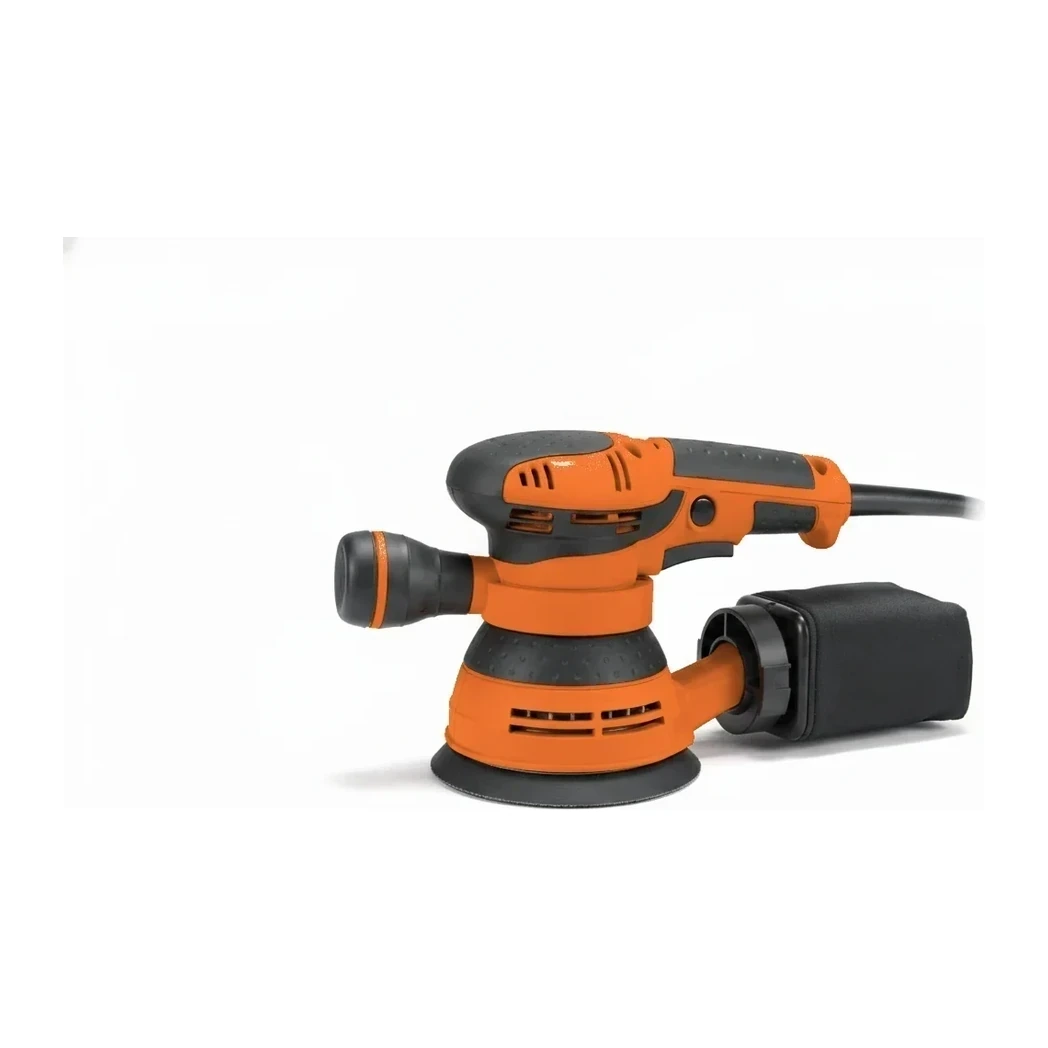
Fonctionnement
The tool's motor drives an off-center bearing that creates simultaneous rotation and orbital motion. As the sanding pad spins, the offset bearing also moves the pad in a small elliptical pattern, resulting in a random scratch pattern where no single grit path crosses itself. This randomized motion prevents the circular swirl marks associated with rotary-only sanders and the linear scratches of belt or sheet sanders. Most models operate between 2,700 and 3,200 strokes per minute, with variable speed control allowing operators to match sanding intensity to material sensitivity. Dust collection ports connect to shop vacuums or dedicated extractors, capturing debris through perforations in both the sanding disc and pad. Cordless models typically operate at 12V to 18V, while corded versions run on standard 120V power.
Types et variantes
- Corded Random Orbital Sander
- AC-powered models offering continuous operation without battery changes, typically featuring higher sustained power output for production environments
- Cordless Random Orbital Sander
- Battery-powered units operating at 12V to 18V platforms, providing mobility and eliminating cord management in field applications
- 5-Inch Pad Sanders
- The most common configuration, balancing maneuverability with surface coverage for general finishing work
- 6-Inch Pad Sanders
- Larger pad diameter increases material removal rate and coverage area for bigger surfaces and production sanding
- Dust-Extracting Models
- Purpose-built systems with optimized airflow paths and multi-hole disc patterns for maximum dust capture in health-sensitive or clean environments
- Mini Random Orbital Sanders
- Compact 3-inch pad versions designed for detailed work, contoured surfaces, and confined spaces where standard sizes cannot reach
Spécifications clés
| Spécification | Plage typique | Signification |
|---|---|---|
| No-Load Strokes Per Minute | 2,700-3,200 strokes/min | Determines material removal rate and surface finish quality; variable speed models adjust within this range |
| Voltage (Cordless) | 12-18V | Battery platform voltage affects runtime and power delivery; higher voltages support sustained performance under load |
| Pad Diameter | 5 or 6 inches | Defines surface coverage area per pass and influences maneuverability around edges and details |
| Orbit Diameter | 0.1–0.1 in (2.5–3.5 mm) | Size of the elliptical pattern; smaller orbits produce finer finishes while larger orbits increase stock removal |
| Weight | 3–6 lbs (1.4–2.7 kg) | Affects operator fatigue during extended use; lighter models improve control while heavier units may reduce vibration |
Comment l'industrie le dimensionne
The industry does not classify random orbital sanders into distinct size categories because the tool serves a singular purpose: feathering and finish sanding. While pad diameter varies, commonly 5-inch or 6-inch, with specialty 3-inch models, this dimension affects work speed rather than capability. All configurations produce the same random scratch pattern and achieve comparable surface finishes given appropriate grit progression. Selection depends on surface area, access constraints, and power source preference (corded versus cordless platforms), rather than on a tiered sizing system.
Applications
- Fine finish sanding of wood furniture, cabinetry, and millwork prior to staining or coating
- Automotive bodywork preparation and paint feathering between repair coats
- Surface preparation of composite materials, fiberglass, and plastic components
- Removal of old finishes, oxidation, and surface contaminants from metal and wood
- Smoothing of drywall compound, joint filler, and patching materials in construction
- Preparation of decking, flooring, and architectural woodwork for refinishing
Sécurité et opération
- Eye protection required to shield against airborne dust and debris ejected from the sanding surface
- Respiratory protection necessary when dust collection is unavailable or when sanding materials that produce hazardous particulates
- Secure workpiece clamping prevents material movement that can cause loss of control or uneven sanding
- Allow the pad to reach operating speed before contacting the work surface to prevent gouging and motor strain
- Maintain two-handed grip during operation to manage vibration and maintain consistent surface contact pressure
Normes et certifications
- OSHA · 29 CFR 1926.304
- Addresses guarding and safe work practices for portable abrasive wheel and sanding tools in construction
- ANSI · B7.1
- Safety requirements for the use, care, and protection of abrasive wheels and sanding equipment
- UL · UL 45
- Safety standard for portable electric tools covering electrical safety, construction, and performance requirements
- NIOSH
- Provides exposure limits and respiratory protection guidance for wood dust and other particulates generated during sanding operations
Questions fréquentes
What distinguishes random orbital sanders from standard orbital sanders?
How does pad diameter affect sanding performance?
Why do random orbital sanders use hook-and-loop disc attachment?
What determines the appropriate strokes-per-minute setting?
Équipements connexes
Parcourir par fabricant
Sources
Chaque spécification est vérifiée par rapport aux données publiées par le fabricant, avec la source liée pour référence.
Tous les modèles
59 modèles · Page 2 sur 2 · Chaque spécification citée à la source