

Spray Foam Proportioner
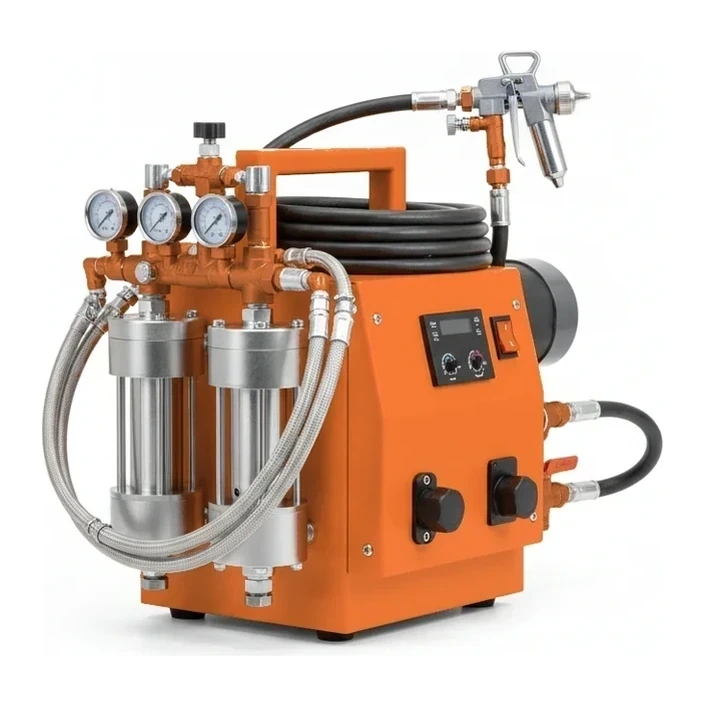
A spray foam proportioner is a specialized metering and heating system that precisely mixes and delivers two-component polyurethane foam (SPF) for insulation and coating applications. These machines heat separate A and B side chemicals to proper temperature and combine them at controlled ratios before delivery to a spray gun. The equipment is essential for professional spray foam insulation contractors requiring consistent foam quality and application performance.
Fonctionnement
The proportioner maintains separate heated tanks or lines for isocyanate (A-side) and polyol resin (B-side) components, typically heating them to 120-150°F to reduce viscosity and ensure proper chemical reaction. Precision metering pumps draw material from each side at exact ratios (commonly 1:1 by volume) and deliver the heated components through heated hoses to a spray gun, where they mix in the chamber or immediately upon exiting the nozzle. The system continuously circulates material through heated hoses when not spraying, maintaining temperature and preventing material from setting in the lines. Pressure and temperature gauges allow operators to monitor system performance, while adjustable pump speeds control output volume. Most units include hydraulic or electric drive systems that synchronize the pumps to maintain consistent ratio accuracy regardless of flow rate.
Types et variantes
- Reactor Proportioner
- Self-contained units with integrated heat exchangers and pumps, designed for professional production work with consistent high-volume output
- Rig-Mounted System
- Trailer or truck-mounted configurations that include bulk material storage tanks, allowing extended operation on large commercial projects
- Hydraulic-Drive Unit
- Systems using hydraulic motors to drive metering pumps, offering smooth operation and high torque for handling viscous materials
- Electric-Drive Unit
- Electrically powered proportioners that eliminate the need for separate hydraulic power sources, common in smaller portable configurations
- High-Pressure System
- Units capable of delivering material at elevated pressures for improved atomization and faster application rates on large-area projects
Spécifications clés
| Spécification | Plage typique | Signification |
|---|---|---|
| Output Pressure | 1,000-3,000 psi | Delivery pressure affects spray pattern atomization and material flow rate through the gun and hoses |
| Heating Capacity | 5-15 kW per side | Determines how quickly the system brings material to optimal spray temperature and maintains heat during operation |
| Flow Rate | 5-50 lbs/min combined | Total material output capacity matched to project scale and application requirements |
| Ratio Accuracy | ±1-2% | Precision of A-side to B-side mixing ratio, critical for proper foam curing and physical properties |
| Hose Length | 50-300 ft heated | Maximum distance material can be delivered while maintaining proper temperature for spray application |
Comment l'industrie le dimensionne
The spray foam industry does not classify proportioners by distinct size bands because each unit is engineered as an integrated system with heating and metering capacity matched to a specific output range. Models are selected based on required flow rate (pounds per minute), which determines the scale of projects the proportioner can efficiently serve. All proportioners perform the same fundamental function of heating and metering two-part foam, with manufacturers offering complete systems rather than sizing options within model lines. Selection depends on project volume, jobsite power availability, and whether mobile or stationary operation is required.
Applications
- Residential and commercial building insulation installation in walls, attics, and crawlspaces
- Industrial tank and equipment insulation for temperature control and condensation prevention
- Roofing applications using spray polyurethane foam roofing systems
- Cold storage facility insulation requiring high R-value and seamless coverage
- Marine and transportation insulation for vessels and refrigerated vehicles
- Agricultural building insulation and environmental control structures
Sécurité et opération
- Proper personal protective equipment including respirators, chemical-resistant suits, and gloves is essential due to isocyanate exposure risks
- Adequate ventilation must be maintained in spray areas as both components and reaction byproducts present inhalation hazards
- High-pressure system components require regular inspection and pressure relief devices must remain functional to prevent hose or component failure
- Material must be kept within specified temperature ranges to prevent excessive pressure buildup or incomplete chemical reactions
- Operators must be trained in emergency shutdown procedures and chemical spill response protocols for both components
Normes et certifications
- OSHA · 29 CFR 1926.94
- Respiratory protection requirements for isocyanate exposure during spray foam application
- SPFA (Spray Polyurethane Foam Alliance)
- Industry best practices and professional training standards for spray foam equipment operation and safety
- ASTM · D7859
- Standard practice for spraying, sampling, and testing of spray polyurethane foam insulation systems
- EPA · SNAP Program
- Regulates acceptable blowing agents used in spray foam formulations for environmental protection
Questions fréquentes
Why is temperature control critical in spray foam proportioners?
What determines the ratio accuracy requirement for two-component foam?
How do hydraulic-drive and electric-drive proportioners differ operationally?
Why are spray foam proportioners also called reactors in the industry?
Équipements connexes
Parcourir par fabricant
Sources
Chaque spécification est vérifiée par rapport aux données publiées par le fabricant, avec la source liée pour référence.
Tous les modèles
9 modèles · Chaque spécification citée à la source