

Hand Tools
Fonctionnement
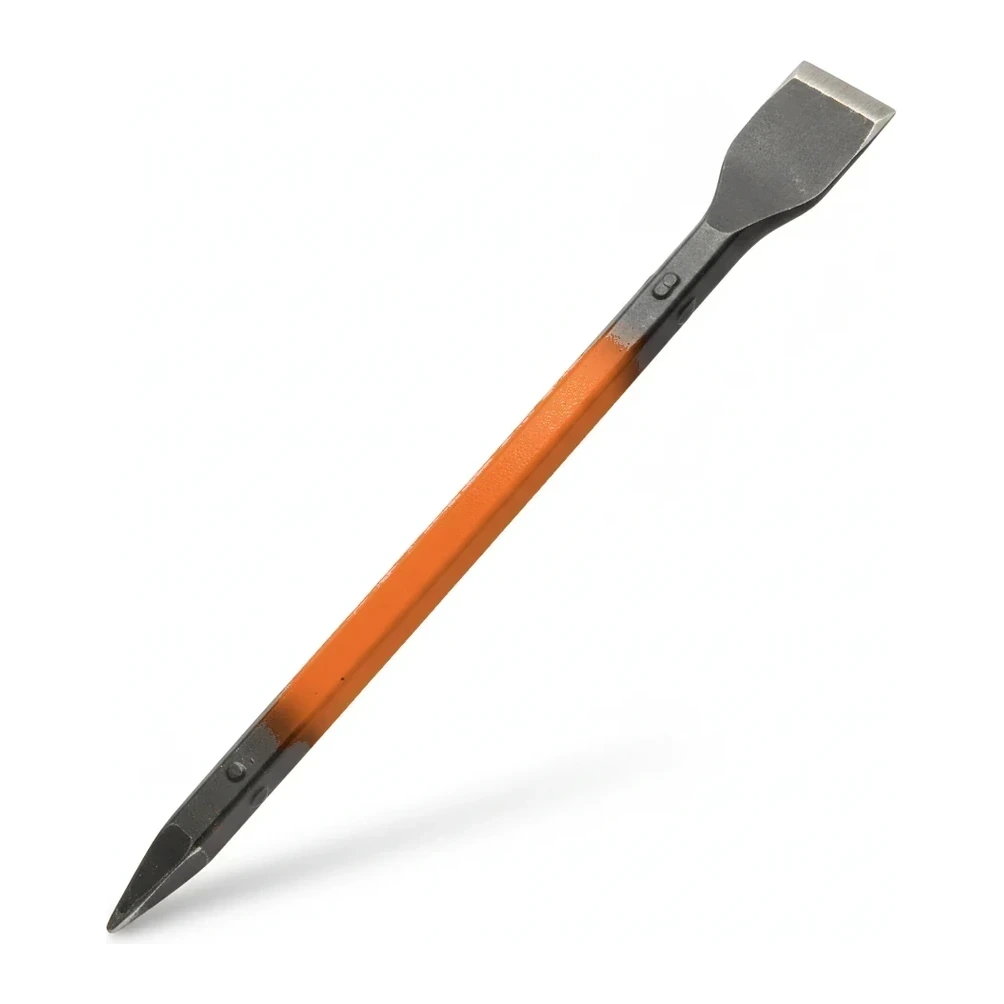
Hand tools in this subcategory function through direct manual force application, utilizing leverage principles to multiply the operator's effort. Bar-type tools feature hardened steel construction with shaped ends designed for specific tasks—pointed ends for penetrating soil or breaking material, flat chisel ends for prying, and curved sections that serve as fulcrums. The operator positions the tool at the work point and applies force through the handle or shaft, using the tool's length and geometry to generate the mechanical advantage necessary for the task.
Types et variantes
- Pry Bar
- Leverage tools featuring flat, curved, or angled ends designed for separating materials, removing fasteners, and applying concentrated prying force in demolition and construction tasks
- Digging Bar
- Heavy-duty steel bars with pointed or chisel ends used for breaking hard soil, clay, frozen ground, and light rock during excavation and post-hole preparation
Normes et certifications
- ASME · B107 Series
- Hand tool safety and performance standards covering design, materials, and marking requirements
- ANSI · ANSI/ASME B107.15
- Specifications for construction and industrial hand tools including bars and striking tools
- OSHA · 29 CFR 1926.951
- Requirements for hand and portable power tool safety in construction environments
Questions fréquentes
What determines the appropriate length for a digging or pry bar?
Bar length selection depends on the application's required leverage and working space. Typical lengths range from 12 inches for confined spaces to 72 inches for maximum leverage in excavation. Longer bars provide greater mechanical advantage but require more working clearance and can be less maneuverable in tight areas.
What materials are used in hand tool bar construction?
Professional-grade pry and digging bars are manufactured from heat-treated, high-carbon steel or forged steel alloys to withstand repeated impact and bending stress. Surface treatments such as powder coating or chrome plating protect against corrosion, while critical areas like tips and claws are hardened to resist wear and deformation.
How are hand tools in this category classified by the industry?
The industry classifies these tools primarily by function (prying versus digging), physical characteristics (length, weight, end configuration), and intended application. Common designations include pinch point bars, crow bars, San Angelo bars, and tamping bars, each indicating specific design features suited to particular tasks.
What safety considerations apply to bar-type hand tools?
Key safety factors include maintaining tool integrity through regular inspection for cracks, mushrooming on struck ends, and bent shafts. Operators should use appropriate personal protective equipment including safety glasses, gloves, and steel-toed footwear. Proper technique involves ensuring stable footing, maintaining awareness of the tool's swing path, and using tools only for their intended purpose to prevent breakage or loss of control.