

Air Conditioners
Portable air conditioners deliver spot and space cooling where permanent systems are absent, down, or insufficient. The class runs from small spot coolers to high-tonnage packaged units, with thermostats and control adaptors filed alongside.
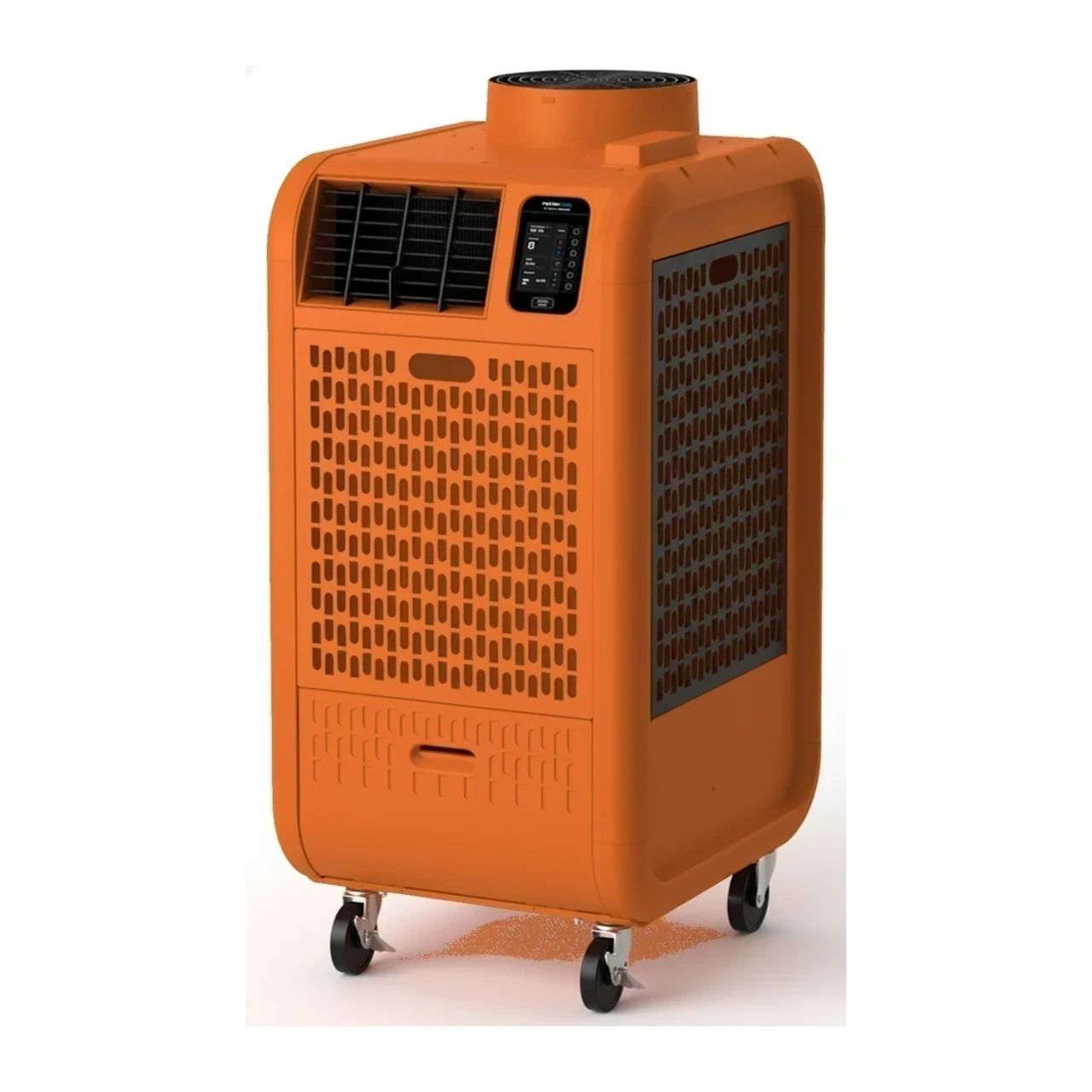
Fonctionnement
A refrigeration circuit absorbs heat at the evaporator and rejects it at the condenser; the two airstreams must stay separated, which is why portable units duct condenser heat away from the cooled space. Capacity in BTU/h or tons is matched to the space's heat load — occupants, equipment, sun, and air changes.
Types et variantes
- Air Conditioners
- Portable and spot-cooling units that remove heat from occupied or process spaces.
- Thermostats
- Controls that regulate temporary heating and cooling equipment.
- Communication Adaptors
- Interface modules that connect HVAC units to controls and building systems.
Comment choisir
Load calculation drives sizing: roughly 12,000 BTU/h per ton, matched against floor area, heat-producing equipment, and ventilation. Spot coolers aim cold air at people or racks; packaged units condition whole rooms via ducting. Power availability (120 V vs three-phase) and condensate handling are the practical constraints.
Normes et certifications
- AHRI
- Performance-certification programs for air conditioning, heating, and refrigeration equipment.
- ASHRAE · Standard 62.1
- Ventilation and indoor air quality guidance referenced when conditioning occupied spaces.