

Stick Edger
A stick edger is a handheld powered tool designed to cut vertical edges along sidewalks, driveways, and landscape borders. The equipment features a rotating blade positioned perpendicular to the ground, creating a clean separation between turf and hardscape surfaces. Stick edgers are essential equipment for maintaining professional-grade lawn appearance in commercial and residential landscape maintenance.
Fonctionnement
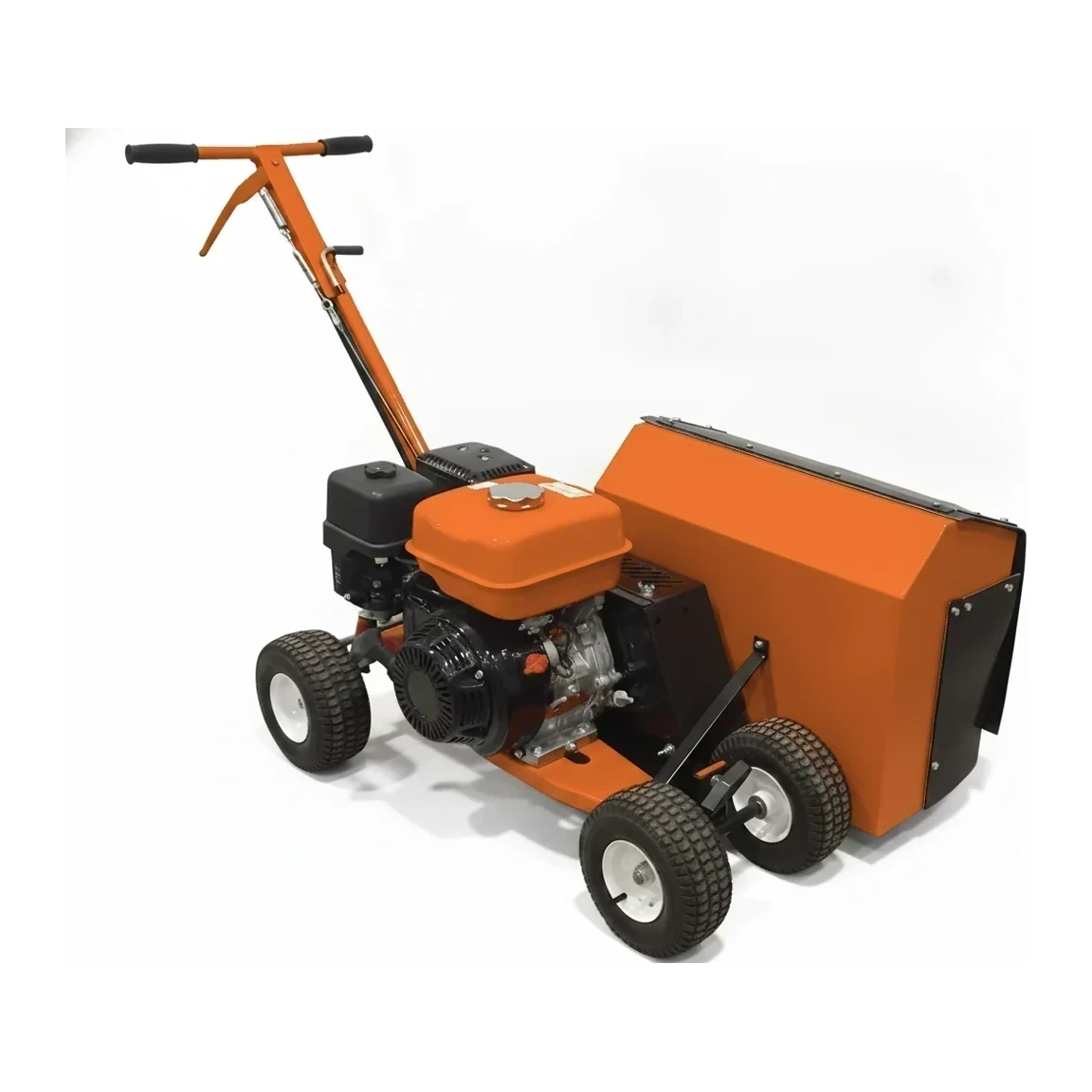
The operator holds the stick edger by its handlebars or handles and guides a vertical spinning blade along the edge to be trimmed. The blade, typically 8 to 9 inches in diameter, rotates at high speed to slice through grass, roots, and soil at the border between lawn and pavement. Most models feature adjustable cutting depth to control how deeply the blade penetrates into the soil. Gas-powered models use two-stroke or four-stroke engines, while battery and corded electric versions provide alternative power sources. A guide wheel or skid plate runs along the hardscape edge to maintain consistent spacing and cutting depth. Debris guards direct soil and clippings away from the operator.
Types et variantes
- Gas-Powered Stick Edger
- Two-stroke or four-stroke engine models offering maximum power and runtime for extended commercial use without requiring external power sources
- Corded Electric Stick Edger
- Plug-in models providing consistent power for residential and light commercial applications within reach of electrical outlets
- Battery-Powered Stick Edger
- Cordless models using rechargeable lithium-ion batteries for quieter operation and zero emissions in noise-sensitive environments
- Attachment-Style Edger
- Edger heads that connect to multi-tool power units, allowing operators to swap between trimming, edging, and other attachments on a single engine platform
- Heavy-Duty Commercial Edger
- High-torque models built with reinforced components and larger engines for continuous professional use on overgrown or challenging edges
Spécifications clés
| Spécification | Plage typique | Signification |
|---|---|---|
| Fuel Capacity | 12.8-20.6 gal | Determines runtime between refueling for gas-powered models during extended edging operations |
| Blade Diameter | 8-9 inches | Affects cutting depth capability and the severity of edges the equipment can establish or maintain |
| Engine Displacement | 21-30 cc (gas models) | Indicates power output for cutting through dense root systems and compacted soil along edges |
| Weight | 10–15 lbs (4.5–6.8 kg) | Influences operator fatigue during extended use and maneuverability around landscape obstacles |
| Cutting Depth | 1.5-2.5 inches adjustable | Controls how deeply the blade penetrates to establish new edges or refresh existing borders |
Comment l'industrie le dimensionne
The stick edger class is not sized into bands, as one model performs the same fundamental edging function regardless of specific dimensions. The industry distinguishes models primarily by power source (gas, corded electric, or battery), intended duty cycle (residential, commercial, or professional), and engine or motor power rating. Fuel capacity ranges from 12.8 to 20.6 gallons across gas models. Operators select equipment based on runtime requirements, portability needs, and the typical condition of edges being maintained rather than on dimensional size classifications.
Applications
- Creating and maintaining clean borders along sidewalks, driveways, and concrete pathways in commercial properties
- Defining landscape bed edges and separating turf from mulched or planted areas
- Trimming grass overgrowth along curbs and pavement edges in municipal maintenance operations
- Establishing new lawn boundaries during landscape installation and renovation projects
- Maintaining athletic field perimeters and track edges in sports facility management
- Detailing property edges in residential lawn care and landscape maintenance services
Sécurité et opération
- Operators must wear eye protection and closed-toe footwear to guard against flying debris, stones, and soil ejected by the spinning blade
- Inspect the work area for hidden obstacles, sprinkler heads, utility markers, and buried lines before beginning edging operations
- Maintain firm footing and proper body position to control the equipment if the blade encounters rocks or roots that cause kickback
- Allow gas-powered engines to cool before refueling and ensure adequate ventilation when operating in enclosed or semi-enclosed areas
- Keep bystanders and other workers at least 50 feet away from the edging path to prevent injury from ejected debris
Normes et certifications
- ANSI · B71.6
- Safety specifications for walk-behind and hand-held lawn care equipment including edgers
- OSHA · 1910.266
- General requirements for powered hand tool operation and personal protective equipment in landscaping work
- EPA · Small Engine Emissions Standards
- Emission requirements for gas-powered handheld outdoor power equipment engines
- ANSI · Z87.1
- Eye and face protection standards applicable to operators exposed to flying debris during edging
Questions fréquentes
What distinguishes a stick edger from a string trimmer used for edging?
How does fuel capacity relate to operational runtime in gas-powered stick edgers?
Can stick edgers be used on established edges or only for creating new borders?
What determines whether battery-powered or gas-powered stick edgers are more appropriate?
Équipements connexes
Parcourir par fabricant
Sources
Chaque spécification est vérifiée par rapport aux données publiées par le fabricant, avec la source liée pour référence.
Tous les modèles
33 modèles · Chaque spécification citée à la source