
Walk-Behind Snow Blower
A walk-behind snow blower is a self-propelled or push-operated machine designed to remove snow from driveways, sidewalks, parking lots and other paved or gravel surfaces. The equipment ingests snow through a rotating auger and discharges it through a chute, with models ranging from compact single-stage units to heavy-duty tracked commercial machines. Walk-behind snow blowers serve residential, municipal and commercial snow removal operations throughout winter climates.
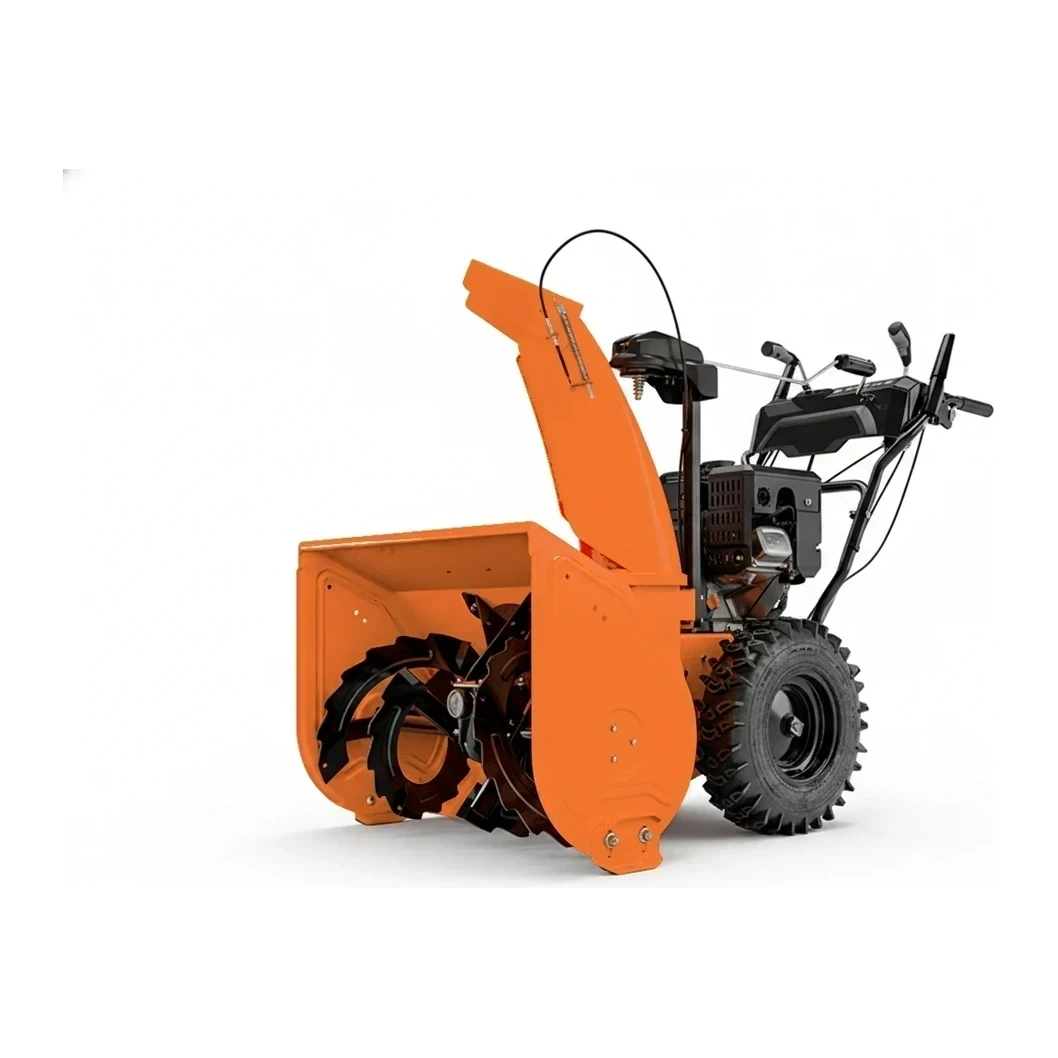
Cat classes
Choisissez une classe de taille — la capacité et la portée varient selon la gamme.
Fonctionnement
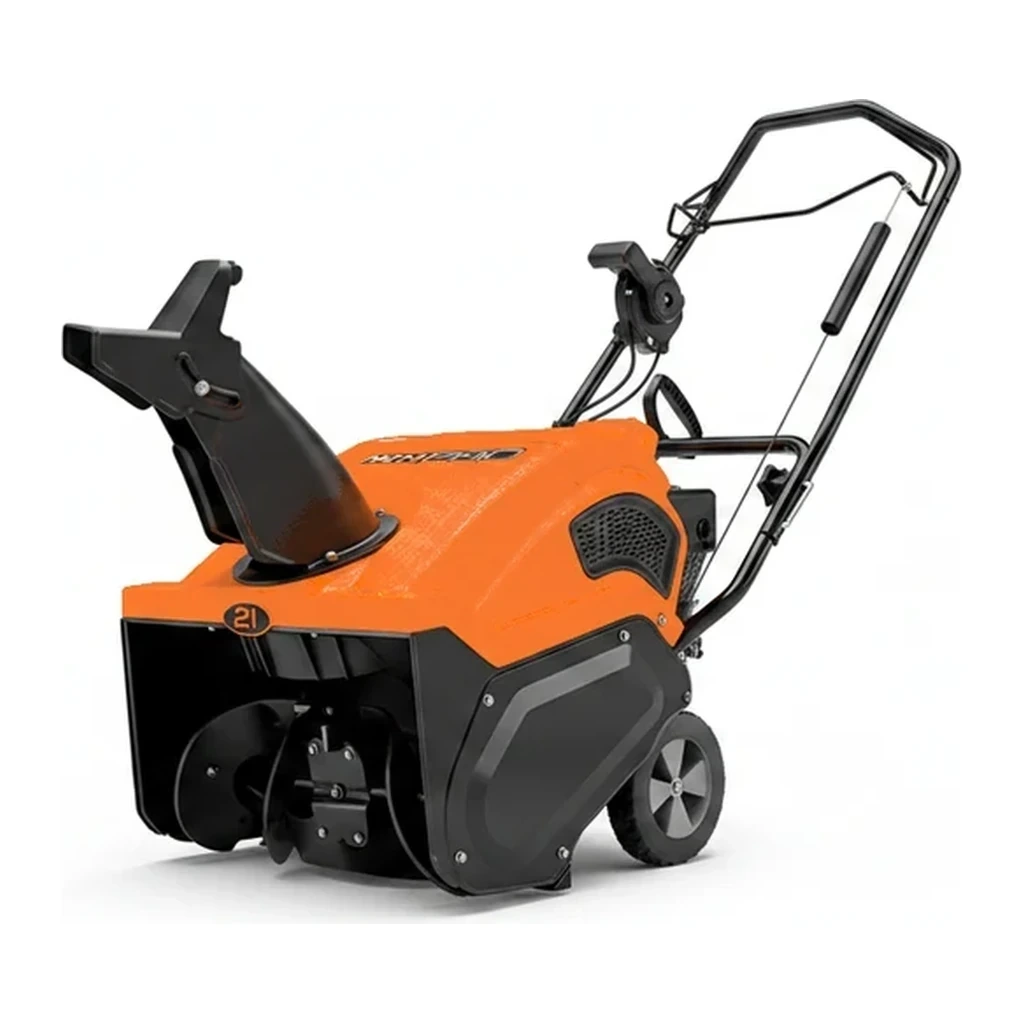
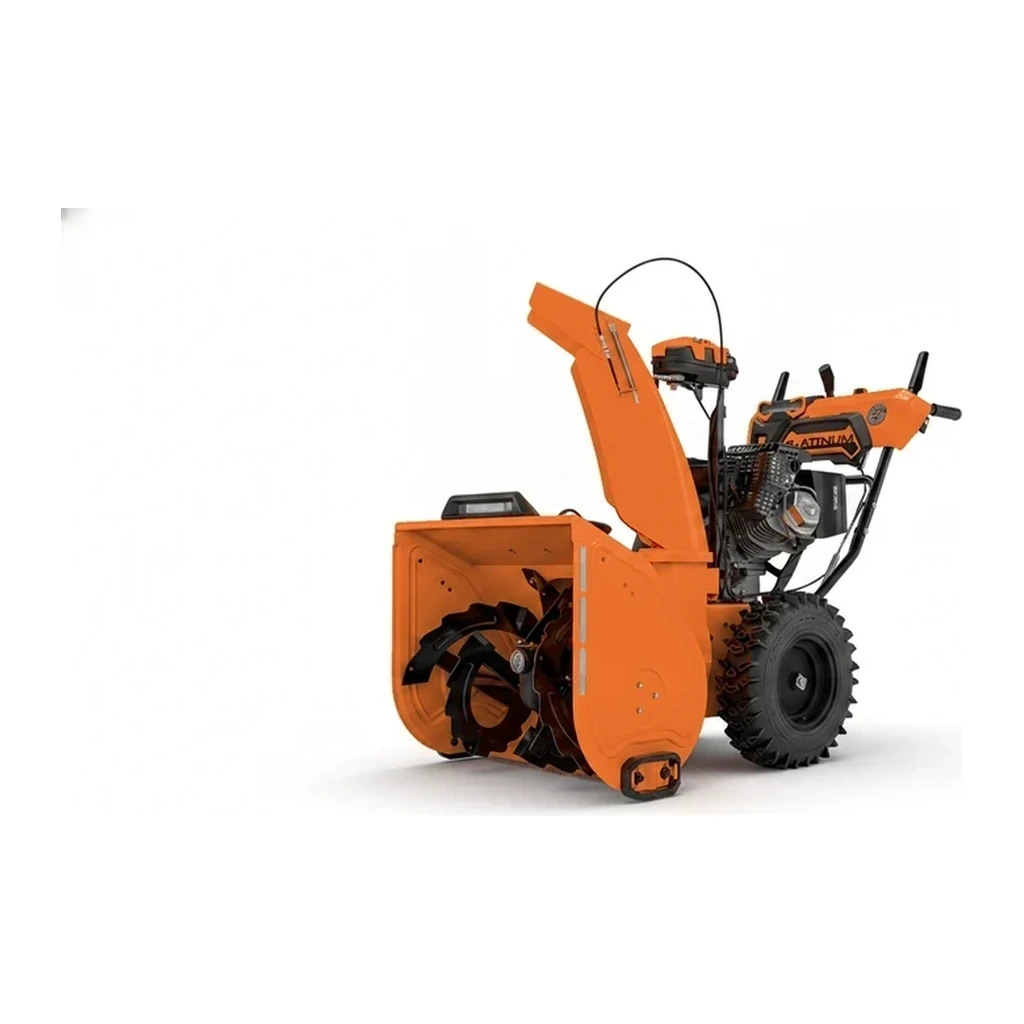
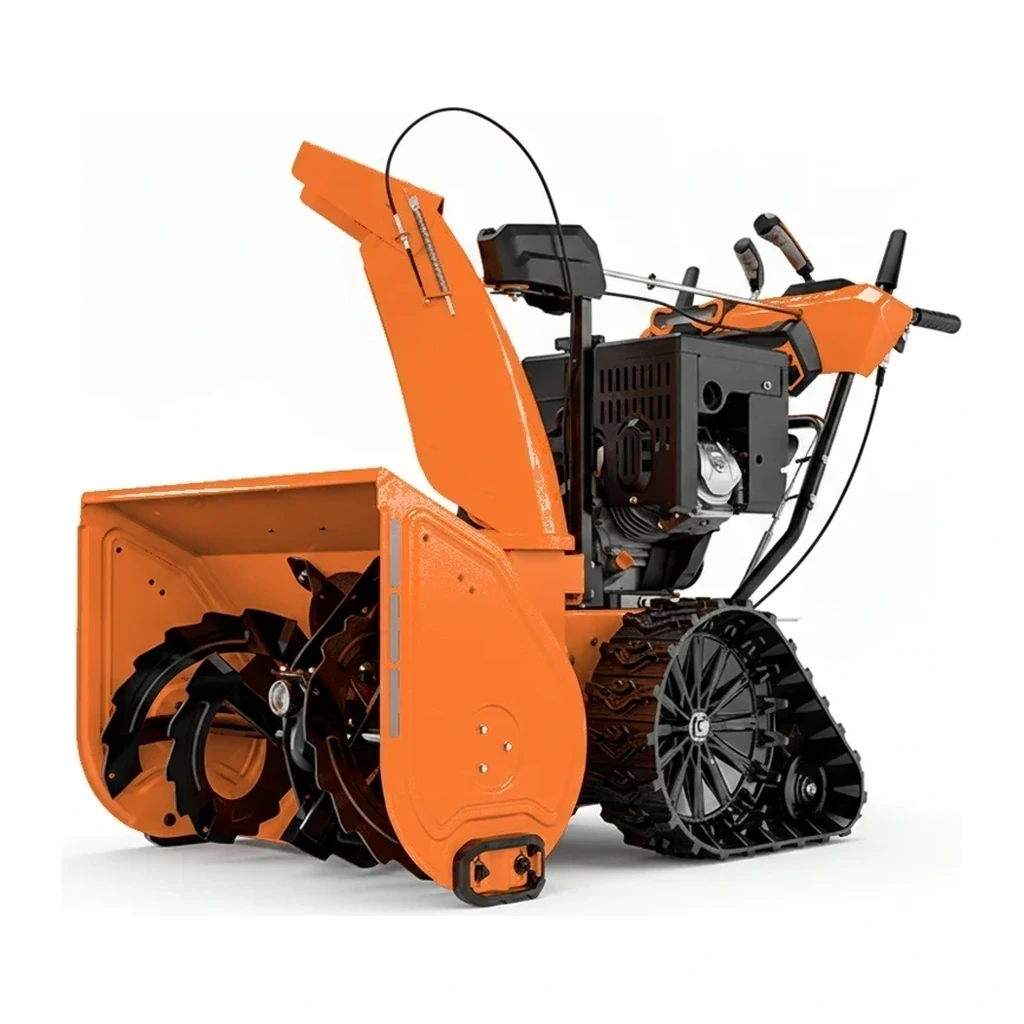
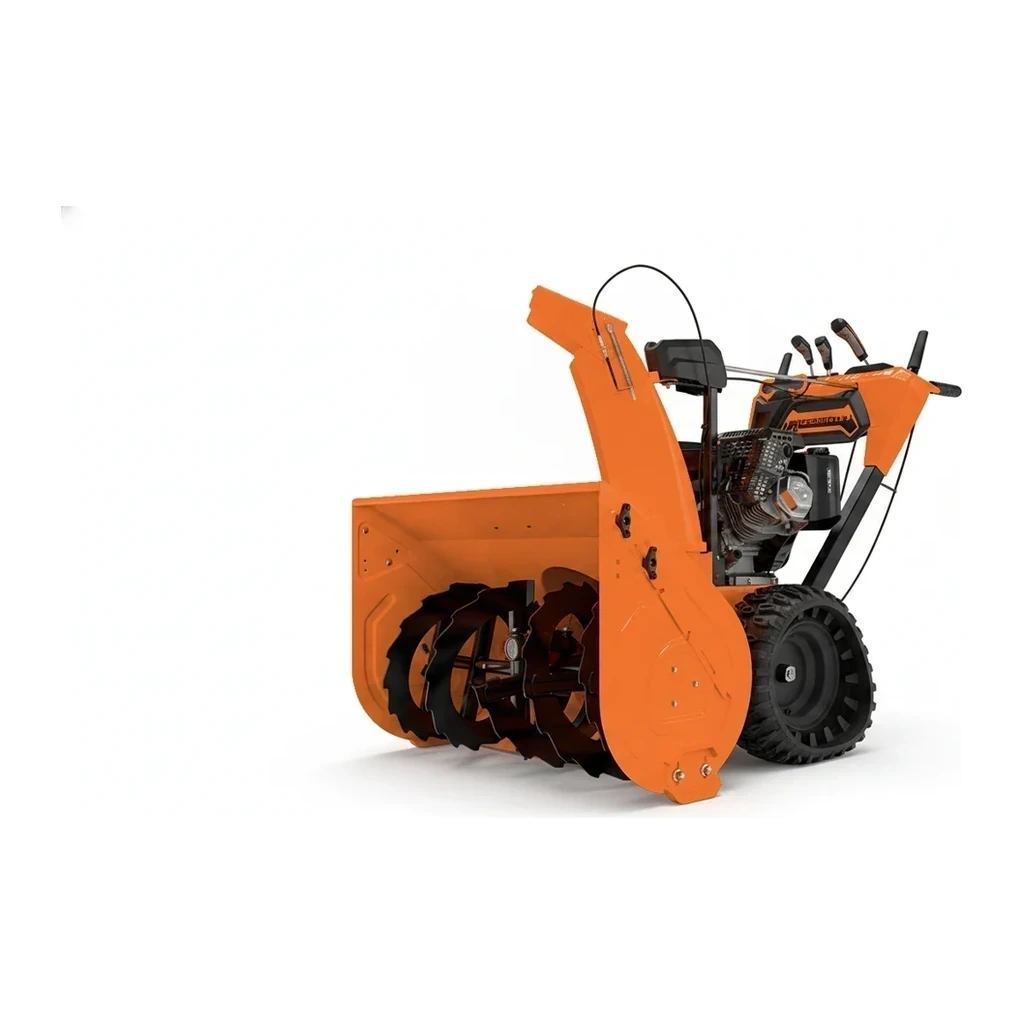
Single-stage snow blowers use a high-speed auger that both scoops and propels snow out of the discharge chute in one motion, making direct contact with the clearing surface. Two-stage models employ a slower auger to gather snow and feed it to a separate high-speed impeller that throws snow through the chute, allowing the machine to handle heavier, wetter snow and operate without the auger touching the ground. Most units feature adjustable chute direction and deflection controls, self-propelled drive systems with multiple forward speeds, and engine-driven augers powered by gasoline engines ranging from small four-stroke to commercial-grade power plants. Tracked models replace wheels with rubber or steel tracks for improved traction on slopes and in deep snow. Electric start systems, heated hand grips, headlights and power steering enhance operation in extreme cold and prolonged use. The operator walks behind the machine, controlling speed, direction and chute positioning through handlebar-mounted controls.
Types et variantes
- Single-Stage
- Auger contacts the ground and directly propels snow through the chute; lightweight, suited to flat surfaces and light, dry snow up to 8 inches deep.
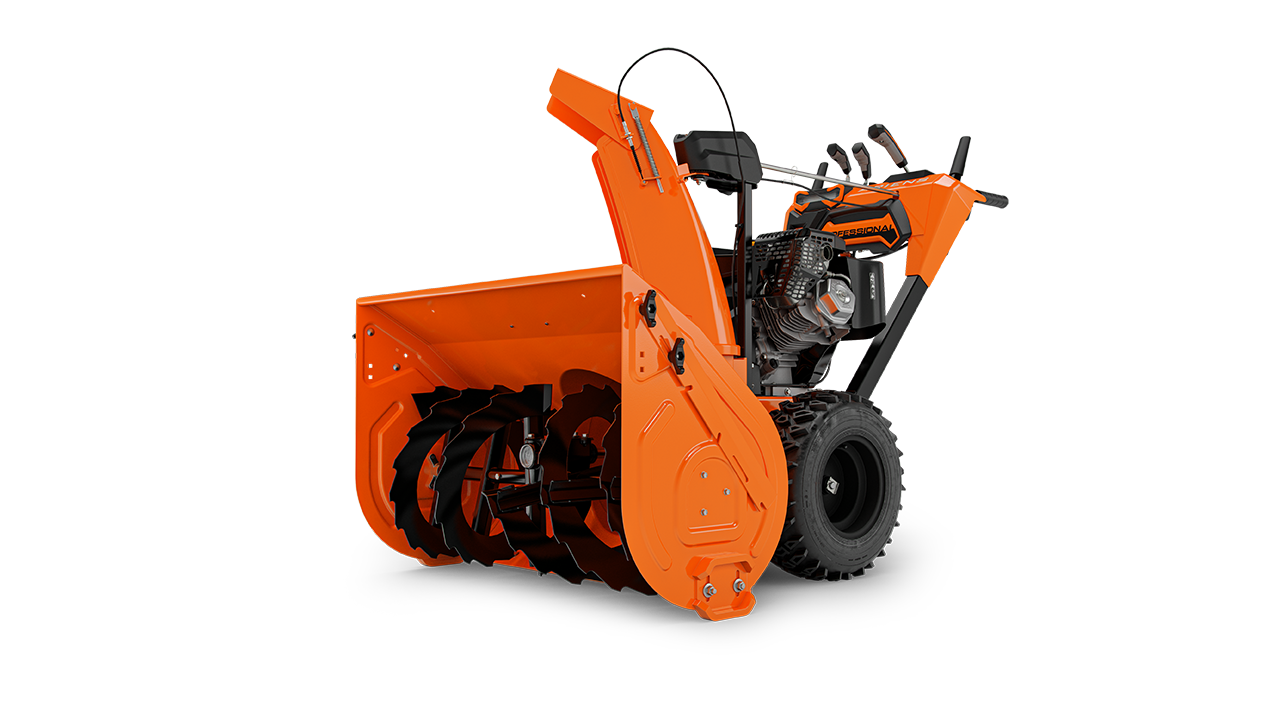
- Two-Stage Wheeled
- Separate auger and impeller system with pneumatic tires; handles deeper snow, gravel driveways and end-of-drive plow banks without auger-to-ground contact.
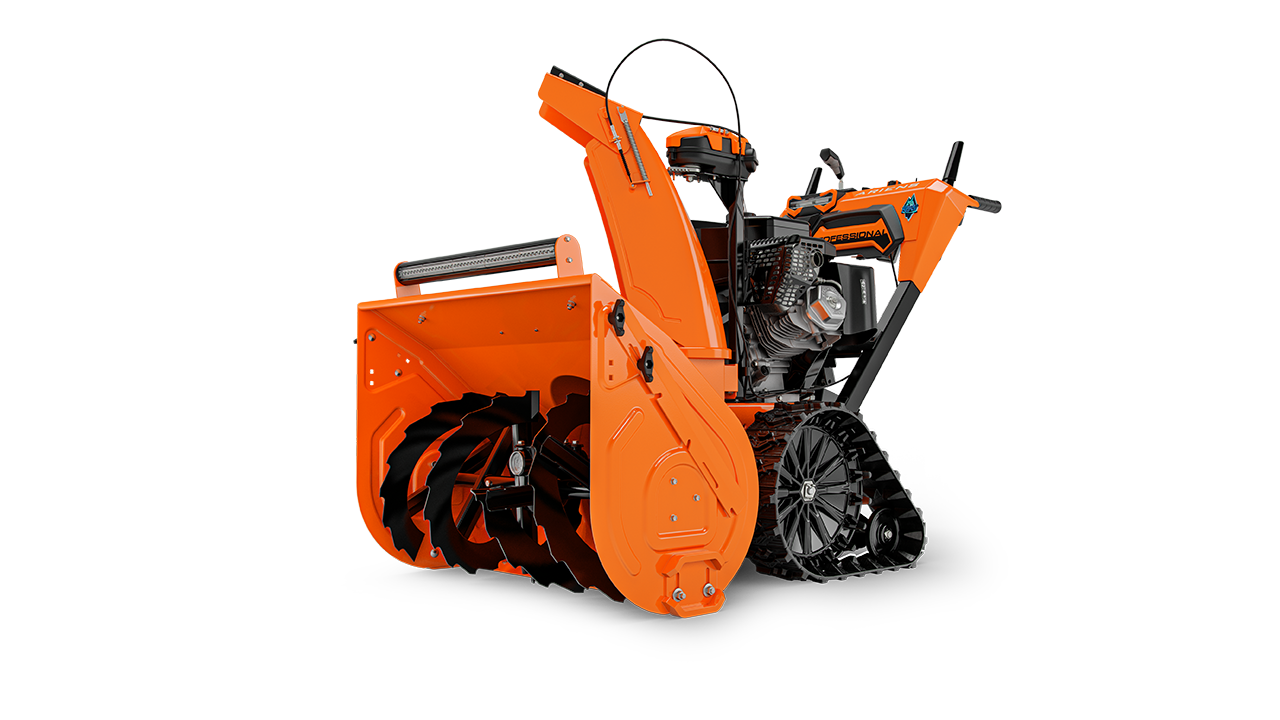
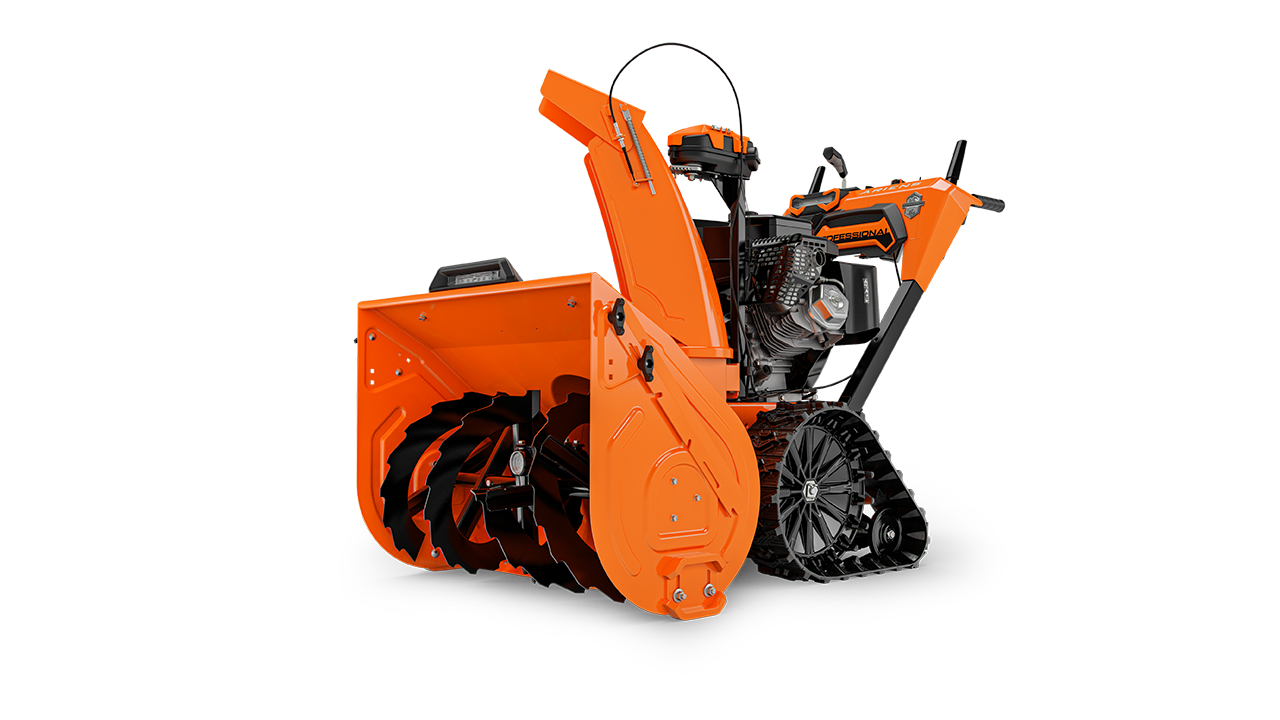
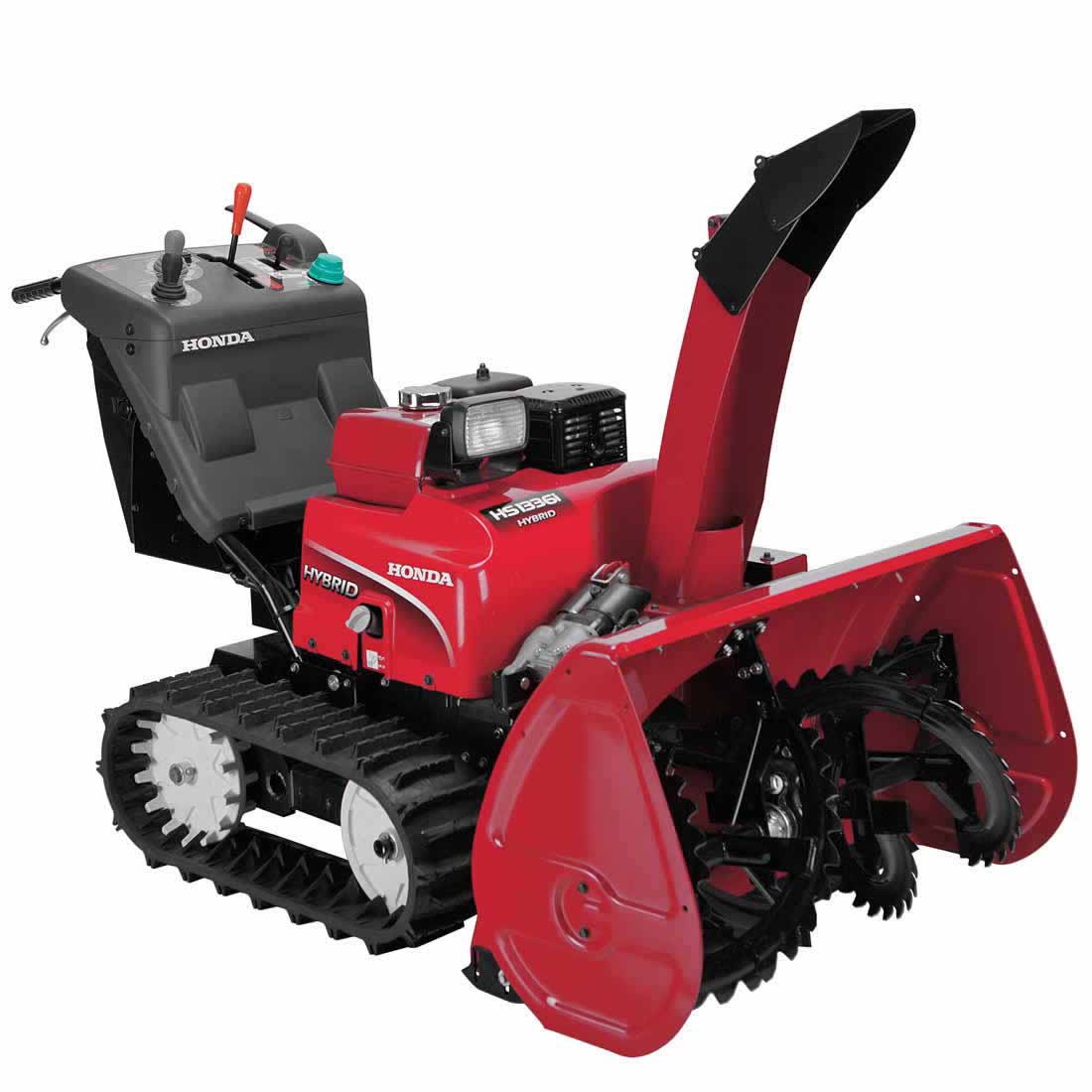
- Two-Stage Tracked
- Rubber or steel track drive system providing superior traction on slopes, ice and uneven terrain; common in commercial and municipal applications.
- Three-Stage
- Adds an accelerator between the auger and impeller to break up snow before discharge; designed for faster clearing of heavy, wet or compacted snow.
- Electric Corded/Battery
- Electric motor powered by cord or lithium-ion battery; quieter operation with zero emissions, limited to lighter snow and smaller areas by power constraints.
Spécifications clés
| Spécification | Plage typique | Signification |
|---|---|---|
| Clearing Width | 20–34 in (residential); up to 45 in (commercial) | The width of the auger housing determines path coverage and is the primary sizing dimension for the class. |
| Intake Height | 12–23 in (30.5–58.4 cm) | Maximum snow depth the machine can ingest in a single pass; larger two-stage units handle deeper accumulation. |
| Engine Displacement | 123–420 cc | Gasoline engine size correlates with power output, auger torque and ability to process heavy or wet snow. |
| Fuel Capacity | 0.8–1.5 gal | Tank size determines runtime between refueling during extended clearing operations. |
| Throwing Distance | 15–50 ft (4.6–15.2 m) | Maximum discharge distance varies by stage type, impeller speed and snow density; critical for directing snow away from cleared areas. |
Comment l'industrie le dimensionne
The industry sizes walk-behind snow blowers primarily by clearing width measured in inches. Single-stage models typically span 18–22 inches and suit walkways and short driveways in light snow. Two-stage units in the 22–28 inch range represent the standard residential class for double driveways and moderate snowfall. Larger two-stage machines from 28–34 inches handle long driveways and heavy wet snow with greater efficiency. Commercial and tracked models extending beyond 34 inches serve sidewalk contractors, municipalities and properties requiring all-winter clearing of large areas and deep accumulation. Engine power, stage configuration and drive system further differentiate models within each width category.
Applications
- Residential driveway and walkway snow removal for single-family and multi-family properties
- Municipal sidewalk and pathway clearing along streets, parks and public facilities
- Commercial parking lot and loading area snow removal for retail, office and industrial sites
- Contractor snow removal services for residential and light commercial accounts
- Institutional campus clearing at schools, hospitals and government complexes
- Gravel driveway and rural property snow removal where plowing would displace surface material
Sécurité et opération
- Operators must disengage auger/impeller before clearing jams or discharge chute blockages to prevent contact with rotating components.
- Proper hand and foot positioning away from auger intake and discharge areas prevents injuries from ejected debris or entanglement.
- Carbon monoxide hazards require outdoor-only operation with adequate ventilation, never in enclosed spaces or garages.
- Hearing protection is recommended for extended operation of gasoline-powered models producing 85+ dB sound levels.
- Refueling procedures require engine shutdown, cool-down period and fuel spill prevention to avoid fire hazards.
Normes et certifications
- ANSI/OPEI B71.3 · B71.3-2022
- Safety specifications for commercial turf care equipment including snow throwers; addresses guarding, controls and operator safety.
- CSA C13 · CAN/CSA-C13-18
- Canadian safety standard for snow throwers covering design, testing and performance requirements for walk-behind models.
- EPA · Tier 4 (Phase 3)
- Emissions regulations for small spark-ignition engines under 19 kW, governing hydrocarbon and NOx output on gasoline models.
- OSHA · 1910.266, 1926.602
- General machinery safety requirements applicable to commercial snow removal operations including equipment maintenance and operator training.
Questions fréquentes
What distinguishes single-stage from two-stage snow blowers in terms of operational capability?
How does clearing width correlate with snow removal efficiency and application suitability?
What drive system differences affect performance on slopes and varied terrain?
When do electric models present a viable alternative to gasoline-powered units?
Comparer les modèles populaires
Chercher par spécification →Normalisé aux mêmes unités. Un tiret signifie que la valeur n'a pas été publiée.
| Modèle | Puissance moteur | Poids en service | Capacité de carburant |
|---|---|---|---|
| Honda HSM1336i | - | - | 1.5 gal |
| Honda HSS1332AT / HSS1332ATD | - | - | 1.5 gal |
| Honda HSS724AT / HSS724ATD | - | - | 0.8 gal |
| Honda HSS724AW / HSS724AWD | - | - | 0.8 gal |
| Honda HSS928AT / HSS928ATD | - | - | 1.3 gal |
| Honda HSS928AW / HSS928AWD | - | - | 1.3 gal |
Parcourir par fabricant
Sources
Chaque spécification est vérifiée par rapport aux données publiées par le fabricant, avec la source liée pour référence.
Tous les modèles
100 modèles · Page 3 sur 3 · Chaque spécification citée à la source