

Mast and Personnel Lifts
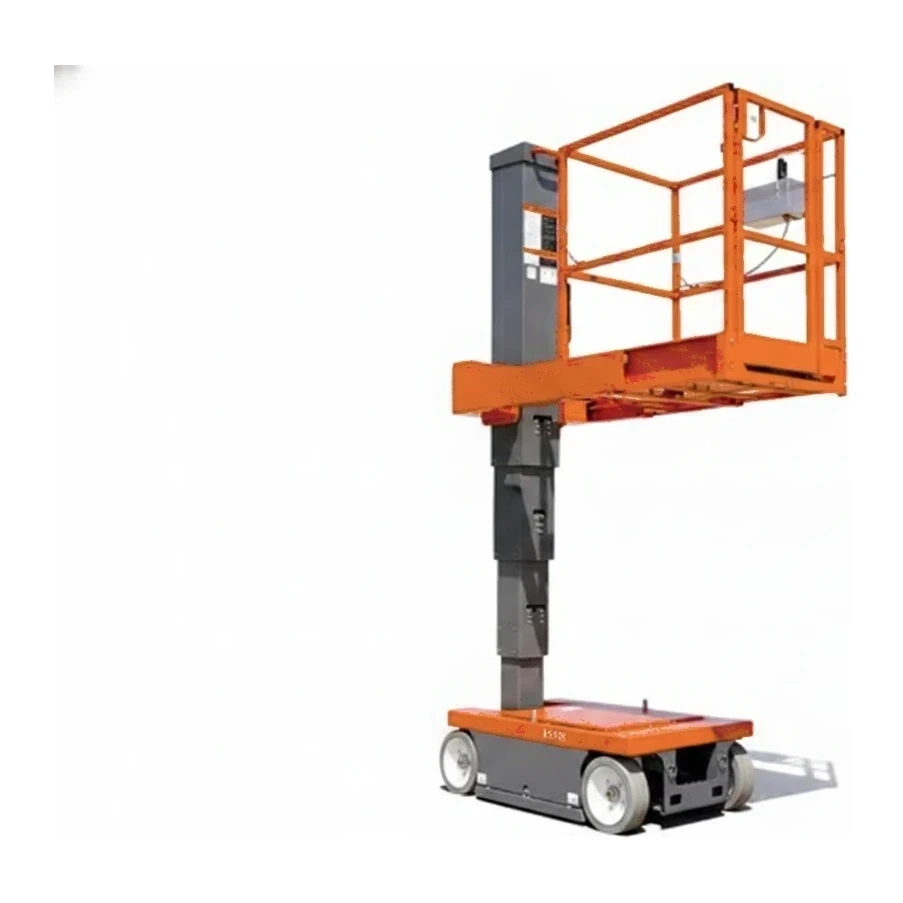
Self-Propelled Mast Lift
124 modèles
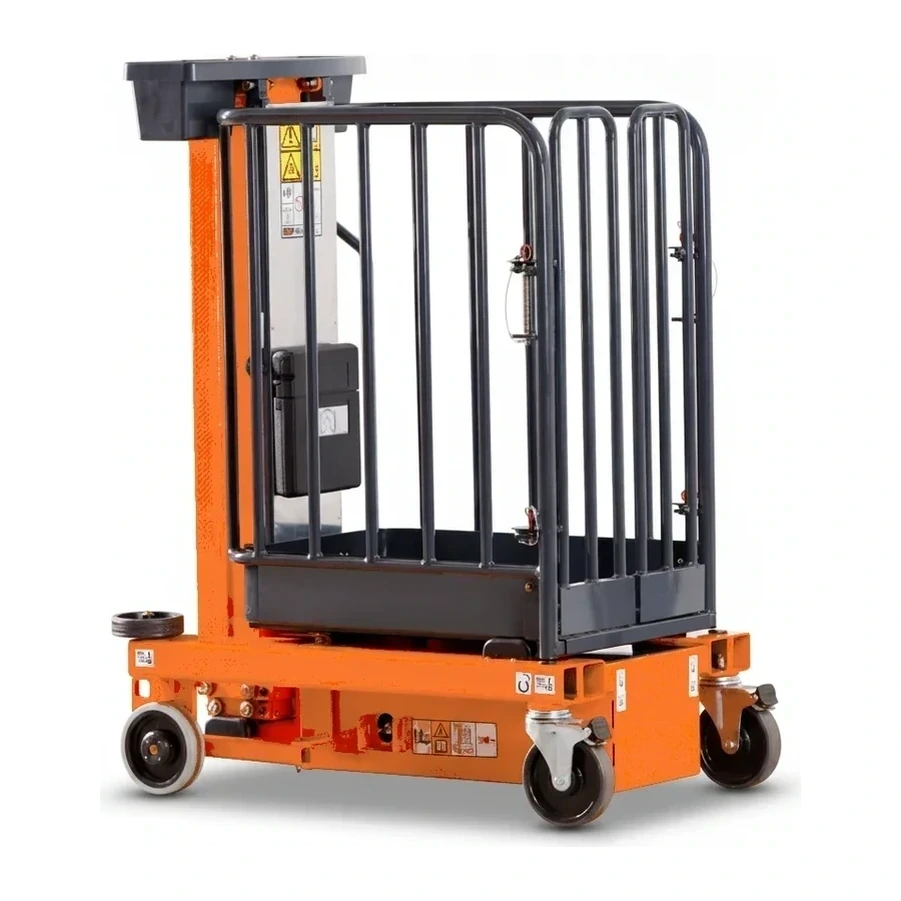
Low-Level Access Lift
31 modèles
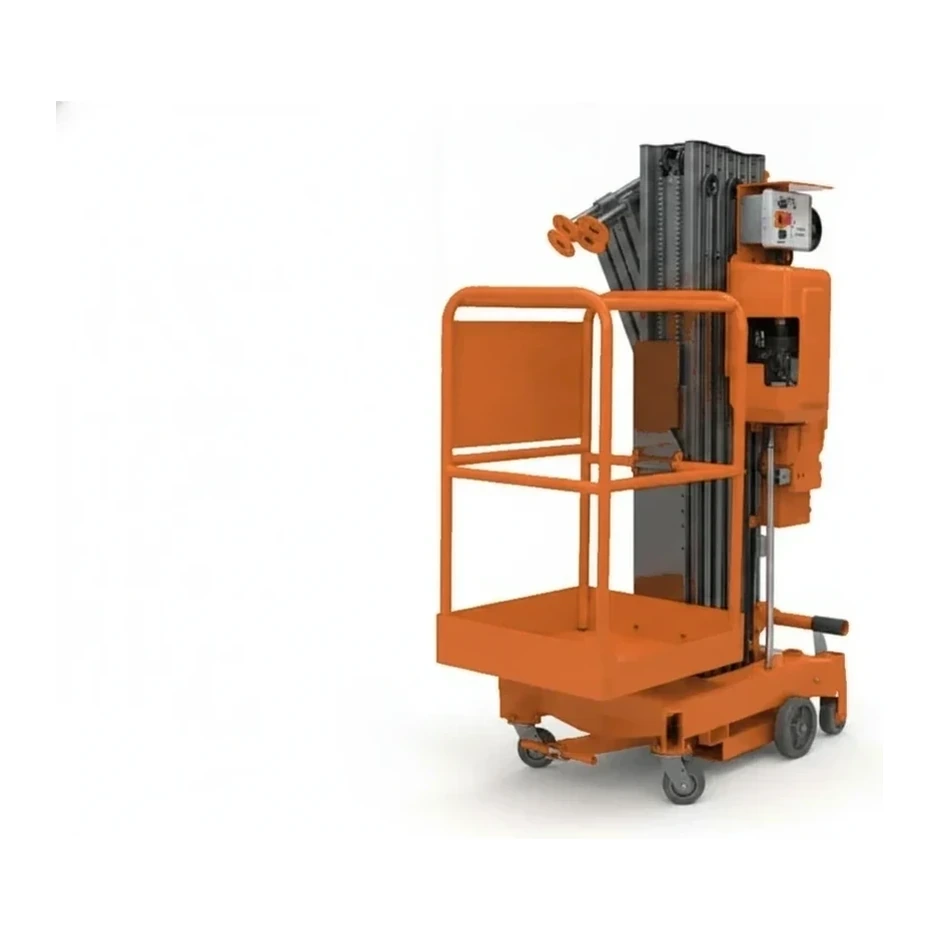
Push-Around Personnel Lift
7 modèles
Fonctionnement
Mast and personnel lifts elevate an operator platform using a vertical mast assembly that extends upward through hydraulic, mechanical, or pneumatic actuation. The platform remains directly above or very close to the base footprint throughout the lift cycle, making these machines ideal for overhead work in tight aisles, retail spaces, warehouses, and maintenance environments. Depending on the class, propulsion may be integrated (self-propelled), manual (push-around), or stationary, with controls typically located on the platform for single-operator use.
Types et variantes
- Low-Level Access Lift
- Compact vertical lifts designed for heights typically under 20 feet, often featuring a small footprint and manual or power operation for tasks like ceiling maintenance, lighting work, and inventory access in retail and warehouse settings.
- Self-Propelled Mast Lift
- Powered vertical mast lifts with integrated drive systems allowing operators to maneuver the machine while elevated, providing greater mobility and productivity for tasks across larger work areas or multiple locations.
- Push-Around Personnel Lift
- Manually repositioned vertical lifts without self-propulsion, offering lightweight portability and quiet operation ideal for indoor environments where the machine is moved between stationary work positions.
Normes et certifications
- ANSI · ANSI/SAIA A92.20
- Design, calculations, safety requirements, and testing for mast-climbing work platforms and personnel lifts
- CSA · CSA B354.6
- Canadian standard for self-propelled elevating work platforms, including vertical mast lifts
- OSHA · 29 CFR 1926.453
- Aerial lifts safety requirements applicable to personnel lift operation and fall protection
Questions fréquentes
What distinguishes mast lifts from scissor lifts?
Mast lifts use a vertical mast structure with minimal horizontal footprint change during elevation, whereas scissor lifts employ a crisscrossing pantograph mechanism with a larger platform. Mast lifts typically offer superior maneuverability in tight spaces and narrower aisle access, while scissor lifts provide larger work platforms and higher weight capacities.
What height ranges do mast and personnel lifts typically cover?
The industry typically classifies these lifts with working heights ranging from 10 to 40 feet. Low-level access models generally reach the lower end of this spectrum, while self-propelled and push-around mast lifts commonly extend throughout the range. Specific capacity depends on the model, with compact units prioritizing footprint over height and larger models offering extended reach.
How are mast and personnel lifts classified by mobility?
The industry classifies these lifts by propulsion method: self-propelled units feature integrated electric or battery-powered drive systems controllable from the platform; push-around models require manual repositioning at ground level; and stationary low-level lifts remain in fixed positions during operation.
What environments are best suited for mast and personnel lifts?
These lifts excel in indoor environments with smooth, level floors such as warehouses, retail spaces, manufacturing facilities, and institutional buildings. Their compact footprint and typically electric power make them ideal for noise-sensitive and emissions-restricted areas where larger boom or scissor lifts would be impractical.