

Pipe Cutter and Beveler
A pipe cutter and beveler is a mechanical or powered tool designed to make clean, square cuts and prepare beveled edges on metal pipe without heat or flame. These machines enable field fabrication, in-place repair, and tie-in work on pressurized or installed pipeline systems where traditional cutting methods are impractical or unsafe.
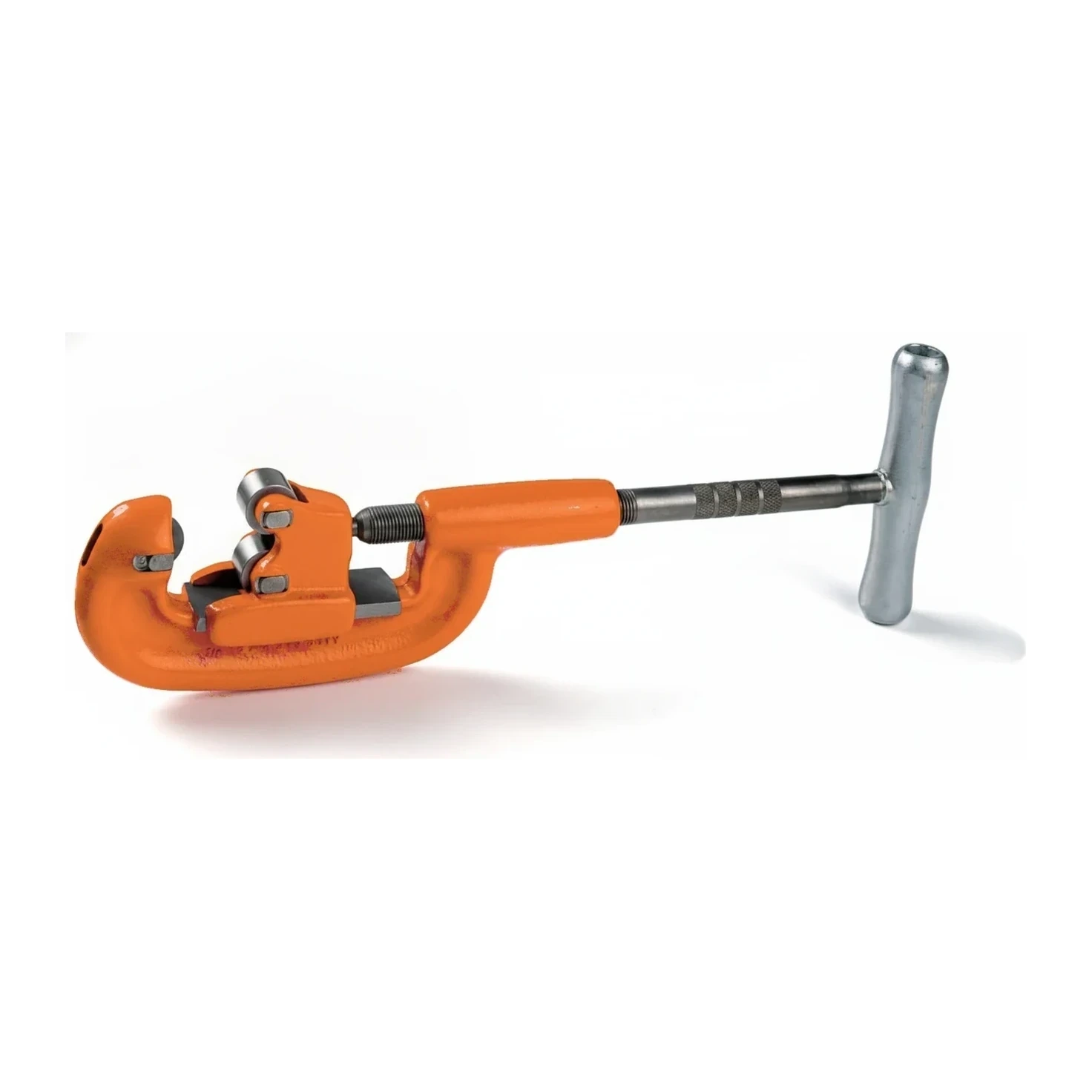
Fonctionnement
The machine clamps onto or around the pipe using either a fixed frame for smaller diameters or a split, clamshell-style frame for large pipe. A motor-driven cutting head travels circumferentially around the pipe, with carbide or tool steel bits removing material to create the cut or bevel. The operator controls feed rate and depth while the machine maintains concentricity. Cold cutting eliminates the heat-affected zone, sparks, and fumes associated with torch or abrasive methods. Many models can be set to cut, face, bevel, or counter-bore in a single setup, with adjustable bevel angles (typically 30° to 37.5°) to meet welding prep specifications.
Types et variantes
- Stationary Frame Cutter
- Fixed-frame machines for smaller pipe (typically under 4 in), often bench-mounted or used with a pipe stand; common for high-volume shop work and service line cutting.
- Clamshell / Split Frame Cutter
- Hinged, wrap-around machines that open to clamp onto installed pipe, enabling in-place cutting on mains and large-diameter pipe from 4 to 60+ inches without removing the section.
- Portable Cold Cutter
- Compact, battery or electric-powered units designed for field use, balancing weight and power for mobility on construction sites and repair crews.
- Beveling-Only Machines
- Specialized tools that prep existing cut ends with precise bevels for welding, typically mounted on the pipe end or inserted into the bore.
- Hydraulic Pipe Cutter
- Heavy-duty, hydraulically-powered machines for large-diameter or thick-wall pipe, delivering high torque for difficult materials like stainless or high-carbon steel.
Spécifications clés
| Spécification | Plage typique | Signification |
|---|---|---|
| Pipe Diameter Capacity | 0.5-60+ in | The range of pipe outer diameters the machine can accommodate; sizing determines machine selection for the application. |
| Wall Thickness Capacity | Schedule 10-XXH | Maximum pipe wall thickness the cutting bits can handle; heavier schedules require more torque and slower feed rates. |
| Bevel Angle Range | 0-37.5° | Adjustable cutting head angle for preparing weld-ready bevels to code specifications. |
| Power Source | 110/220V, pneumatic, hydraulic, or battery | Drive system varies by model; cordless units offer field portability, while hydraulic machines deliver maximum torque. |
| Machine Weight | 15–300 lb (6.8–136 kg) | Total weight impacts portability; larger clamshell machines may require lifting equipment for positioning. |
Comment l'industrie le dimensionne
The industry sizes pipe cutters and bevelers by maximum pipe diameter capacity, expressed in inches. Machines under 4 in are typically stationary or portable units for service lines and small process pipe. The 4-12 in range covers the majority of mains, distribution, and industrial piping work. Large-diameter machines (12 in and above) employ clamshell designs that wrap around installed pipe, with some models extending to 60+ inches for transmission lines and heavy industrial applications. Wall thickness capacity and material compatibility further refine selection within each diameter class.
Applications
- In-place cutting and beveling of water, gas, and oil transmission mains for tie-ins and repairs
- Preparation of weld-ready pipe ends on process piping in refineries, chemical plants, and power facilities
- Field fabrication and modification of HVAC, fire protection, and industrial piping systems
- Service line cutting and replacement in municipal water and natural gas distribution networks
- Shop fabrication of pipe spools and assemblies requiring precise, repeatable cuts and bevels
- Hot tapping and line stopping operations where spark-free cutting is mandatory
Sécurité et opération
- Ensure the pipe is properly supported and the machine is securely clamped before starting the cut to prevent movement or binding.
- Verify that cutting chips and debris are directed away from operators and that guarding is in place on rotating components.
- Confirm that the pipe is depressurized and purged of hazardous contents when cutting in-place lines, or follow hot tap procedures for live pipelines.
- Use appropriate personal protective equipment including safety glasses, hearing protection, and gloves when operating or clearing chips.
- Inspect cutting bits and tooling for wear or damage before each use; dull or damaged bits increase cutting forces and can cause kickback.
Normes et certifications
- OSHA · 29 CFR 1926.350
- Regulations for gas welding and cutting, applicable when pipe cutters replace torch cutting methods in construction.
- ANSI/ASME B16.25
- Buttwelding ends standard specifying bevel angles and dimensions that beveling machines must achieve for code-compliant welds.
- AWS D10.12/D10.12M
- Recommended Practices for Welding Austenitic Stainless Steel Tubing and Piping Systems, referencing acceptable pipe preparation methods.
- ANSI B31
- Pressure Piping Code series governing pipe fabrication and assembly; cold cutting and beveling methods must meet preparation standards for the applicable code section.
Questions fréquentes
What is the advantage of cold cutting over flame cutting for pipe?
How is pipe diameter capacity determined for clamshell cutters?
Can pipe cutters and bevelers handle stainless steel or exotic alloys?
What is the typical cut quality compared to torch or saw cutting?
Équipements connexes
Parcourir par fabricant
Sources
Chaque spécification est vérifiée par rapport aux données publiées par le fabricant, avec la source liée pour référence.
Tous les modèles
14 modèles · Chaque spécification citée à la source