

Press Tool
A press tool is a battery-powered or manual hydraulic tool that joins pipes to press fittings using radial compression. The tool clamps around a fitting with a jaw assembly, then hydraulically forces a ring or jaw insert to compress the fitting onto the pipe, creating a permanent, leak-proof mechanical joint. Press tools have largely replaced soldering and threading in modern copper, stainless steel, and carbon steel piping systems.
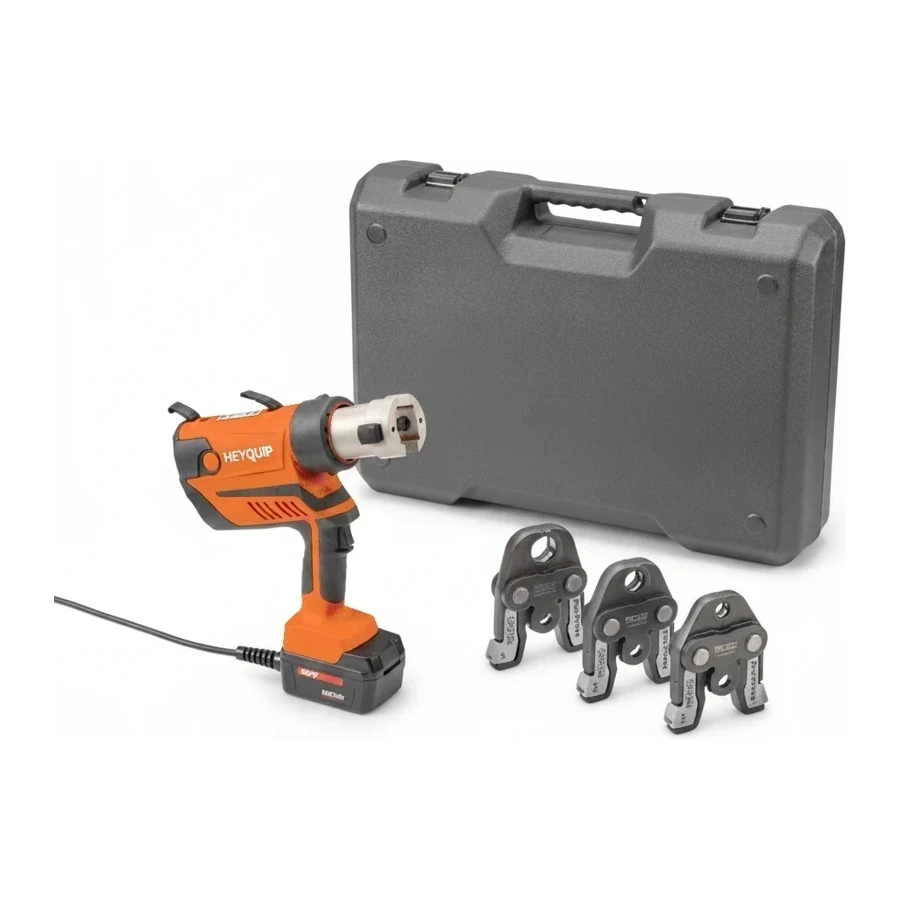
Fonctionnement
The press tool uses a hydraulic piston to drive movable jaws radially inward around a press fitting. The operator selects the appropriate jaw size for the pipe diameter, slides the jaw over the fitting, and activates the tool. Hydraulic pressure forces the jaw to compress a stainless steel sleeve or ring embedded in the fitting, cold-forming it onto both the fitting body and the inserted pipe. The compression creates a mechanical interlock and seal. Most battery-powered units complete a press cycle in 3 to 7 seconds and automatically release when full compression is achieved. The tools feature interchangeable jaw sets to accommodate different pipe sizes and materials, with some systems using modular ring adapters that snap into a base jaw for expanded size ranges.
Types et variantes
- Standard Press Tool (1/2-1 in)
- Compact, lightweight tools for everyday residential and light commercial work on copper and stainless tubing up to 1 inch.
- Mid-Range Press Tool (up to 2 in)
- Heavier-duty units for commercial branch lines and risers, handling copper, stainless, and some carbon steel up to 2 inches.
- Large-Diameter Press Tool (2 1/2-4 in)
- High-force tools designed for commercial mains and large-bore applications, requiring extended jaw sets and higher tonnage.
- Manual Hydraulic Press Tool
- Hand-pumped hydraulic tools for locations without battery power or where lighter weight is prioritized over speed.
- Multi-System Press Tool
- Platforms compatible with multiple fitting systems (copper, stainless, PEX, carbon steel) through interchangeable jaw libraries.
Spécifications clés
| Spécification | Plage typique | Signification |
|---|---|---|
| Pipe Size Range | 1/2 to 4 in | The range of nominal pipe diameters the tool can press with available jaw sets. |
| Press Force | Varies by size and material | Hydraulic force required to achieve full compression; larger diameters and thicker walls demand higher tonnage. |
| Cycle Time | 3-7 seconds | Duration from activation to full compression and automatic release on battery-powered models. |
| Jaw Compatibility | Brand-specific insert systems | Press tools require jaw sets matched to the fitting manufacturer's profile and pressing system. |
| Power Source | 18V lithium-ion or manual hydraulic | Battery-powered units dominate production work; manual pumps serve remote or occasional use. |
Comment l'industrie le dimensionne
Press tools are sized by the maximum nominal pipe diameter they can accommodate, expressed in inches. The industry commonly segments the class into three bands: compact tools for 1/2 to 1 1/4 inch (pressing 1/2 to 1 inch copper and stainless for residential and light commercial work), mid-range tools up to 2 inches (commercial branch and riser installations), and large-diameter tools for 2 1/2 to 4 inches (commercial mains and heavy-duty systems). Jaw sets are purchased separately or in kits, with each jaw calibrated to a specific pipe size and fitting system. Tools are often identified by their compatible fitting brand ecosystem, as jaw profiles are not interchangeable across manufacturers.
Applications
- Residential and commercial potable water distribution in copper and stainless steel
- Hydronic heating and chilled water systems with press-compatible tubing
- Fire protection sprinkler branch lines and risers using approved press fittings
- Natural gas and propane piping in carbon steel with certified press systems
- Medical gas installations where flame-free joining is required
- Retrofit and repair work in occupied buildings where soldering poses fire risk
Sécurité et opération
- Verify the jaw insert matches both the pipe size and the fitting manufacturer's system to ensure proper compression
- Inspect jaws for wear, cracks, or deformation before each shift; damaged jaws may result in incomplete or failed joints
- Ensure the fitting is fully inserted to the pipe stop before pressing; incomplete insertion causes leaks and joint failure
- Keep hands and loose clothing clear of the jaw mechanism during the press cycle to avoid crush injuries
- Confirm battery charge or hydraulic fluid level before starting work to prevent incomplete presses
Normes et certifications
- ASME B16.51
- Copper and copper alloy press-connect pressure fittings; defines performance and testing requirements.
- ICC International Plumbing Code
- Governs installation and approval of press-connect systems in potable water, gas, and drain/waste/vent applications.
- OSHA 29 CFR 1926 · Subpart P
- General hand and power tool safety requirements applicable to press tool operation on construction sites.
Questions fréquentes
What pipe materials can press tools join?
How is a press tool sized for a project?
Are press fittings and jaws interchangeable between brands?
What distinguishes a press joint from a soldered or threaded joint?
Équipements connexes
Parcourir par fabricant
Tous les modèles
3 modèles · Chaque spécification citée à la source