

Cable Puller
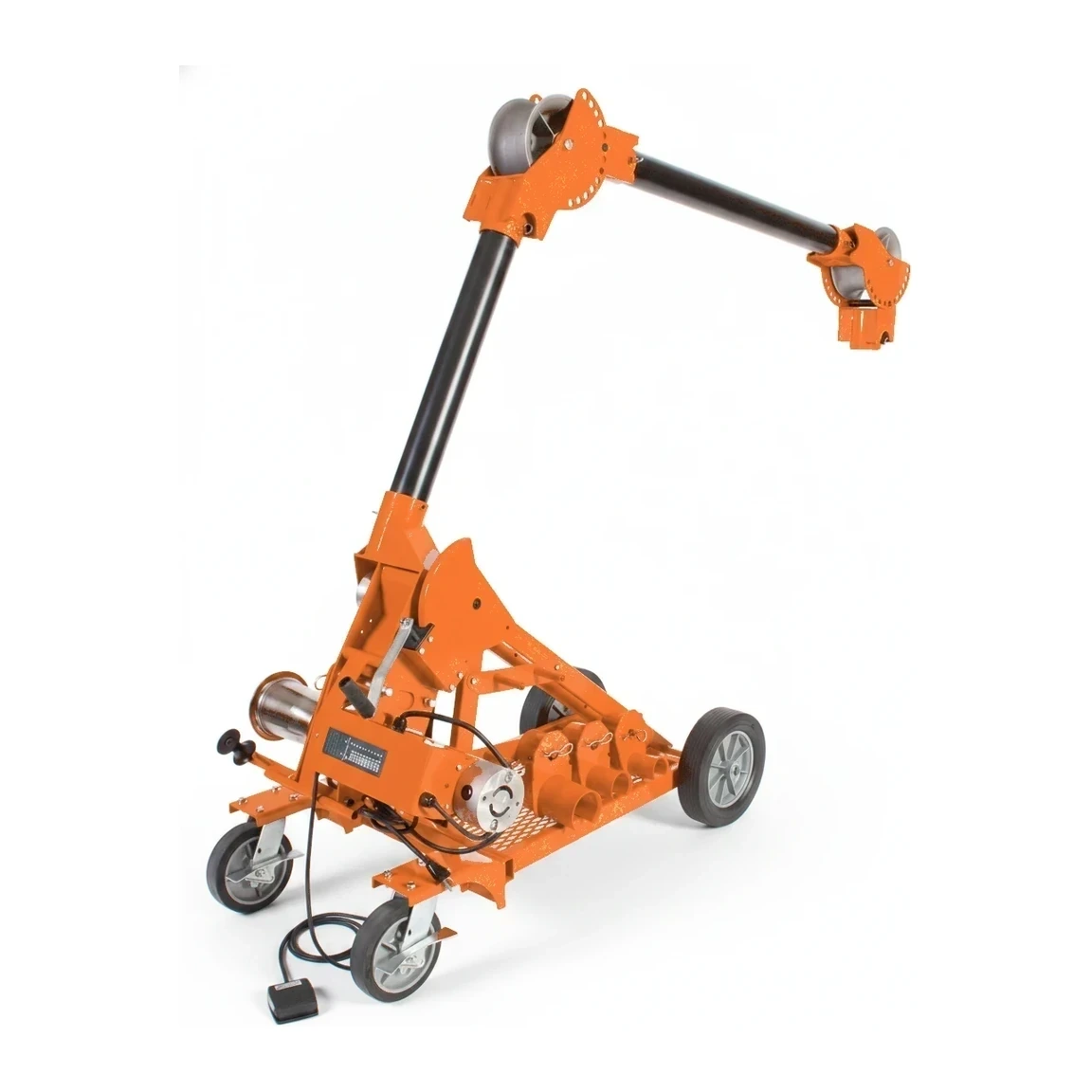
A cable puller is a motorized machine designed to pull electrical wire and cable through conduit, duct banks, and raceways using controlled force. Also known as tuggers, wire pullers, or capstan pullers, these machines apply steady tension to reduce installation time and minimize cable jacket damage. The rental industry stocks cable pullers ranging from portable units to heavy-duty machines exceeding 10,000 lb capacity for utility-scale installations.
Fonctionnement
Cable pullers use an electric, hydraulic, or gas-powered motor to drive a capstan wheel or drum. The operator attaches a pulling rope or cable sock to the wire bundle, threads the rope through the conduit system, and feeds it around the capstan. As the capstan rotates, friction between the rope and wheel generates controlled pulling force, drawing the cable through the raceway at regulated speed and tension. Most models feature adjustable speed controls and tension limiting to prevent exceeding cable manufacturer ratings. Load cells or mechanical systems monitor pulling force in real time, automatically stopping or alerting the operator when pre-set limits are reached. Some units include digital displays showing force, speed, and total cable length pulled.
Types et variantes
- Portable Electric Tugger
- Lightweight, 120V or battery-powered units for branch circuit work and short pulls; easily transported to multiple floors.
- Standard Jobsite Tugger
- Mid-range electric models with wheeled frames for feeder installation through buildings; most common class in commercial electrical work.
- Heavy-Duty Hydraulic Puller
- High-capacity machines with hydraulic drive systems for large-conductor pulls through multiple bends and long horizontal runs.
- Utility Cable Puller
- Industrial-grade units exceeding 10,000 lb pulling force, used for medium-voltage cable installation in underground duct banks and utility vaults.
- Bullwheel Puller
- Large-diameter capstan design providing high line speed and smooth tension delivery for continuous pulls of multiple cable reels.
Spécifications clés
| Spécification | Plage typique | Signification |
|---|---|---|
| Pulling Force | Varies by model | Maximum rated tension the machine can apply to the pulling rope; primary sizing specification matched to conductor size and run complexity. |
| Line Speed | Variable | Rope travel speed; lower speeds provide better control on difficult pulls, higher speeds increase productivity on straight runs. |
| Power Source | 120V, 240V, hydraulic, battery | Energy input type; voltage and phase determine jobsite electrical requirements and available locations for operation. |
| Capstan Diameter | Varies by model | Wheel diameter affects rope wrapping and mechanical advantage; larger capstans reduce rope wear and improve pulling efficiency. |
Comment l'industrie le dimensionne
The rental industry sizes cable pullers by maximum pulling force measured in pounds (lb). Units rated 0-2,000 lb handle light pulls: branch circuits and small feeders through short conduit runs. Machines rated 2,000-6,500 lb represent the standard tugger class, pulling feeders through a building with a few bends one floor at a time. Heavy pulls requiring 6,500-10,000 lb capacity address large feeders, long runs, and multiple bends where rope tension is the limit. Utility-scale pullers exceeding 10,000 lb serve medium-voltage cable installation through long duct banks. Selection depends on conductor size, conduit fill, run length, number and radius of bends, and maximum sidewall bearing pressure ratings from cable manufacturers.
Applications
- Commercial building feeder installation through vertical and horizontal conduit systems
- Industrial plant power distribution cable pulls in rigid metal and PVC raceways
- Underground utility duct bank installations for primary and secondary voltage cables
- Data center and telecommunications cable pulling in cable tray and raised floor systems
- Retrofit and renovation projects pulling new conductors through existing occupied conduit
- Solar farm and wind turbine cable installation connecting arrays to inverters and substations
Sécurité et opération
- Monitor pulling force continuously to remain within cable manufacturer tension and sidewall bearing pressure limits to prevent insulation damage
- Maintain clear communication between puller operator and feeding crew, especially on long runs or multi-floor pulls without line of sight
- Use appropriate lubricants rated for cable jacket type to reduce friction and heat buildup during extended pulls
- Inspect pulling rope, cable grips, and swivels before each pull for wear, fraying, or damage that could cause failure under load
- Position operators and personnel away from rope line and potential recoil zones in case of rope or grip failure under tension
Normes et certifications
- NFPA 70 (NEC) · Article 300
- National Electrical Code requirements for conductor installation methods, raceway fill, and pulling tension limits.
- ICEA · S-97-682
- Insulated Cable Engineers Association standards for maximum pulling tensions and sidewall bearing pressures on insulated cables.
- IEEE · 576
- Institute of Electrical and Electronics Engineers recommended practice for installation, termination, and testing of insulated cables.
Questions fréquentes
How is cable puller pulling force matched to conductor size?
What determines whether a pull requires a standard or heavy-duty tugger?
Can one cable puller handle different rope diameters?
What causes cable pullers to reach capacity before completing a pull?
Équipements connexes
Parcourir par fabricant
Tous les modèles
37 modèles · Chaque spécification citée à la source