

Crimping Tool
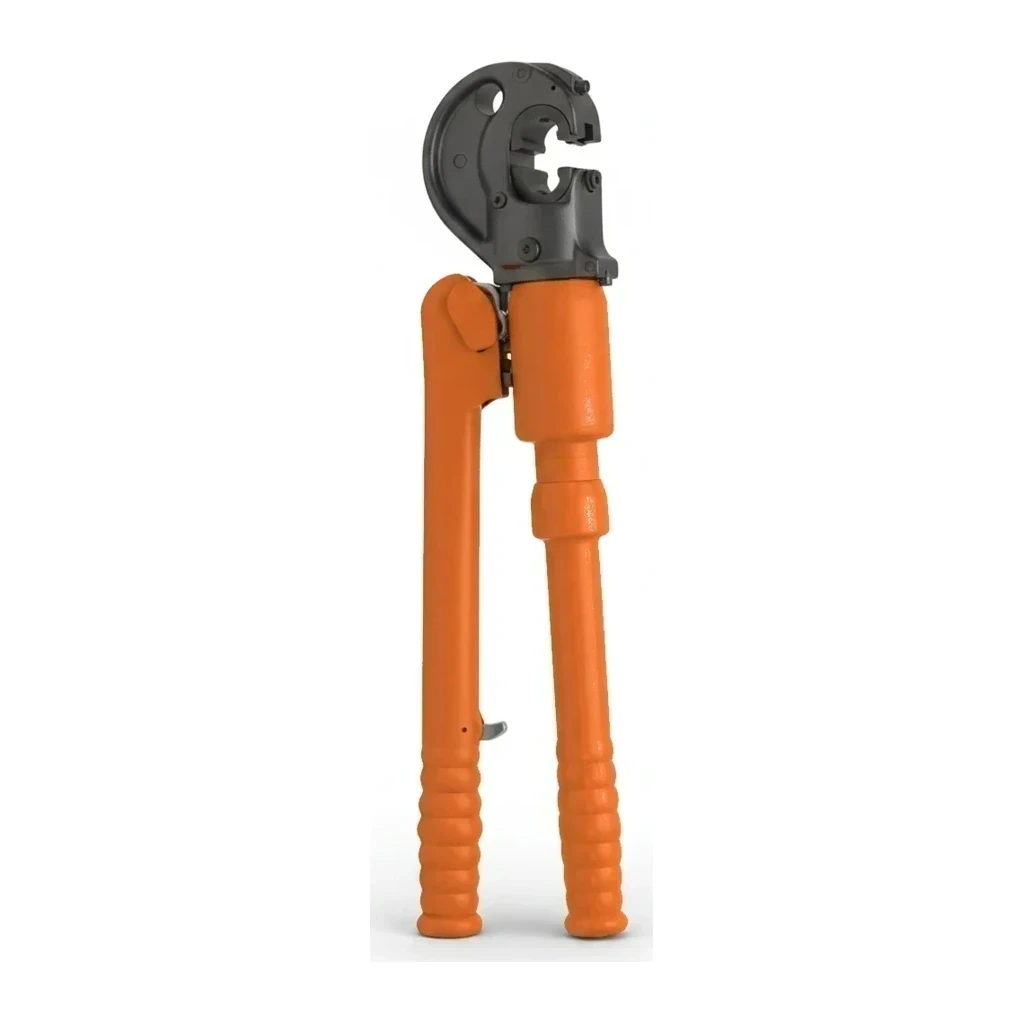
A crimping tool is a compression device used to attach electrical connectors, lugs, and terminals onto wire and cable conductors by applying controlled radial force. These tools create permanent, code-compliant connections for electrical distribution systems ranging from branch circuits to utility transmission lines. The equipment is available in manual, battery-powered, hydraulic, and utility-grade configurations.
Fonctionnement
Crimping tools function by positioning a conductor and connector into a die set, then applying tonnage force to compress the connector barrel uniformly around the conductor. Hydraulic and battery-powered models use a piston-driven ram to advance the crimping head through a complete cycle, while manual models employ lever-actuated mechanical advantage. The tool applies force until the die set reaches its closed position, creating a cold-weld compression joint that meets electrical and mechanical performance standards. Most professional crimping tools feature interchangeable die sets matched to specific connector types and conductor sizes. The crimping cycle is typically irreversible once initiated, and many hydraulic models include automatic retraction once the compression sequence completes. Proper die selection and conductor preparation are critical to achieving connections that meet pull-out strength and conductivity requirements.
Types et variantes
- Manual Crimpers
- Ratcheting hand tools for smaller gauge wire and connectors, typically handling up to 2/0 AWG or 250 kcmil with mechanical leverage.
- Battery-Powered Hydraulic Crimpers
- Cordless tools with integrated hydraulic pumps, commonly 12-ton models for field work on service entrance and feeder terminations.
- Hydraulic Crimpers with Separate Pump
- High-tonnage tools (12-20+ ton) with hand pump or electric pump units, used for large conductor and utility applications.
- Indent Crimpers
- Specialized tools that create point indentations rather than hex compression, used for specific connector types and utility work.
- Utility Compression Tools
- Heavy-duty 20+ ton crimpers designed for ACSR, transmission conductor, and 1000+ kcmil applications with utility-specific dies.
Spécifications clés
| Spécification | Plage typique | Signification |
|---|---|---|
| Tonnage Rating | 12, 18, or 20+ ton | Maximum compression force available; determines the largest conductor and connector the tool can properly crimp. |
| Maximum Conductor Capacity | 250 kcmil (12 ton), 750-1000 kcmil (12-20 ton), 1000+ kcmil (20+ ton) | Largest conductor size the tool can accommodate with appropriate dies, measured in circular mils or AWG. |
| Die System | Interchangeable hex, indent, or O-type dies | Replaceable die sets matched to connector manufacturers and styles; determines crimp geometry and compatibility. |
| Power Source | Manual, 18V battery, hydraulic hand pump, or electric pump | Operating mechanism; affects portability, cycle time, and suitability for field versus shop use. |
| Crimp Profile | Hex, indent, or compression crimp | Shape of the finished crimp; must match connector manufacturer specifications for code compliance. |
Comment l'industrie le dimensionne
The industry sizes crimping tools primarily by tonnage rating, which directly correlates to the maximum conductor size the tool can handle. Tools up to approximately 12 tons crimp conductors up to about 250 kcmil for branch and small feeder terminations. Mid-range tools from 12 to 20 tons handle service entrance and large feeder work, crimping conductors from 750 to 1000 kcmil. Utility-grade tools rated above 20 tons are specified for 1000 kcmil and larger conductors, ACSR, and transmission applications. Selection depends on the largest connector and conductor combination anticipated, with die set availability also influencing tool choice.
Applications
- Installing service entrance conductors and main distribution lugs in commercial and industrial facilities
- Terminating large feeder cables for panelboards, switchgear, and transformer connections
- Attaching grounding and bonding lugs to electrical system grounding conductors
- Utility distribution and transmission line connector installation on overhead and underground systems
- Renewable energy installations including solar array wire terminations and battery bank connections
- Data center and critical power infrastructure with high-ampacity bus connections
Sécurité et opération
- Inspect dies for wear, cracks, and proper sizing before each use; damaged dies produce inadequate crimps and connection failures
- Verify die and connector compatibility with manufacturer specifications to ensure code-compliant connections
- Maintain hydraulic fluid levels and check for leaks on hydraulic models; low fluid affects tonnage delivery
- Keep hands and fingers clear of the crimping head during operation; many tools cannot be stopped mid-cycle
- De-energize all circuits and verify zero energy state before crimping connections on existing electrical systems
Normes et certifications
- UL · UL 486A/B
- Standard for wire connectors and soldering lugs for electrical connections; crimped connections must meet pull-out and temperature rise requirements.
- NFPA · NFPA 70 (NEC)
- National Electrical Code requires listed connectors installed per manufacturer instructions, which specify crimp tool and die requirements.
- ANSI · ANSI C119.4
- American National Standard for electric connectors; establishes performance criteria for compression connectors used in power distribution.
- IEEE · IEEE 1185
- Recommended practice for cable installation; includes guidance on proper crimping techniques and tooling for power cables.
Questions fréquentes
What is the difference between tonnage ratings in crimping tools?
Are crimping tool dies interchangeable between manufacturers?
How does the industry verify crimp quality in the field?
What maintenance do hydraulic crimping tools require?
Équipements connexes
Parcourir par fabricant
Sources
Chaque spécification est vérifiée par rapport aux données publiées par le fabricant, avec la source liée pour référence.
Tous les modèles
38 modèles · Chaque spécification citée à la source