

Utility Vehicles
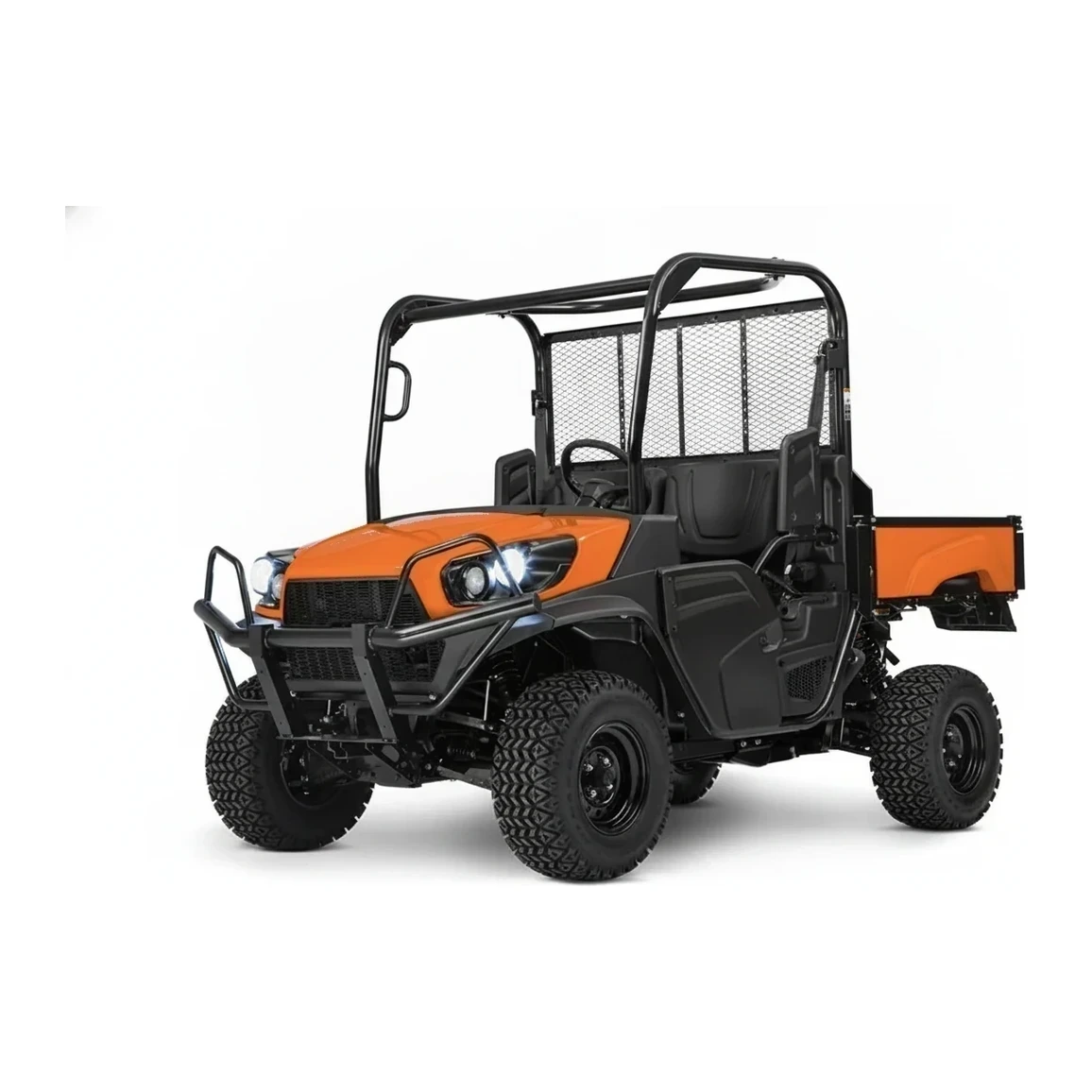
Utility vehicles carry crews and material across large sites faster than walking and lighter than trucks. Gas-powered UTVs are the catalog class.
Fonctionnement
A compact gas drivetrain, often with selectable four-wheel drive, moves the vehicle over unimproved ground; the bed carries a few hundred to a thousand-plus pounds, and hitches tow small trailers. Roll-over protective structures and belts are the safety envelope — real utility vehicles are ROPS-equipped, unlike sport ATVs.
Types et variantes
- Gas Utility Vehicle (UTV)
- Side-by-side utility vehicle that carries crews and material across large sites.
Comment choisir
Passenger count, bed capacity, and terrain set the model: two- and four-seat configurations, bed ratings, and drivetrain options cover most site duty. Speed and stability are traded on slopes and rough ground, and operator briefings on ROPS, belts, and terrain limits are the safety baseline.
Normes et certifications
- OSHA · 29 CFR 1926 Subpart W
- Rollover protective structure requirements for earthmoving and compaction equipment.