
Rammer
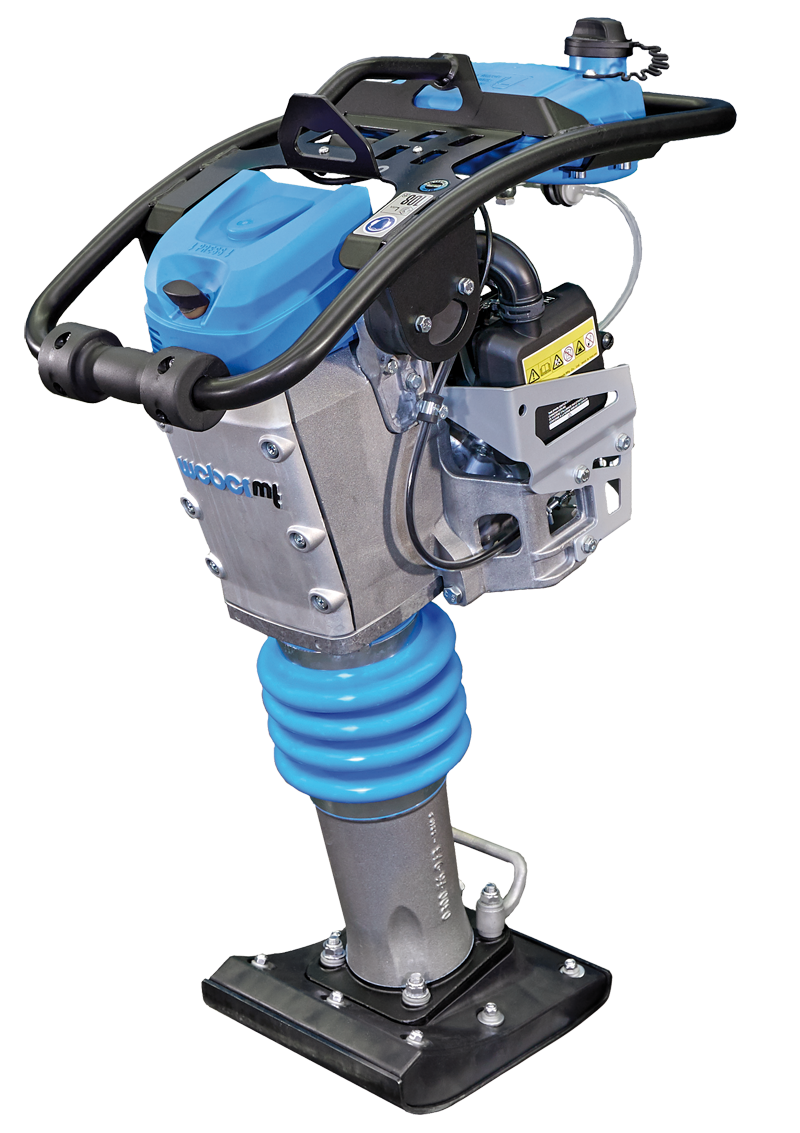
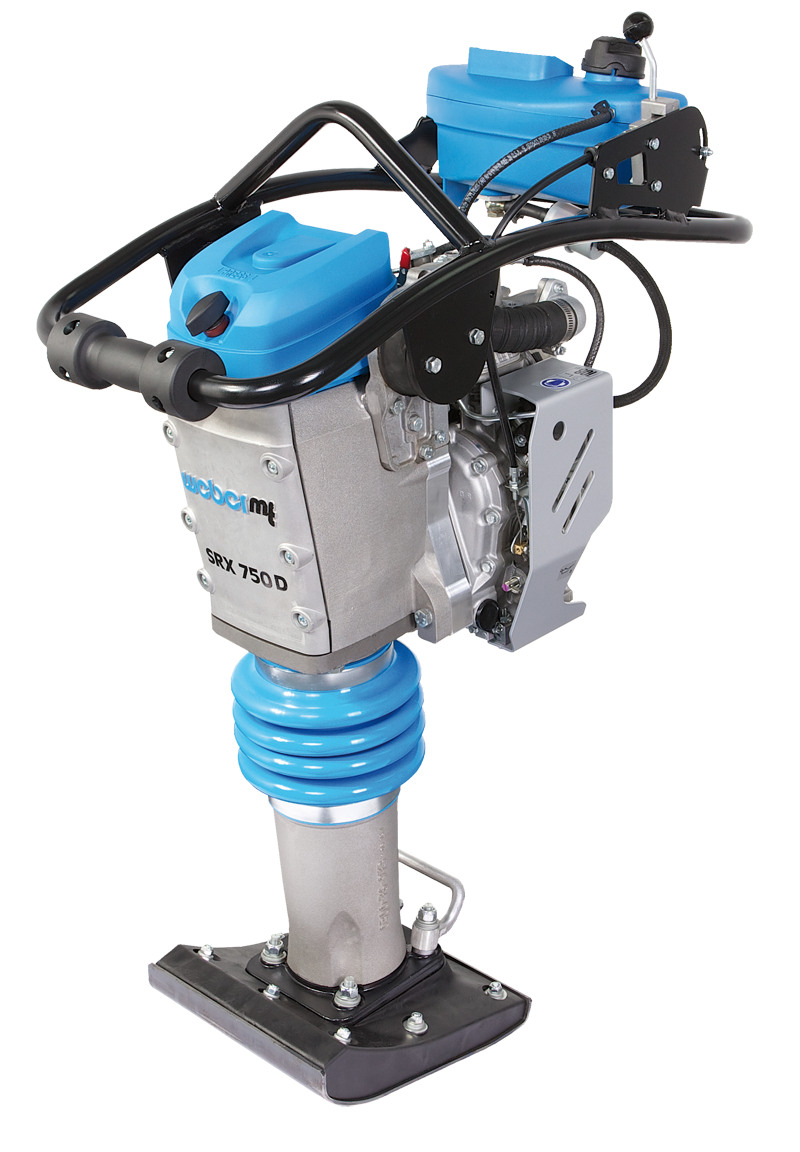
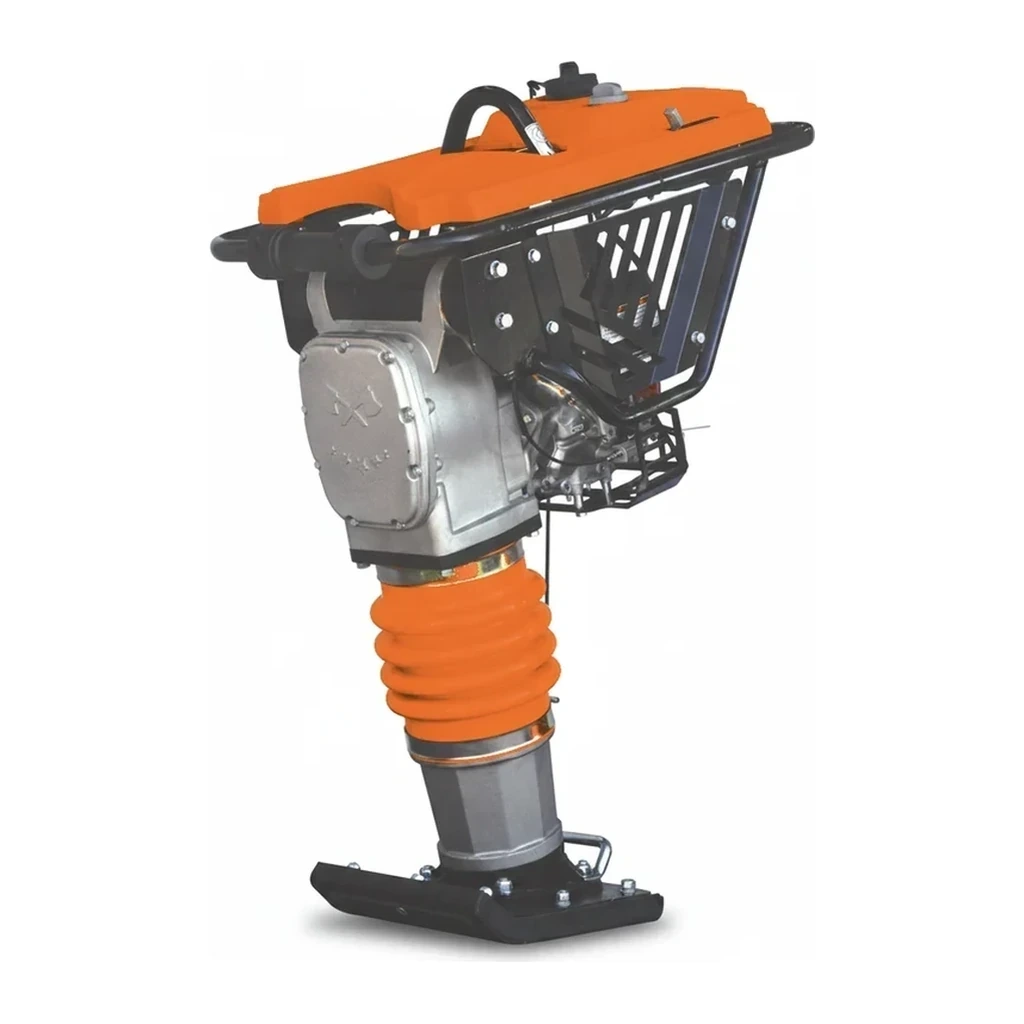
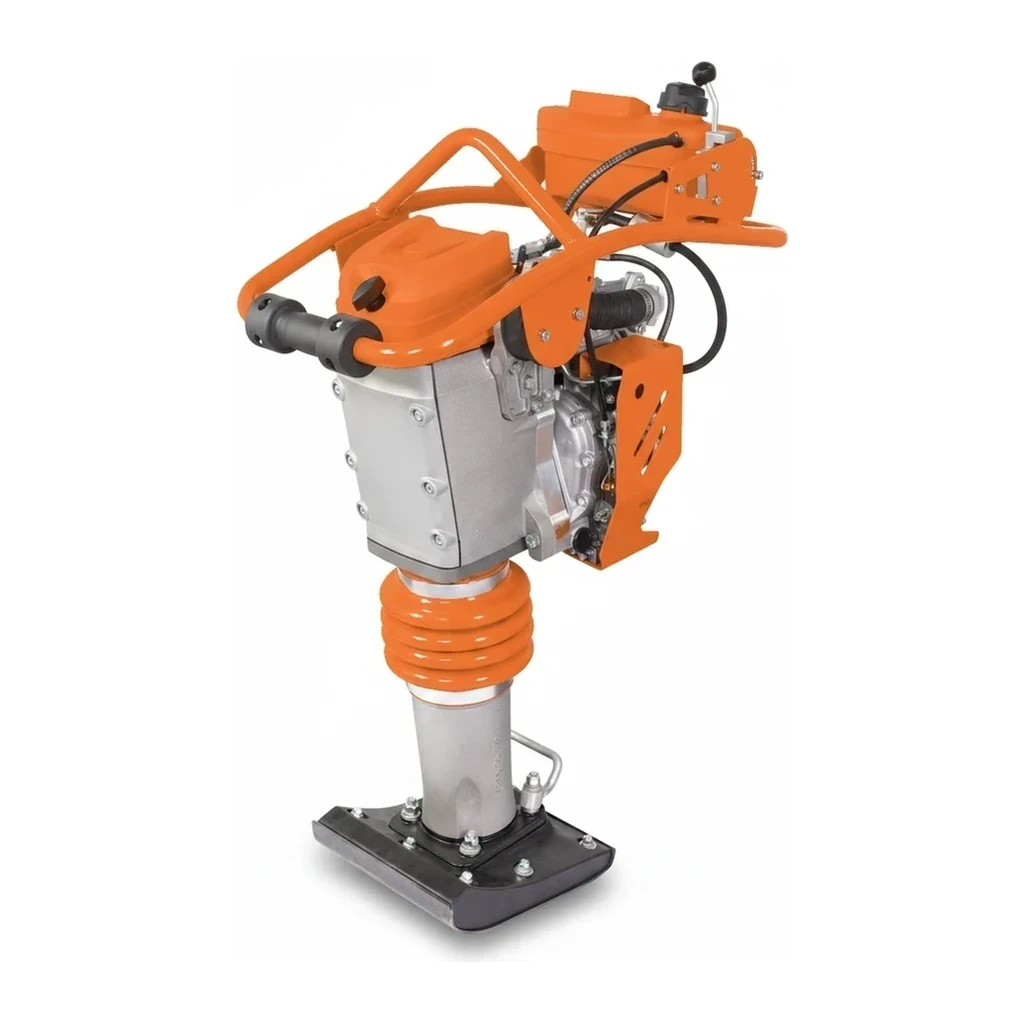
A rammer, commonly called a jumping jack or trench rammer, is a vertical percussive compaction machine designed to compact cohesive and mixed soils in confined spaces. The equipment delivers rapid, high-impact blows through a foot plate to densify soil in deeper lifts than vibratory plates can achieve. Rammers are essential for trench work, pipe bedding, and foundation backfill where narrow widths and jumping action provide superior compaction of clay and silt.
Cat classes
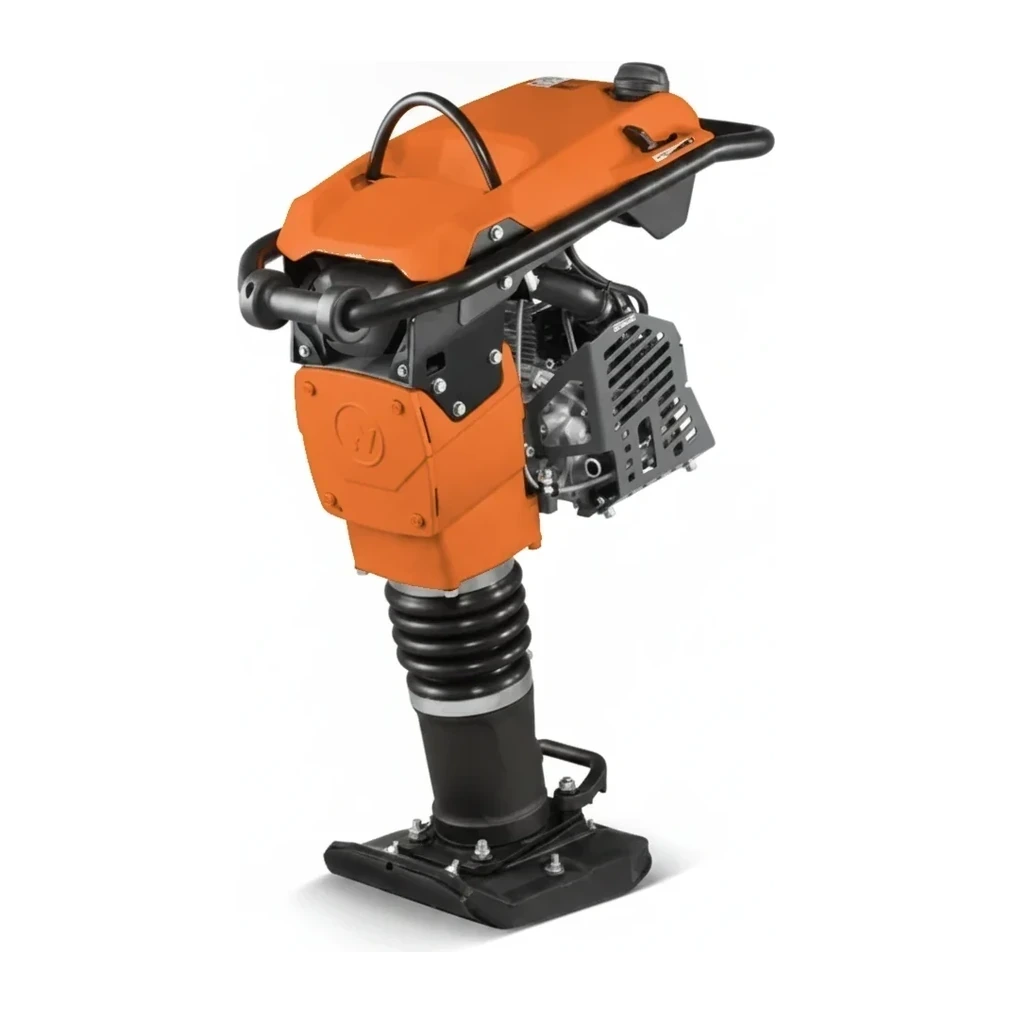
Pick a size class — capacity and reach differ across the range.
How it works
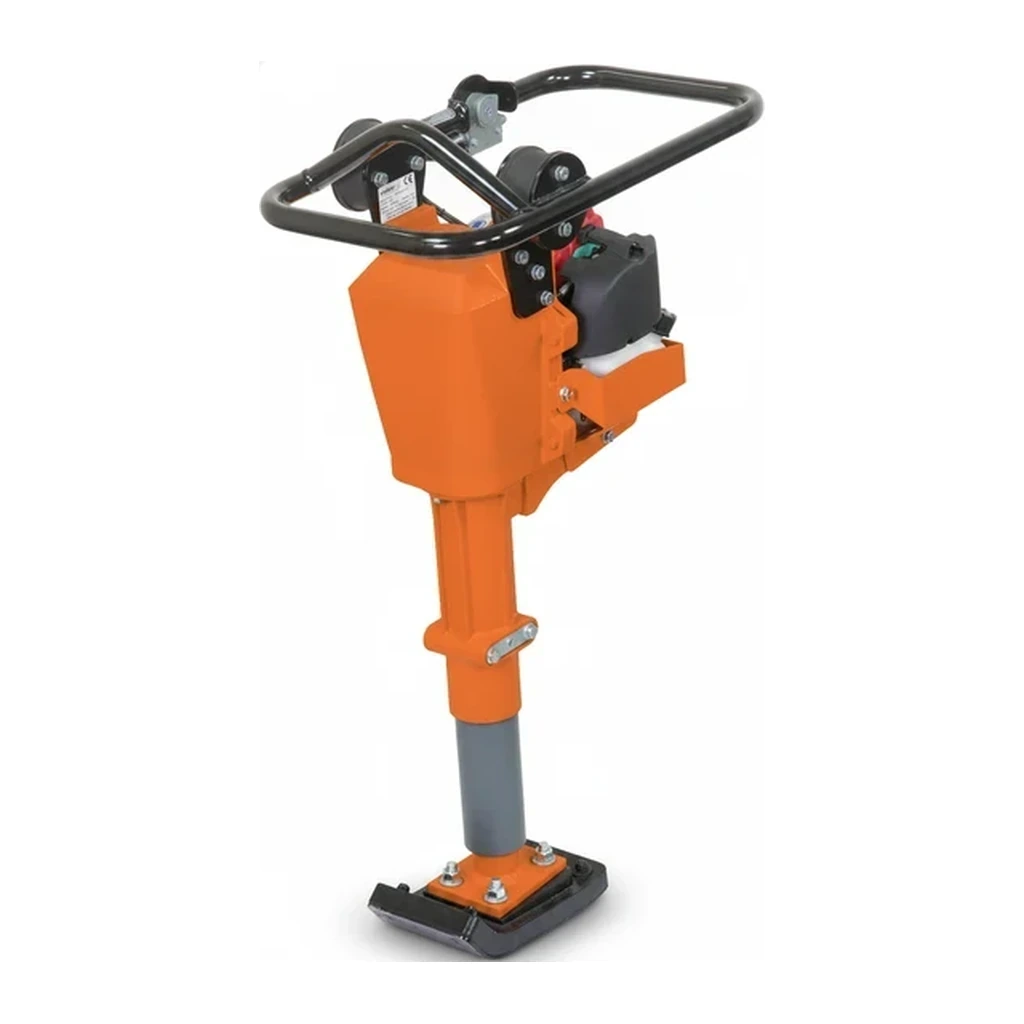
A rammer operates by converting engine power into rapid vertical percussive motion. An internal combustion engine drives an eccentric or spring mechanism that lifts and drops a heavy mass, transmitting impact force through a narrow foot (shoe) into the soil below. The machine "jumps" forward with each blow at percussion rates between 678 and 690 impacts per minute, propelling itself across the work area while an operator guides it with a handlebar assembly. The narrow shoe and high impact force allow rammers to penetrate and compact cohesive soils in lifts up to 12 inches thick. Unlike vibratory compactors that rely on surface vibration, the percussive energy travels deeper into the soil column, making rammers particularly effective in materials with high clay or silt content where vibration alone would be insufficient.
Types & variants
- 2-Stroke Rammer
- Lightweight models with 2-stroke engines, typically under 130 lb, favored for portability and ease of handling in the tightest trenches.
- 4-Stroke Rammer
- Heavier-duty units with 4-stroke engines offering better fuel efficiency, lower emissions, and longer service intervals; the standard for general trench work.
- Reversible-Handle Rammer
- Features a handle that pivots to allow operation from either side, useful in narrow trenches where repositioning is difficult.
- Low-Emission Rammer
- EPA Tier 4 or equivalent models designed for indoor work, parking structures, or jurisdictions with strict emissions regulations.
- Heavy Trench Rammer
- Units exceeding 160 lb with maximum impact force for deep lifts of heavy clay and utility trench backfill requiring aggressive compaction.
Key specifications
| Specification | Typical range | What it means |
|---|---|---|
| Operating Weight | 29.0–2,688.0 kg (64–5,925 lb); industry sizes by weight in lb | Determines impact energy and application; the industry sizes rammers by weight class rather than engine power. |
| Percussion Rate | 678–690 blows per minute | The frequency of impacts; consistent rates in this range provide effective compaction and forward travel speed. |
| Plate (Shoe) Width | 130–280 mm (5–11 in) | The width of the foot plate; narrow shoes fit tight trenches, while wider shoes increase surface coverage per pass. |
| Engine Power | 3.6–23.6 hp | Drives the percussive mechanism; heavier rammers require more power to maintain percussion rate and travel speed. |
| Compaction Force | 13.5–17.0 kN | The downward striking energy delivered per blow; higher force compacts deeper lifts and denser materials. |
How the industry sizes it
The industry sizes rammers by operating weight in pounds, reflecting the direct relationship between machine mass and compaction effectiveness. Machines up to 130 lb are lightest, with narrow shoes for pipe-zone bedding and trench bottoms in minimal clearance. The 130–160 lb range represents the standard workhorse for cohesive and mixed backfill in trenches and around foundations. Units above 160 lb are heavy-duty models deployed for thick lifts of clay and silt where vibratory plates cannot achieve the required depth of compaction.
Applications
- Utility trench backfill compaction around water, sewer, gas, and electrical lines
- Pipe bedding and haunch compaction in narrow excavations
- Foundation and footing backfill in residential and commercial construction
- Cohesive soil compaction in clay, silt, and mixed soil conditions
- Repair work in roadway trenches and patch compaction
- Landscaping and hardscaping bed preparation in confined areas
Safety & operation
- Hand-arm vibration syndrome (HAVS) is a recognized hazard; operators should limit continuous use and follow exposure guidelines.
- Hearing protection is mandatory; percussion rates and engine noise typically exceed 85 dBA.
- Maintain secure footing and avoid steep slopes; the jumping action can propel the machine unpredictably on unstable ground.
- Ensure adequate ventilation when operating in trenches or excavations to prevent carbon monoxide accumulation.
- Inspect the shoe and throttle linkage before each use; worn or damaged components can cause loss of control.
Standards & certifications
- OSHA · 29 CFR 1926 Subpart P
- Excavation and trenching standards govern safe work zones where rammers are typically deployed.
- ASTM · ASTM D698 / D1557
- Proctor compaction test standards specify target density; rammers are selected to achieve specified compaction percentages.
Frequently asked
What is the difference between a rammer and a vibratory plate?
How is rammer size determined?
Why are rammers called jumping jacks?
What soil types are best suited for rammer compaction?
Compare popular models
Find by spec →Normalised to the same units. A dash means the figure was not published.
| Model | Operating weight | Engine power |
|---|---|---|
| Ammann eATR 68 | 154 lb (70 kg) | 2 hp |
| Multiquip AR14H | 2,687 lb (1,219 kg) | - |
| Wacker Neuson BS50-2 11IN US | 130 lb (59 kg) | 3 hp |
| Wacker Neuson BS60-4As | 159 lb (72 kg) | 4 hp |
| Wacker Neuson BS60-2plus | 146 lb (66 kg) | - |
| Wacker Neuson BS70-4As | 176 lb (80 kg) | 4 hp |
Related equipment
Browse by manufacturer
Sources
Every specification is verified against the manufacturer's published data, with the source linked for reference.
All models
69 models · Page 2 of 2 · Every spec cited to source