
Hand-Held Cut-Off Saw
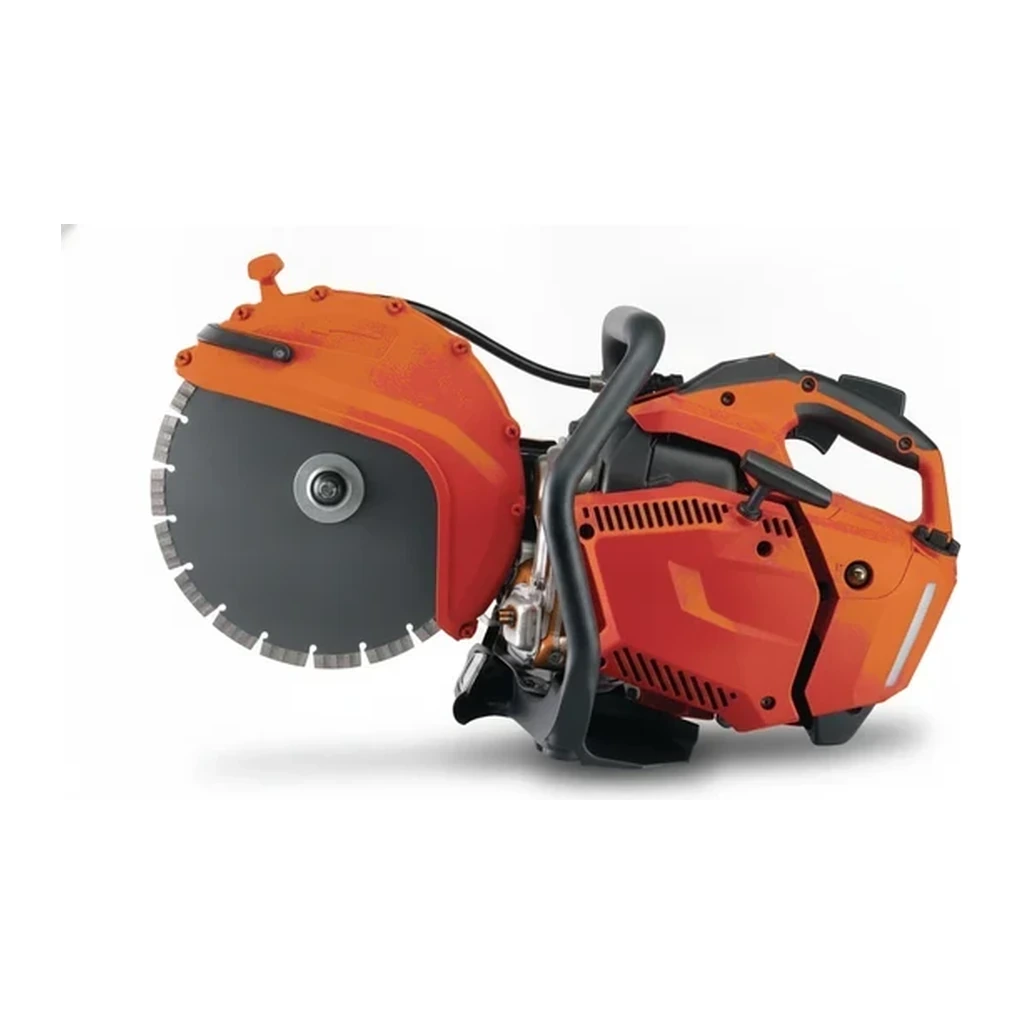
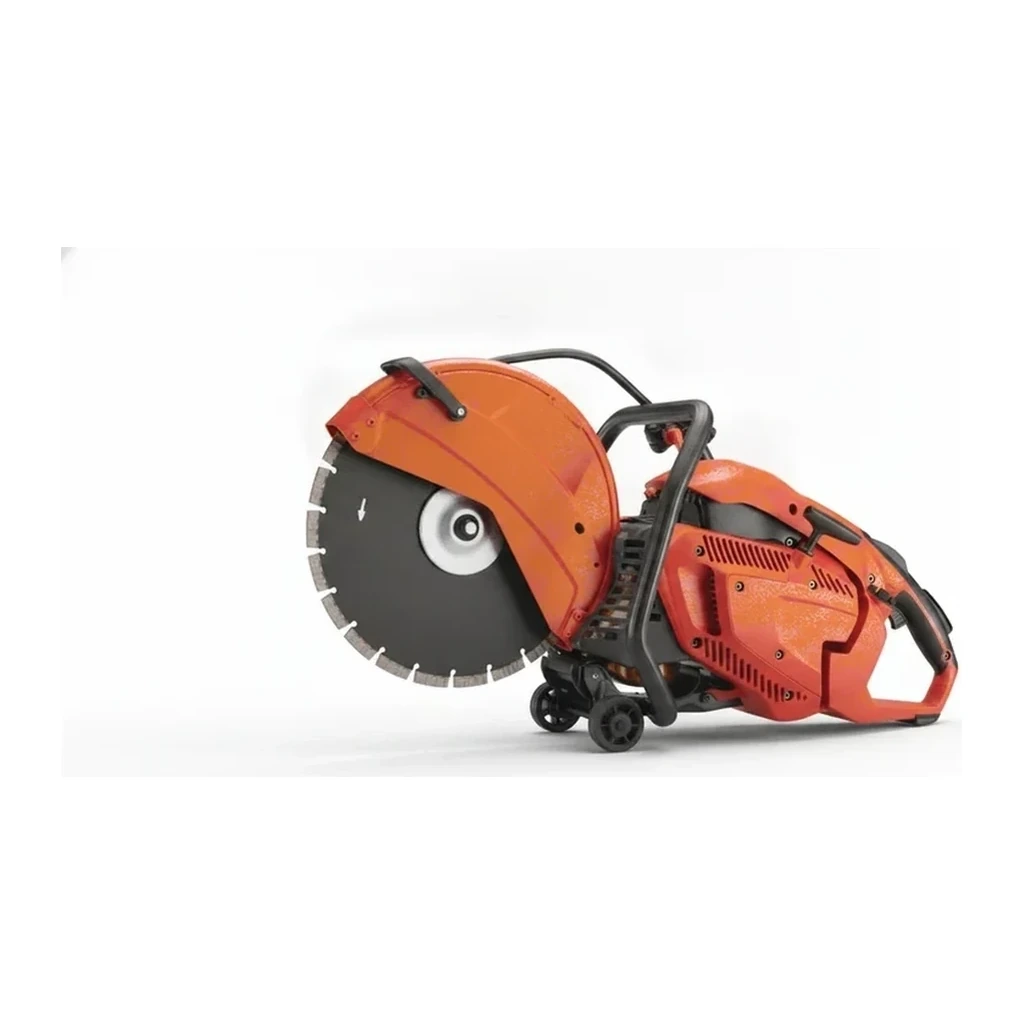
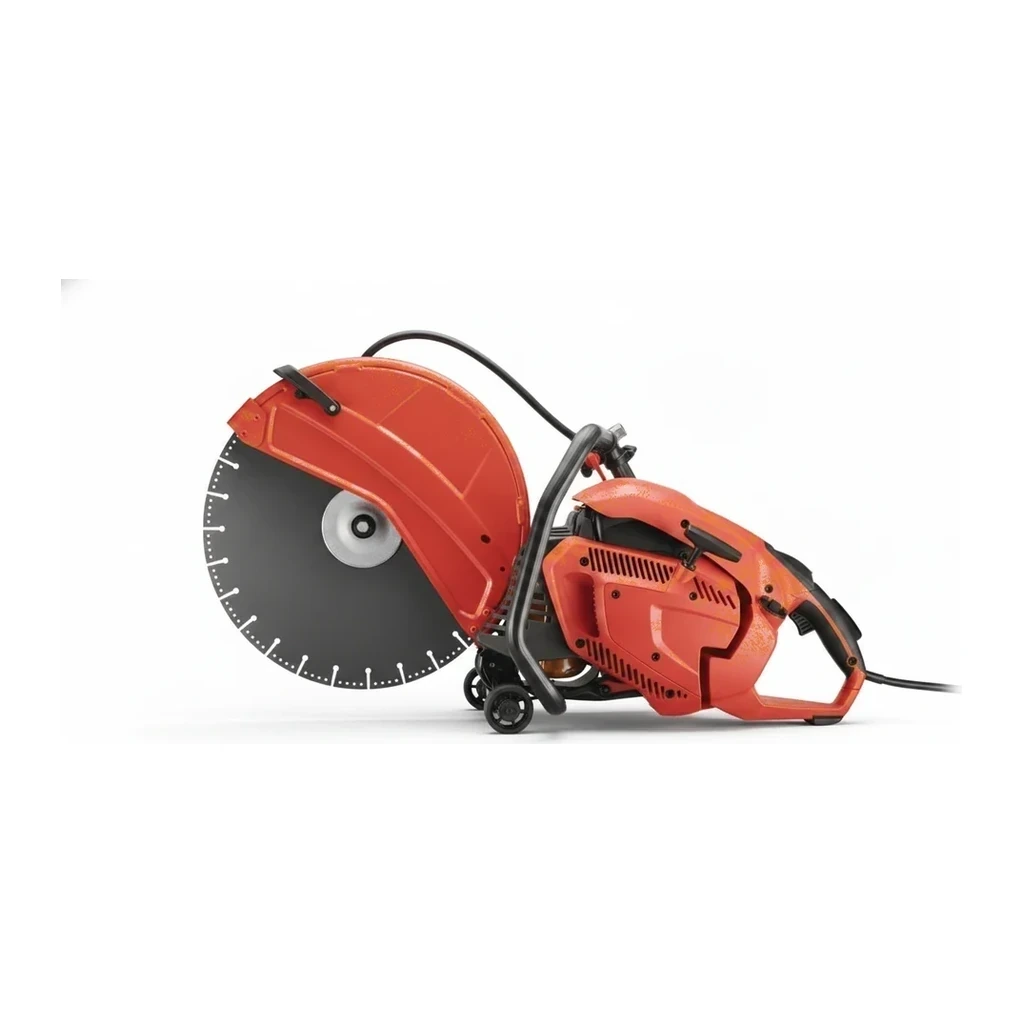
A hand-held cut-off saw — power cutter, demo saw — is a portable one-person saw driving an abrasive or diamond blade for fast cuts in concrete, masonry, asphalt, pipe, and steel. It is the walk-up cutting tool of construction: listed models carry blades of 200–356 mm, with engine power from 0.8 to 18.5 kW and cutting depths of 40–260 mm across the class including deep-cutting ring designs.
Cat classes
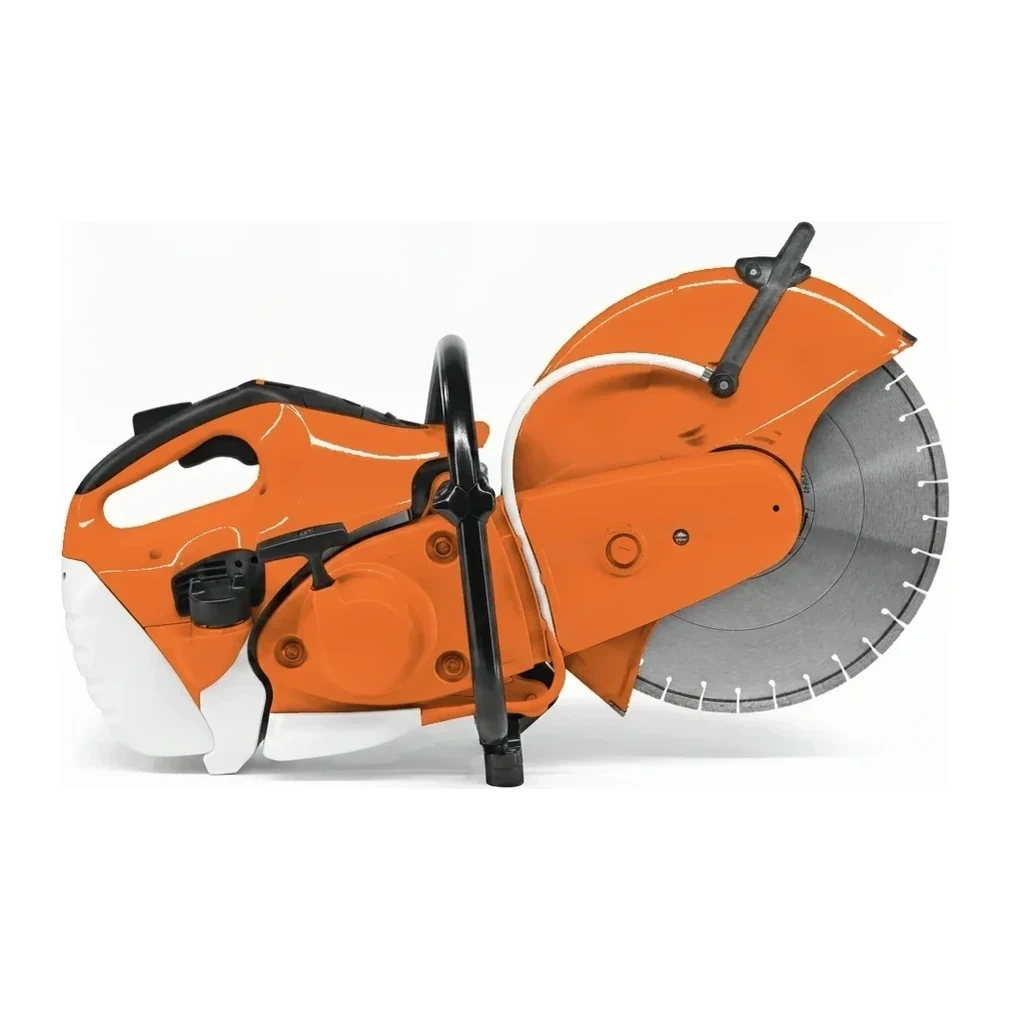
Pick a size class — capacity and reach differ across the range.
How it works
A two-stroke gasoline engine or electric motor spins the blade through a belt or direct drive; the operator controls the cut entirely by hand, scoring first and deepening progressively rather than forcing full depth at once. Diamond blades are matched to material, and most cutting runs wet — a water feed to the blade suppresses silica dust and cools the diamond rim. Conventional saws cut to roughly a third of blade diameter; ring-saw variants drive the blade from its rim, freeing the center to reach the deep end of the listed 40–260 mm cutting range.
Types & variants
- Gas power cutter
- Two-stroke engine, fully portable; the jobsite standard. Listed fuel capacities run 1.0–1.6 quarts.
- Electric cut-off saw
- Corded or high-frequency drive for indoor and low-emission work; listed electric units span 230–400 V.
- Ring saw
- Rim-driven blade with no center arbor, cutting far deeper than a conventional blade of the same size.
- Cart-mounted cutter
- A hand-held saw fixed to a guide cart for straight line work on slabs and pavement.
Key specifications
| Specification | Typical range | What it means |
|---|---|---|
| Blade diameter | 200–356 mm on listed models | Sets maximum cutting depth for conventional blade geometry and overall saw handling weight. |
| Engine power | 0.8–18.5 kW across listed models | Determines cutting rate in dense or reinforced material without bogging the blade. |
| Cutting depth | 40–260 mm across listed models | Conventional saws reach the lower half of this range; ring designs account for the deepest listed cuts. |
| Sound power level guaranteed | 94–111 dB(A) on listed units | All models in the class require hearing protection; gas high-output saws sit at the loud end. |
| Operating weight | 3.9–1620.0 kg on listed units | Hand-held models cluster at the low end; cart-mounted and ring-saw configurations increase total mass. |
How the industry sizes it
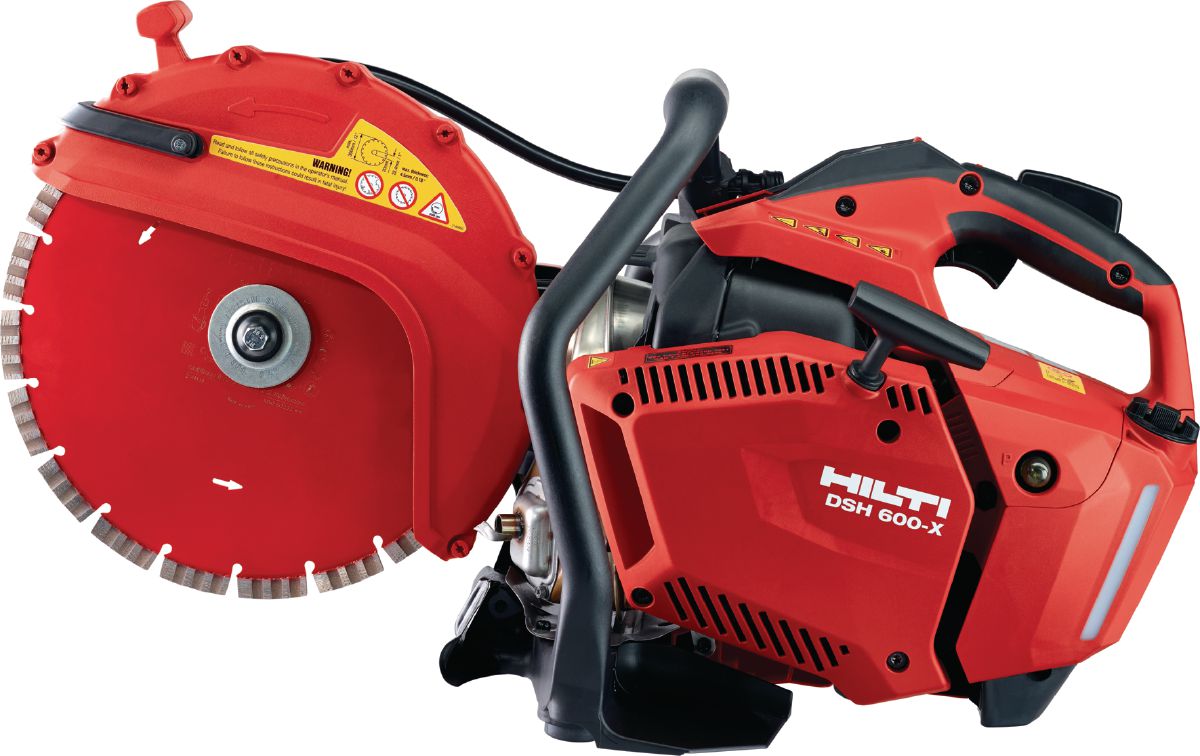
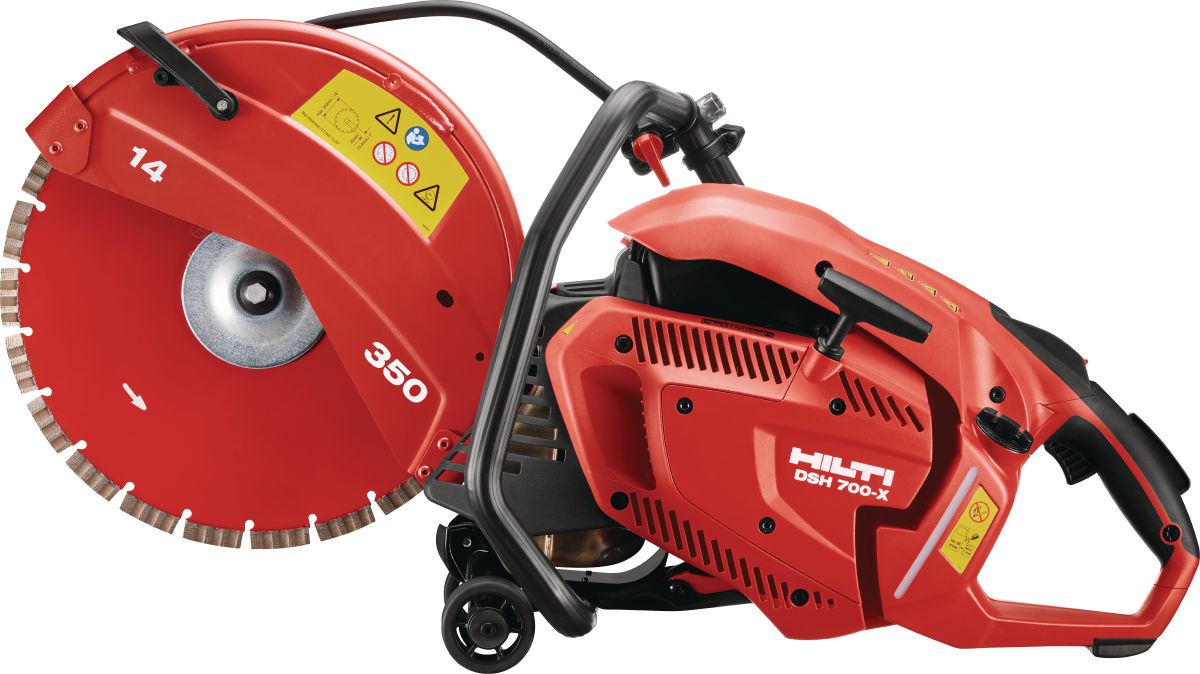
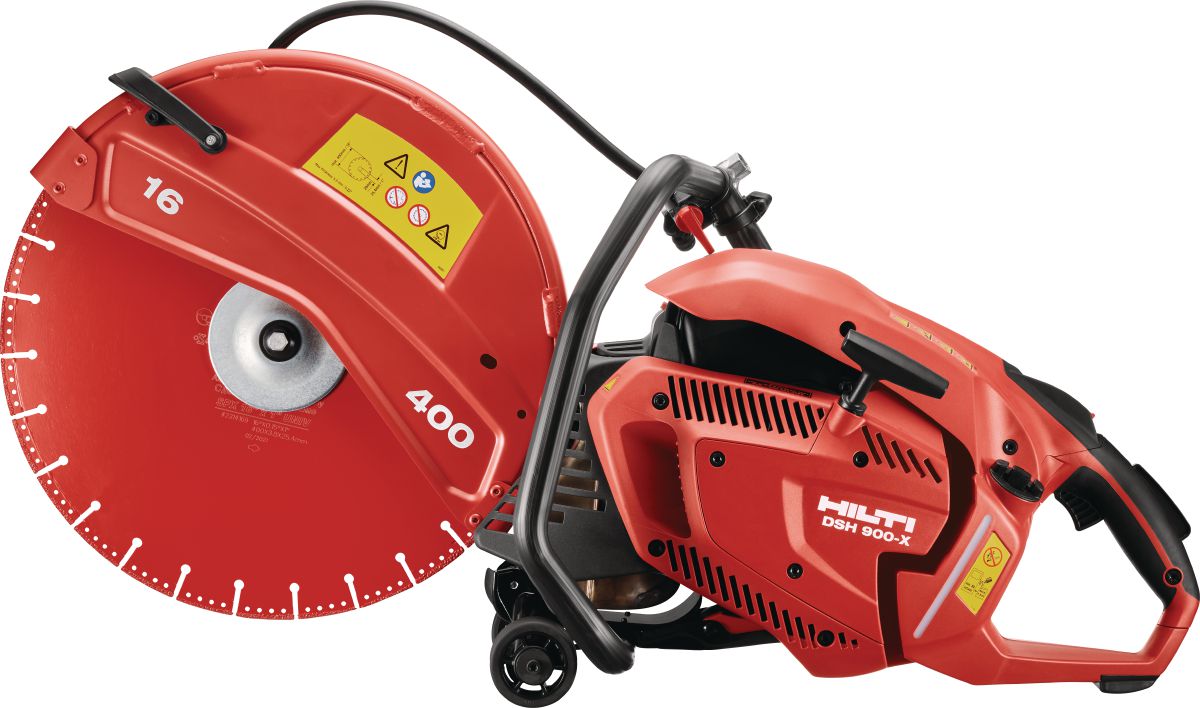
Cut-off saws are sized by blade diameter against required cut depth. Up to 13 in models handle 12 in blade — pipe, rebar, block, and cuts about 4 in deep. The 13–15 in band — THE standard saw — runs 14 in blade, cuts ~5 in deep in concrete and asphalt, and represents what most jobs mean by 'a cut-off saw'. 16 in and up models deliver deeper single-pass cuts in slab, curb, and large pipe. Because depth for conventional blades is limited to roughly a third of diameter, material thickness drives the choice.
Applications
- Cutting openings and penetrations in concrete and block
- Sizing rebar, pipe, and structural steel
- Asphalt cutting for utility and patch repairs
- Expansion joint and slab cutting
- Masonry trimming on site
- Emergency and rescue cutting
Safety & operation
- Kickback is the defining hazard: cutting with the upper quadrant of the blade throws the saw up and back toward the operator. Cuts run with the lower blade segment, two hands on the saw, and the operator out of the blade plane.
- Dry cutting concrete without controls is a silica violation as well as a health hazard — wet cutting or vacuum-shrouded dry systems are the specified controls under OSHA Table 1 for hand-held power saws.
- Blades must be rated above the saw's spindle speed and matched to the material; abrasive wheels are inspected for damage before mounting under ANSI B7.1 practice.
- Gas saws are never run in unventilated interiors; listed sound levels of 94–111 dB(A) make hearing protection mandatory across the class.
Standards & certifications
- OSHA · 29 CFR 1926.1153 Table 1
- Specified silica controls for handheld power saws — integrated water delivery or vacuum dust collection.
- ANSI · B7.1
- Safety requirements for the use, care, and protection of abrasive wheels run on cut-off machines.
Frequently asked
How deep can a hand-held cut-off saw cut?
Gas or electric — what decides it?
Why is wet cutting the default on concrete?
What causes cut-off saw kickback?
Compare popular models
Find by spec →Normalised to the same units. A dash means the figure was not published.
| Model | Engine power | Operating weight |
|---|---|---|
| Hilti DSH 700-X | 5 hp | 26.5 lb (12 kg) |
| Stihl TSA 230 (Unit Only) | - | 8.8 lb (4 kg) |
| Husqvarna K3600 MKII | - | 17.6 lb (8 kg) |
| Husqvarna TS60 | - | 386 lb (175 kg) |
| Husqvarna K1250 | 17 hp | 30.9 lb (14 kg) |
| Husqvarna TS355 | 3 hp | 50.7 lb (23 kg) |
Related equipment
Browse by manufacturer
Sources
Every specification is verified against the manufacturer's published data, with the source linked for reference.
All models
96 models · Page 2 of 2 · Every spec cited to source