

Wire Saw
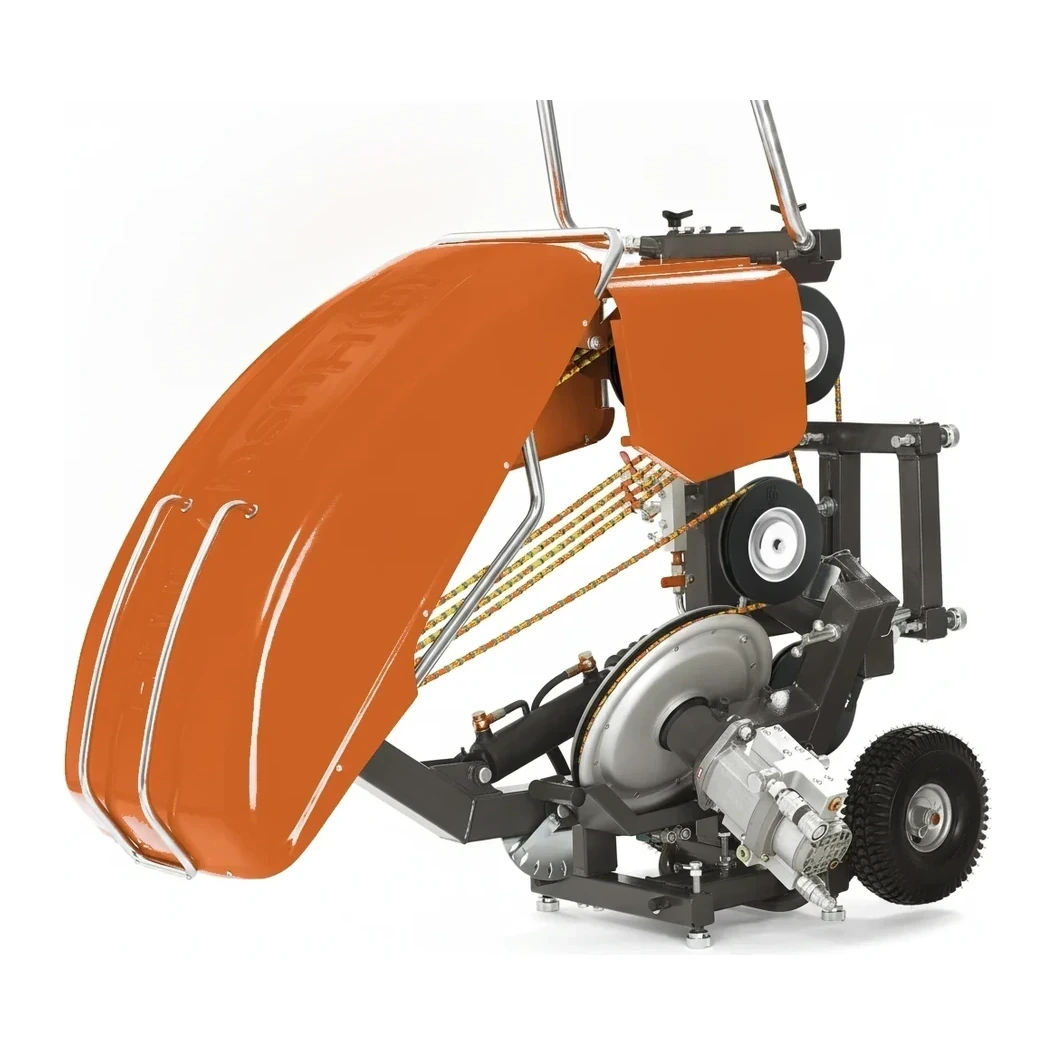
A wire saw is a specialized concrete cutting system that uses a continuous loop of diamond-beaded wire cable driven by a hydraulic power unit to cut through large structural sections. The equipment is deployed for cuts exceeding the capacity of circular or chain saws, including deep walls, thick slabs, and heavily reinforced concrete structures. Wire sawing is recognized in the industry for its ability to execute cuts of virtually unlimited depth and complexity.
How it works
The system consists of a hydraulic power unit, drive wheel assembly, and diamond wire cable threaded through pre-drilled guide holes in the concrete. Once the wire loop is tensioned and positioned, the drive wheel rotates the wire at controlled speeds while maintaining proper tension. Diamond segments bonded to the wire cable abrade the concrete and rebar as the wire continuously circulates through the cut path, with water cooling the wire and flushing debris. Operators position pulleys and guide wheels around the cutting plane, threading the wire through corner holes drilled at strategic points. The hydraulic drive unit provides adjustable speed and tension, allowing the system to adapt to varying concrete densities and reinforcement patterns. Cut geometry is determined by pulley placement and wire routing rather than machine size.
Types & variants
- Hydraulic Wire Saw System
- Complete turnkey system with hydraulic power unit, drive wheel, and wire spools for general structural cutting applications
- Electric-Hydraulic Wire Saw
- Electric motor drives hydraulic pump for indoor or urban applications where exhaust emissions must be minimized
- High-Speed Wire Saw
- Higher RPM drive systems optimized for cutting softer concrete or achieving faster cycle times on routine demolition cuts
- Heavy-Duty Wire Saw
- Higher-torque systems designed for cutting heavily reinforced or hardened concrete in infrastructure and industrial settings
Key specifications
| Specification | Typical range | What it means |
|---|---|---|
| Hydraulic Power Output | 15-40 HP | Determines cutting speed and ability to handle dense concrete and heavy reinforcement |
| Wire Speed | 20-30 m/s | Operating speed of the diamond wire through the cut; adjusted based on material hardness and wire diameter |
| Wire Diameter | 0.3–0.4 in (8–11 mm) | Cable thickness selected based on cut depth, material abrasiveness, and required cut precision |
| Maximum Tension | 2,000–4,500 lbs (907–2,041 kg) | Wire tension capacity affects cutting efficiency and determines wire service life |
How the industry sizes it
Wire saws are not classified by size bands because the cutting capacity is determined by the length of wire deployed rather than the machine specifications. The industry treats wire sawing systems as complete cutting solutions for sections too large or geometrically complex for blade-based tools. Projects are scoped by cut depth, perimeter, and reinforcement density, with wire length and pulley configuration specified accordingly. All systems consist of a hydraulic drive unit paired with appropriate wire and rigging, making them inherently adaptable to diverse cutting demands.
Applications
- Controlled demolition of bridge piers, abutments, and elevated roadway sections
- Sectioning large foundation elements and retaining walls for removal or modification
- Cutting openings in thick concrete walls for doorways, windows, or utility penetration
- Precision cutting of heavily reinforced nuclear, hydroelectric, and industrial structures
- Underwater cutting of submerged concrete structures in marine and dam projects
- Salvage and segmentation of precast elements for deconstruction or repositioning
Safety & operation
- Operators must maintain proper wire tension throughout the cut to prevent wire breakage and dangerous cable whip
- Adequate water supply is required for cooling and dust suppression during all wire sawing operations
- Personnel must remain outside the wire path plane and establish exclusion zones around pulleys and drive wheels
- Structural stability of the cut section must be evaluated and supported to prevent uncontrolled collapse during or after cutting
- Diamond wire inspection protocols must be followed to detect wear and segment loss before wire failure occurs
Standards & certifications
- OSHA · 29 CFR 1926 Subpart Q
- Regulations governing concrete and masonry work, including cutting tool safety and silica exposure limits
- ANSI · B7.5
- Safety requirements for construction and demolition operations involving powered abrasive cutting equipment
- CSDA · Concrete Sawing & Drilling Association
- Industry association providing technical standards, training, and best practices for wire sawing operations
- EPA · Silica Rule
- Regulations on respirable crystalline silica exposure; water suppression is critical in wire saw operations
Frequently asked
What cutting capacity advantage does wire sawing offer over wall saws?
How is diamond wire selected for different concrete hardness levels?
What determines whether a project requires wire sawing versus other cutting methods?
Why are wire saw systems provided as complete units rather than sized individually?
Related equipment
Browse by manufacturer
Sources
Every specification is verified against the manufacturer's published data, with the source linked for reference.
All models
4 models · Every spec cited to source