

Site Dumper
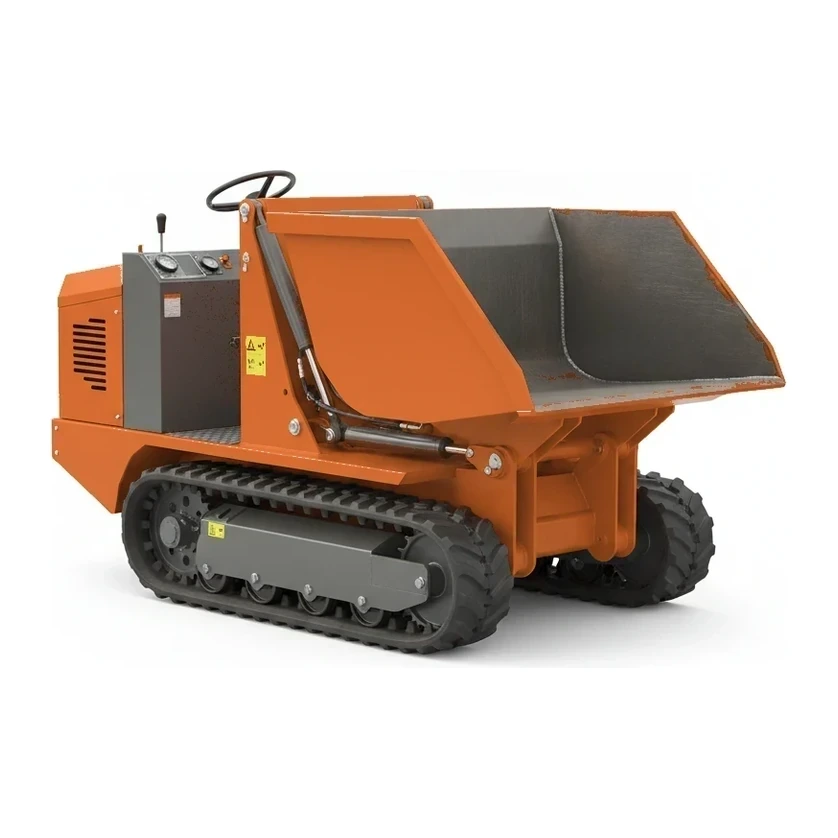
A site dumper is a compact, off-road hauling vehicle designed to transport material across uneven, soft, or confined terrain where conventional trucks and loaders cannot operate effectively. These machines feature a skip or hopper, often with swivel capability, mounted on either wheeled or tracked undercarriages, enabling transport of spoil, concrete, aggregates, and other materials on construction sites. Site dumpers bridge the gap between manual wheelbarrow work and full-size earthmoving equipment.
How it works
The operator drives the site dumper to the loading point, where material is placed into the skip or hopper either manually or by excavator. Once loaded, the operator navigates the machine across the worksite using controls similar to a small tractor or skid steer. Upon reaching the destination, the skip is hydraulically raised and tilted to discharge the load, with swivel dumpers offering the ability to rotate the skip up to 180 degrees for precise placement without repositioning the machine. Tracked models distribute weight over a larger footprint, reducing ground pressure and enabling operation on soft, muddy, or steep terrain. Wheeled versions offer greater transport speed on harder surfaces and easier maneuverability in tight spaces. Most site dumpers are powered by diesel or gasoline engines with hydrostatic or mechanical transmissions, and feature roll-over protective structures (ROPS) for operator safety.
Types & variants
- Tracked Dumper
- Rubber or steel track undercarriage providing low ground pressure for operation on soft, muddy, or steep terrain; typically slower but more stable on challenging ground.
- Wheeled Dumper
- Pneumatic tire configuration offering faster transport speeds on firmer ground and tighter turning radius for confined site work.
- Swivel Skip Dumper
- Skip rotates up to 180 degrees horizontally, allowing discharge to either side or rear without repositioning the machine, common on mid-size and larger models.
- Mini Dumper
- Ultra-compact models under 3,000 lb designed for interior work, narrow access, and sites where manual wheelbarrow transport is the only alternative.
- High-Tip Dumper
- Extended reach hydraulics allow discharge over formwork, into hoppers, or onto elevated surfaces without ramps.
- Concrete Dumper
- Designed specifically for transporting and placing fresh concrete with reinforced skips and vibration-damping features to prevent segregation during transport.
Key specifications
| Specification | Typical range | What it means |
|---|---|---|
| Payload Capacity | 1,000–10,000 lb (454–4,536 kg) | Maximum weight of material the skip can safely carry; primary sizing metric for matching dumper to task volume and cycle efficiency. |
| Skip Capacity | 0.25-2.0 cu yd | Volumetric capacity of the hopper; determines loads per cycle for bulk materials like soil, gravel, or concrete. |
| Ground Clearance | 6–12 in (15.2–30.5 cm) | Minimum clearance beneath chassis; influences ability to traverse rough terrain, debris, and obstacles without bellying out. |
| Gradeability | 30-45% | Maximum slope the loaded dumper can safely climb; critical spec for hilly sites and earthwork staging areas. |
| Machine Weight | 1,500–12,000 lb (680–5,443 kg) | Operating weight affects ground pressure, transportability, and suitability for finished surfaces or elevated decks. |
How the industry sizes it
The industry sizes site dumpers primarily by payload capacity in pounds, with three recognized size bands. Light models up to 3,000 lb replace wheelbarrow crews on tight sites and interior work. Standard dumpers from 3,000 to 7,000 lb serve general construction, feeding footing and backfill crews across ground a skid steer cannot cross. Large dumpers above 7,000 lb handle high-volume hauling on soft ground and steep grades where highway trucks cannot operate. Skip capacity in cubic yards and machine weight also factor into selection, particularly when coordinating with site access constraints or ground-bearing limitations.
Applications
- Earthwork spoil removal from excavations and trenches across unpaved or muddy terrain
- Concrete placement for footings, slabs, and pours in areas inaccessible to ready-mix trucks
- Backfilling operations around foundations, utility trenches, and retaining walls
- Material transport on steep grades, hillside developments, and sites with limited haul roads
- Interior demolition debris removal through buildings and confined access points
- Landscape and hardscape material distribution across finished or sensitive ground
Safety & operation
- Operators must maintain awareness of center of gravity when traversing slopes, particularly with loaded skip raised or extended
- ROPS and seatbelts are standard safety features; operators should remain seated with restraints fastened during operation
- Ground conditions must be assessed before operation, as soft soil, hidden voids, or excessive slope can cause tip-over or loss of control
- Swivel skips require clearance checks before rotation to avoid striking personnel, structures, or overhead obstructions
- Daily inspection of hydraulic systems, brakes, and skip latching mechanisms prevents unintended discharge or component failure during loaded travel
Standards & certifications
- OSHA · 29 CFR 1926.602
- Establishes general requirements for material handling equipment on construction sites, including ROPS and operator protection.
- ANSI/ITSDF · B56.9
- Safety standard for rough terrain powered industrial trucks, covering design and operation of site dumpers and similar off-road equipment.
- EPA · Tier 4
- Emissions standards applicable to diesel engines in site dumpers, particularly larger models with higher-horsepower powerplants.
- SAE · J1040
- Performance test for measuring maximum vehicle speed, gradeability, and drawbar pull on earthmoving machinery including dumpers.
Frequently asked
What distinguishes a site dumper from a mini track loader or skid steer with bucket?
How does payload capacity relate to skip volume in site dumpers?
When are tracked dumpers preferred over wheeled models?
What are common industry aliases for site dumpers?
Compare popular models
Find by spec →Normalised to the same units. A dash means the figure was not published.
| Model | Operating weight | Max dig depth | Max reach | Engine power |
|---|---|---|---|---|
| Hinowa HS1203 High Tip and self-loading dumper bed | - | - | - | 21 hp |
| Hinowa HS701 Extra High Tip and self-loading dumper bed | - | - | - | 9 hp |
| JCB 1T-2 | - | - | - | 22 hp |
Related equipment
Browse by manufacturer
Sources
Every specification is verified against the manufacturer's published data, with the source linked for reference.
All models
7 models · Every spec cited to source