

Orbital Floor Sander
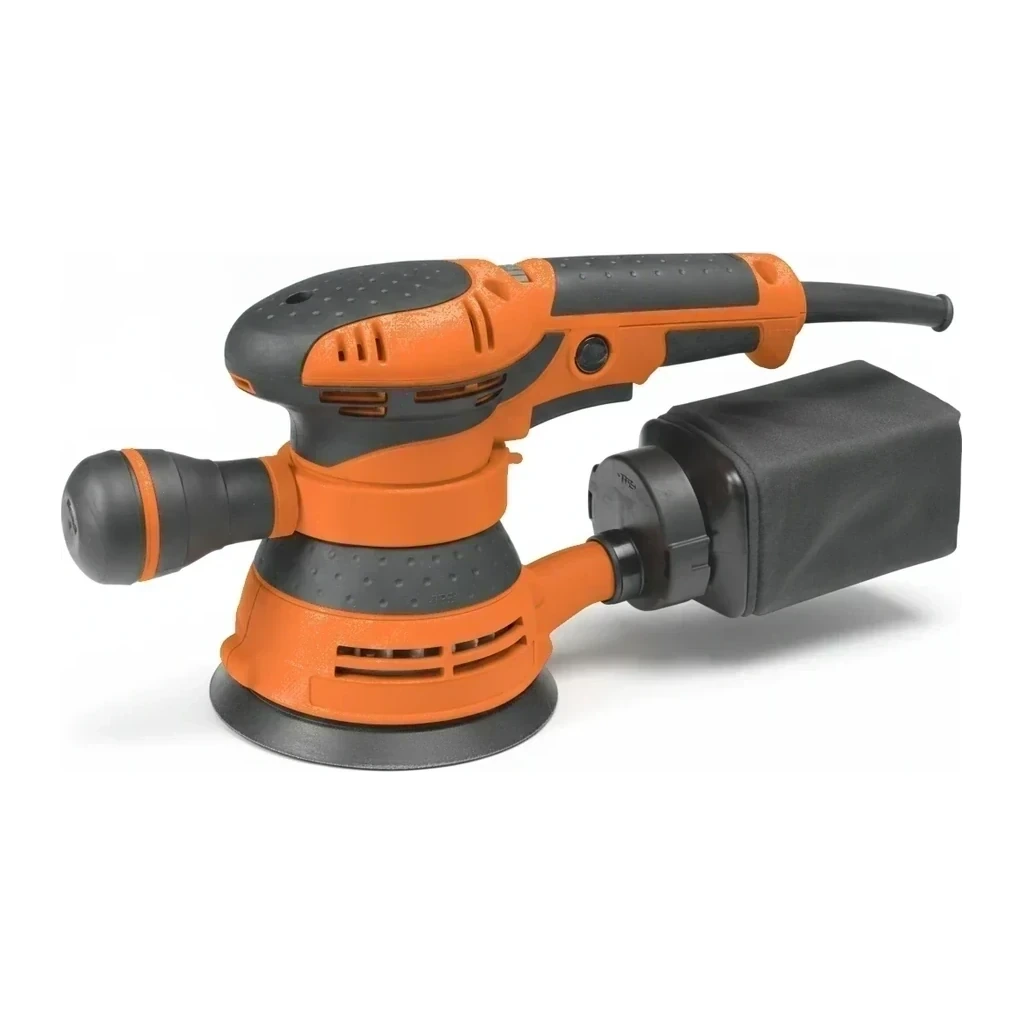
An orbital floor sander is a floor finishing machine that uses circular or random orbital motion to sand, screen, and polish wood floors. Unlike drum sanders, orbital models distribute abrasive action across a flat pad or multiple disc heads, preventing gouges and creating a uniform finish. The equipment class includes small square-buff sanders for screening between coats and large multi-head orbital machines for aggressive stock removal and finishing.
How it works
Orbital floor sanders employ either a single square or rectangular pad that oscillates in small circular patterns, or multiple rotating disc heads arranged across a wide base plate. The abrasive pad or discs make contact with the floor surface under controlled pressure, removing material through random or synchronized orbital motion rather than linear drum action. This motion pattern minimizes cross-grain scratches and reduces the risk of creating visible sanding marks. The operator guides the machine across the floor while the motor drives the orbital mechanism. Dust collection systems typically attach to capture sanding debris. Smaller square-buff models weigh less and use screens or abrasive pads for light screening work, while larger multi-disc orbitals feature heavier construction and aggressive abrasives for flattening uneven floors and removing old finishes.
Types & variants
- Square-Buff Sander
- Compact single-pad orbital sander with square or rectangular base, typically under 14 inches, used for screening between finish coats and buffing small areas.
- Random Orbital Floor Sander
- Single-pad machine with random orbital motion pattern that eliminates swirl marks, suitable for final finishing passes on hardwood floors.
- Multi-Disc Orbital Sander
- Wide-format machine with three or more rotating disc heads arranged in a row, designed for aggressive stock removal and large-area floor flattening.
- U-Sand Style Orbital
- Specific multi-head orbital design that uses synchronized disc rotation to flatten floors without drum sander tracking issues, popular for gym floor refinishing.
- Trio Orbital Sander
- Three-disc configuration balancing aggressive cutting power with manageability, common for residential and light commercial floor work.
Key specifications
| Specification | Typical range | What it means |
|---|---|---|
| Pad/Head Width | 12-20 in (single pad) or 18-26 in (multi-disc) | Working width determines coverage area and productivity; multi-disc machines cover more area per pass than square-buff models. |
| Motor Power | 1.5-3.5 HP | Higher horsepower supports aggressive material removal and operation of multiple disc heads under load. |
| Operating Weight | 80–200 lb (36.3–90.7 kg) | Heavier machines provide downward pressure for cutting while lighter models improve maneuverability for screening work. |
| Orbital Action Type | Random orbital, synchronized orbital, or oscillating | Motion pattern affects finish quality and material removal rate; random orbital minimizes visible scratch patterns. |
| Abrasive Interface | Hook-and-loop pad, screen holder, or disc arbor | Attachment method determines compatible abrasive types and changeout speed during multi-grit operations. |
How the industry sizes it
The industry sizes orbital floor sanders primarily by working width measured in inches, distinguishing between compact square-buff models (typically under 14 inches) used for screening and touch-up work, and wide multi-disc orbitals (14 inches and larger) designed for full floor refinishing. Multi-disc machines are further characterized by the number of disc heads (trio, quad, or more), which directly relates to coverage width and production rate. Sizing selection depends on the floor area, required aggressiveness, and whether the application involves screening between finish coats or complete floor resurfacing.
Applications
- Screening hardwood floors between polyurethane or finish coats to promote adhesion
- Refinishing gymnasium and sports facility floors without drum sander chatter marks
- Flattening uneven wide-plank or parquet floors prior to final finishing
- Removing old floor finishes and coatings in preparation for recoating
- Final sanding passes on residential hardwood floors to eliminate cross-grain scratches
- Commercial floor maintenance and restoration in occupied buildings where dust control is critical
Safety & operation
- Maintain proper dust collection system operation to control combustible wood dust and minimize airborne particulate exposure
- Inspect abrasive pads and discs for wear or damage before operation; damaged abrasives can cause vibration and uneven sanding
- Use appropriate hearing protection as orbital sanders generate sustained operational noise levels
- Keep power cord clear of the sanding path to prevent damage and tripping hazards during operation
- Ensure floor is free of nails, staples, and debris that could damage abrasives or cause projectile hazards
Standards & certifications
- OSHA · 29 CFR 1926.57
- Ventilation requirements for controlling wood dust exposure during sanding operations.
- NFPA · NFPA 654
- Standard for the Prevention of Fire and Dust Explosions from the Manufacturing, Processing, and Handling of Combustible Particulate Solids, applicable to wood dust.
- ANSI · ANSI B7.1
- Safety requirements for the use, care, and protection of abrasive wheels and related machinery components.
- UL · UL 987
- Safety standard for stationary and fixed electric tools, covering motor and electrical system requirements.
Frequently asked
What is the difference between a square-buff sander and a multi-disc orbital?
How does an orbital floor sander differ from a drum sander?
What abrasive grits are typically used with orbital floor sanders?
Why are multi-disc orbital sanders preferred for gymnasium floors?
Related equipment
Browse by manufacturer
Sources
Every specification is verified against the manufacturer's published data, with the source linked for reference.
All models
16 models · Every spec cited to source