
Chain Hoist
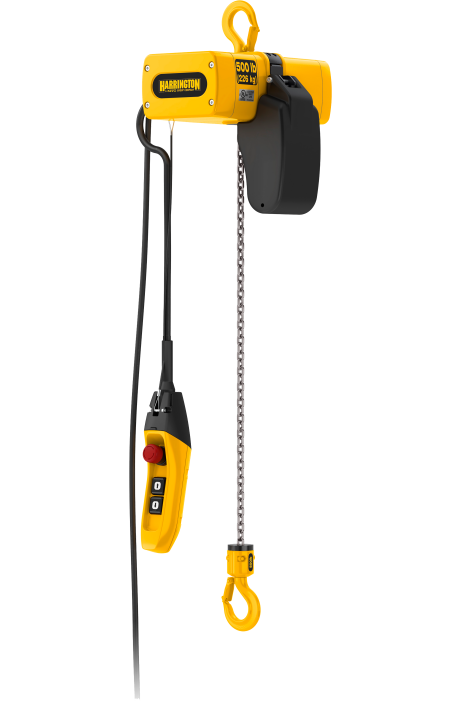
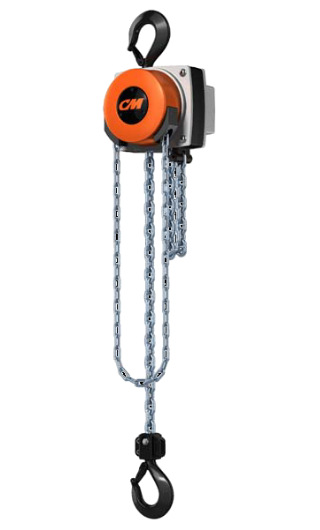
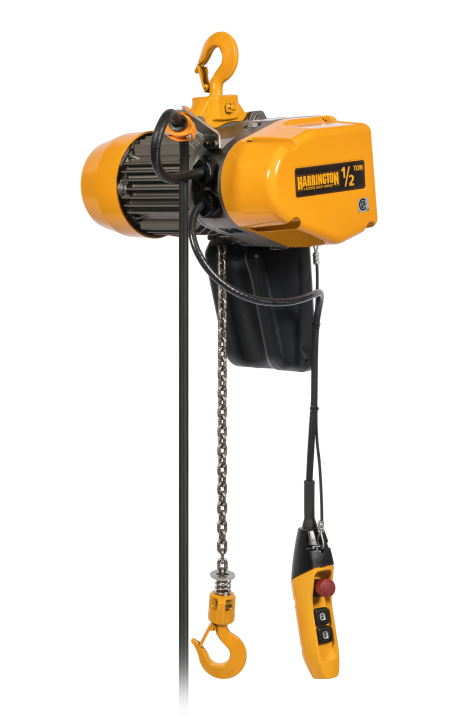
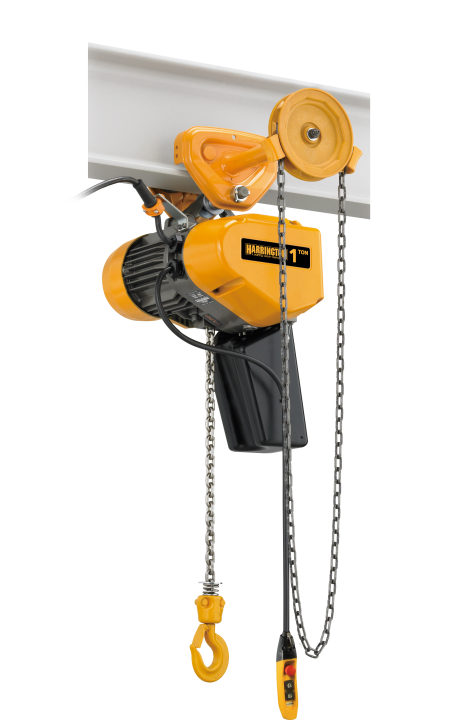
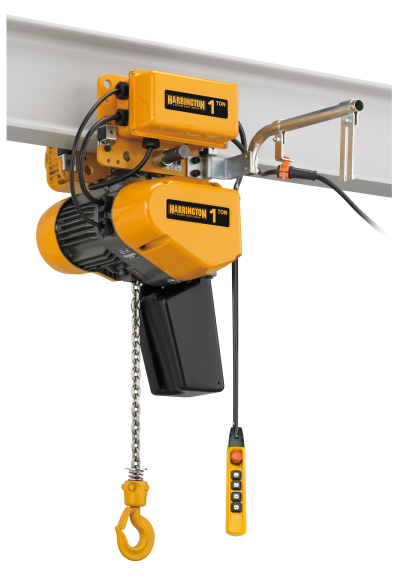
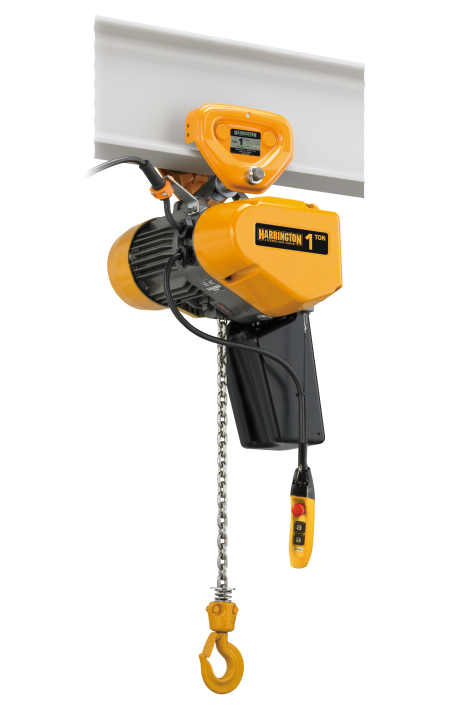
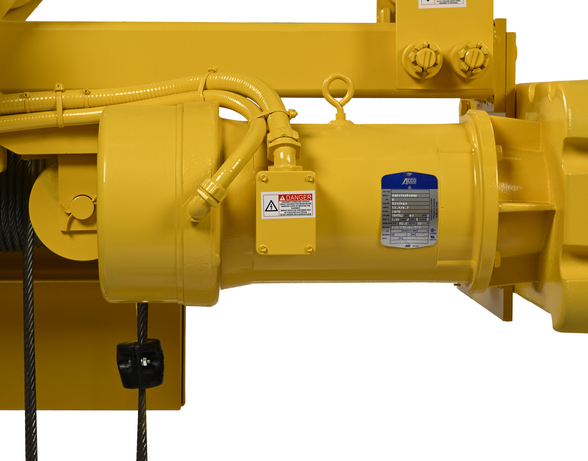
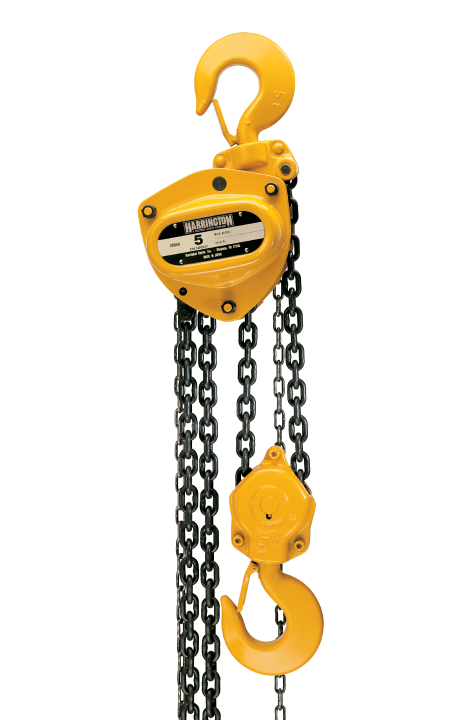
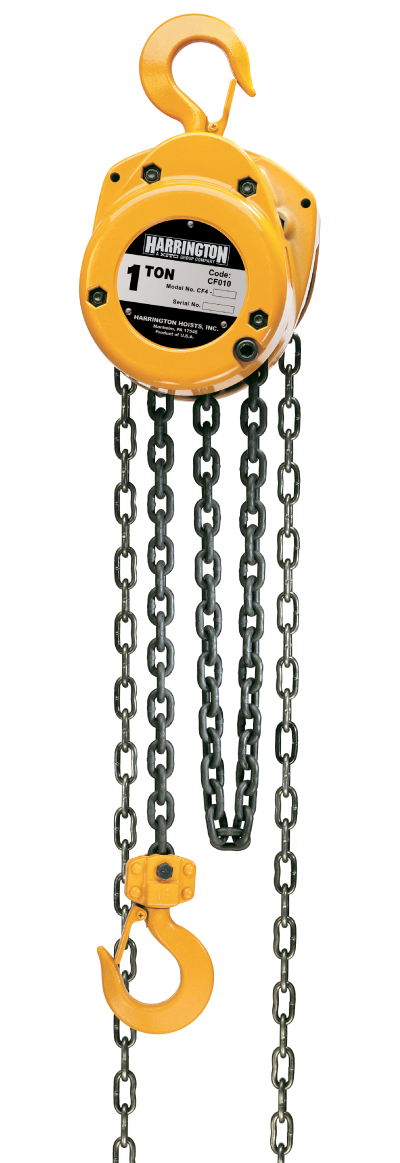
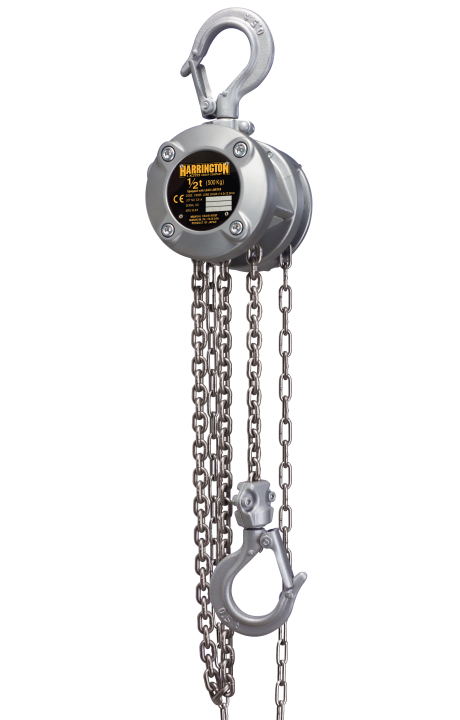
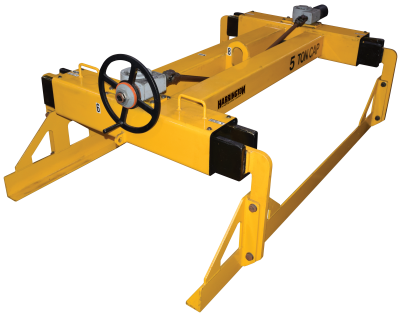
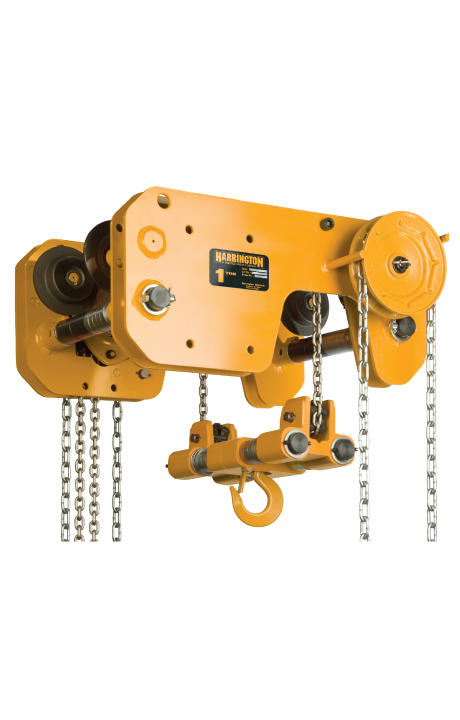
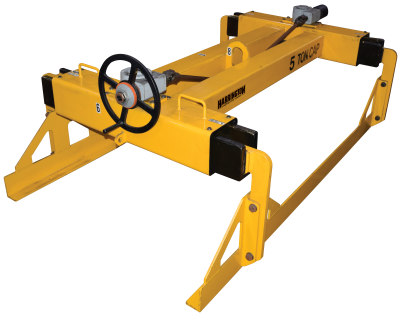
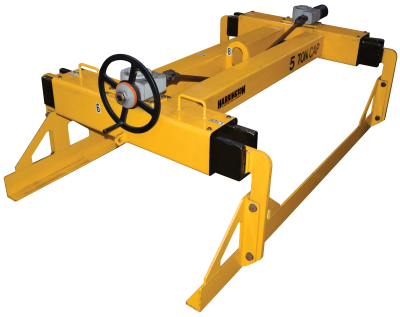
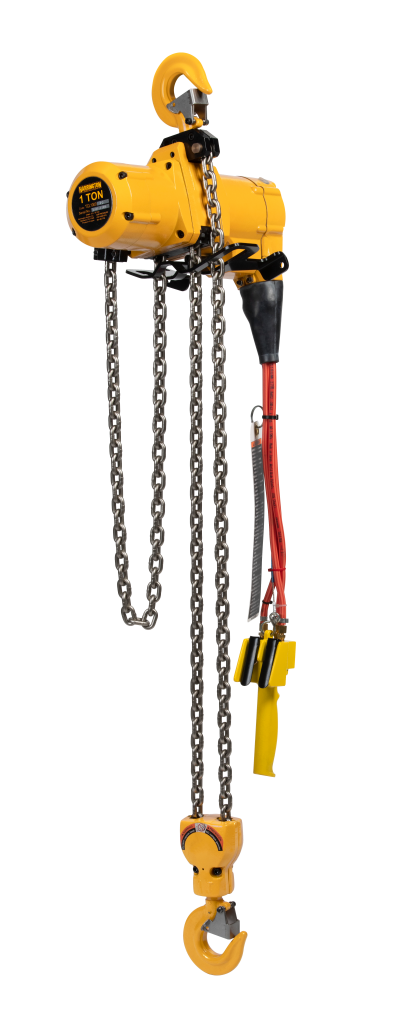
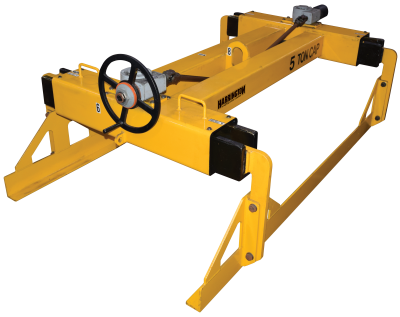
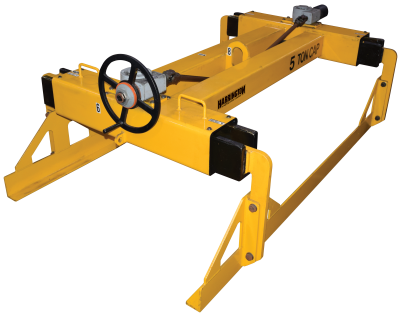
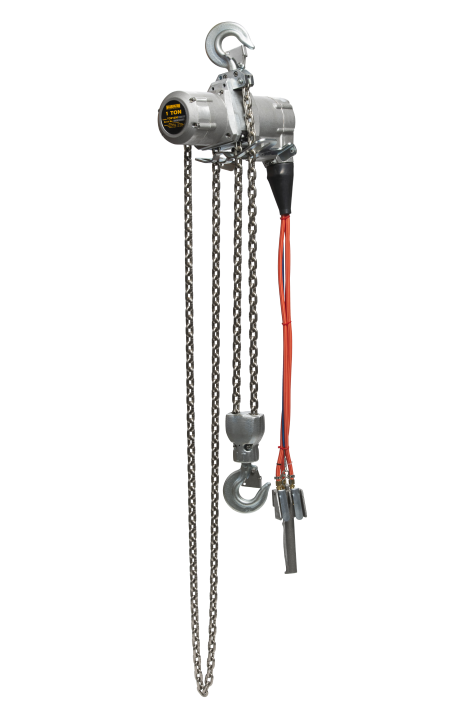
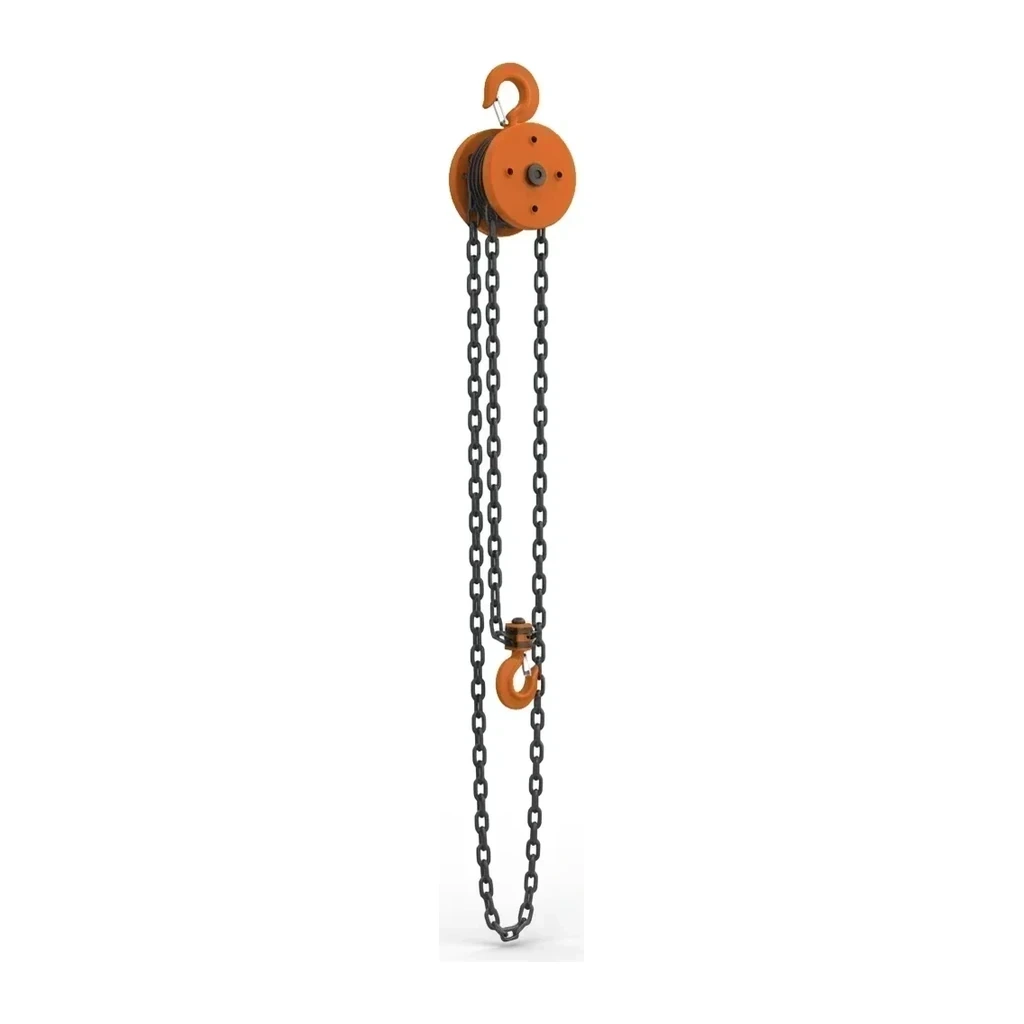
A chain hoist lifts and lowers suspended loads on a load chain running through a geared hoist body, hung from a hook, trolley, or fixed anchorage. The family spans hand chain blocks, lever hoists, and powered electric and air hoists, covering listed capacity bands from light sub-4,400 lb units to 40,000 lb heavy-lift blocks.
Cat classes
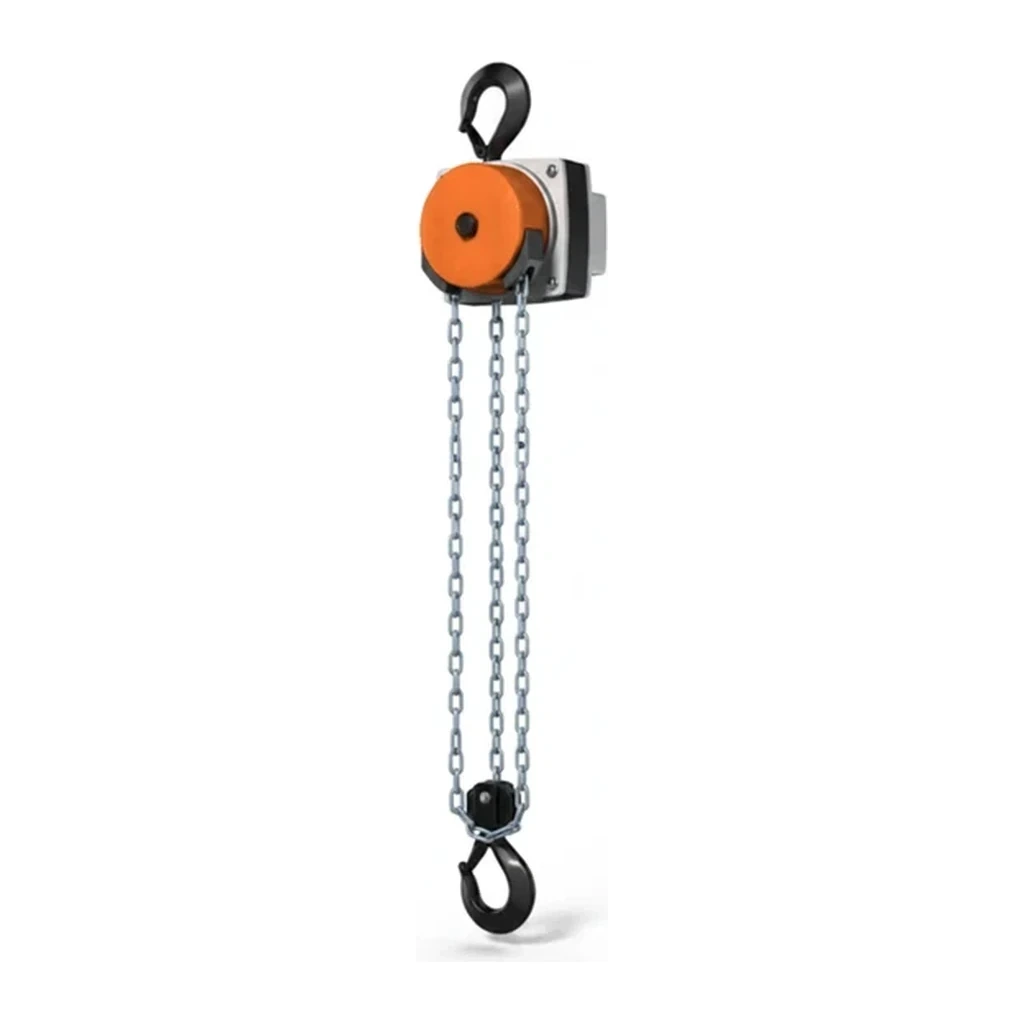
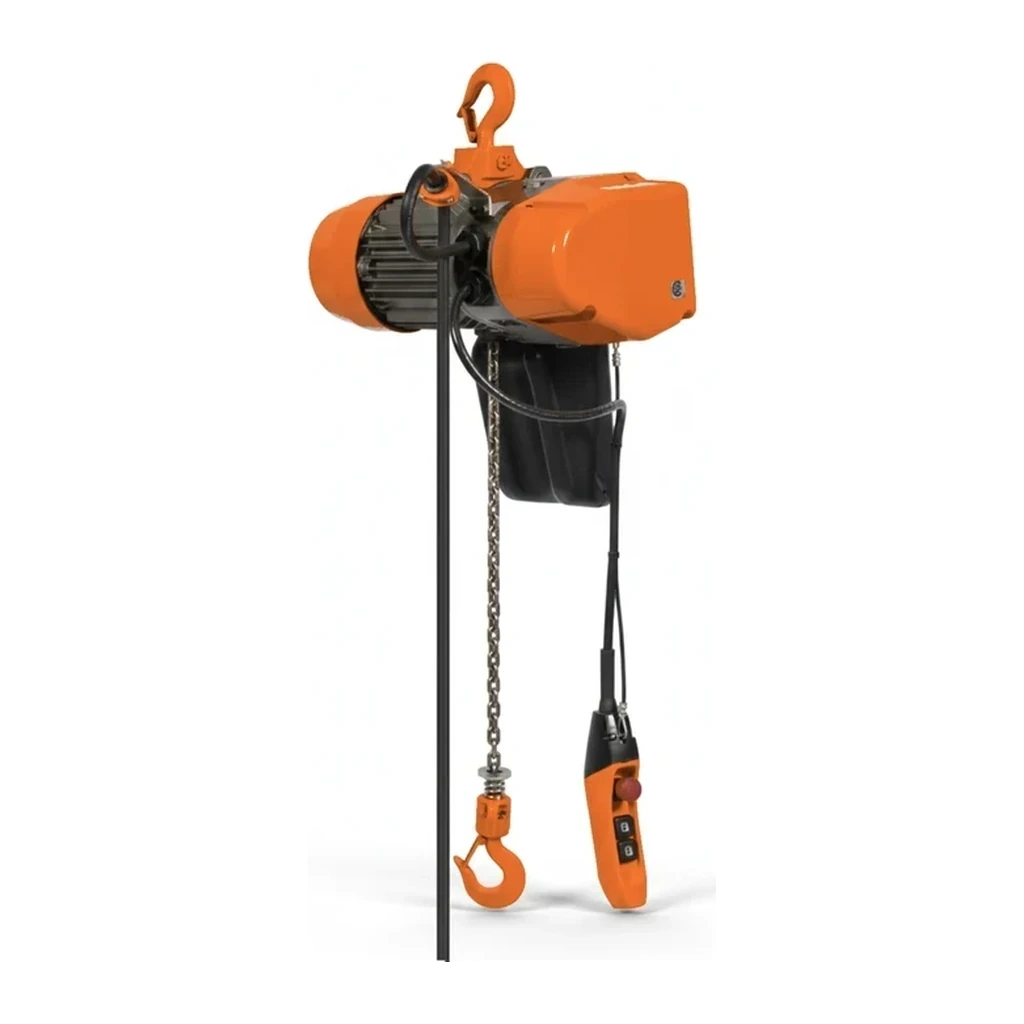
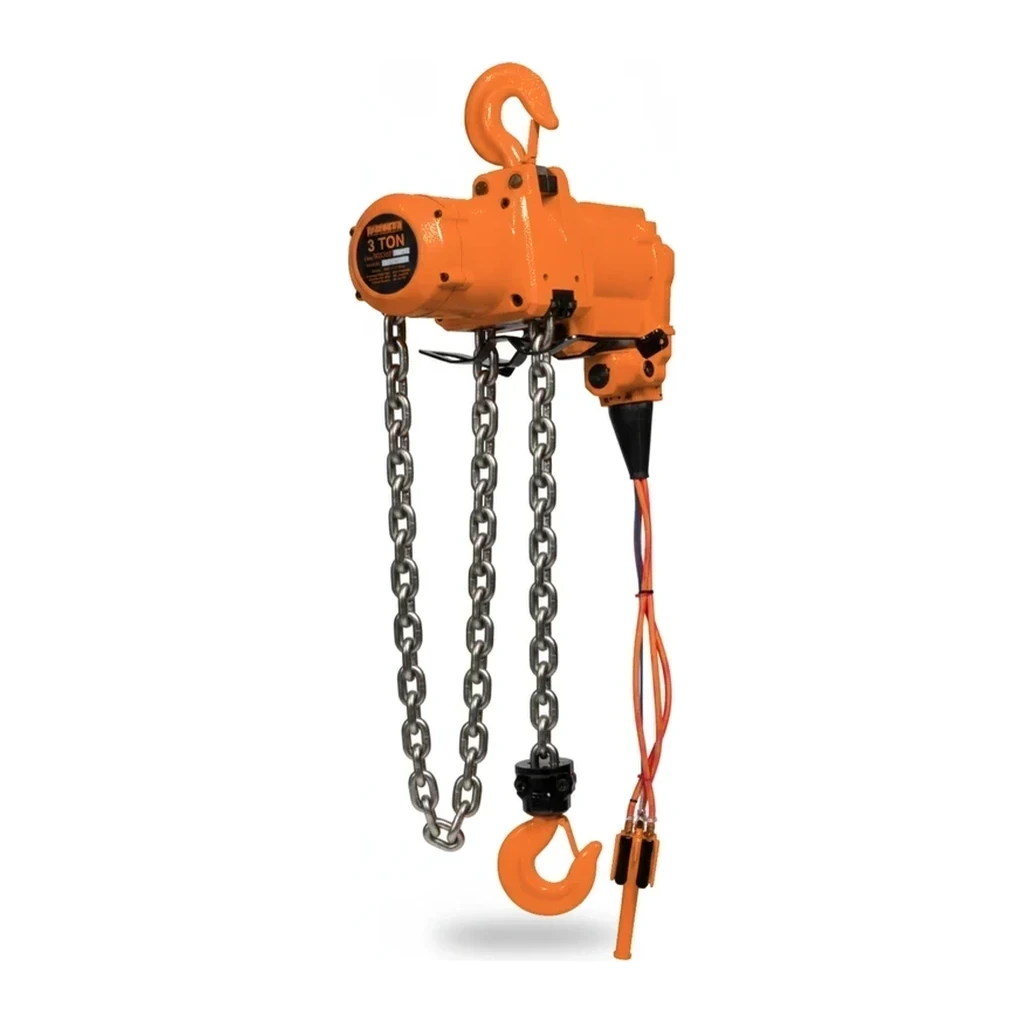
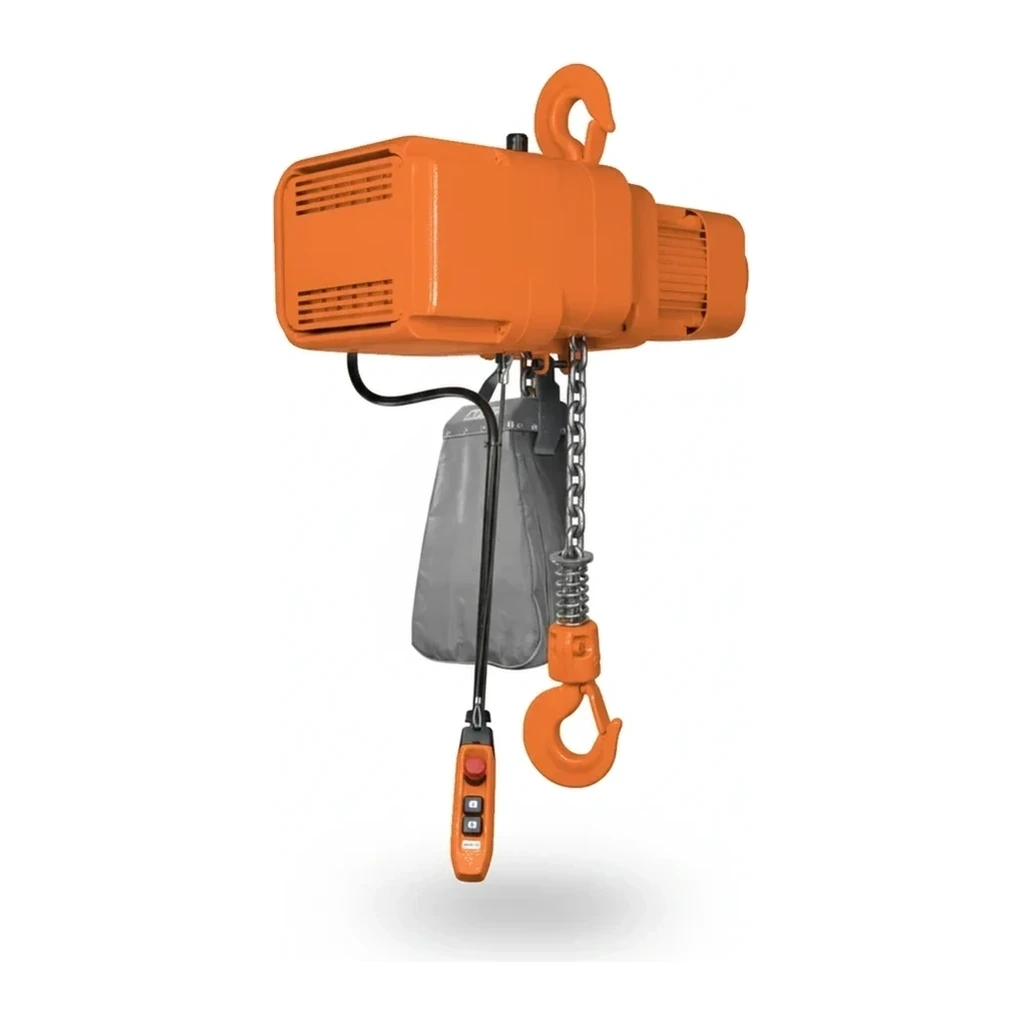
Pick a size class — capacity and reach differ across the range.
How it works
In a manual chain block, pulling the hand chain turns a pocketed lift wheel through reduction gearing, so modest hand force raises a much heavier load while a Weston-style load brake holds it at any point. Lever hoists apply the same gearing through a ratchet lever for pulling and positioning in any orientation. Electric and air hoists replace the hand chain with a motor and brake, adding controlled speeds and duty ratings for repetitive production lifting; all types depend on an adequately rated suspension point above the load.
Types & variants
- Hand chain block
- Manual hoist for vertical lifting where power is unavailable; slow but precise and highly portable.
- Lever hoist (come-along)
- Ratchet-lever hoist that lifts, pulls, and tensions in horizontal and angled orientations.
- Electric chain hoist
- Motor-driven hoist for repetitive lifting, often trolley-mounted on a beam.
- Air chain hoist
- Pneumatic hoist for spark-sensitive or washdown environments with variable-speed control.
Key specifications
| Specification | Typical range | What it means |
|---|---|---|
| Rated capacity | 0-40,000 lb across the listed bands | The working load limit of the hoist; the suspension point and rigging must meet or exceed it. |
| Standard lift | 5-30 ft of chain across listed models | The chain length supplied determines how far below the anchorage the hook can travel; longer chains are available per model. |
| Suspension type | Hook, lug, or trolley mount, per model | Sets how the hoist hangs from the beam or anchorage and whether the load can travel horizontally. |
| Drive type | Manual, electric, or air, per model | Manual units suit occasional lifts and powerless sites; powered units suit production duty cycles. |
How the industry sizes it
Chain hoists are sized to the heaviest planned load with the working load limit never exceeded, then by required lift length and headroom — the distance the hoist body itself consumes between anchorage and hook. The 0-4,400 lb band handles motors, pumps, and rigging assists; 4,400-11,000 lb covers mid-weight machinery; and the 11,000-40,000 lb band serves structural steel and plant equipment, with listed brands including Harrington, Demag, Kito, Columbus McKinnon, Coffing, and Vestil.
Applications
- Machinery setting and removal in plants and mechanical rooms
- Engine, pump, and gearbox lifts during maintenance
- Positioning pipe, duct, and equipment on installation jobs
- Rigging structural steel members during erection
- Tensioning and pulling with lever hoists in confined spaces
Safety & operation
- The working load limit on the hoist body governs every lift; shock loading and side pulls are prohibited on vertical-lift blocks.
- The supporting beam or anchorage must be verified for the full load before the hoist is hung.
- Load chain condition, hook throat opening, and brake function are inspection points before each use per ASME B30.16.
- Suspended loads are never left unattended over personnel, and riders are never carried on hook or load.
Standards & certifications
- ASME · B30.16
- Overhead underhung and stationary hoists: marking, inspection, and operation.
- ASME · B30.21
- Lever hoist standard covering manually operated ratchet hoists.
- OSHA · 29 CFR 1926.554
- Construction requirements for overhead hoists, including rated-load marking and support.
Frequently asked
What is the difference between a chain block and a lever hoist?
How much lift does a chain hoist provide?
Can a chain hoist pull loads horizontally?
What supports the hoist?
Compare popular models
Find by spec →Normalised to the same units. A dash means the figure was not published.
| Model | Load capacity | Lift height | Engine power |
|---|---|---|---|
| Demag DHR Rope Hoist | 2,205 lb (1,000 kg) | - | - |
| Demag DVR Rope Hoist | 176,370 lb (80,000 kg) | - | - |
| Demag DH Hoist Units | 2,205 lb (1,000 kg) | - | - |
| Demag DC-Pro Chain Hoist | 11,023 lb (5,000 kg) | - | - |
| Demag LDC-D Double Chain Hoist | 11,023 lb (5,000 kg) | - | - |
| Demag KLDC-D Double Chain Hoist | 4,409 lb (2,000 kg) | - | - |
Related equipment
Browse by manufacturer
Sources
Every specification is verified against the manufacturer's published data, with the source linked for reference.
All models
169 models · Page 3 of 4 · Every spec cited to source