

Winch
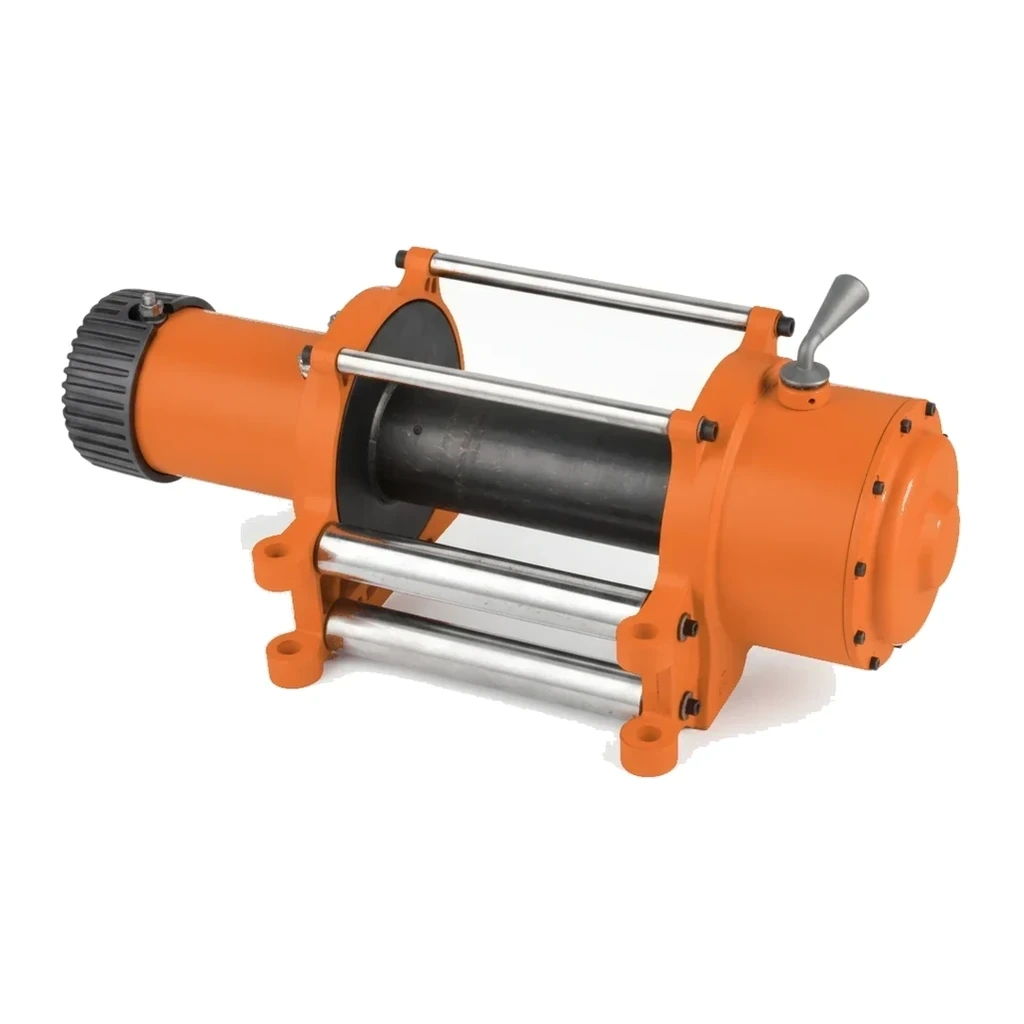
A winch is a mechanical device that winds cable or rope onto a drum to pull loads horizontally across surfaces or up inclines. Winches provide controlled pulling force for equipment recovery, material handling, and positioning tasks across construction, forestry, marine, and industrial applications.
How it works
A winch operates by rotating a drum around which wire rope or synthetic cable is wound. Power sources include electric motors, hydraulic pumps, compressed air, or manual hand cranks that drive the drum through a gear reduction system, multiplying input force into high pulling capacity. As the drum rotates, cable spools onto or off the drum, creating linear pulling force at the cable's end. Most winches include a braking system to hold loads under tension and prevent uncontrolled cable release. A clutch or free-spool mechanism allows operators to disengage the drive system for rapid cable payout. Fairleads or roller guides direct cable onto the drum evenly, preventing cable pile-up and ensuring consistent line pull throughout the working range.
Types & variants
- Electric Winch
- Powered by AC or DC electric motors, providing consistent pulling force with simple on-site power connection or battery operation for vehicle-mounted applications.
- Hydraulic Winch
- Driven by hydraulic motors connected to a machine's hydraulic system, offering high power density and precise speed control for heavy industrial and mobile equipment use.
- Air Winch (Pneumatic)
- Compressed-air powered units suited for hazardous environments where electric spark risk must be eliminated, common in refineries and chemical plants.
- Capstan Winch
- Vertical drum design where rope wraps around the rotating drum without spooling, allowing unlimited line length and continuous pulling operations.
- Recovery Winch
- Vehicle-mounted units designed specifically for extracting stuck equipment and vehicles from mud, sand, or rough terrain.
- Tugger Winch
- Portable pulling and positioning winches often used for equipment installation, rigging, and maintenance work in confined industrial spaces.
Key specifications
| Specification | Typical range | What it means |
|---|---|---|
| Rated Line Pull | 0.5 to 40+ tons | Maximum pulling force the winch can exert on the first layer of cable wrap, determining load capacity. |
| Cable Capacity | 50 to 300 ft | Length of cable the drum can hold, limiting maximum pulling distance in a single operation. |
| Cable Diameter | 1/4 to 3/4 in | Wire rope or synthetic line thickness, matched to drum capacity and rated load requirements. |
| Line Speed | 10 to 60 ft/min | Rate at which cable winds onto the drum under load, balancing pulling force with operational efficiency. |
| Gear Ratio | 50:1 to 500:1 | Mechanical advantage between power input and drum rotation, determining the trade-off between speed and pulling force. |
How the industry sizes it
The industry sizes winches primarily by rated line pull capacity measured in tons, representing maximum pulling force on the first wrap of cable. Common capacity bands include 0-2 tons for light recovery and ATV work, 2-5 tons for standard equipment recovery, 5-15 tons for heavy machine extraction and timber skidding, and 15+ tons for continuous industrial and marine operations. Pulling capacity decreases as cable layers build up on the drum due to increasing effective drum diameter. Power type (electric, hydraulic, air, manual) and mounting configuration (portable, vehicle-mounted, fixed installation) further distinguish models within capacity classes.
Applications
- Equipment recovery: extracting stuck vehicles, excavators, and machinery from mud, sand, or ditches
- Material positioning: pulling steel beams, pipe sections, and heavy components into alignment during assembly
- Forestry operations: skidding logs and timber from cutting areas to landing zones
- Marine and dock work: positioning barges, pulling vessels, and handling mooring lines
- Utility installation: tensioning overhead lines and pulling underground cable through conduit
- Slope stabilization: pulling equipment and materials up embankments and grade work
Safety & operation
- Never exceed rated line pull capacity; pulling force decreases significantly with multiple layers of cable on the drum
- Maintain clear zones on both sides of cable under tension; cable failure releases stored energy that can cause severe injury
- Inspect wire rope before each use for broken strands, kinks, bird-caging, and wear; damaged cable must be replaced immediately
- Use rated shackles, hooks, and rigging hardware; attaching loads with improper connections can cause equipment failure under load
- Keep hands and body clear of moving cable and pinch points between cable and fairleads or drum during operation
Standards & certifications
- ASME · B30.7
- Safety standard for winches used for base-mounted drum hoists and construction applications, covering design, inspection, and operation.
- SAE · J706
- Performance requirements for vehicle-mounted recovery winches, establishing rating methods and minimum design criteria.
- OSHA · 1926.1431
- Hoisting and rigging requirements applicable to winches used in construction, including operator qualifications and equipment inspection.
- Wire Rope Technical Board
- Industry guidance on wire rope selection, inspection criteria, and retirement standards for winch cable applications.
Frequently asked
How does cable layer affect pulling capacity?
What determines whether to use wire rope or synthetic cable?
How is winch capacity different from hoist capacity?
What is the purpose of a snatch block with a winch?
Related equipment
Browse by manufacturer
Sources
Every specification is verified against the manufacturer's published data, with the source linked for reference.
All models
72 models · Page 1 of 2 · Every spec cited to source