

Table Saw
A table saw drives a circular blade projecting up through a flat table, with a rip fence guiding stock past it. It is the reference tool for accurate, repeatable rip cuts on site.
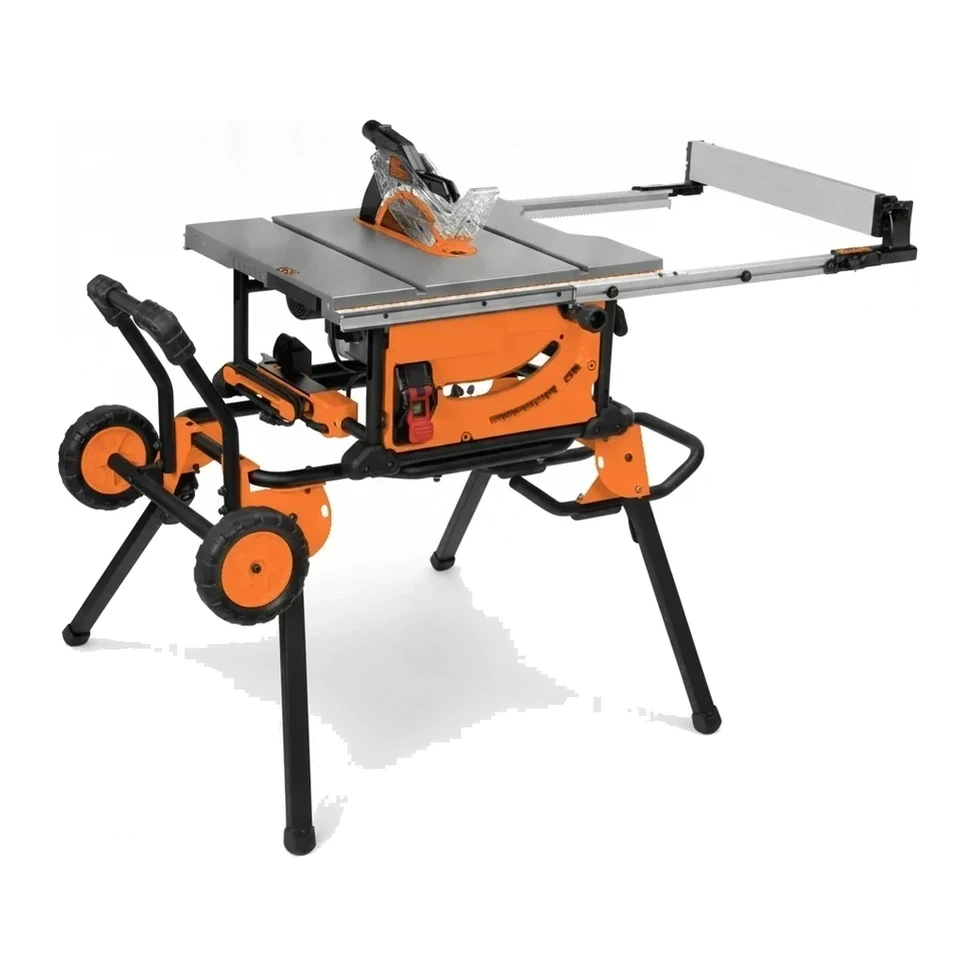
How it works
Stock slides along the fence and across the table into the blade, so the machine geometry, not the operator's hand, defines the cut line. Blade height and tilt adjust from below the table, and a riving knife behind the blade keeps the kerf from closing. Jobsite models fold onto wheeled stands for transport.
Types & variants
- Jobsite table saws
- Compact, stand-mounted saws built for transport between sites.
- Contractor-style saws
- Larger tables and fences for higher-capacity ripping.
- Cordless table saws
- Battery models for ripping where power is not yet run.
Key specifications
| Specification | Typical range | What it means |
|---|---|---|
| Rip capacity | Varies by model | The fence's maximum distance from the blade sets the widest rip. |
| Blade diameter | Varies by model | Determines maximum depth of cut through thick stock. |
| Safety system | Riving knife and guard | Anti-kickback hardware is central to safe ripping. |
How the industry sizes it
Jobsite models differ mainly in rip capacity, table size, and stand design. Grounding for this class carries no reliable spec ranges, so capacities should be confirmed per model.
Applications
- Ripping sheet goods and lumber to width
- Sizing decking, siding, and trim stock
- Repeat cuts for stair, cabinet, and built-in work
- Bevel ripping for angled assemblies
Safety & operation
- Kickback is the defining hazard: the riving knife stays fitted, and push sticks keep hands away from the blade on narrow rips.
- Never cut freehand; stock is controlled by the fence or the miter gauge, not both at once.
- Stand out of the direct line behind the blade, where kickbacks eject stock.
Standards & certifications
- OSHA · 29 CFR 1926.304
- Guarding and spreader requirements for table saws in construction.
- UL · UL 62841
- Safety standard covering transportable bench saws.
Frequently asked
What causes table saw kickback?
Table saw or circular saw with a rail?
What is a riving knife?
Related equipment
Browse by manufacturer
Sources
Every specification is verified against the manufacturer's published data, with the source linked for reference.
All models
7 models · Every spec cited to source