Router
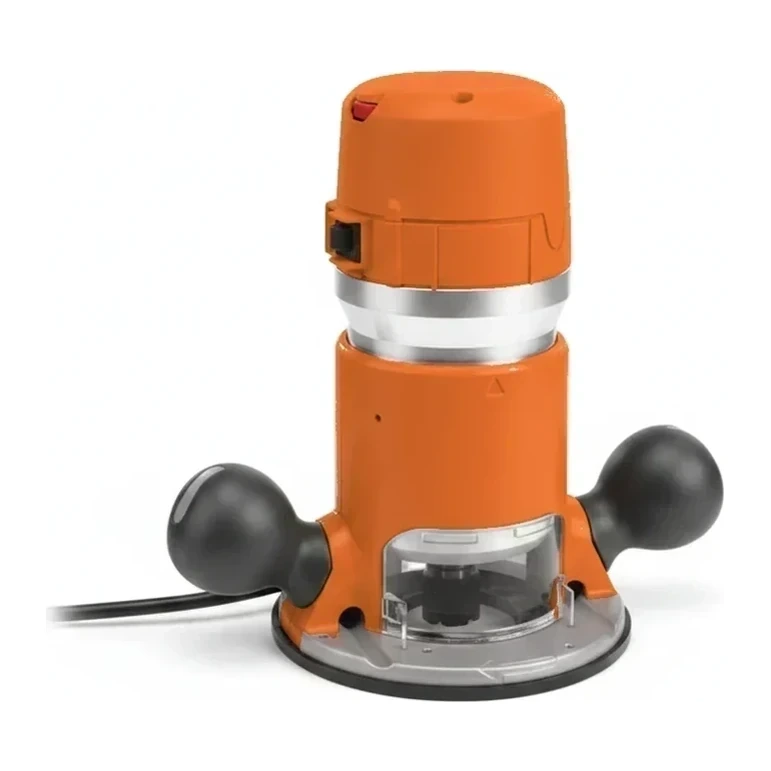
A router is a high-speed motor spinning a shaped cutting bit, guided along or through wood to cut profiles, grooves, and joinery. It is the shaping tool of carpentry, doing with one bit change what dedicated machines once did.
How it works
The motor drives a collet-held bit at very high RPM while a flat base references the work surface. Depth adjustment sets how far the bit projects; edge guides, bearings on the bit, or templates steer the cut. Fixed bases hold one depth for edge work, while plunge bases let the spinning bit enter the surface mid-panel.
Types & variants
- Fixed-base routers
- Set-depth routers for edge profiles and dadoes.
- Plunge routers
- Spring-loaded bases for mortises, inlays, and interior cuts.
- Compact trim routers
- One-hand models for edge trimming, hinges, and light profiles.
- Cordless routers
- Battery models covering trim and light joinery on site.
Key specifications
| Specification | Typical range | What it means |
|---|---|---|
| Motor rating | 5.6-15.0 A | Higher amperage swings large-diameter bits through hard stock without bogging. |
| Collet size | 1/4 or 1/2 in | The 1/2 in collet runs larger bits with less vibration and deflection. |
| Speed control | Variable on most | Large bits must run slower to keep rim speed safe and burn-free. |
How the industry sizes it
The class spans one-hand trim routers to full-size plunge machines. Trim routers handle edge work and laminates; mid-size machines cover general joinery; the largest motors drive panel-raising and template work, usually in a router table.
Applications
- Edge profiles on trim, counters, and furniture parts
- Dadoes, rabbets, and mortise joinery
- Hinge, lockset, and hardware recessing with templates
- Flush-trimming laminates and template-shaped parts
Safety & operation
- Feed against bit rotation; climb cutting lets the router self-feed and run.
- Bits must be fully seated and collets clean; a slipping bit ruins work and can eject.
- The bit stays spinning after release, so the router lifts clear and stops before being set down.
Standards & certifications
- OSHA · 29 CFR 1926.304
- Woodworking tool requirements for portable routers.
- UL · UL 62841
- Safety standard for hand-held motor-operated electric tools.
Frequently asked
What separates a trim router from a full-size router?
Why did the cut burn?
Which collet matters more, 1/4 or 1/2 in?
Browse by manufacturer
Sources
Every specification is verified against the manufacturer's published data, with the source linked for reference.
All models
115 models · Page 3 of 3 · Every spec cited to source