

Painting and Coating Equipment
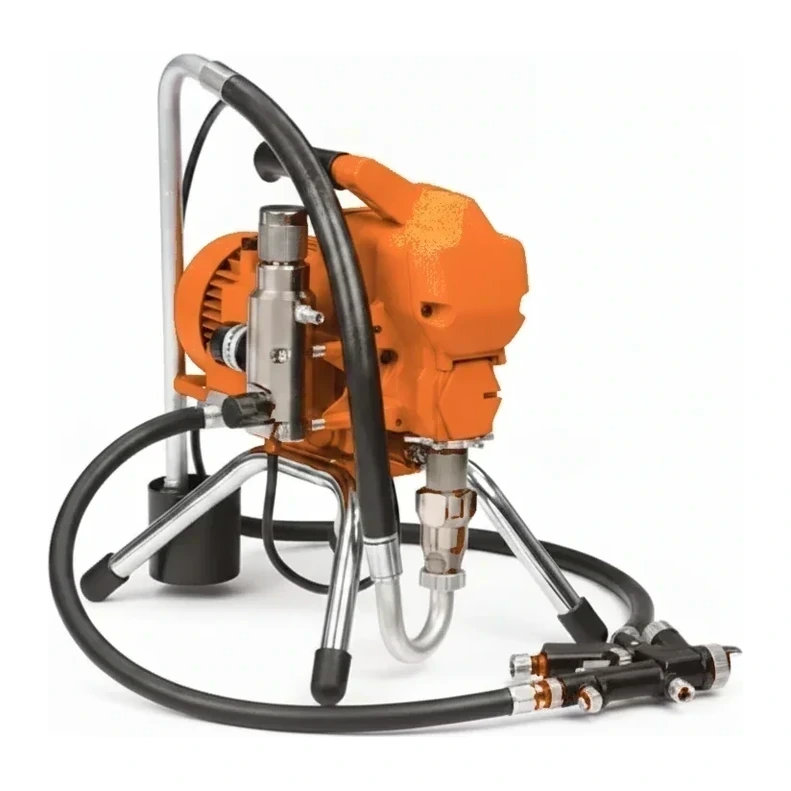
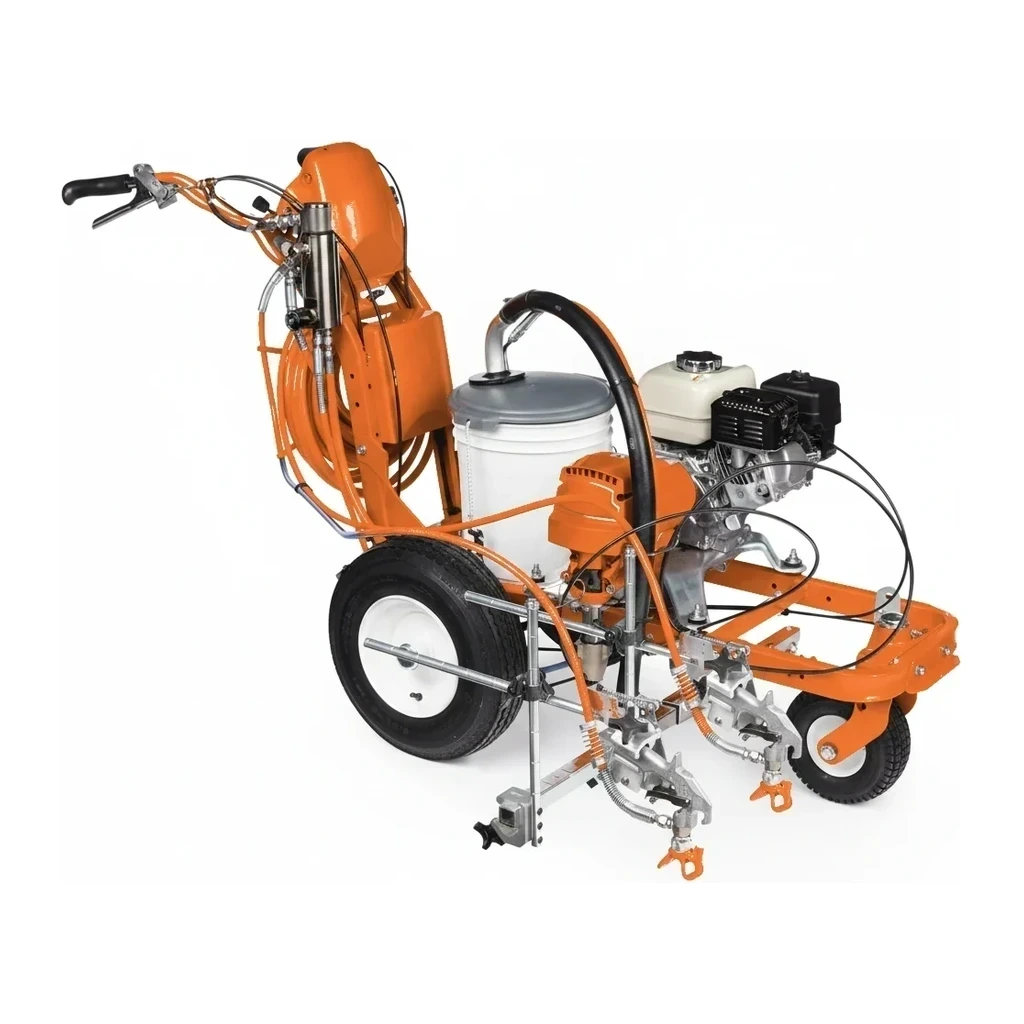
Paint equipment applies coatings from walls to parking lots. Airless paint sprayers are the core class, with line stripers, texture sprayers, and brushes rounding out the family.
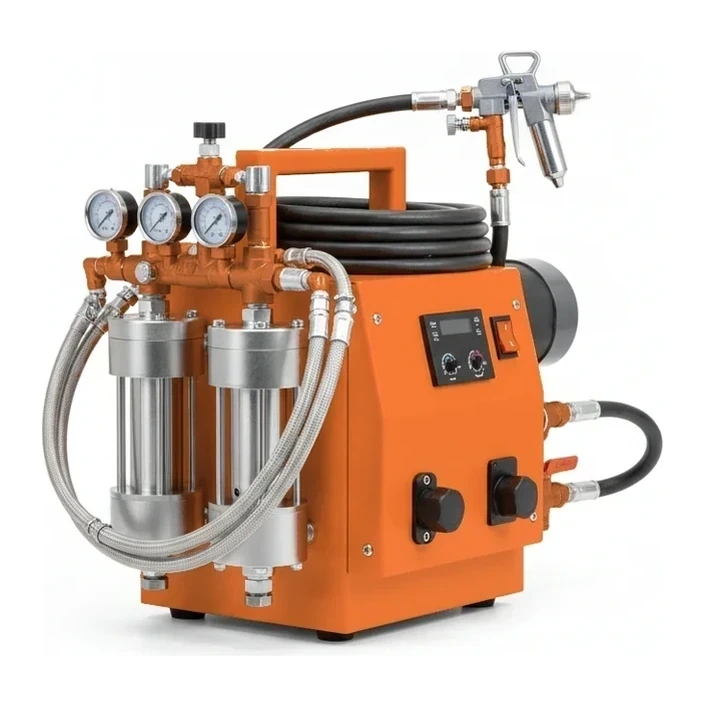
How it works
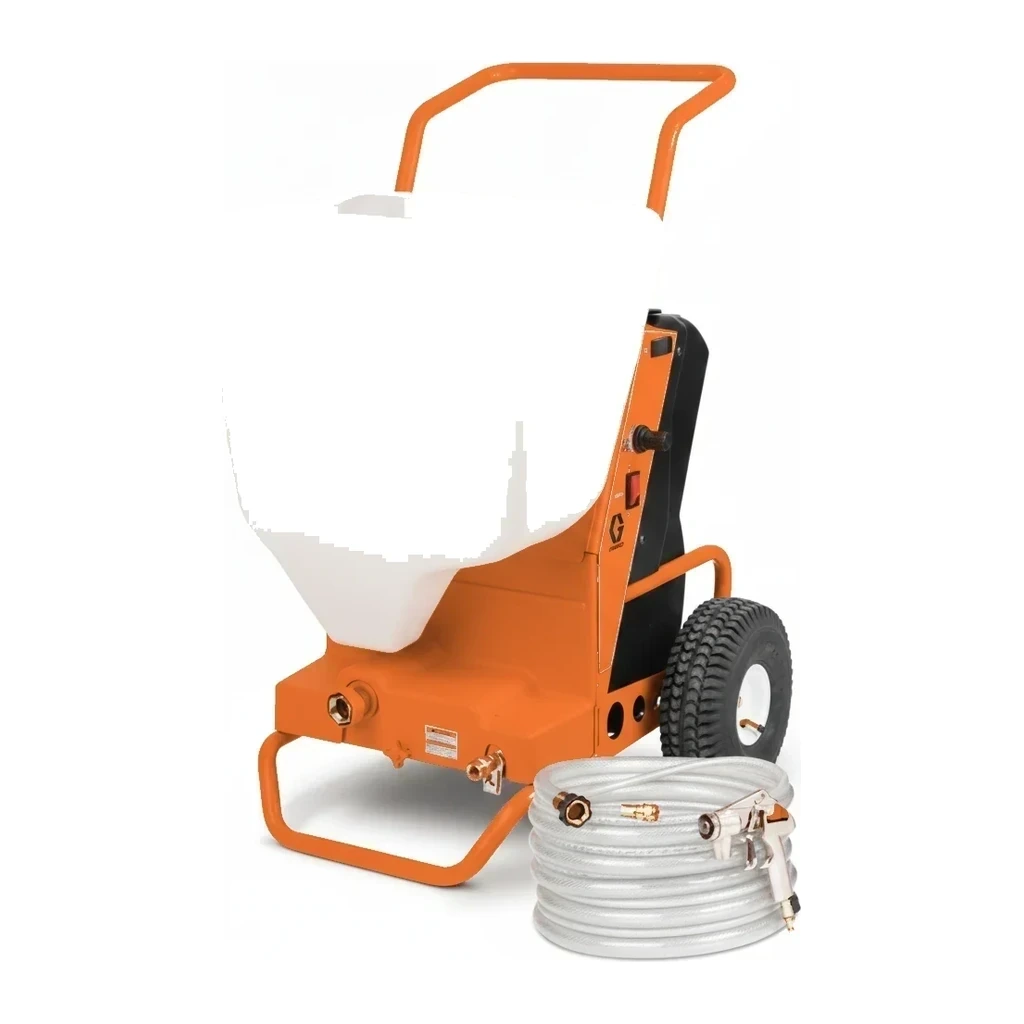
An airless pump forces coating through a small tip at up to several thousand psi, atomizing it into a fan that lays down far faster than rolling. Tip orifice and fan width are chosen per coating viscosity and surface. Stripers mount the same technology on a wheeled chassis with guns aimed at the ground; texture rigs pump heavier-bodied material.
Types & variants
- Paint Sprayer
- Airless or HVLP unit that atomizes paint for fast, even coating.
- Line Striper
- Walk-behind sprayer that lays straight traffic and field lines.
- Texture Sprayer
- Sprayer that applies drywall texture and heavy-bodied coatings.
- Paint Brush
- Manual brushes for cut-in and detail painting.
- Protective Coatings
- Specialty coatings applied for surface protection.
How to choose
Coating and area select the machine: interior latex at volume favors mid-size airless units; heavy elastomerics and blockfillers need larger pumps and tips; lines and layouts go to stripers. Tip wear degrades finish and wastes material, so tip condition and filter maintenance decide results as much as the pump does.
Standards & certifications
- OSHA · 29 CFR 1926.300
- General guarding and condition requirements for hand and power tools in construction.
- EPA · RRP Rule (40 CFR 745)
- Lead-safe work practices when disturbing pre-1978 painted surfaces.