

Electric Heater
An electric heater converts electrical power to heat through resistance elements with a fan spreading the warmth, no combustion, no fumes, no fuel logistics, making it the default for enclosed and occupied spaces where air quality matters. The catalog lists 123 models from brands including Qmark, Dimplex, Chromalox, TPI Corporation and Val6.
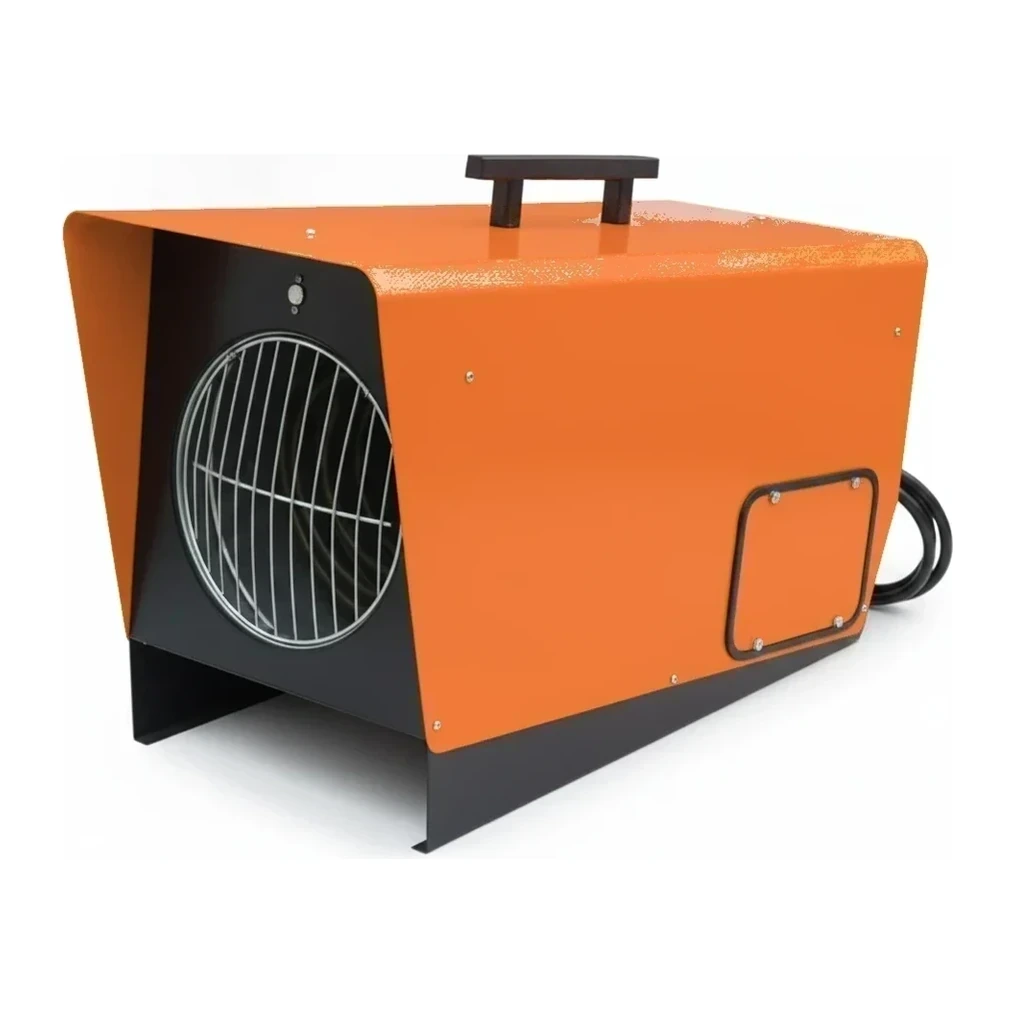
How it works
Current through resistance elements produces heat with near-total conversion efficiency at the unit; a fan moves air across the elements into the space. Output is fixed by the electrical supply, every BTU corresponds to electrical power drawn, so the practical ceiling is the site's available circuits, not the heater catalog. Smaller units plug into standard circuits, while larger salamander and skid formats require high-voltage or three-phase connections installed by qualified electricians.
Types & variants
- Portable fan-forced heaters
- Plug-in units for rooms, offices and small work areas.
- Electric salamander heaters
- High-output jobsite units on higher-voltage supplies.
- Fixed unit and wall heaters
- Permanently wired heaters for garages, entries and utility spaces.
- Industrial process heaters
- Chromalox-style element packages for process and freeze-protection duty.
Key specifications
| Specification | Typical range | What it means |
|---|---|---|
| Heat output | 5,000 through 400,000 BTU across the catalog size classes | Output tracks electrical input directly: the sizing figure. |
| Airflow | 50 to 550 cfm documented across listed models | Fan delivery spreads the heat through the space. |
| Supply requirement | Documented per model listing | Voltage, phase and amperage decide which site circuits can host the unit. |
| Staging | Documented per model listing | Element stages let output match partial loads without cycling. |
How the industry sizes it
Electric heaters are sized in BTU against the space's heat loss, but the governing constraint is electrical supply: the catalog classes, 5,000-50,000, 50,000-150,000 and 150,000-400,000 BTU, climb from standard-circuit portables to units needing dedicated high-voltage or three-phase service. Site power is confirmed before the class is chosen.
Applications
- Heating enclosed and occupied spaces without combustion fumes
- Drying interiors after paint, drywall and flooring work
- Job trailers, offices and small workshops
- Supplemental and freeze-protection heat
- Warehouse and shop heating where power is available
Safety & operation
- Circuit loading is the class's core hazard: heaters draw at capacity continuously, and undersized or daisy-chained cords overheat.
- Clearances to combustibles per the data plate apply; elements run hot enough to ignite what touches them.
- Units stand on stable, dry surfaces with cords protected from traffic, on GFCI supply in damp work.
- Large units are hard-wired or connected by qualified electricians to the nameplate specification.
Standards & certifications
- UL · 1025
- Safety standard for electric air heaters.
- NFPA · 70 (NEC)
- Circuit sizing, cord and connection requirements.
- OSHA · 29 CFR 1926.154
- Temporary heating device rules on construction sites.
Frequently asked
Why choose electric over fuel-fired heat?
What supply do the larger classes need?
Are electric heaters really fume-free?
Compare popular models
Find by spec →Normalised to the same units. A dash means the figure was not published.
| Model | Airflow | Fuel capacity |
|---|---|---|
| Multiquip EHTX-44Y5 | - | - |
| Val6 MPX | 110 cfm | 6.6 gal |
Related equipment
Browse by manufacturer
Sources
Every specification is verified against the manufacturer's published data, with the source linked for reference.
All models
123 models · Page 3 of 3 · Every spec cited to source