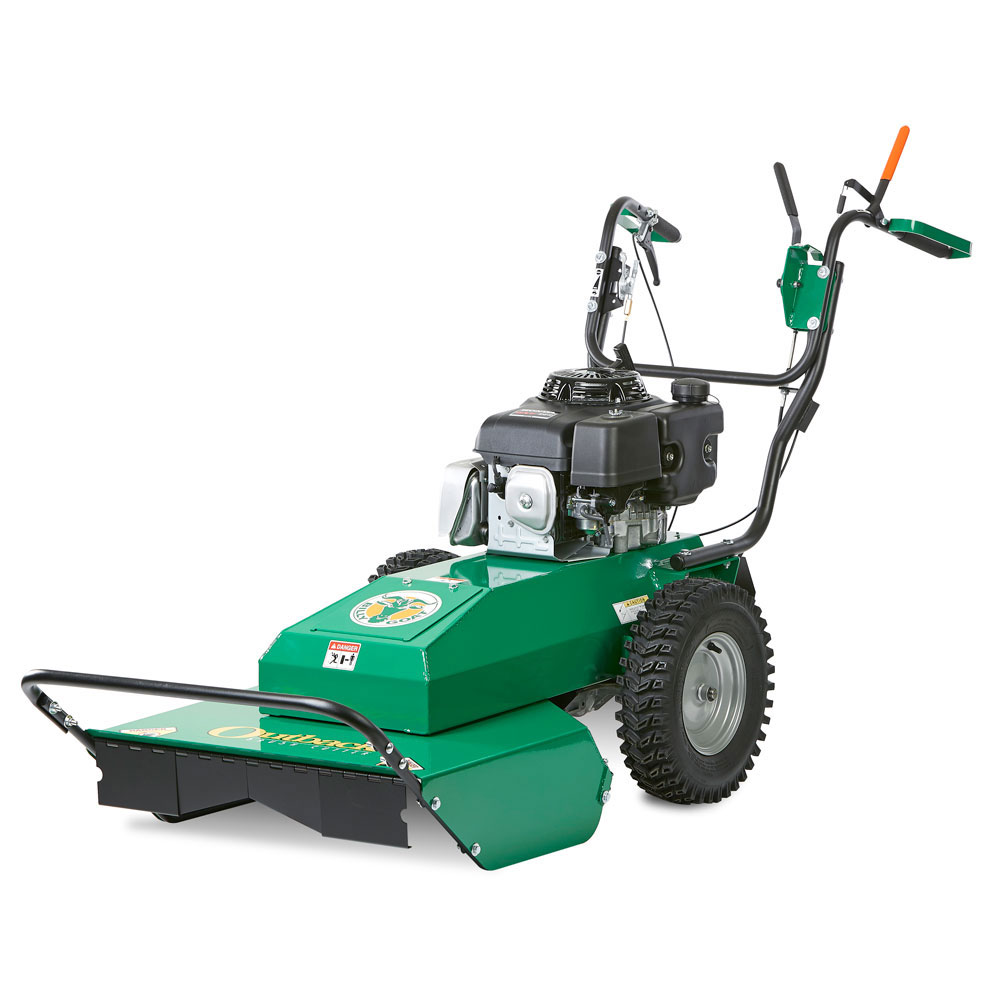

Rough-Cut Brush Mower
A rough-cut brush mower is a heavy-duty cutting machine designed to clear overgrown vegetation, thick grass, briars, weeds, and small saplings in areas where standard lawn mowers cannot operate. These machines utilize robust cutting systems, typically rotary blades, flail blades, or sickle bars, to handle dense, woody material up to 2 inches in diameter. Rough-cut brush mowers serve land clearing, right-of-way maintenance, trail management, and agricultural field preparation across the landscape and grounds maintenance industries.
How it works
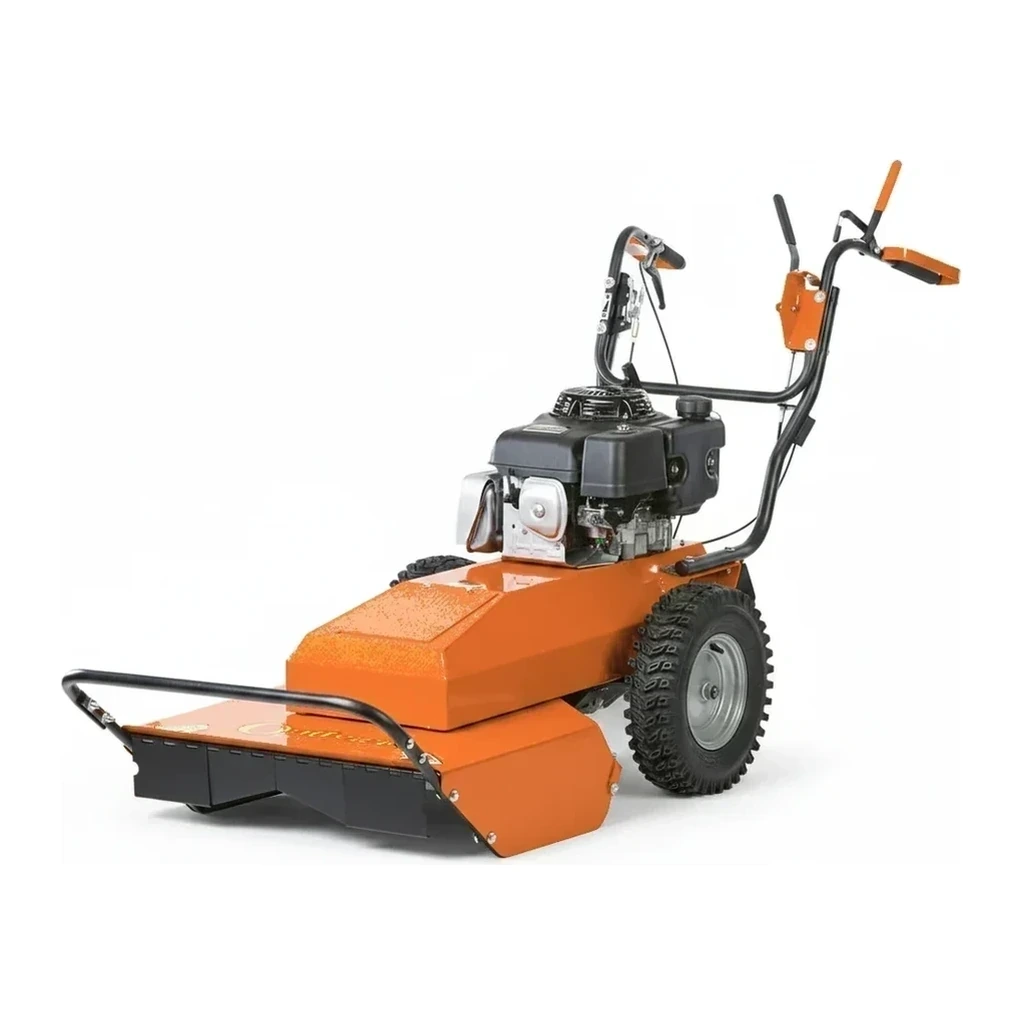
Rough-cut brush mowers employ high-torque cutting mechanisms powered by gasoline engines or tractor power take-off (PTO) systems. Walk-behind and self-propelled models use direct-drive or belt-driven rotary blades spinning at high speed beneath a reinforced deck, while tow-behind and tractor-mounted units often feature flail drums or articulating cutter bars. The cutting head sits higher off the ground than conventional mowers, with reinforced guards to deflect debris, and heavy-duty blades or chains designed to absorb impact from rocks and stumps. Operators control ground speed and cutting height to match vegetation density, with slower speeds for thick brush and saplings. The machine's weight and low center of gravity provide stability on uneven terrain, while wide tires or tracks distribute weight to prevent soil compaction. Discharge chutes direct cut material away from the operator, and many models feature adjustable cutting decks to accommodate slopes and ditch banks.
Types & variants
- Walk-Behind Brush Mower
- Self-contained units with handlebar controls, typically under 30 inches wide, used for trails, lot perimeters, and areas inaccessible to larger equipment.
- Self-Propelled Field Mower
- Ride-on or stand-on machines with hydrostatic drive systems, offering greater productivity on overgrown lots and utility right-of-ways.
- Tow-Behind Brush Cutter
- PTO-driven or trailed units pulled by tractors or UTVs, covering larger acreage with minimal operator fatigue.
- Flail Mower
- Employs free-swinging hammer blades on a rotating drum, providing fine mulching action and safer operation near obstacles.
- Skid Steer Brush Cutter
- Loader-mounted attachments delivering high hydraulic flow for clearing dense vegetation and light forestry applications.
Key specifications
| Specification | Typical range | What it means |
|---|---|---|
| Cutting Width | 26–72 in (66.0–183 cm) | Determines productivity per pass and suitability for confined areas versus open acreage. |
| Operating Weight | 546-1009 kg (1200-2225 lb) | Affects traction, stability on slopes, and transport requirements for walk-behind and self-propelled models. |
| Fuel Capacity | 12.8-33.8 gal | Influences continuous operating duration between refueling, critical for remote site work. |
| Maximum Cutting Capacity | Up to 2 in diameter saplings | Defines the upper limit of woody material the cutting system can reliably process without damage. |
How the industry sizes it
The rental industry sizes rough-cut brush mowers primarily by cutting width measured in inches, which directly correlates to application and machine type. Models under 30 inches are walk-behind units suited for trails and confined areas; 30- to 48-inch machines encompass self-propelled and tow-behind field mowers for overgrown lots and ditch banks; units over 48 inches wide are tractor-mounted or loader-attached cutters capable of clearing acres of brush and processing 2-inch saplings efficiently. Operating weight and fuel capacity serve as secondary indicators of duty cycle and machine class, with heavier units providing greater stability and longer operating intervals.
Applications
- Right-of-way and utility corridor maintenance along roadsides, power lines, and pipeline easements
- Land clearing and lot preparation for construction sites and real estate development
- Trail creation and maintenance in parks, recreational areas, and conservation lands
- Agricultural field reclamation and pasture renovation following abandonment or overgrowth
- Municipal and county roadside shoulder management and vegetation control
- Fire break establishment and defensible space clearing in wildland-urban interface zones
Safety & operation
- Operators must wear eye protection, hearing protection, long pants, and steel-toed boots due to high-velocity debris discharge and noise levels exceeding 85 dBA.
- Pre-operation site inspection identifies hidden obstacles such as rocks, stumps, wire fencing, and debris that can become projectiles or damage cutting components.
- Maintaining safe distance from bystanders, typically 300 feet minimum, prevents injury from ejected material during cutting operations.
- Blade engagement should occur only after ensuring cutting deck is clear and machine is on stable, level ground to prevent tip-over or loss of control.
- Fuel handling and hot surface contact protocols prevent fire hazard, particularly when operating in dry grass or brushy conditions.
Standards & certifications
- ANSI · ANSI/OPEI B71.4
- Establishes safety and performance standards for commercial turf care equipment including walk-behind and ride-on mowers.
- OSHA · 29 CFR 1910.266
- Provides logging operations safety requirements applicable to brush cutting and forestry mowing activities.
- SAE · SAE J2258
- Specifies operator controls and displays for agricultural and forestry machinery, including tractor-mounted implements.
- EPA · Tier 4 Emissions
- Regulates engine emissions for non-road diesel and gasoline engines used in outdoor power equipment.
Frequently asked
What distinguishes a rough-cut brush mower from a standard lawn mower?
How does cutting width affect machine selection for different terrain types?
What maintenance intervals apply to rough-cut brush mower cutting systems?
Can rough-cut brush mowers operate on slopes and uneven ground?
Compare popular models
Find by spec →Normalised to the same units. A dash means the figure was not published.
| Model | Engine power | Operating weight | Fuel capacity |
|---|---|---|---|
| Kubota L2501 | - | - | - |
| Kubota Z400 | - | - | - |
Related equipment
Browse by manufacturer
Sources
Every specification is verified against the manufacturer's published data, with the source linked for reference.
All models
49 models · Page 1 of 2 · Every spec cited to source