

Hydroseeder
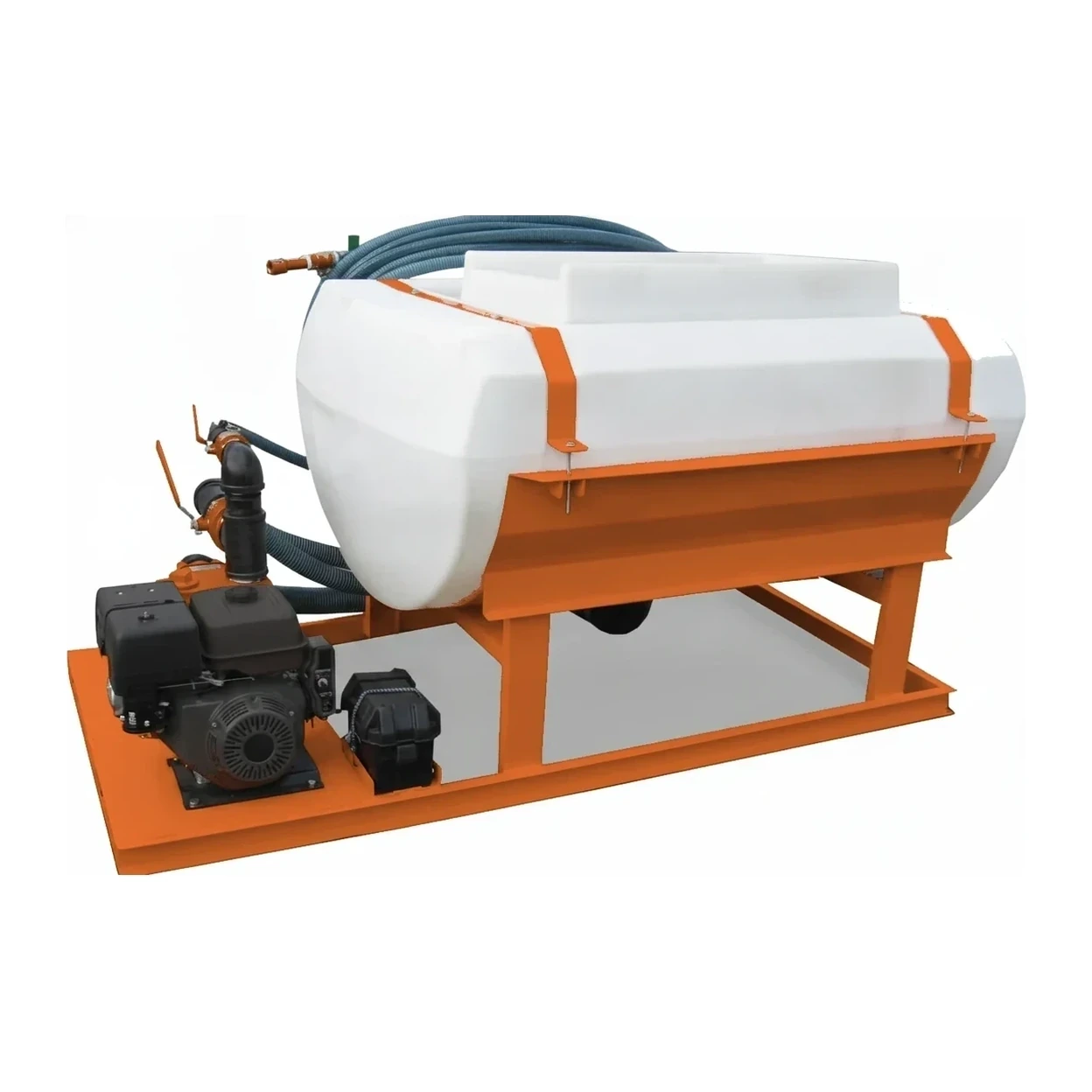
A hydroseeder is a truck- or trailer-mounted tank system that applies a pressurized slurry of seed, mulch, fertilizer, tackifier, and water to soil surfaces. Used primarily for erosion control, slope stabilization, and rapid turf establishment, hydroseeders deliver uniform coverage over large or difficult-to-access areas. The equipment class is central to site work, highway construction, and commercial landscaping operations.
How it works
The hydroseeder's tank mixes water with seed, wood or paper mulch, fertilizer, and binding agents into a homogenous slurry through mechanical paddles or jet agitation. A centrifugal or diaphragm pump pressurizes the mixture and discharges it through a hose and spray nozzle, projecting the slurry up to 200 feet or more depending on pump capacity and pressure. Operators control flow rate, spray pattern, and application thickness from a control panel, typically at the rear or side of the unit. Jet-agitated models recirculate slurry through nozzles inside the tank to keep solids suspended and are common in smaller units. Mechanical agitation uses rotating paddles or chains and is preferred in larger production machines where thick bonded fiber matrix (BFM) slurries are applied for erosion control on steep slopes and highway projects.
Types & variants
- Jet-Agitated Hydroseeder
- Uses high-velocity water jets to recirculate slurry and maintain suspension; lighter weight, typical on trailer-mounted units under 500 gallons.
- Mechanical-Agitation Hydroseeder
- Employs paddle or chain agitators for thorough mixing; handles heavier slurries and higher mulch loads, standard on production units over 1,000 gallons.
- Trailer-Mounted Hydroseeder
- Portable units towed behind a truck or utility vehicle; tank capacities typically range from 50 to 1,200 gallons for residential and light commercial work.
- Truck-Mounted Hydroseeder
- Integrated onto a truck chassis for large-scale, self-contained operation; common in 800 to 3,000+ gallon sizes for highway and commercial site work.
- Bonded Fiber Matrix (BFM) Hydroseeder
- Heavy-duty mechanical units designed to apply thick, tackified fiber slurries for steep slope and erosion-control applications requiring superior adherence.
Key specifications
| Specification | Typical range | What it means |
|---|---|---|
| Tank Capacity | 0-3,000+ gallons | Primary sizing metric; larger tanks support longer spray runs and heavier slurry loads before refilling. |
| Pump Type | Centrifugal or diaphragm | Centrifugal pumps deliver high flow rates for distance; diaphragm pumps handle thicker slurries and higher pressures. |
| Spray Distance | Varies by unit size and pump | Maximum horizontal reach of the slurry stream; determined by pump pressure, nozzle design, and slurry viscosity. |
| Agitation Method | Jet or mechanical | Jet agitation suits lighter slurries; mechanical agitation required for heavy mulch and BFM applications. |
| Engine Power | Gas or diesel | Drives the pump and agitation system; larger engines support higher flow rates and thicker mixtures. |
How the industry sizes it
The industry sizes hydroseeders by tank capacity in gallons, which directly correlates to coverage area per load and job scale. Units from 0 to 150 gallons handle lawn repair and small residential seeding, typically jet-agitated units on small trailers. Machines from 150 to 500 gallons cover full residential lawns and small commercial lots in a load or two. Site work hydroseeders in the 500 to 1,200 gallon range serve subdivision lots, pads, and slopes with one truck feeding. Heavy-duty units from 1,200 to 2,500 gallons tackle highway and large-slope erosion control with bonded fiber matrix. Production hydroseeders over 2,500 gallons feature mechanical agitation and support thousands of gallons per day on large-scale commercial and infrastructure projects.
Applications
- Erosion control and slope stabilization on highway embankments, cuts, and construction sites
- Residential and commercial lawn establishment and turf seeding
- Mine reclamation, landfill capping, and disturbed land revegetation
- Golf course rough seeding, athletic field overseeding, and park establishment
- Wildfire restoration and native grass seeding on public and conservation lands
- Subdivision lot seeding and post-grading site finishing
Safety & operation
- Ensure the tank is properly vented during filling and operation to prevent pressure buildup or vacuum collapse.
- Inspect hoses, fittings, and spray nozzles for wear and secure connections before pressurizing the system.
- Maintain stable footing and clear work zones when operating the spray gun; high-pressure discharge can cause operator imbalance.
- Wear eye protection and gloves when handling tackifiers, fertilizers, and other chemical additives mixed into the slurry.
- Prevent slurry overspray onto roadways and walkways, which can create slippery surfaces and traffic hazards.
Standards & certifications
- EPA Tier Emissions · 40 CFR Part 1039
- Diesel engines on hydroseeders must meet applicable EPA nonroad emissions standards based on horsepower and model year.
- OSHA · 29 CFR 1926.602
- Material handling equipment regulations apply to trailer and truck-mounted hydroseeder operation on construction sites.
Frequently asked
What is the difference between jet and mechanical agitation?
How is hydroseeder capacity related to coverage area?
What mulch types are used in hydroseeding?
Can hydroseeders apply fertilizer and tackifier simultaneously?
Related equipment
Browse by manufacturer
All models
22 models · Every spec cited to source