

Straw Blower
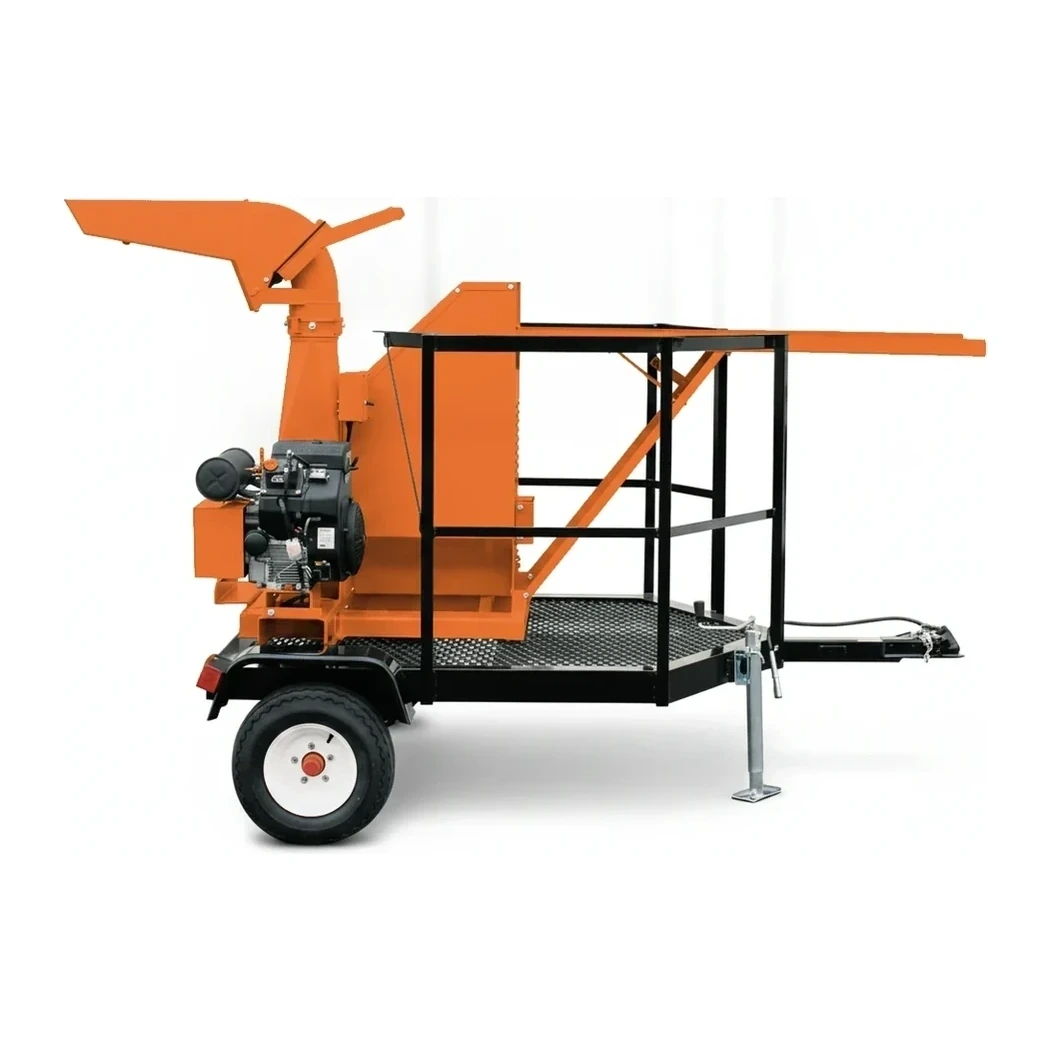
A straw blower is a pneumatic distribution machine that uses forced air to break apart and spread baled straw, hay, or mulch over seeded ground. It is primarily used in erosion control, revegetation, and landscape establishment to protect freshly seeded soil. The equipment ranges from tailgate-mounted units for residential work to high-capacity trailer models for highway and large-scale site work.
How it works
The machine draws compressed air from a PTO-driven or engine-driven blower and directs it through a discharge chute. An operator or feeder introduces whole or broken bales into a feed chamber, where rotating paddles or tines shred the material while air propels the particles through a flexible hose or rigid boom. The resulting airborne stream distributes mulch evenly over the target area at distances up to several hundred feet, depending on blower capacity and wind conditions. Operators control coverage density by adjusting blower speed, feed rate, and the angle and sweep of the discharge chute. Some models feature hydraulic boom controls for roadside work, while tailgate units rely on manual aim and repositioning. Most machines accept standard rectangular bales and can handle straw, hay, wood fiber, and processed mulch products.
Types & variants
- Tailgate Mulcher
- Compact units that mount on truck tailgates or trailers, typically under 3 tons/hr capacity, suited for residential and small commercial seeding jobs.
- Trailer-Mounted Blower
- Mid-capacity machines on dedicated trailers with independent engines or PTO drives, commonly used by site contractors and landscape crews.
- Highway Production Blower
- High-output models exceeding 8 tons/hr, designed for continuous operation with multiple bale feeders, used in roadway and large infrastructure projects.
- PTO-Driven Blower
- Units powered by tractor or truck PTO systems, eliminating the need for a separate engine and reducing maintenance complexity.
- Self-Propelled Blower
- Integrated engine and chassis designs that allow the machine to move independently during operation, common in large-scale revegetation work.
Key specifications
| Specification | Typical range | What it means |
|---|---|---|
| Capacity | 3-8 tons/hr (site crews), <3 tons/hr (tailgate), >8 tons/hr (highway production) | Rated output in tons per hour; determines crew size, coverage rate, and job scale suitability. |
| Power Source | Gas engine, diesel engine, or PTO | Drives the blower fan; engine models operate independently, PTO units require compatible tractor or truck. |
| Discharge Distance | 50–200 ft (15.2–61.0 m) | Maximum effective throwing range under ideal conditions; varies with material type and blower capacity. |
| Bale Type | Standard rectangular bales (14"×18"×36") | Most machines accept conventional small square bales; some accommodate large square or round bales with modification. |
| Hose/Boom Length | 20–60 ft (6.1–18.3 m) | Length of discharge chute or articulating boom; longer reach reduces machine repositioning on large sites. |
How the industry sizes it
The industry sizes straw blowers by throughput capacity measured in tons per hour. Tailgate mulchers under 3 tons/hr serve small lots, ditch lines, and residential seeding applications. Mid-range units from 3 to 8 tons/hr are standard for site contractors working subdivision lots and roadway shoulders, typically operated by a single bale feeder. Highway production blowers exceeding 8 tons/hr support continuous operation with crews feeding bales behind seeding trains on large linear infrastructure projects. Capacity correlates with blower fan size, engine horsepower, and feed chamber design.
Applications
- Erosion control mulching on construction sites and disturbed slopes
- Highway and roadway shoulder stabilization following seeding operations
- Golf course and athletic field establishment with straw coverage
- Revegetation of mine reclamation areas and landfill caps
- Agricultural field mulching for moisture retention and weed suppression
- Wildfire restoration and native grassland reseeding projects
Safety & operation
- Maintain clear zones around intake and discharge areas to prevent foreign object ingestion and projectile hazards
- Wear respiratory protection when working in airborne straw dust and use hearing protection near blower fans
- Secure all bales and materials during transport to prevent load shifting and roadway debris
- Inspect hoses and booms for wear or separation before operation to avoid sudden discharge failures
- Follow manufacturer lockout/tagout procedures when clearing jams or servicing feed mechanisms
Standards & certifications
- OSHA · 29 CFR 1926 Subpart W
- General requirements for rollover protection and seat belts on mobile equipment used in construction.
- SAE · J1166
- Hydraulic hose and fittings standards applicable to machines with hydraulic boom controls.
- EPA · Tier 4
- Emissions standards for off-road diesel engines; applies to newer diesel-powered blower models.
- ANSI · B71.4
- Safety standards for agricultural equipment including PTO-driven implements and material handling machinery.
Frequently asked
What materials can straw blowers distribute besides straw?
How is coverage density controlled during operation?
What distinguishes a straw blower from a hydromulcher?
Can straw blowers operate on slopes and uneven terrain?
Related equipment
Browse by manufacturer
All models
30 models · Every spec cited to source