

Pipe Threading Machine
A pipe threading machine is a power tool that cuts National Pipe Thread (NPT) tapered threads onto the ends of steel, stainless steel, or brass pipe. These machines enable field fabrication of threaded pipe assemblies for plumbing, HVAC, gas distribution, and fire protection systems. Equipment ranges from portable models for small-diameter pipe to heavy geared machines for industrial applications.
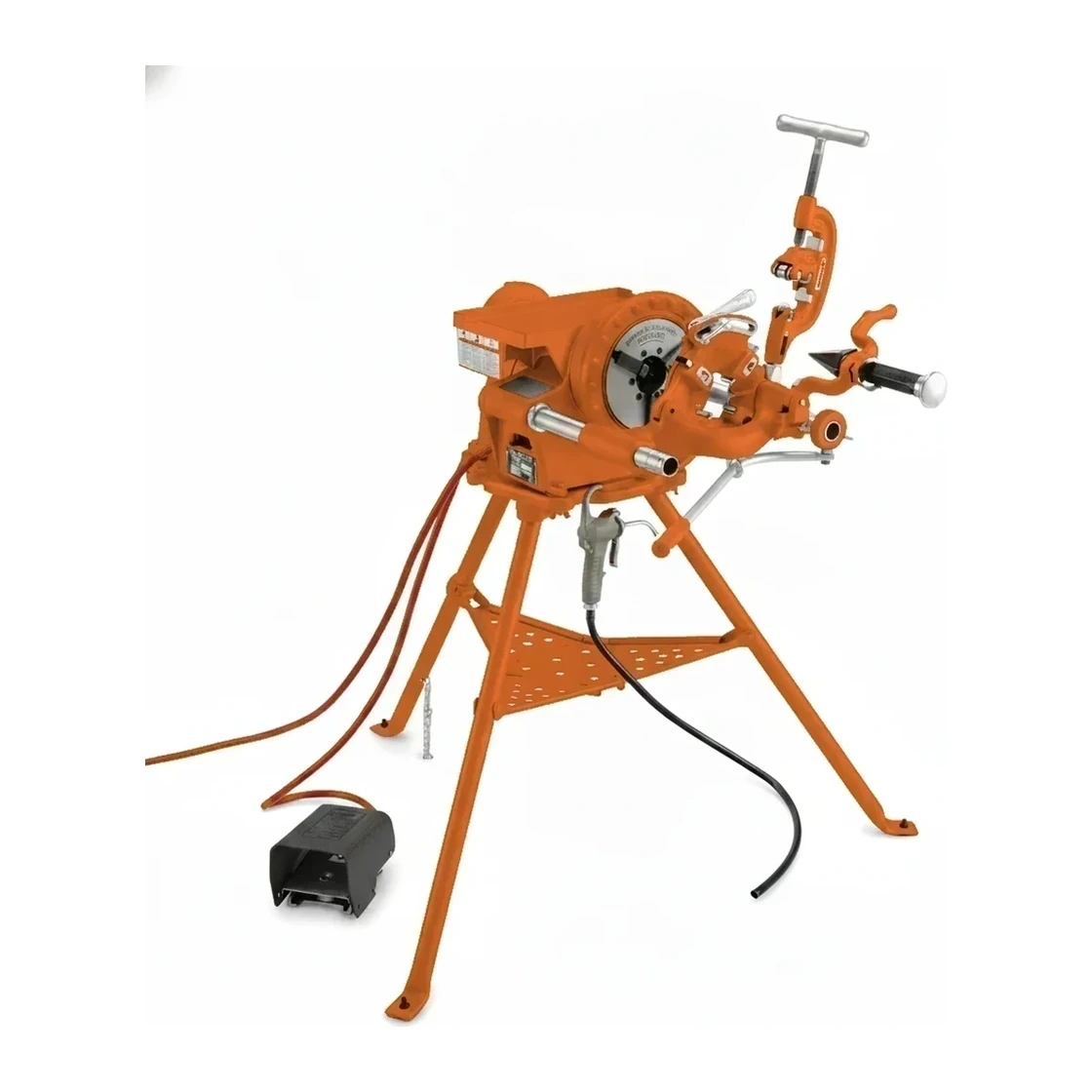
How it works
The machine rotates the pipe while advancing a die head fitted with cutting dies that progressively cut the tapered thread form specified by NPT standards. An integrated oiling system continuously lubricates the dies and pipe during the cutting process to cool the metal and flush away chips. The pipe is secured in a chuck or vise, the appropriate die head is selected for the pipe diameter, and the threading mechanism is engaged until the die head automatically opens at the correct thread length. Smaller threading machines mount to a tripod stand or workbench and handle pipe up to 2 inches. Larger models use a floor stand and geared drive train, requiring two operators to handle heavy pipe sections. Most machines include integrated pipe cutters and reamers to prepare pipe ends before threading.
Types & variants
- Portable Handheld Threader
- Compact units for threading 1/2 to 2 in pipe in the field, often powered by cordless drills or dedicated motors.
- Bench/Tripod Threader
- Stand-mounted machines threading up to 2 in pipe, the standard shop and service truck equipment for plumbers and mechanical contractors.
- Power Drive Threader
- Heavy-duty machines threading 2 to 4 in pipe, commonly used for commercial and institutional installations.
- Geared Threader
- Industrial floor-mounted units for 6 in and larger pipe, using gear reduction for high torque and requiring two-person operation.
- Combination Pipe Machine
- Integrated units that cut, ream, thread, and groove pipe in one setup, often including roll grooving attachments.
Key specifications
| Specification | Typical range | What it means |
|---|---|---|
| Maximum Pipe Capacity | 1/8 to 2 in, up to 4 in, or 6 in and larger | The largest pipe diameter the machine can thread, determining its application range and class. |
| Thread Standard | NPT (National Pipe Thread) | The tapered thread form specified by ASME B1.20.1 for pressure-tight joints in pipe systems. |
| Motor Power | 1/2 to 2 HP | Electrical power driving the threading mechanism; larger machines require more torque for bigger pipe. |
| Die Head Type | Self-opening or manual | Automatic die heads retract when thread length is complete; manual heads require operator disengagement. |
| Power Source | 110V, 220V, or battery | Electrical requirement; smaller portable units may use cordless battery packs for field work. |
How the industry sizes it
The industry sizes pipe threading machines by the maximum pipe diameter they can thread, expressed in inches. The three primary size classes are machines that thread 1/8 to 2 in pipe for water and gas lines (the everyday plumber's machine), machines that thread up to 4 in for commercial risers and fire sprinkler mains, and machines that thread 6 in and larger for industrial process pipe and big mains (geared threaders that need a stand and two people). Within each size class, manufacturers offer variations in portability, from handheld models to tripod-mounted units to floor-standing geared machines.
Applications
- Threading black iron and galvanized steel pipe for natural gas distribution systems
- Fabricating threaded connections for potable water supply and drain-waste-vent plumbing
- Preparing threaded pipe for HVAC condensate drains and refrigerant lines
- Threading fire sprinkler system pipe and risers in commercial construction
- Field fabrication of threaded conduit for electrical and instrumentation runs
- Threading stainless steel pipe for food processing and pharmaceutical systems
Safety & operation
- Secure pipe properly in the vise or chuck before engaging threading mechanism to prevent rotation and ejection
- Keep hands and loose clothing away from rotating pipe, chuck, and die head during operation
- Use adequate cutting oil to prevent die overheating, chip welding, and premature die wear
- Wear safety glasses to protect against metal chips and cutting fluid spray during threading operations
- Ensure proper electrical grounding and avoid operating in wet conditions to prevent shock hazards
Standards & certifications
- ASME · B1.20.1
- Defines NPT thread dimensions and tolerances for pressure-tight pipe joints in mechanical systems.
- ANSI · B11.19
- Performance requirements for safeguarding pipe threading machines and related metalworking equipment.
- OSHA · 1910.212
- Machine guarding requirements for rotating components and pinch points on power-driven equipment.
Frequently asked
What is the difference between NPT and NPTF threads?
How is a pipe threading machine sized for a specific job?
Can the same machine thread both black iron and stainless steel pipe?
What determines when threading dies need replacement?
Related equipment
Browse by manufacturer
Sources
Every specification is verified against the manufacturer's published data, with the source linked for reference.
All models
49 models · Page 2 of 2 · Every spec cited to source