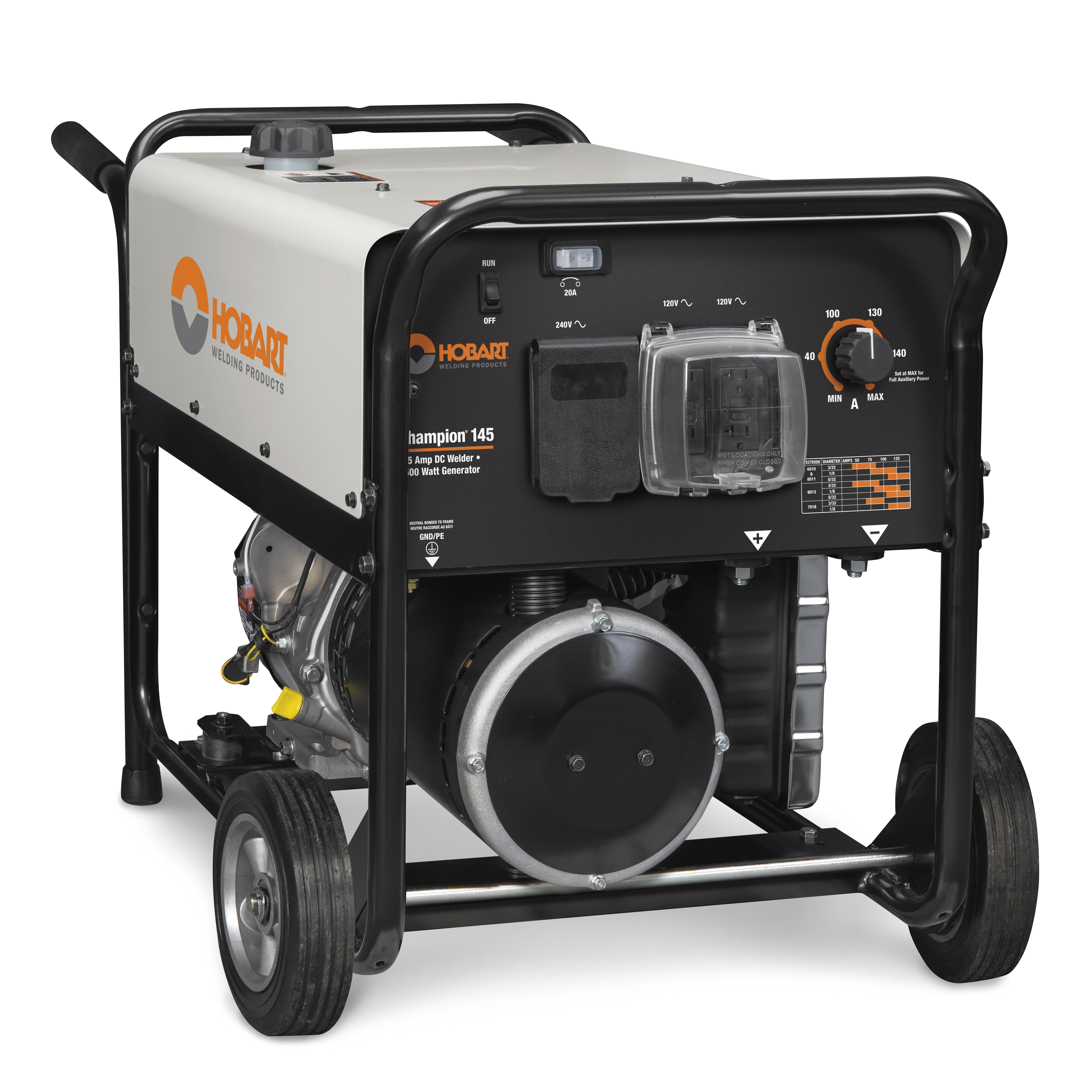

Engine-Driven Welder
An engine-driven welder pairs a gasoline or diesel engine with a welding generator, producing welding current anywhere a machine can be trucked: no line power required. It is the standard power source for field welding on pipelines, structural steel, and repair work, and most units double as generators for tools and lights.
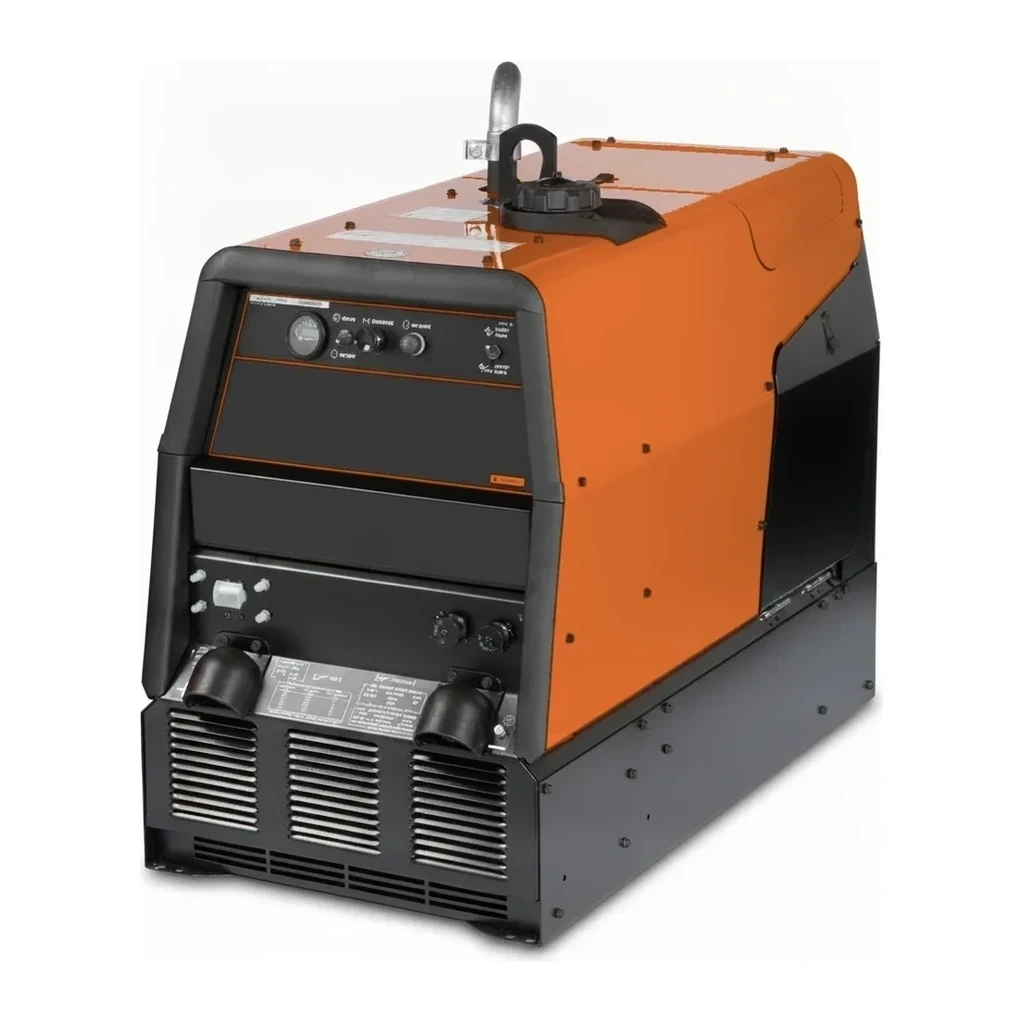
How it works
The engine spins a dedicated welding generator or alternator whose output is regulated to the selected welding process and amperage; the operator sets output at the machine, and engine speed responds to arc load, idling down between welds on most models. Because the machine produces its own power, arc characteristics stay consistent regardless of site electrical conditions. Most units also expose auxiliary AC receptacles fed by the same rotating machine, powering grinders, lights, and hand tools at the weld site: one skid replacing both a welder and a small generator.
Types & variants
- Gasoline-powered units
- Lighter machines at the lower-amperage end, common on trucks for maintenance and light fabrication.
- Diesel-powered units
- Heavier machines favored on construction and pipeline work, sharing fuel with the rest of the diesel fleet.
- Stick/DC-focused machines
- Units optimized for stick and arc-gouging duty, the traditional field-welding configuration.
- Multi-process engine drives
- Machines supporting stick, wire (MIG/flux-cored), and TIG processes for mixed field and shop duty.
- Pipe-welding rigs
- High-duty-cycle diesel machines built for pipeline spreads, often paired on skids with tool power and gouging capacity.
Key specifications
| Specification | Typical range | What it means |
|---|---|---|
| Welding output | 120-400 A across cataloged size classes | Output amperage governs electrode size, material thickness, and processes the machine supports; duty cycle at a given amperage sets sustained output. |
| Fuel capacity | 1.6-25 gal across cataloged models | Tank size against engine load sets how long a machine welds between refuelings on remote work. |
| Process capability | Stick/DC universally; wire and TIG on multi-process models | Determines what work the machine covers without a separate power source. |
| Auxiliary power | AC generator output for tools and lighting on most models | The auxiliary rating decides whether the machine also carries grinders, lights, and small tools at the weld site. |
How the industry sizes it
Engine-driven welders are sized by output amperage against the work: the cataloged classes split at 120-300 A, covering most field welding and light fabrication, and 300-400 A for structural, pipe, and gouging duty. Duty cycle at working amperage matters as much as peak output for production welding, and auxiliary power needs push machine selection when one skid must run the whole weld station.
Applications
- Field welding on structural steel and equipment erection
- Pipeline and pipe-spool welding
- Equipment repair and hardfacing away from shop power
- Maintenance welding on plants, farms, and fleets
- Carbon-arc gouging and cutting on demolition and repair
- Auxiliary tool and lighting power at remote weld sites
Safety & operation
- Engine exhaust contains carbon monoxide; position machines outdoors or exhaust away from the welder and enclosed spaces.
- Shut down and cool before refueling: fuel vapor over a hot engine is an ignition risk on any engine drive.
- Place the work clamp close to the weld to keep current out of unintended paths, and inspect leads for damaged insulation.
- Arc work demands full PPE, shade-rated helmet, gloves, and cover, plus fire watch where sparks reach combustibles.
- Ground and bond the machine per the manual when auxiliary power feeds cord-connected tools.
Standards & certifications
- ANSI · ANSI Z49.1
- Safety in welding, cutting, and allied processes: the base safety standard for all arc welding operations.
- OSHA · 29 CFR 1926.351 / Subpart J
- Arc welding and cutting requirements on construction sites, including lead condition and grounding.
- EPA · 40 CFR Parts 1054 / 1039
- Emission standards for the small spark-ignition and nonroad diesel engines powering these machines.
Frequently asked
What amperage engine-driven welder covers most field work?
Can an engine-driven welder power tools too?
Gas or diesel engine drive?
Compare popular models
Find by spec →Normalised to the same units. A dash means the figure was not published.
| Model | Power output | Fuel capacity |
|---|---|---|
| Hobart Champion 145 Recoil Engine Driven Welder | - | 6.2 gal |
| Hobart Champion Elite 225 Engine-Driven Welder | - | 11.0 gal |
Related equipment
Browse by manufacturer
Sources
Every specification is verified against the manufacturer's published data, with the source linked for reference.
All models
29 models · Every spec cited to source