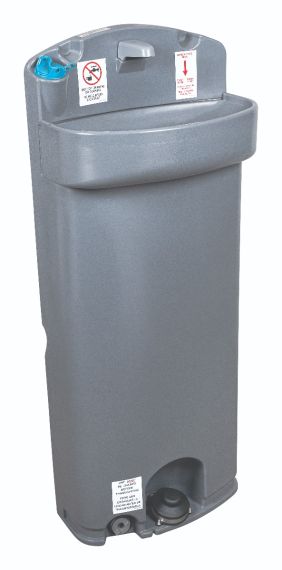
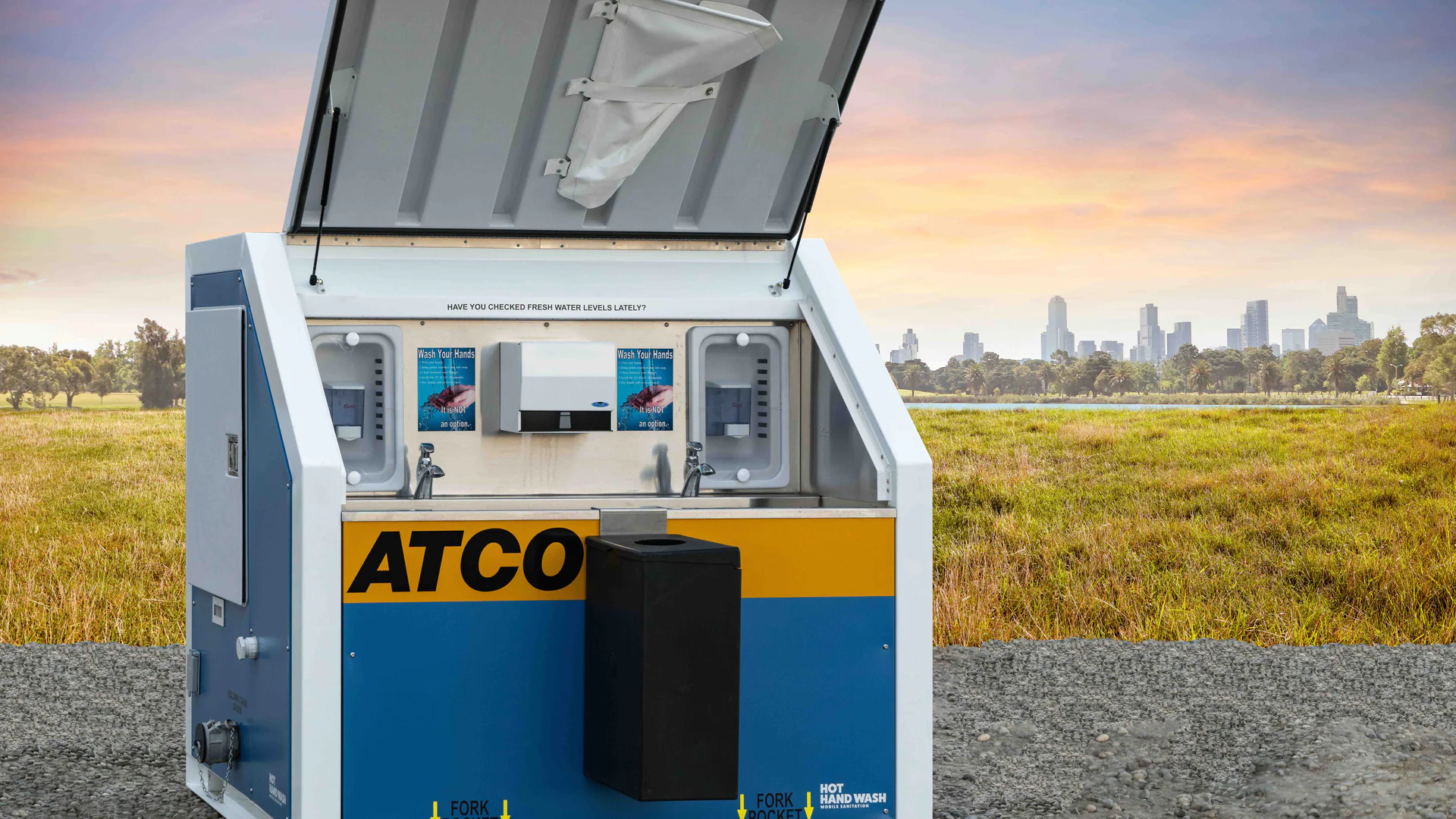
Portable Hand Wash Station
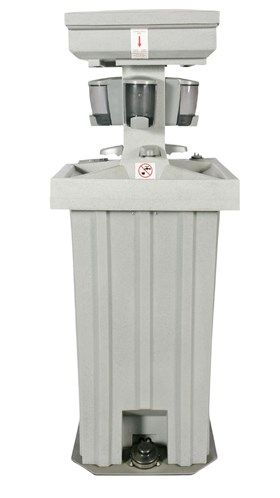
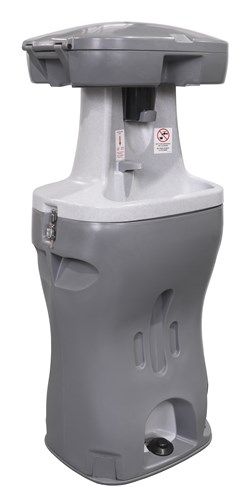
A portable hand wash station is a self-contained sink unit with its own fresh water supply and grey water tank, built for locations without plumbing. Crews and event guests wash with soap and running water at the station itself, no hookup required. The catalog lists 34 models from Monsam Enterprises, Polyjohn, Five Peaks, Satellite Industries, J&J Portable Sanitation Products and Armal.
How it works
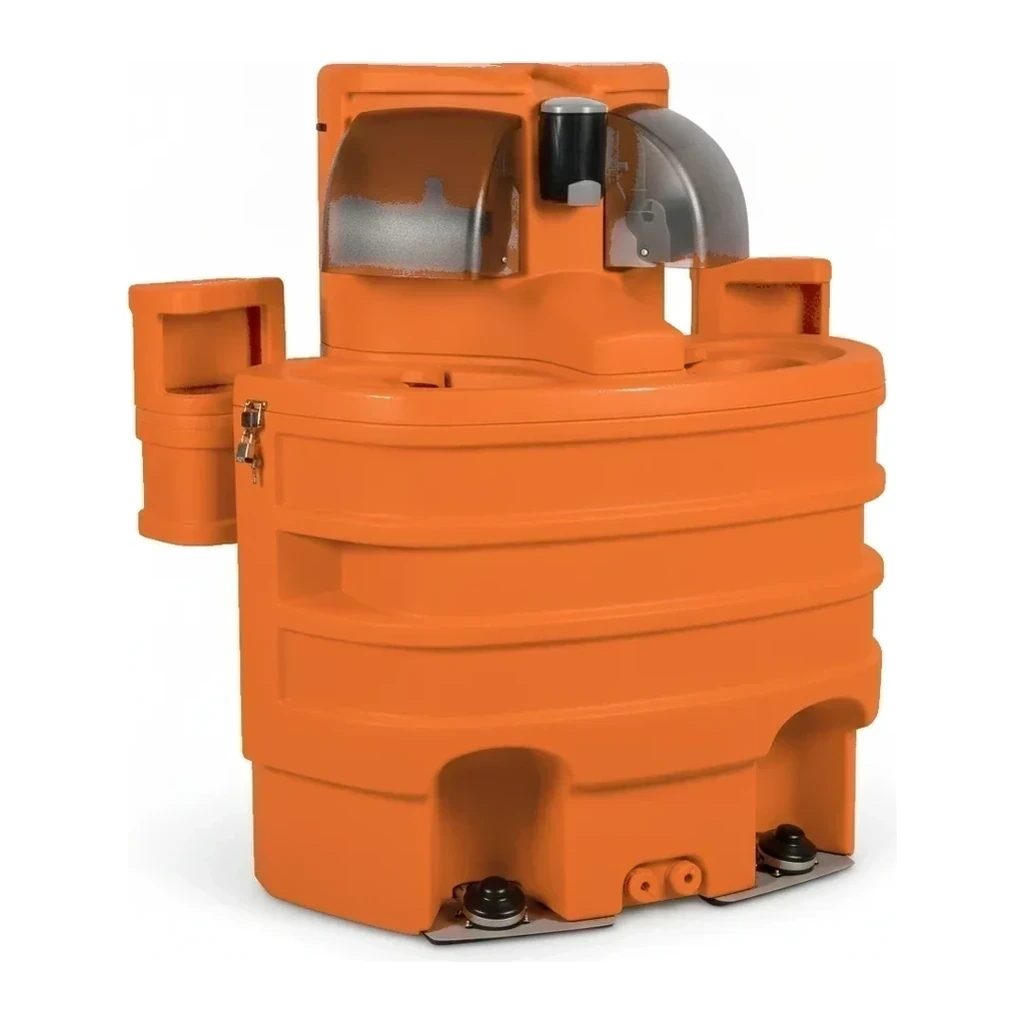
A foot pump draws water from the fresh tank to the faucet, around 2 fl oz per stroke on listed models, so both hands stay free for washing. Used water drains to a separate grey water tank inside the same shell for later pump-out. Stations carry soap and towel dispensers on board. Service means refilling fresh water, emptying grey water and restocking consumables, usually on the same route as portable toilet service.
Types & variants
- Single-sink stations
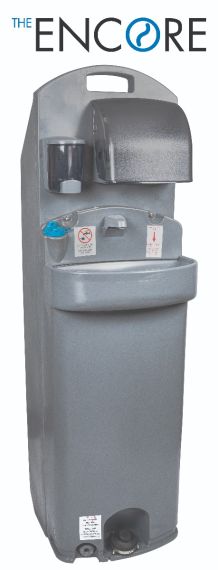
- Compact one-basin units for small crews and tight placements.
- Multi-station units
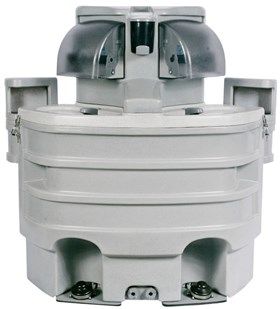
- Two- or four-sided stations letting several people wash at once at events and large sites.
- Heated and enclosed stations
- Units with warm water or enclosures for cold-weather sites and food-handling applications.
Key specifications
| Specification | Typical range | What it means |
|---|---|---|
| Fresh water capacity | 15.5-33.0 gal | Sets how many wash cycles a station delivers between refills: the driver of service frequency. |
| Pump capacity | 2.0 fl oz/stroke | Water delivered per foot-pump stroke; a practical measure of wash comfort and water economy. |
| Width | 16–50.5 in (40.6–128 cm) | Footprint at the base; wider multi-sink units serve more users but need more placement room. |
| Height | 45–66.5 in (114–169 cm) | Overall height including dispensers; affects transport in enclosed trailers. |
| Depth | 10.5–26.5 in (26.7–67.3 cm) | How far the unit projects from a wall line: relevant beside toilet banks and walkways. |
How the industry sizes it
Hand wash stations are sized by basin count and fresh water capacity, which in this class runs 15.5-33.0 gal. Planning practice ties stations to headcount and toilet placement: each toilet bank gets washing capacity, with multi-sided units where meal breaks concentrate demand. Bigger tanks stretch the interval between water service on remote sites.
Applications
- Hand washing beside portable toilet banks on construction sites
- Food vendor and dining areas at festivals and events
- Hygiene support for painting, coating and abatement crews
- Agricultural field sanitation for harvest crews
- Emergency and disaster-relief sanitation setups
Safety & operation
- OSHA requires washing facilities where workers handle paints, coatings, herbicides and similar contaminants: sanitizer alone does not satisfy that duty.
- Grey water is wastewater: tanks are pumped out and disposed of properly, never drained to the ground or storm sewers.
- Stations are placed level and refilled from potable sources only, keeping the fresh tank safe to wash with.
- In freezing weather, tanks and pumps are winterized or heated: a frozen pump takes the station out of service.
Standards & certifications
- OSHA · 29 CFR 1926.51(f)
- Washing facility requirements for construction sites, the rule hand wash stations are deployed to satisfy.
- ANSI/PSAI · Z4.3
- Sanitation standard for nonsewered waste-disposal systems, covering portable sanitation equipment practice.
Frequently asked
How many washes does a station provide between refills?
Where does the used water go?
Is a hand wash station required next to portable toilets?
Related equipment
Browse by manufacturer
Sources
Every specification is verified against the manufacturer's published data, with the source linked for reference.
All models
34 models · Every spec cited to source