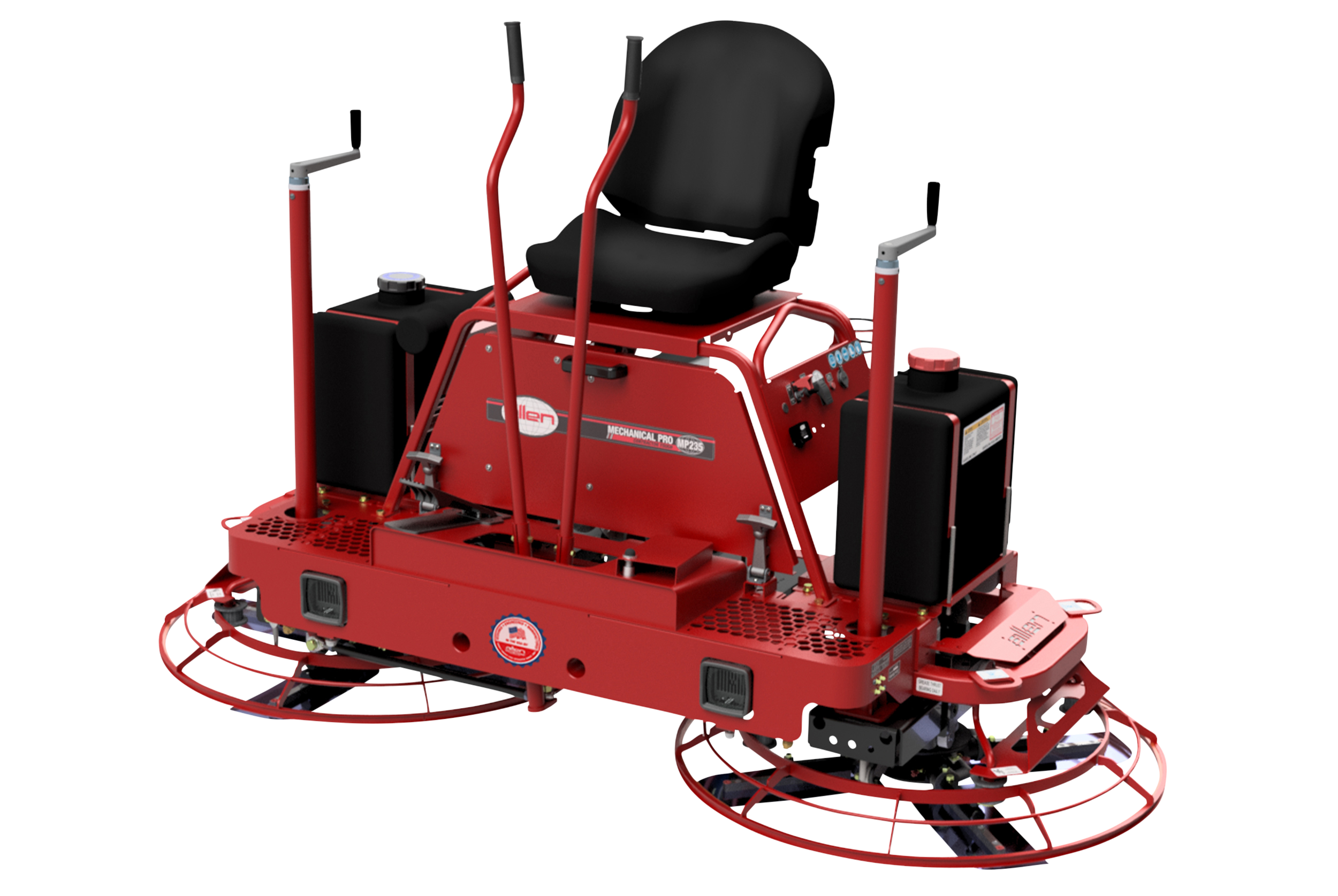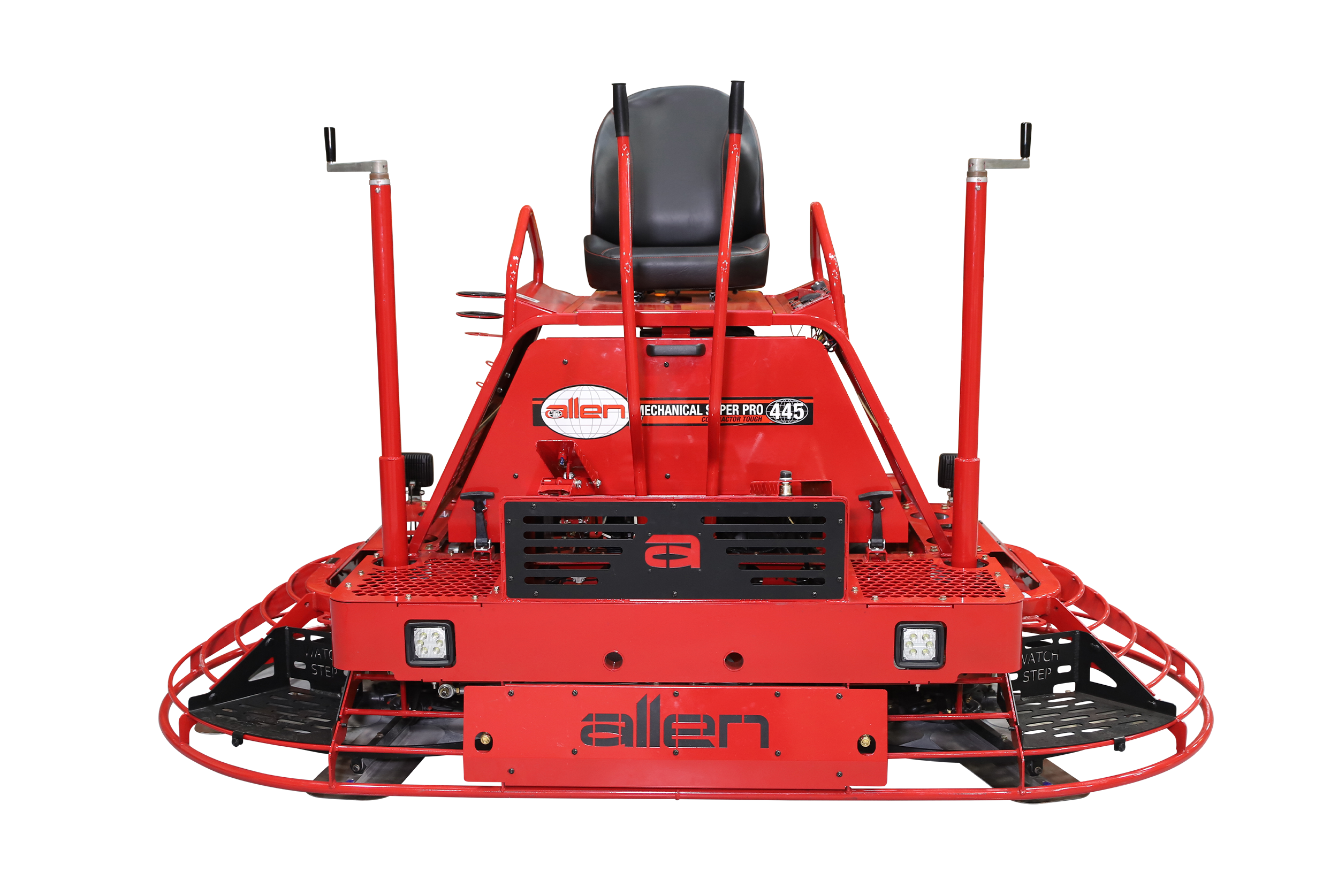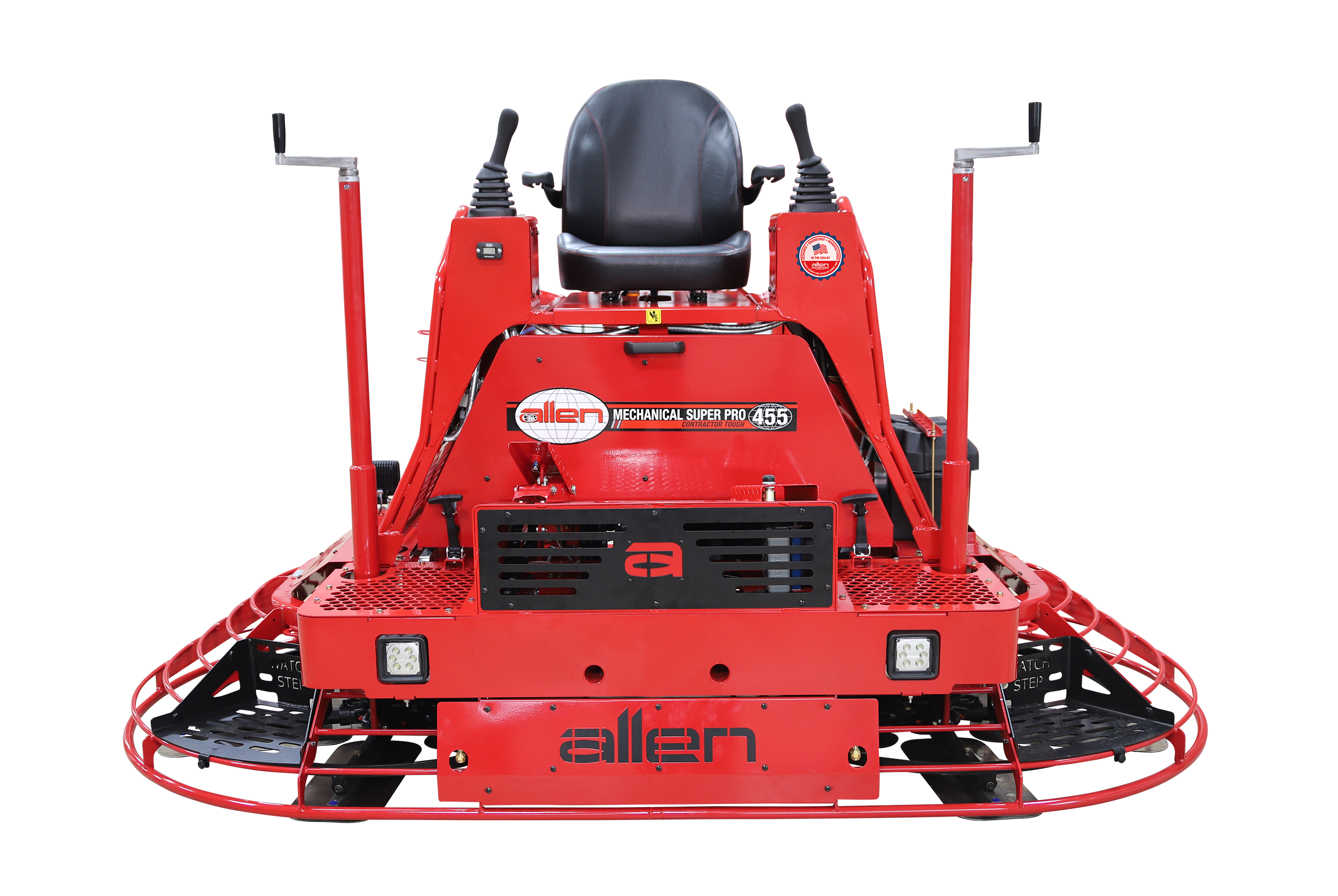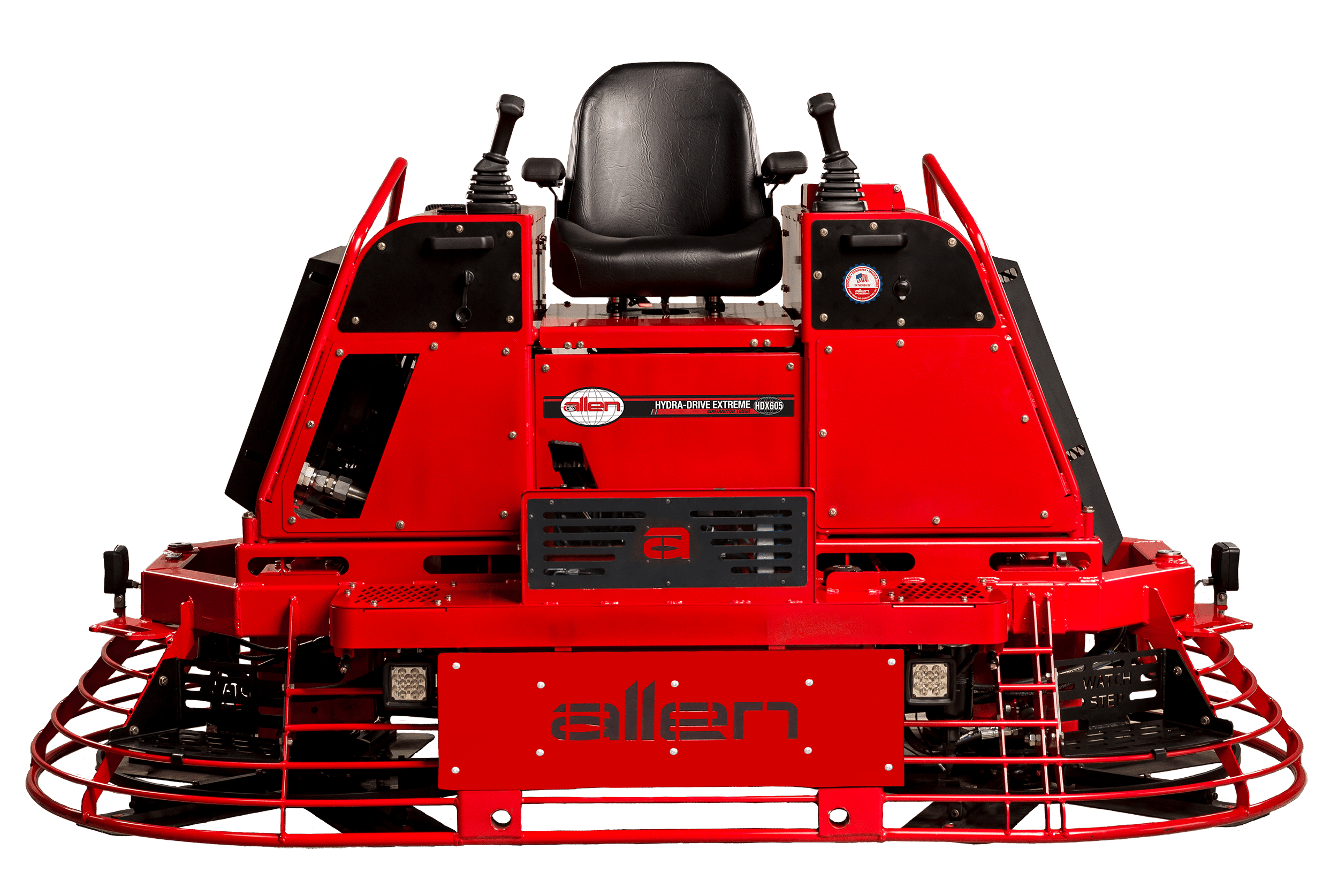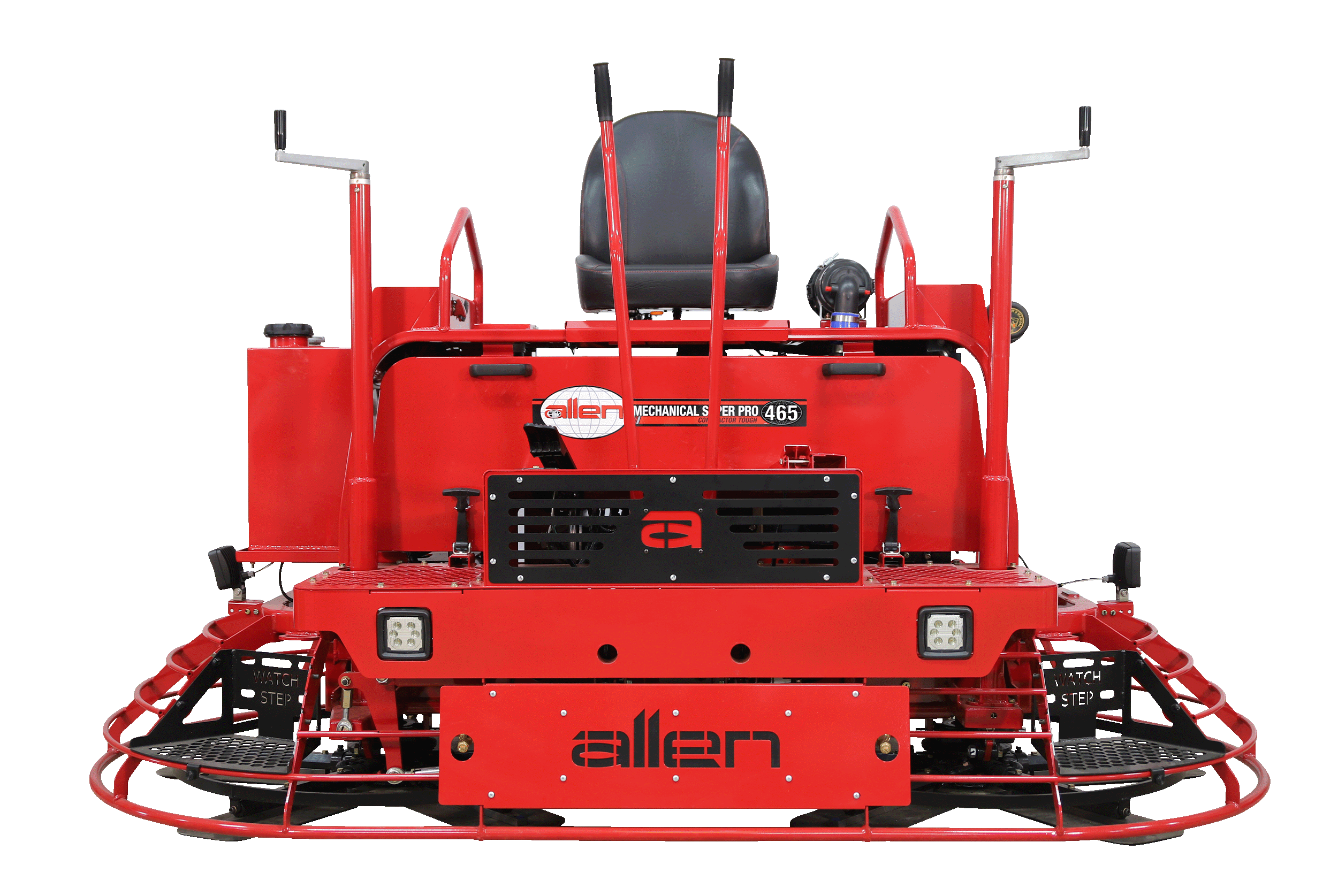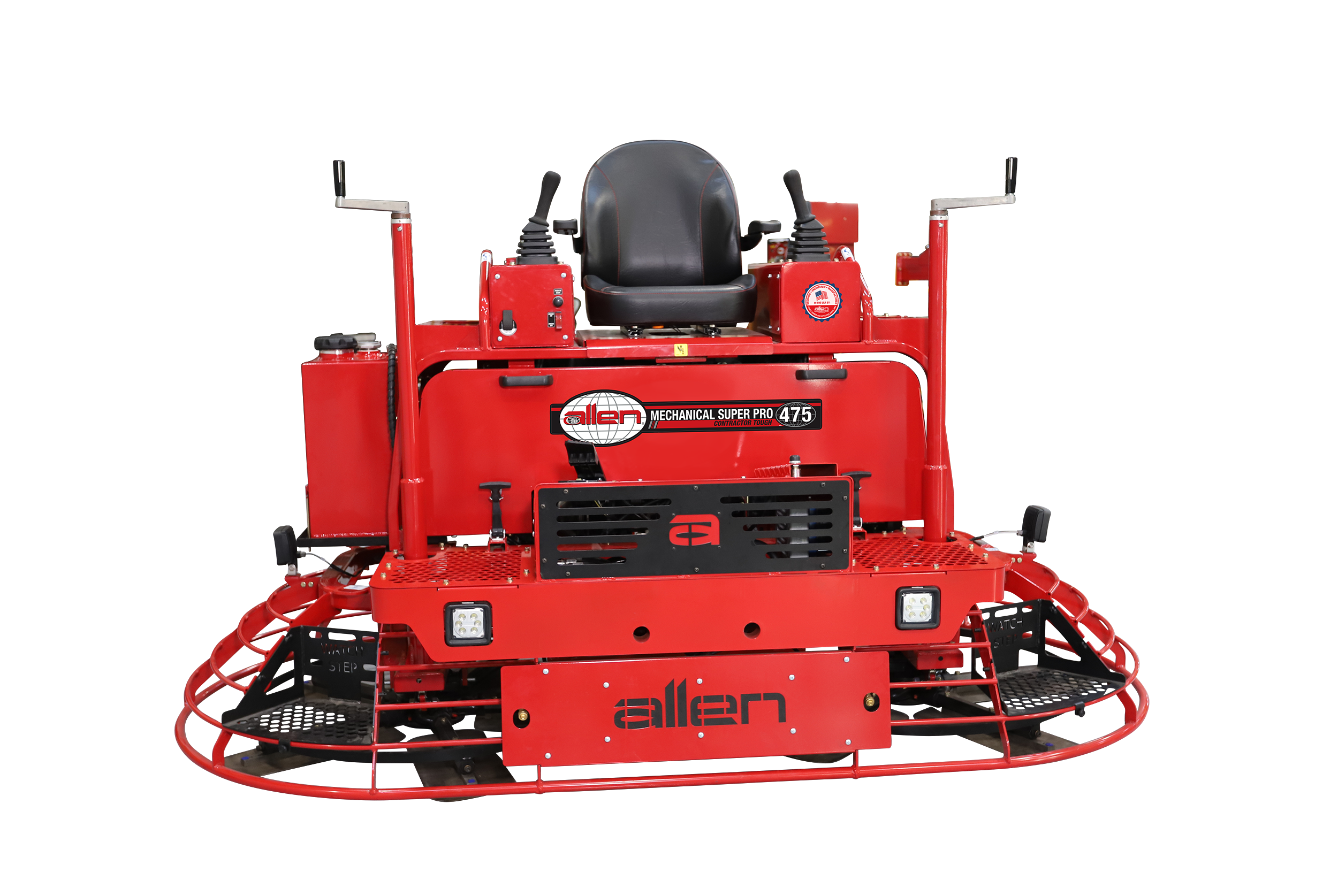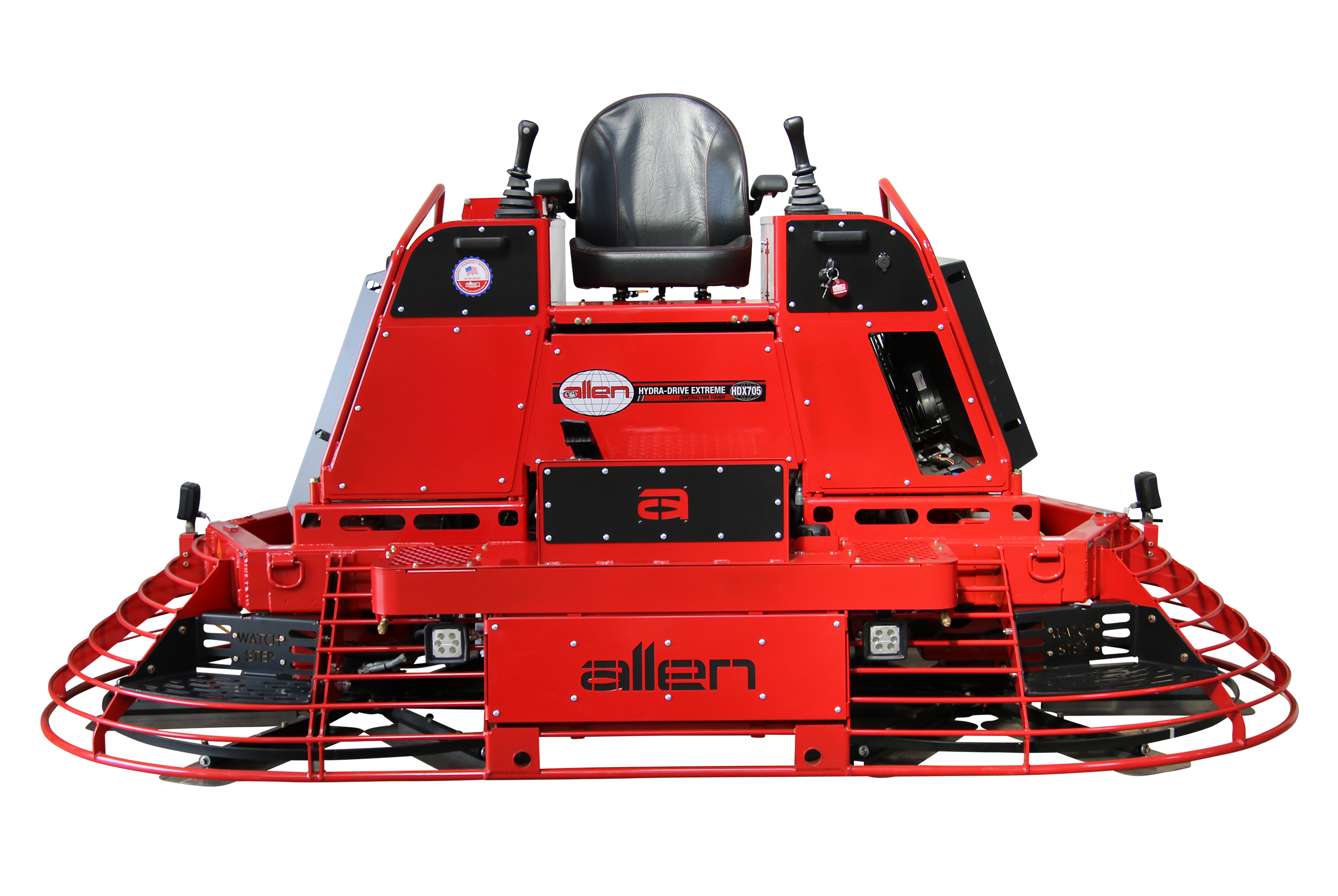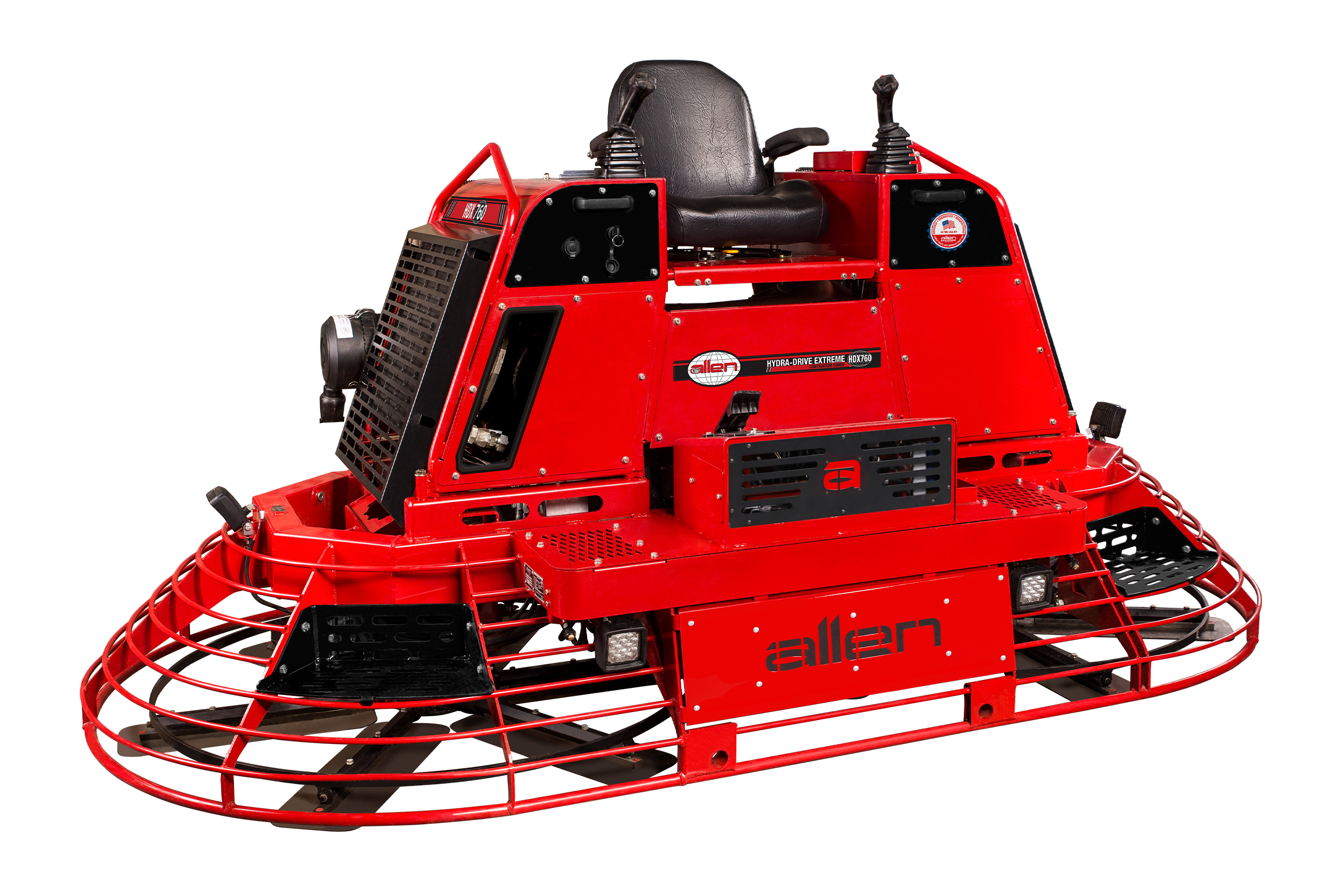

80+ in Ride-On Power Trowel
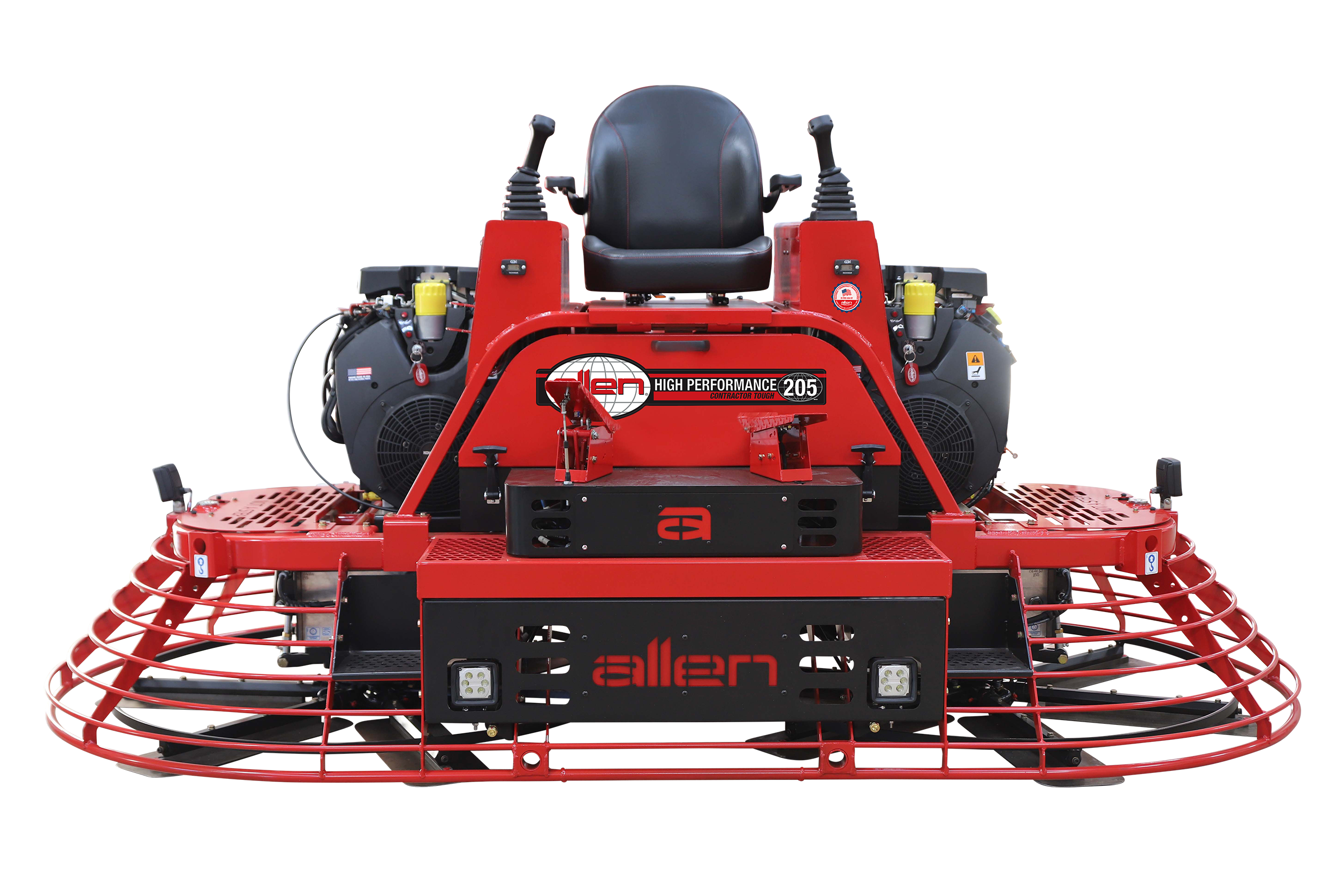
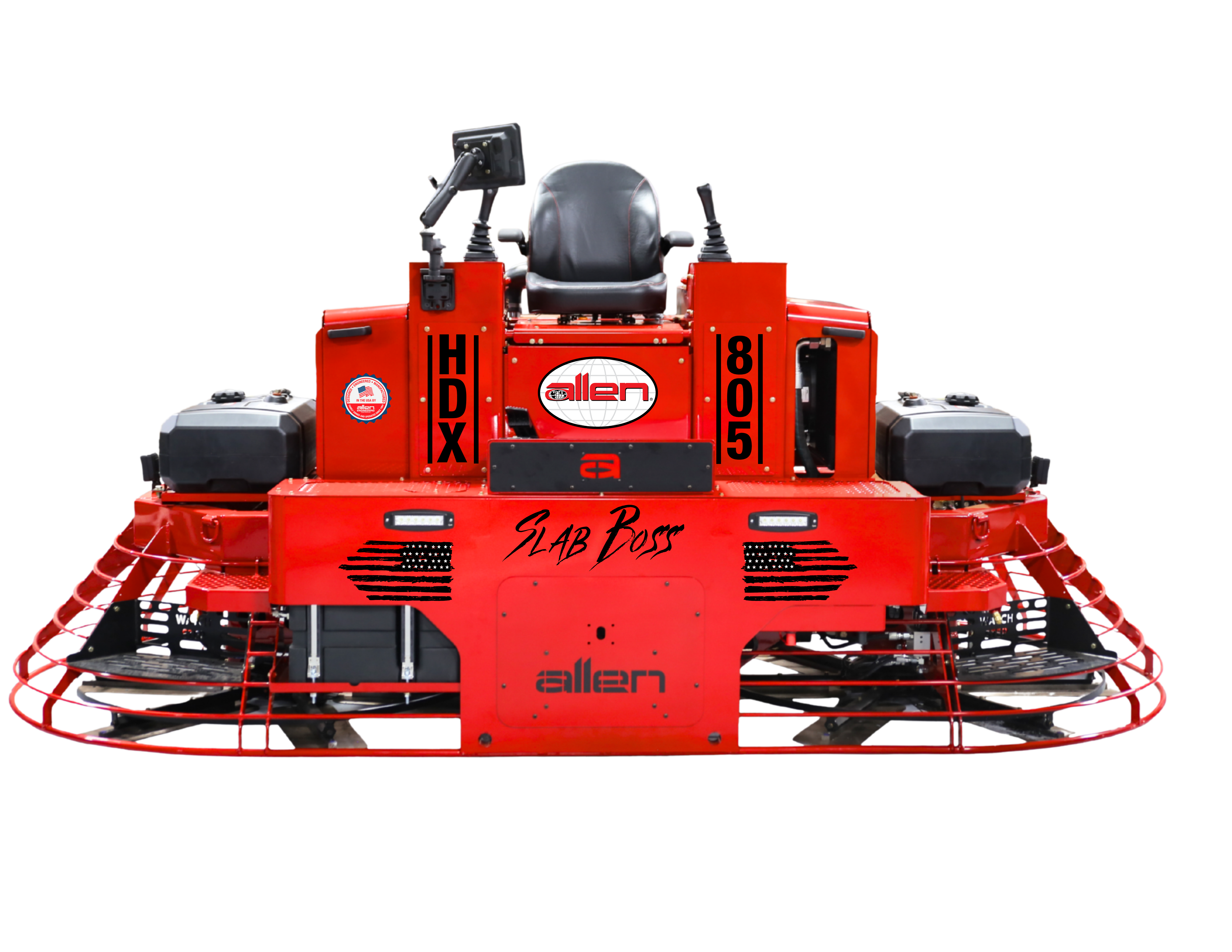
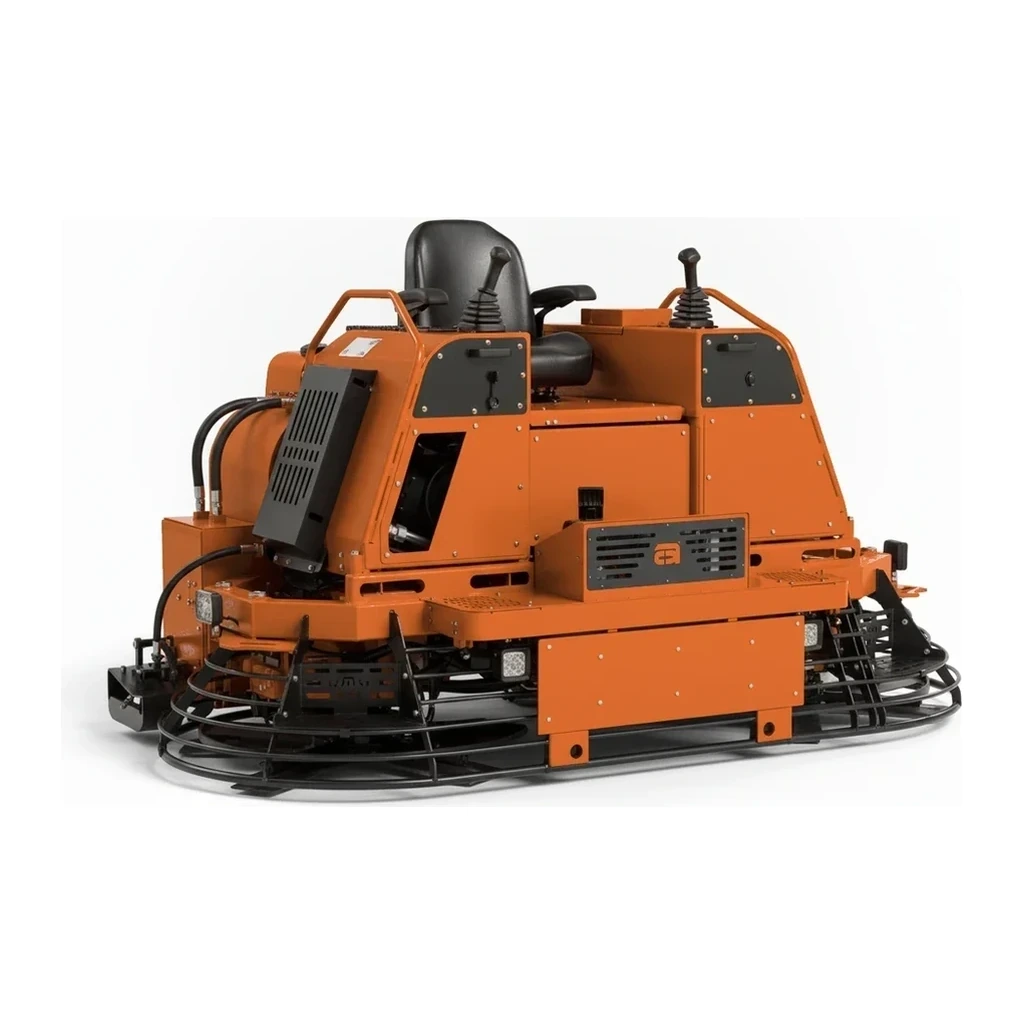
The 80+ inch ride-on power trowel class represents the widest finishing machines in the concrete industry, with blade paths spanning 85 to 140 inches. These machines are purpose-built for high-volume pours where tens of thousands of square feet must be floated and finished within a narrow window before the concrete sets. Positioned at the top of the ride-on trowel ladder, this size class prioritizes maximum coverage over maneuverability.
Cat classes
Elija una clase de tamaño: la capacidad y el alcance varían en la gama.
Especificaciones clave
| Especificación | Rango típico | Qué significa |
|---|---|---|
| Total path width | 85–140 in (216–356 cm) | Widest coverage per pass; multiple rotors often span 10+ feet to maximize production. |
| Engine power | 22-133 hp | Larger engines drive dual or triple rotor assemblies and provide hydraulic power for steering and blade pitch. |
| Operating weight | 533-1542 kg (1175-3400 lb) | Heavy frames required to stabilize wide rotor spans and maintain operator control during finishing. |
Cómo elegir
This size class is appropriate for warehouse floors, distribution centers, big-box retail slabs, and airport aprons where pour volumes exceed 20,000 square feet and finish crews must keep pace with large concrete placement operations. The extremely wide path justifies the machine's bulk and transport requirements only when slab area and pour rate demand maximum production. For commercial buildings, mid-sized industrial floors, or projects with columns and interior walls that limit straight runs, the Up to 80 in Ride-On Power Trowel class offers better maneuverability and is typically the more practical choice.
Lo que maneja este tamaño
- Warehouse and fulfillment center floors with uninterrupted slabs exceeding 50,000 sq ft
- Airport taxiway and apron slabs requiring high flatness specifications
- Big-box retail and supercenter interiors with minimal obstruction
- Industrial manufacturing facilities with large open production areas
- Logistics and cold-storage facilities with continuous concrete placement
- Tilt-up building floor slabs poured in single large placements
Seguridad y operación
- Wide rotor spans create significant crush zones; barriers and spotters required when multiple machines or laborers work the same slab
- Operator sight lines limited by machine width; reversing and tight maneuvering require clear communication protocols
- Blade guards and emergency stop controls mandatory; rotors spinning at 100+ RPM present serious contact hazards
- Trailer loading and unloading requires stable ground and proper ramp angle due to high center of gravity and weight distribution
Transporte y logística
- Dual-axle or tri-axle equipment trailers rated for 3500-5000 lb loads; widest models may require overwidth permits
- Tow vehicles with 10,000+ lb towing capacity and trailer brake controllers for heavier units
- Hydraulic or steel ramp systems; some models require winch assistance due to weight and low ground clearance
Alimentación
- Gasoline or diesel engines; largest models use diesel for extended run time and fuel efficiency on multi-hour pours
- On-board fuel tanks sized for 4-8 hours of continuous operation; refueling logistics critical on large pours
- Some dual-rotor models offer propane conversion kits for enclosed-slab work with ventilation concerns
Preguntas frecuentes
What pour size justifies an 80+ inch ride-on trowel?
How does path width affect flatness and levelness specifications?
Are dual-rotor or triple-rotor configurations common in this size class?
Comparar modelos populares
Buscar por especificación →Normalizado a las mismas unidades. Un guion significa que el valor no fue publicado.
| Modelo | Potencia del motor | Peso operativo |
|---|---|---|
| Allen Engineering HDX600 | 50 hp | 2,194 lb (995 kg) |
| Allen Engineering HDX705 | 84 hp | 2,749 lb (1,247 kg) |
| Allen Engineering HDX760 | 74 hp | 2,687 lb (1,219 kg) |
| Allen Engineering HDX805 | 133 hp | 3,400 lb (1,542 kg) |
| Allen Engineering HP205 | 37 hp | 2,169 lb (984 kg) |
| Allen Engineering MSP455 | 37 hp | 1,175 lb (533 kg) |
Equipos relacionados
Explorar por fabricante
Fuentes
Cada especificación se verifica con los datos publicados por el fabricante, con la fuente enlazada como referencia.
80+ in Ride-On Power Trowel
12 modelos · Cada especificación citada a la fuente