

Concrete Saws
Concrete and masonry saws cut joints, openings, and units in cured material. Hand-held cut-off saws are the largest class in the entire catalog, alongside walk-behind flat saws, tile and masonry bench saws, early entry saws, and diamond chain saws.
Cómo funciona
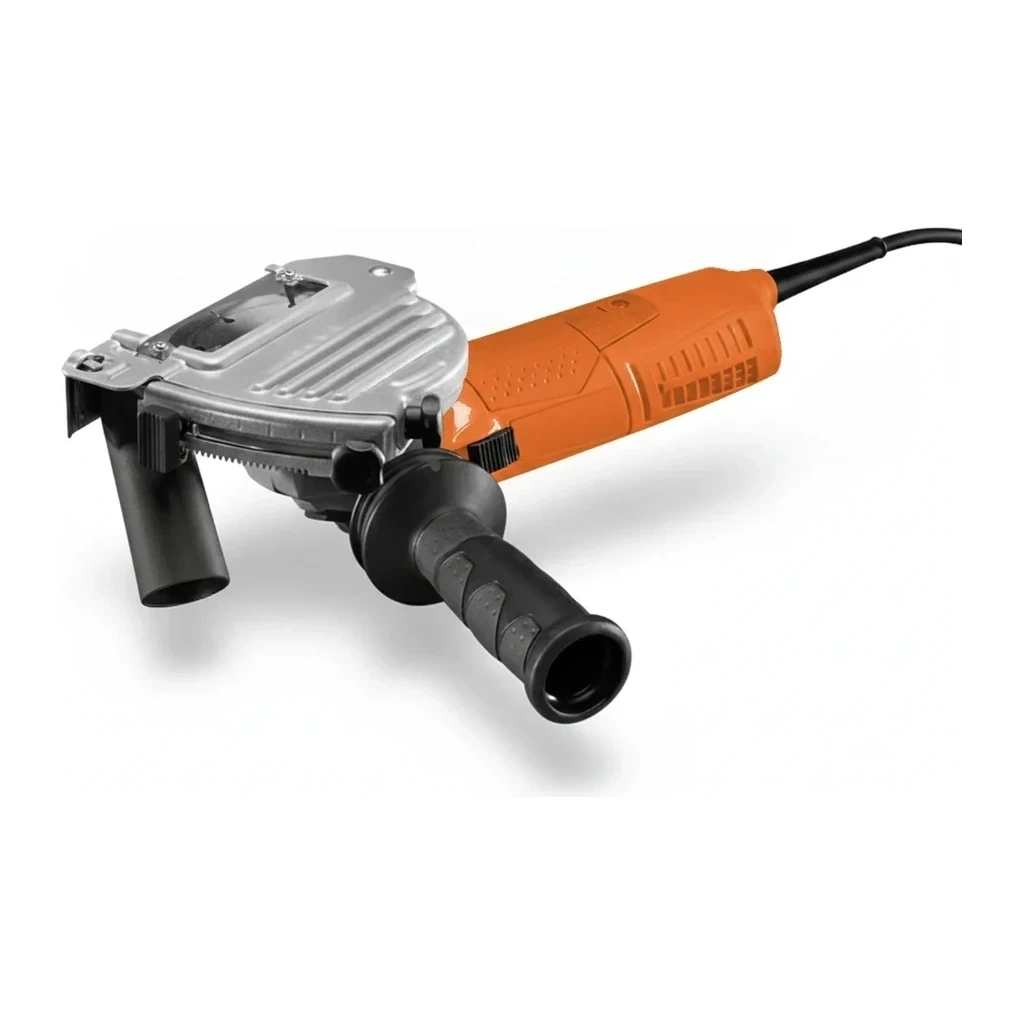
A gas engine or electric motor spins a diamond blade at high speed; the diamond segments grind through the material rather than slicing it. Wet cutting cools the blade and suppresses silica dust, while depth is controlled freehand on cut-off saws and by crank on walk-behind machines.
Tipos y variantes
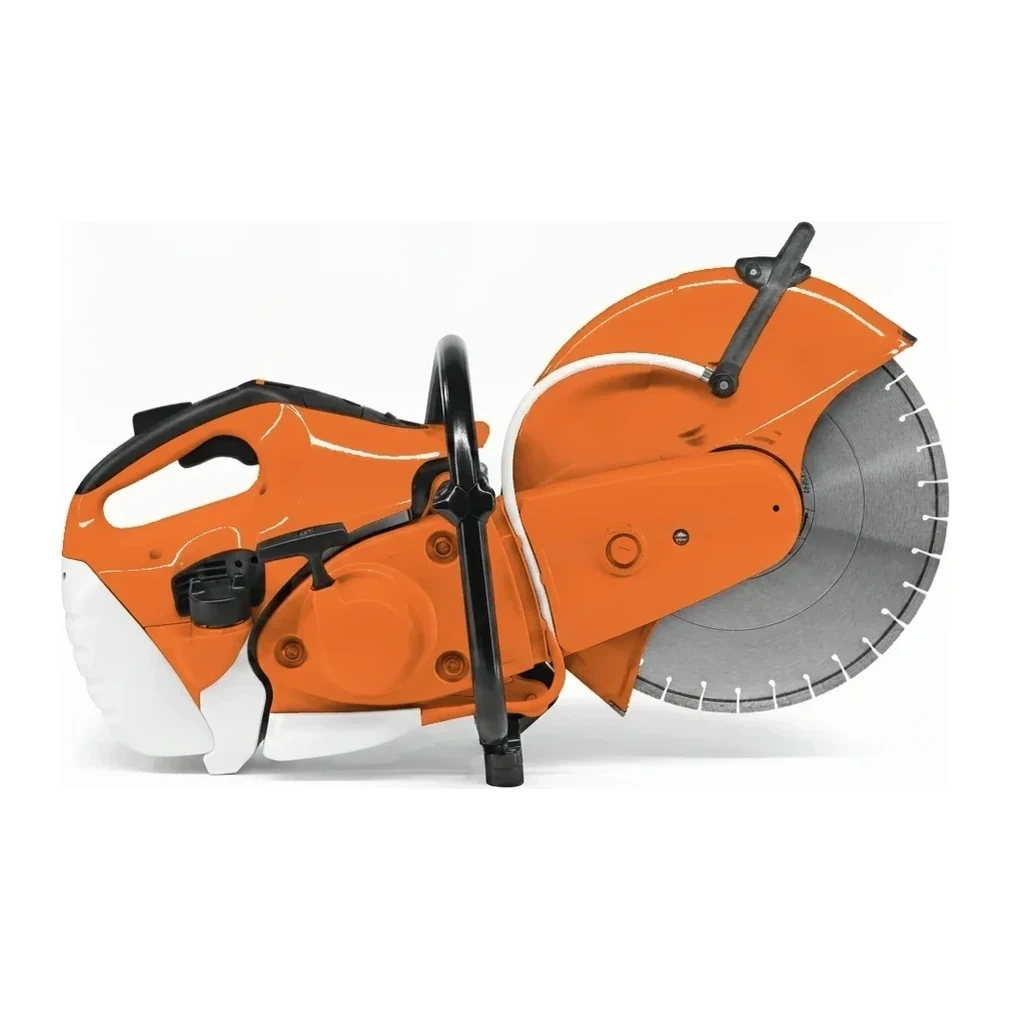
- Hand-Held Cut-Off Saw
- Portable high-speed saw with an abrasive or diamond blade for cutting concrete, masonry, and metal.
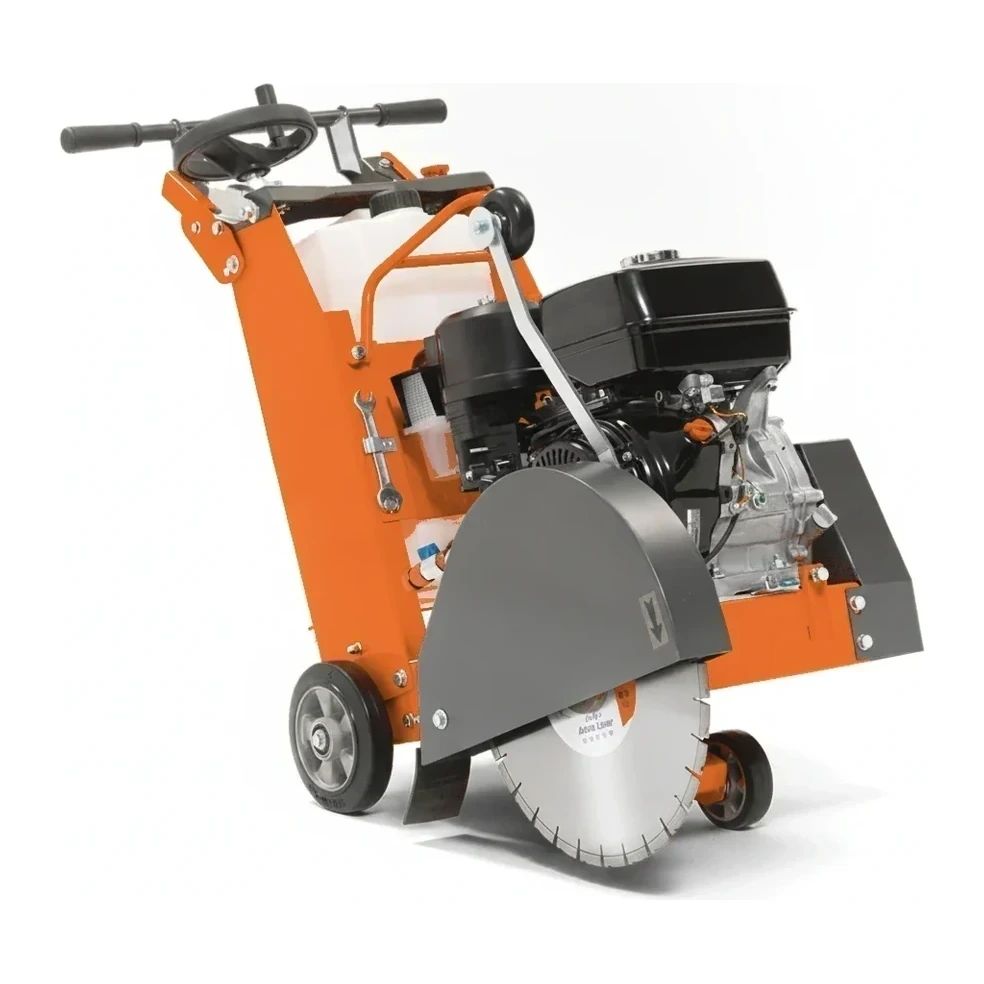
- Walk-Behind Concrete Saw
- Push or self-propelled flat saw for cutting joints and openings in slabs and pavement.
- Tile Saw
- Wet-cutting bench saw for precise cuts in tile and thin masonry.
- Masonry Saw
- Bench or table saw built for brick, block, and paver cutting.
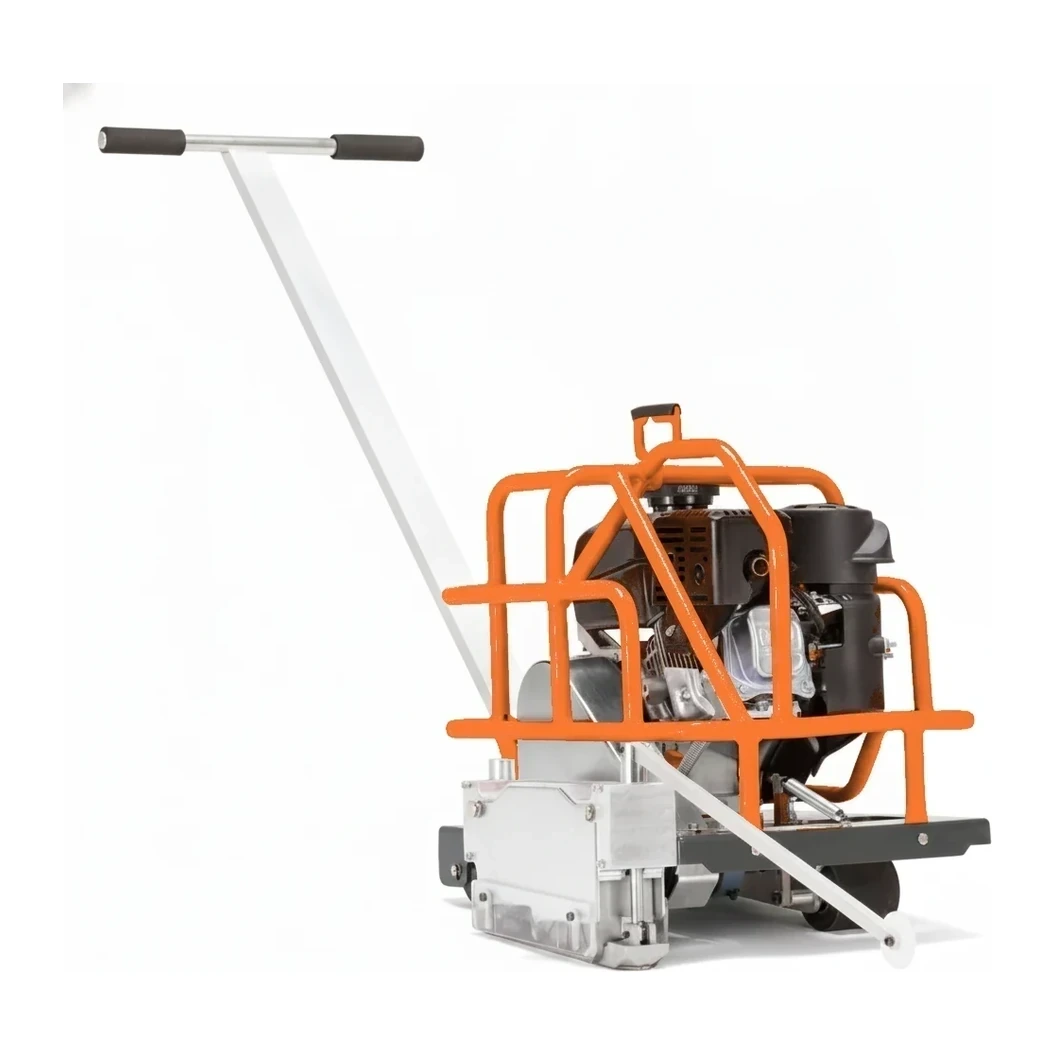
- Early Entry Saw
- Lightweight saw that cuts control joints in green concrete within hours of finishing.
- Diamond Chain Saw
- Chain saw with diamond segments for deep, square-cornered cuts in concrete and pipe.
Cómo elegir
The cut dictates the saw: freehand openings and pipe cuts go to a hand-held cut-off saw; long, straight, depth-controlled joint cuts to a walk-behind saw; repetitive unit cuts to a masonry or tile bench saw; and joints in fresh slabs to an early entry saw within hours of finishing. Diamond chain saws handle deep, square-cornered openings that circular blades cannot finish.
Normas y certificaciones
- OSHA · 29 CFR 1926.1153
- Respirable crystalline silica rule; requires dust controls when cutting, grinding, or drilling concrete and masonry.
- OSHA · 29 CFR 1926.102
- Eye and face protection requirements when operating cutting and striking tools.