

Walk-Behind Concrete Saw
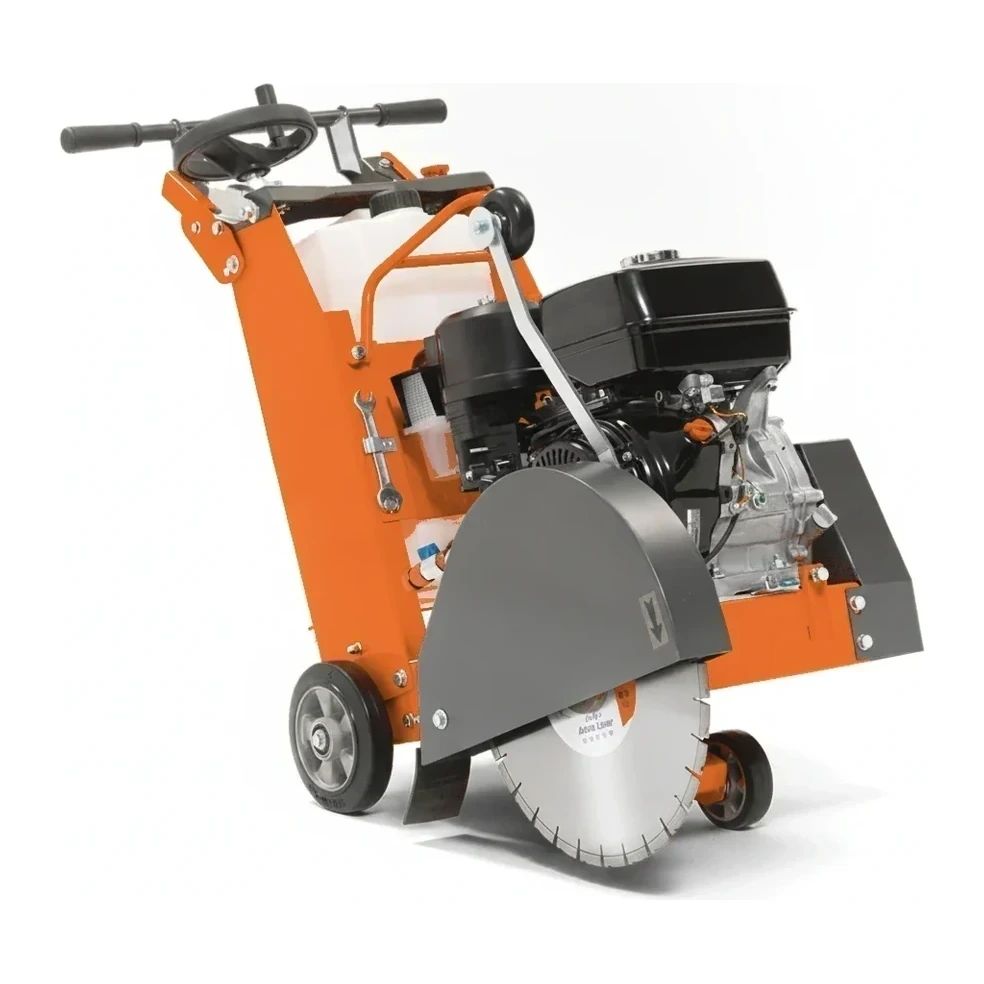
A walk-behind concrete saw, flat saw, slab saw, cuts slabs, pavement and roadways with a diamond blade on a wheeled, depth-controlled carriage the operator guides from behind. It is the machine for joint sawing, utility cuts and demolition sawing at grade.
Cat classes
Elija una clase de tamaño: la capacidad y el alcance varían en la gama.
Cómo funciona
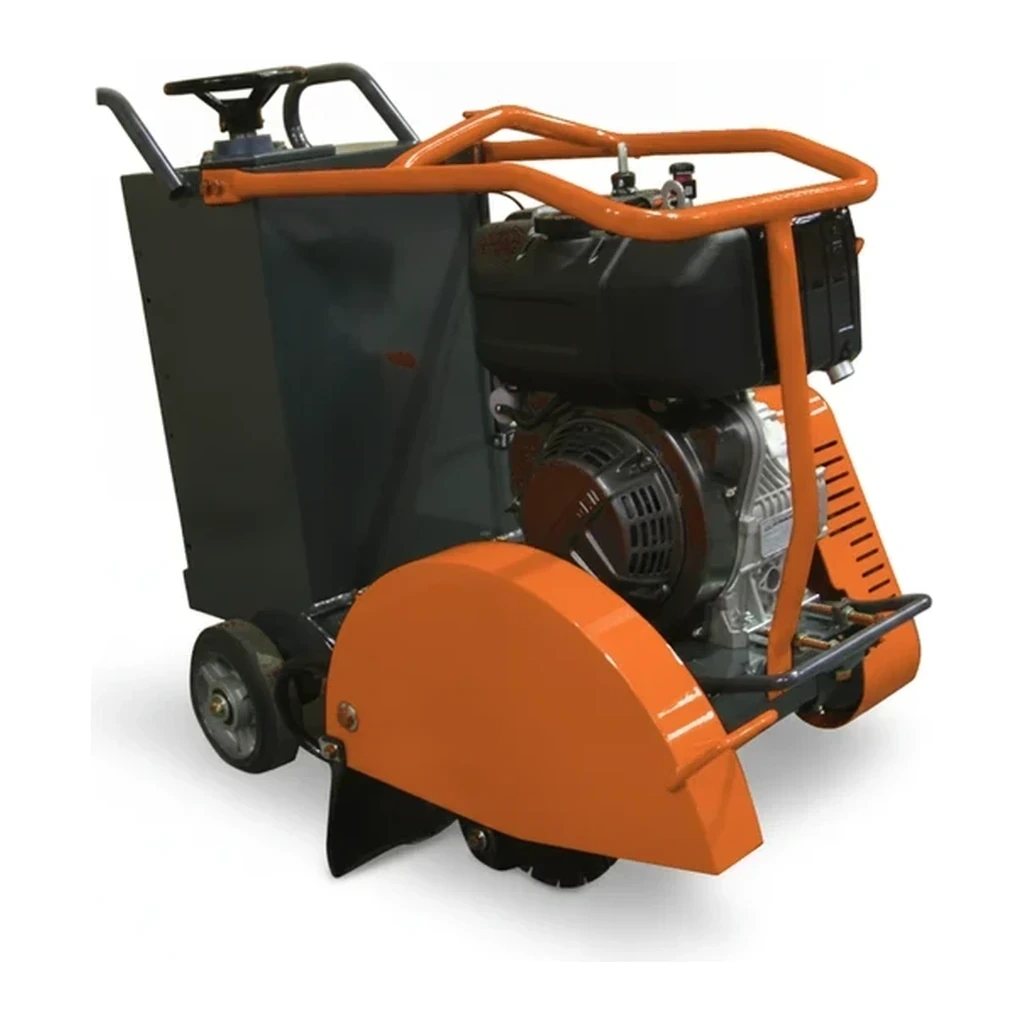
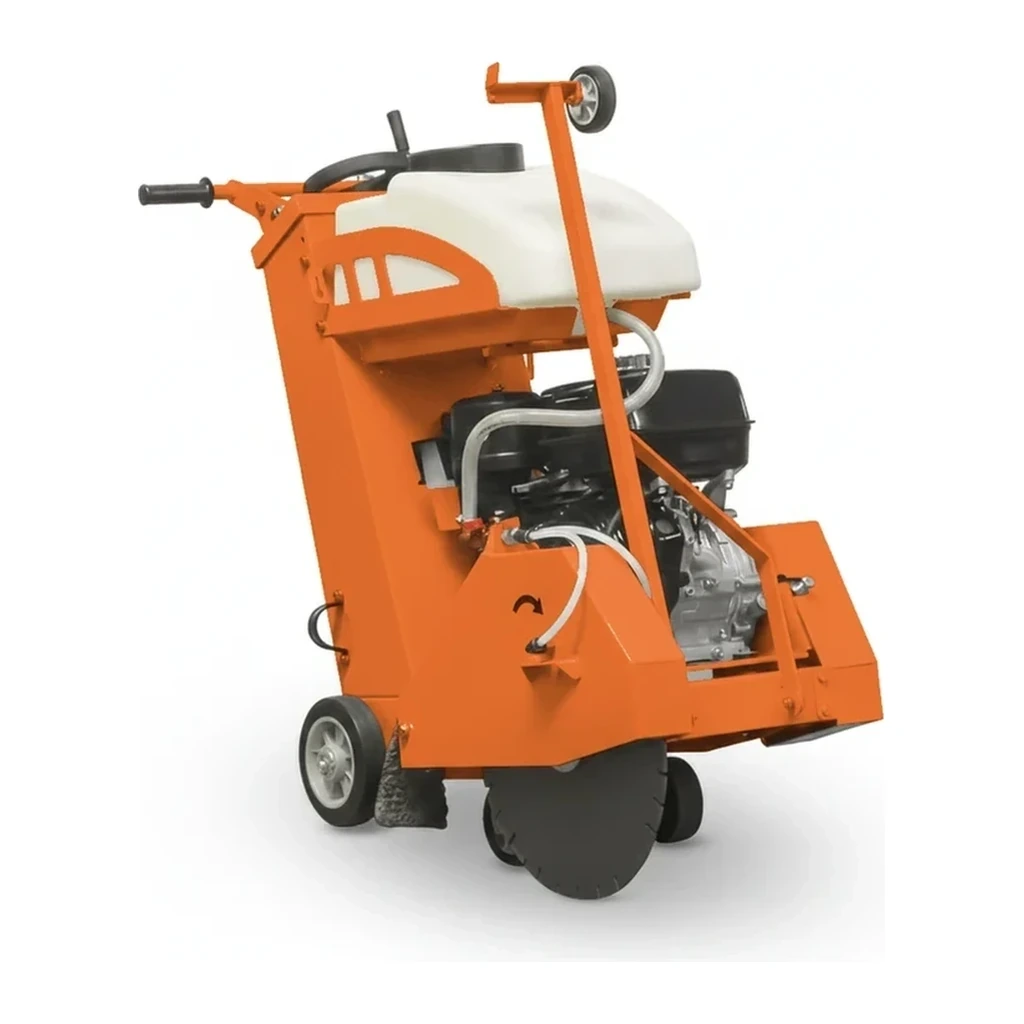
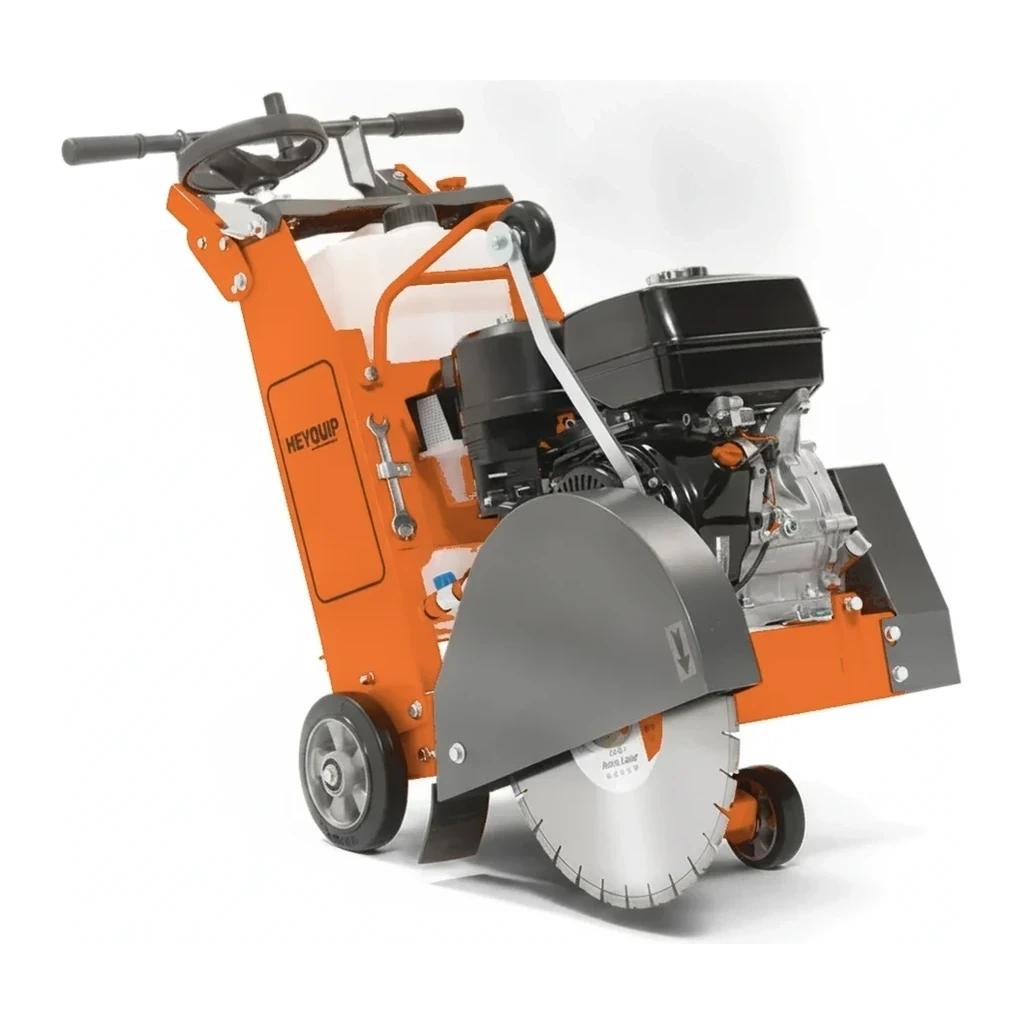
The engine drives the blade shaft through belts while a raise-lower control sets cut depth against a gauge; the operator tracks a chalk or string line with a guide pointer, either pushing the saw or letting self-propelled drive hold pace. Cutting runs wet on most work, water fed to both blade faces cools the diamond rim and suppresses slurry-bound dust, with depth taken in staged passes on deep cuts rather than forced in one. Blade speed is matched to blade diameter for correct rim velocity.
Tipos y variantes
- Push flat saw
- Operator-propelled saw at the light end of the weight spectrum for joints and shallow utility cuts.
- Self-propelled flat saw
- Transmission-driven carriage holds constant feed rate on deep or long production cuts.
- Electric flat saw
- Motor-driven version for interior slab cutting where engine exhaust is prohibited.
- Heavy sawing machine
- High-power unit for full-depth roadway and runway cutting.
Especificaciones clave
| Especificación | Rango típico | Qué significa |
|---|---|---|
| Blade capacity | Commonly 14-30 in | Largest blade the guard and spindle accept, which fixes maximum achievable depth. |
| Depth of cut | Typically to about 12 in | Matched to slab or pavement thickness; full-depth cuts at the top end take staged passes. |
| Operating weight | 137-2132 kg across models | Heavier saws track straighter and absorb vibration but need ramps and equipment to move. |
| Fuel capacity | 20 gal on listed models | Sets run time between refuels on long production cutting. |
| Engine power | 0.2-74.3 hp across models | Power scales with blade size to maintain cutting force in deep or hard material. |
Cómo la industria lo dimensiona
Walk-behind concrete saws are sized by blade diameter against required depth of cut, since a blade cuts to roughly a third of its diameter. Machines under 20 in blade capacity handle slab openings and control joints to about 7 in deep. Self-propelled mid-size units in the 20-30 in range take road cuts and full-depth slab removal to about 12 in. Large self-propelled flat saws above 30 in capacity perform full-depth highway and bridge-deck cutting.
Aplicaciones
- Sawing control joints in slabs and pavement
- Cutting existing slabs for repair and removal
- Utility trench cuts in asphalt and concrete
- Sizing sections before demolition
- Sidewalk, curb and driveway cutting
- Full-depth roadway and runway cuts
Seguridad y operación
- Wet cutting is the primary silica control for flat sawing; dry cutting without dust collection on concrete violates the specified OSHA Table 1 methods for walk-behind saws.
- Blades must be rated for the saw's spindle speed and inspected before mounting; a damaged diamond blade can shed segments at speed.
- Utility strikes are a defining flat-saw risk: buried electrical, gas and communication lines are located and marked before any pavement cut.
- Gas saws cutting indoors require ventilation or an electric machine; slurry control keeps walking surfaces and adjacent traffic areas safe.
Normas y certificaciones
- OSHA · 29 CFR 1926.1153 Table 1
- Specified silica controls for walk-behind saws: water delivery to the blade or equivalent dust capture.
- CSDA · Best Practices
- Concrete Sawing & Drilling Association practice documents for flat sawing operations.
Preguntas frecuentes
How deep can a walk-behind saw cut?
What separates push saws from self-propelled models?
Why does saw weight matter?
Is water required when flat sawing?
Comparar modelos populares
Buscar por especificación →Normalizado a las mismas unidades. Un guion significa que el valor no fue publicado.
| Modelo | Potencia del motor | Peso operativo |
|---|---|---|
| Husqvarna FS 400 LV | 12 hp | 298 lb (135 kg) |
| Multiquip ST61230 / ST61460 | 15 hp | 302 lb (137 kg) |
| Multiquip ST1 / ST1F | 0 hp | 8.8 lb (4 kg) |
| Multiquip ST3020B1 | 2 hp | - |
| Multiquip ST4125G | 10 hp | - |
| Multiquip ST-70 | 80 hp | 4,700 lb (2,132 kg) |
Equipos relacionados
Explorar por fabricante
Fuentes
Cada especificación se verifica con los datos publicados por el fabricante, con la fuente enlazada como referencia.