
Airless Paint Sprayer
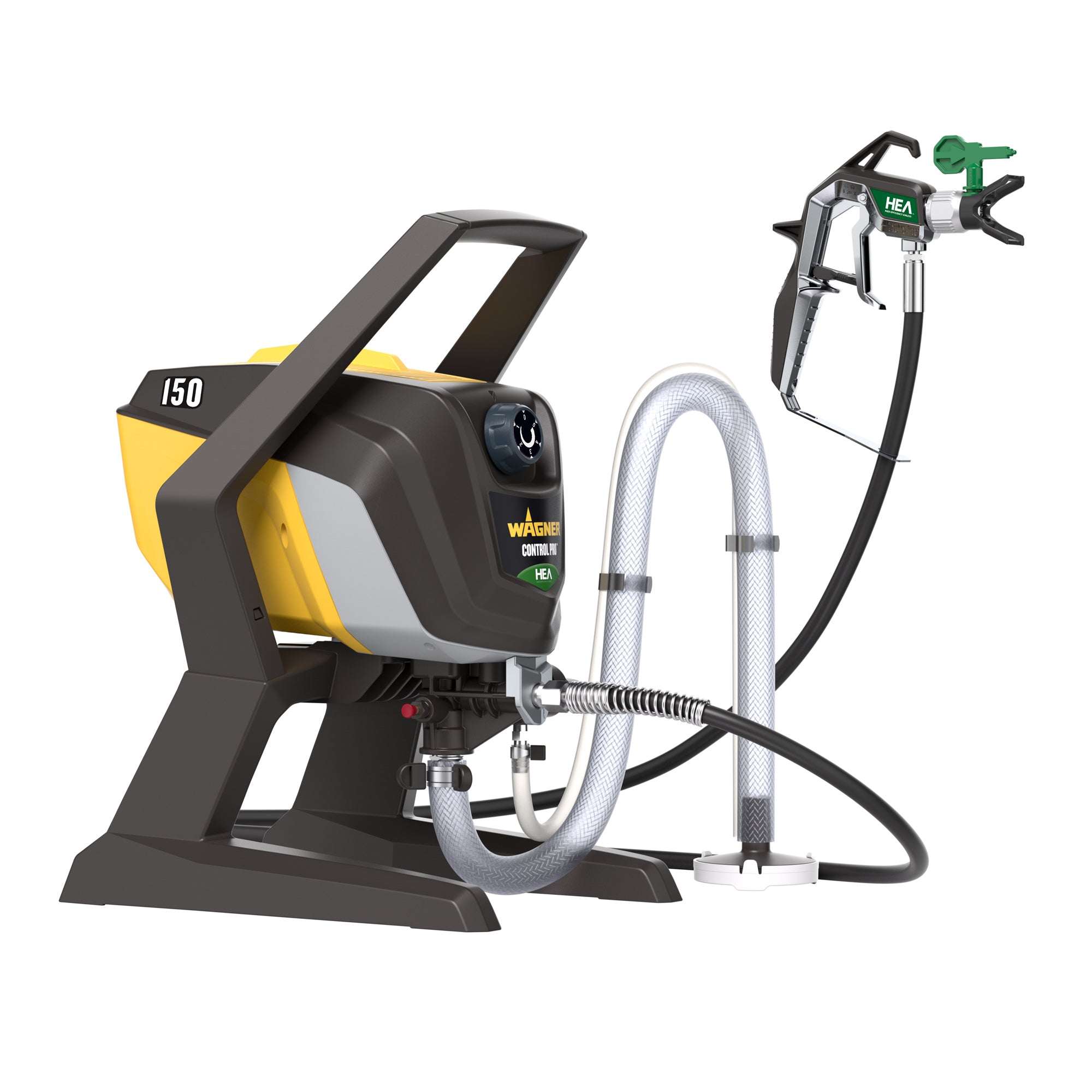
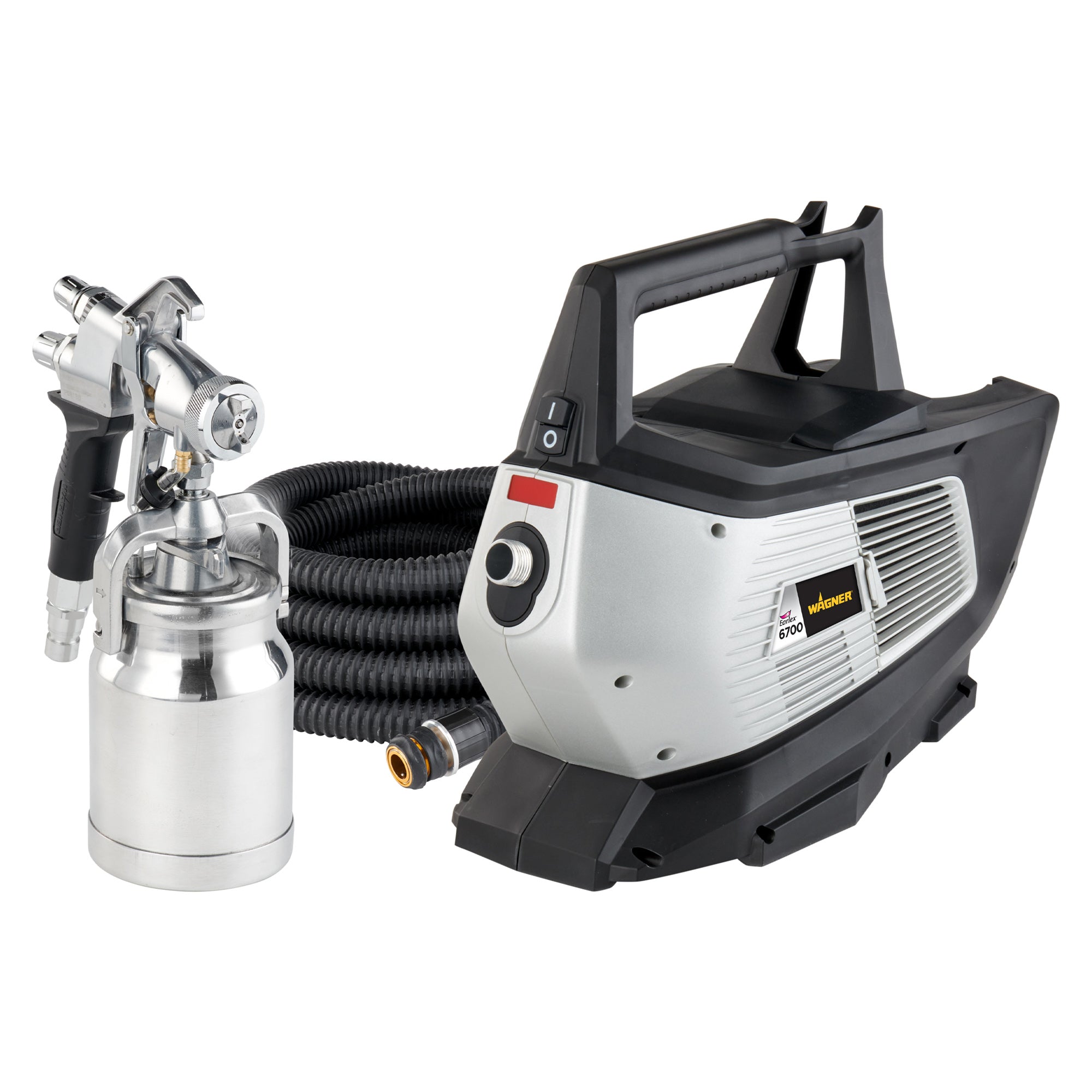
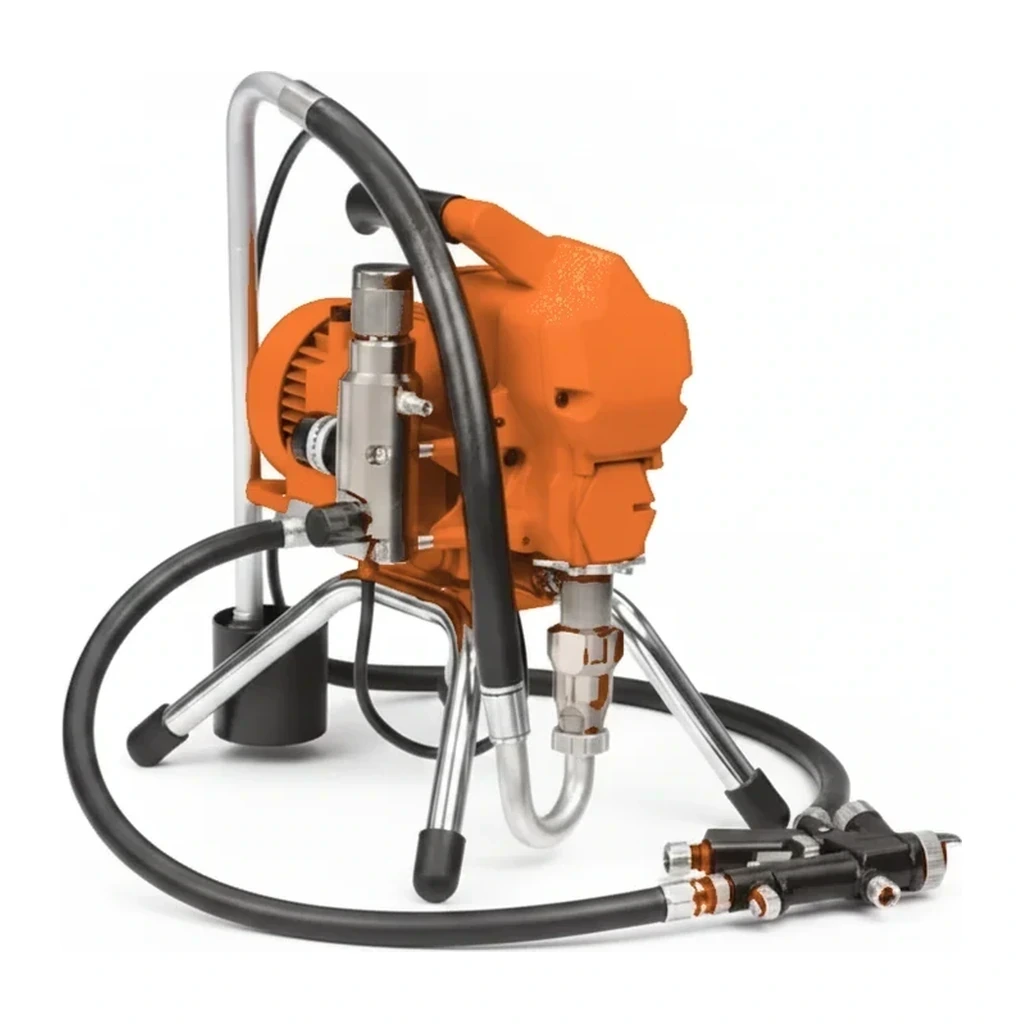
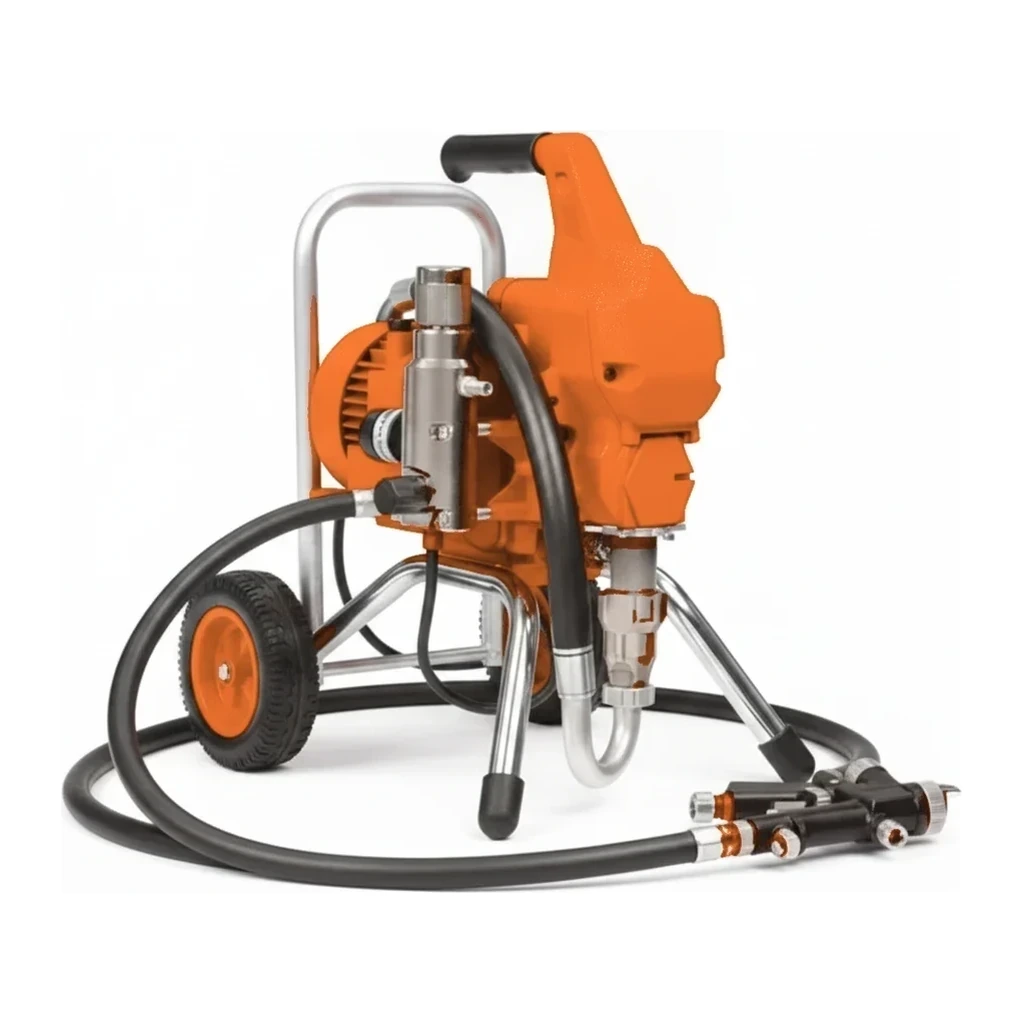
An airless paint sprayer is a high-pressure pump system that atomizes paint and coatings by forcing material through a precision spray tip without the use of compressed air. These machines deliver fast coverage rates and uniform film thickness across residential, commercial, and industrial painting applications. The equipment class spans handheld units to cart-mounted rigs capable of handling viscous coatings and long hose runs.
Cat classes
Elija una clase de tamaño — la capacidad y el alcance varían en la gama.
Cómo funciona
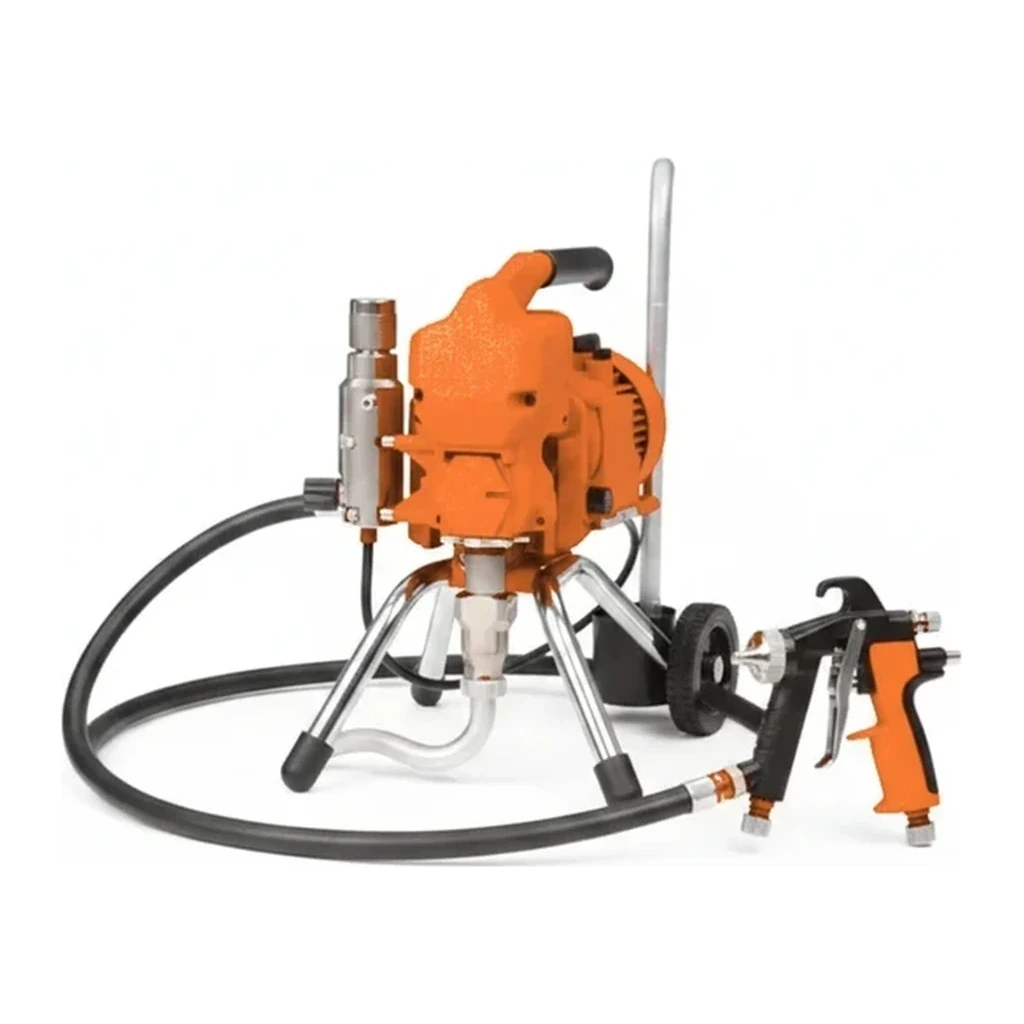
An electric or gas-powered piston or diaphragm pump draws coating material from a container and pressurizes it to 1,500–3,300 PSI. The high-pressure fluid travels through a hose to a spray gun, where it is forced through a small orifice in the reversible tip. As the material exits the tip at high velocity, the sudden pressure drop causes it to atomize into a fine spray pattern without requiring compressed air. The spray tip size and pressure setting determine the fan width, flow rate, and coating thickness. Tip guards prevent accidental contact with the high-pressure stream, and filters in the system prevent clogs from debris.
Tipos y variantes
- Electric Piston Airless
- Most common type for professional use; electric motor drives a reciprocating piston pump for consistent pressure and flow in commercial and residential settings.
- Gas-Powered Airless
- Gasoline engine drives the pump for outdoor or remote job sites without electrical power; higher output models suited to commercial exteriors and new construction.
- Diaphragm Airless
- Membrane pump design that isolates fluid from mechanical parts; used for corrosive or abrasive coatings in industrial maintenance and specialty applications.
- Handheld Airless
- Compact, self-contained units with integrated pump and gun for small-scale touch-up, cabinet work, and residential tasks.
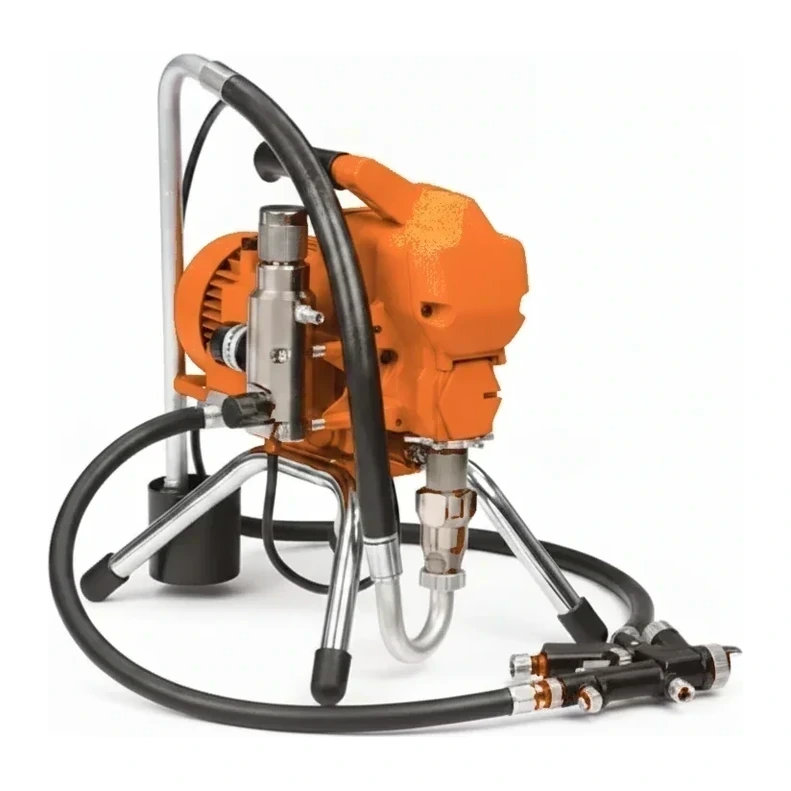
- Cart-Mounted Airless
- Mobile frame with larger pump, hose reel, and accessories for all-day commercial spraying and multi-story applications requiring extended hose runs.
Especificaciones clave
| Especificación | Rango típico | Qué significa |
|---|---|---|
| Flow Rate (GPM) | Varies by model | Gallons per minute delivered at rated pressure; primary sizing metric that determines coverage speed and gun count. |
| Maximum Pressure (PSI) | 1,500–3,300 PSI | Peak operating pressure available to atomize coatings; higher pressures handle thicker materials and finer finishes. |
| Maximum Tip Size | Varies by pump capacity | Largest spray tip orifice the pump can support at rated pressure; limits material viscosity and flow capacity. |
| Hose Length | 50–300 feet | Maximum recommended hose run from pump to gun; longer runs require higher-output pumps to maintain pressure. |
| Power Source | Electric 115V/230V or gasoline | Energy input for the pump motor; determines portability and suitability for indoor versus outdoor environments. |
Cómo la industria lo dimensiona
The industry sizes airless paint sprayers primarily by flow rate measured in gallons per minute (GPM). Units delivering 0–0.5 GPM suit one gun on residential interiors and small commercial applications including walls, trim, and fences. Mid-range sprayers at 0.5–1.0 GPM support two guns or heavier coatings on commercial repaints sprayed all day. High-output machines above 1.0 GPM handle high-build industrial coatings, elastomerics, and block filler pushed through long hose runs. Maximum tip size and operating pressure further refine selection based on coating viscosity, desired finish, and project scale.
Aplicaciones
- Interior and exterior residential painting of walls, ceilings, trim, and cabinetry
- Commercial building repaints and new construction spraying across large surface areas
- Industrial maintenance coating of steel structures, tanks, and equipment with protective finishes
- Application of high-build elastomerics, texture coatings, and block fillers on masonry surfaces
- Fence, deck, and exterior wood staining with semi-transparent or solid-body stains
- Roof coating application and waterproofing membrane spraying on flat commercial roofs
Seguridad y operación
- High-pressure fluid injection injuries can occur from contact with the spray stream or tip; never place hands or body parts in front of the tip or check for clogs by hand.
- Engage trigger lock and relieve system pressure before changing tips, clearing clogs, or performing maintenance.
- Ensure adequate ventilation when spraying indoors to prevent accumulation of volatile organic compounds and atomized particles.
- Wear appropriate respiratory protection, eye protection, and protective clothing to guard against overspray and coating exposure.
- Ground equipment properly to prevent static discharge when spraying flammable coatings; use explosion-proof motors in hazardous environments.
Normas y certificaciones
- OSHA · 29 CFR 1926.57
- Ventilation requirements for spray finishing operations in construction to limit worker exposure to airborne contaminants.
- NFPA · 33
- Fire safety standard for spray application using flammable or combustible materials, including equipment grounding and ventilation.
Preguntas frecuentes
What differentiates airless sprayers from HVLP and conventional air spray systems?
How does GPM rating affect the number of spray guns an airless sprayer can support?
What coating viscosities can airless sprayers handle compared to other application methods?
Why do airless spray tips wear and require periodic replacement?
Equipos relacionados
Explorar por fabricante
Fuentes
Cada especificación se verifica con los datos publicados por el fabricante, con la fuente enlazada como referencia.
Todos los modelos
80 modelos · Página 1 de 2 · Cada especificación citada a la fuente