

Air Handlers
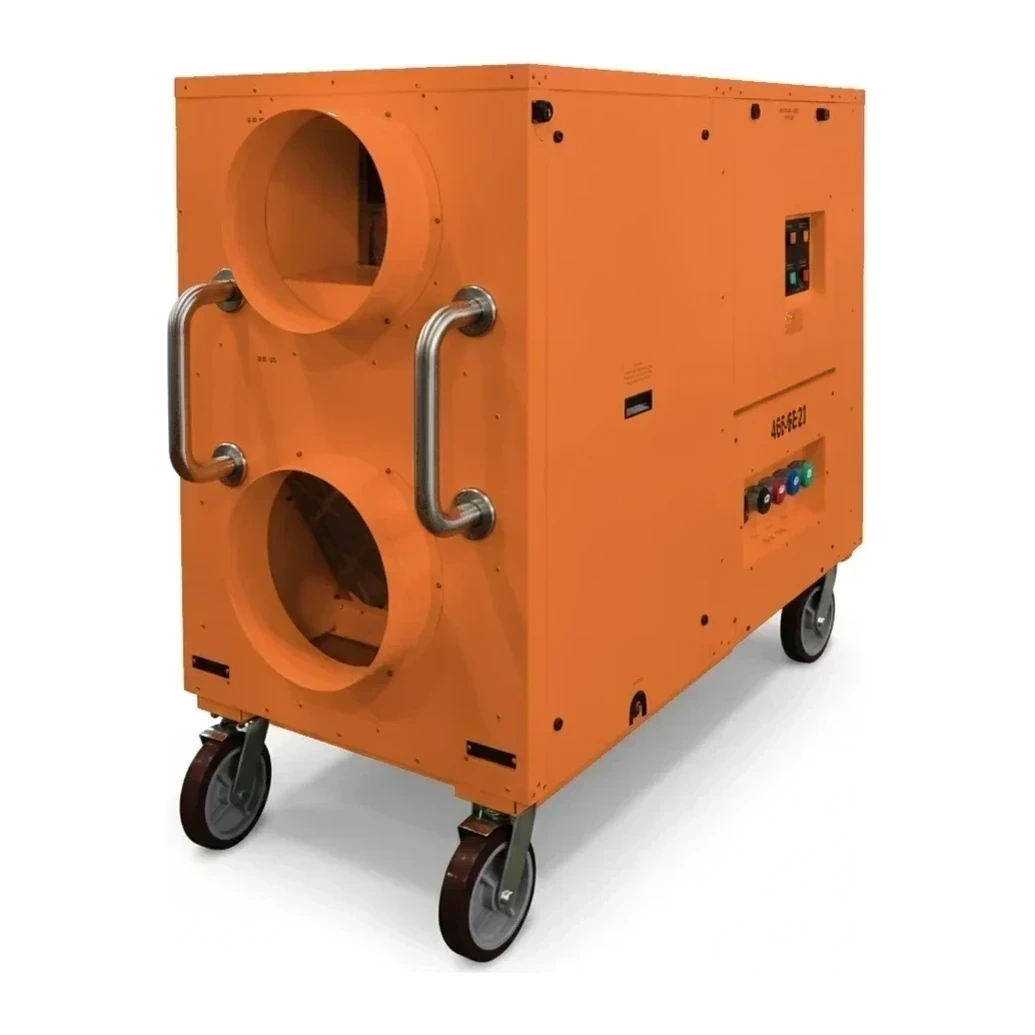
Air handlers move large volumes of conditioned air through spaces and duct systems. The catalog class covers portable and skid units used in temporary cooling, heating, and ventilation setups.
Cómo funciona
A blower draws air through filters and across a coil carrying chilled water, refrigerant, or hot fluid, then delivers it through flexible duct. Capacity pairs airflow (cfm) with coil rating (tons or BTU/h); the connected chiller or heat source sets what the coil can actually deliver.
Tipos y variantes
- Air Handler
- Fan-coil unit that moves conditioned air through ducts or a space.
Cómo elegir
Air handlers are sized with their heat source as a system: coil capacity to the load, cfm to the space and duct runs, and static pressure to the duct length. Placement near the served space shortens ducting, and condensate drainage and power supply round out the checklist.
Normas y certificaciones
- AHRI
- Performance-certification programs for air conditioning, heating, and refrigeration equipment.
- ASHRAE · Standard 62.1
- Ventilation and indoor air quality guidance referenced when conditioning occupied spaces.
Preguntas frecuentes
What is an air handler used for in temporary HVAC?
Distributing conditioned air: paired with a chiller for cooling or a heat source for warmth, it pushes air through flex duct into tents, floors under renovation, and process areas.
Does an air handler cool on its own?
No — it moves air across a coil. The cooling or heating comes from the connected chiller, condensing unit, or hydronic source; the air handler is the delivery mechanism.
How is duct run length handled?
Through static pressure capacity. Long or restrictive duct runs demand a blower rated for the added resistance, or delivered airflow falls below design.