

Chillers
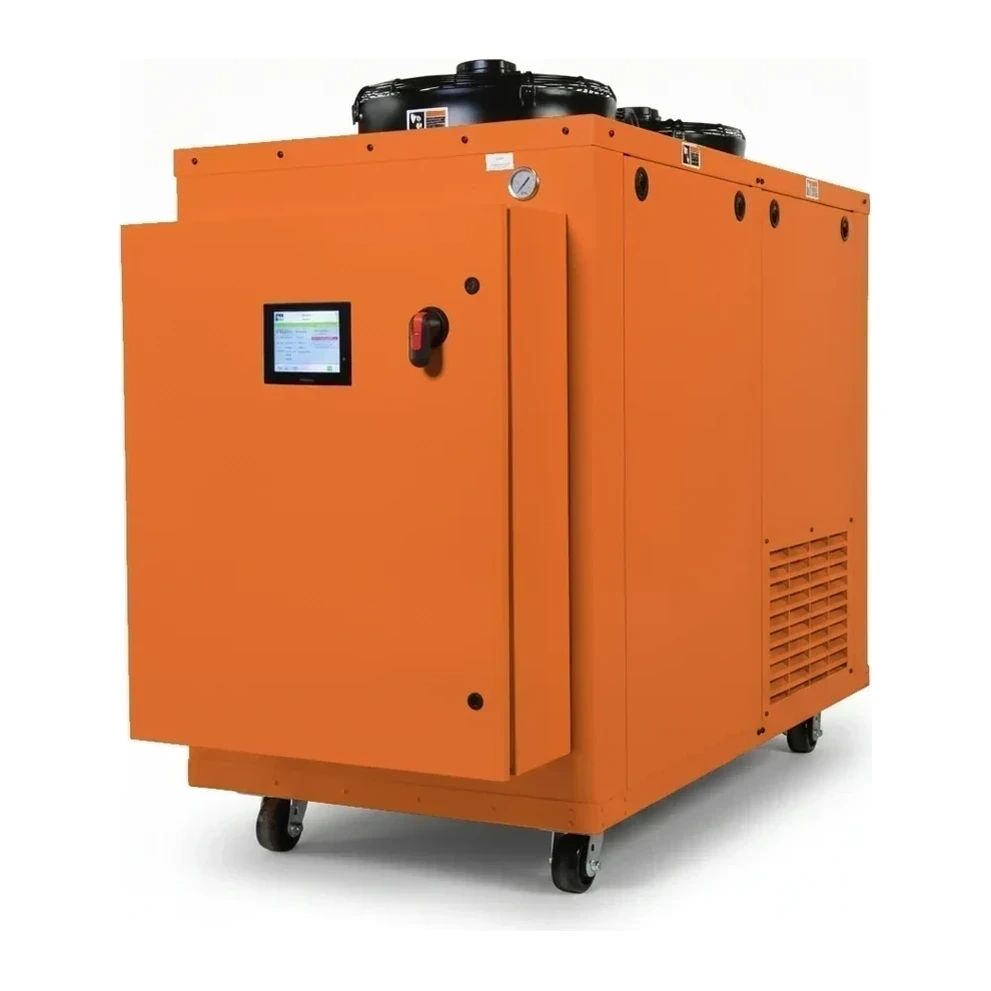
Chillers produce chilled water for comfort and process cooling. The catalog spans compact air-cooled units through high-tonnage trailer plants, with thermal storage and immersion systems at the specialty edge.
Cómo funciona
The refrigeration cycle chills the loop fluid at the evaporator; pumps circulate it to the load and back. Capacity in tons is set against the connected load with attention to supply temperature, flow rate, and ambient conditions — air-cooled units derate as outdoor temperature climbs.
Tipos y variantes
- Chiller
- Refrigeration plant that supplies chilled water for comfort or process cooling.
- Ice Thermal Storage
- Tanks that store cooling capacity as ice for peak-demand shifting.
- Immersion Cooling
- Systems that cool electronics by submerging them in dielectric fluid.
Cómo elegir
Air-cooled units dominate temporary work for their self-contained simplicity; water-cooled plants win on efficiency where a tower exists. Sizing runs from load calculation through fluid temperature and flow to power supply — chillers are among the larger electrical loads on a temporary site — and glycol concentration matters in freezing exposure.
Normas y certificaciones
- AHRI
- Performance-certification programs for air conditioning, heating, and refrigeration equipment.
- ASHRAE · Standard 62.1
- Ventilation and indoor air quality guidance referenced when conditioning occupied spaces.