

500-1,500 k btu Direct Fired Heater
The 500-1,500 k btu direct fired heater represents high-output temporary heating for large open structures where combustion products discharge directly into the conditioned space. Because combustion moisture and exhaust gases enter the work area, this size class is limited to applications where finish materials and occupants are not present. This is the sole size class currently standardized in the direct fired heater category.
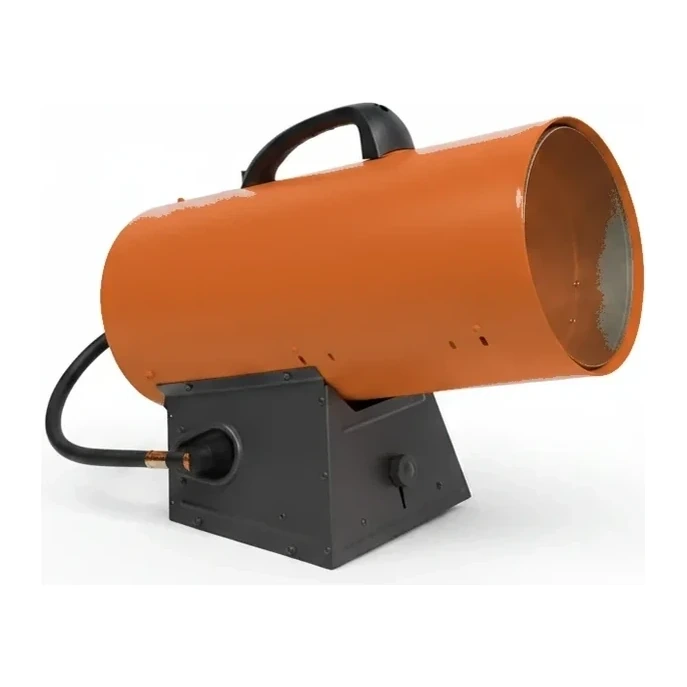
Especificaciones clave
| Especificación | Rango típico | Qué significa |
|---|---|---|
| Heat output | 500,000 – 1,500,000 BTU/hr | Thermal capacity for heating large volumes of open air quickly |
| Fuel type | Propane or natural gas | Direct combustion of gaseous fuel produces heat and moisture |
| Ventilation requirement | Open or well-ventilated space only | Combustion byproducts including CO₂ and water vapor discharge into the space |
| Airflow pattern | Forced air with integrated blower | Distributes heated air across the work area |
Cómo elegir
This size class serves large open structures undergoing rough construction, demolition, or other early-phase work where combustion moisture and exhaust gases are acceptable. The 500-1,500 k btu band is appropriate when rapid heating of substantial volumes is required and finish materials, coatings, or occupied spaces are not present. For applications requiring dry heat or where finish work is underway, indirect fired heaters eliminate combustion products from the airstream. For enclosed or semi-enclosed spaces, proper makeup air and ventilation must be verified before operation.
Lo que maneja este tamaño
- Heating large warehouses during construction before insulation and finishes are installed
- Thawing frozen ground or concrete pours in open excavations
- Maintaining temperature in steel erection or framing phases of commercial buildings
- Temporary heat for agricultural structures or open-sided pole barns during maintenance
- Drying out flood-damaged structures where finish materials have been removed
- Heating large tented or temporary event structures with adequate ventilation
Seguridad y operación
- Carbon monoxide and oxygen depletion monitoring required in any partially enclosed space; detectors mandatory
- Minimum clearances to combustible materials and overhead obstructions per manufacturer specifications, typically several feet
- Combustion products including moisture, CO₂, and trace CO enter the workspace; unsuitable for occupied spaces or where finishes may be damaged
- Fuel supply connections and hoses inspected for leaks before each operating session; proper regulator sizing critical
Transporte y logística
- Wheeled chassis with tow bar allows repositioning by hand or light vehicle on relatively flat surfaces
- Compact footprint relative to heat output; units typically fit through standard commercial door openings
- Fuel cylinders or bulk propane supply transported separately and connected on site
Alimentación
- Electric power for blower motor, typically 115V single-phase standard outlet
- Propane supply via bulk tank or multiple large cylinders; consumption at maximum output can exceed 10 gallons per hour
- Natural gas connection where available, requiring appropriately sized supply line for rated input
Preguntas frecuentes
Why does this heater add moisture to the space?
What distinguishes direct fired from indirect fired heaters?
How much ventilation does this output range require?
Explorar por fabricante
Fuentes
Cada especificación se verifica con los datos publicados por el fabricante, con la fuente enlazada como referencia.
500-1,500 k btu Direct Fired Heater
1 modelos · Cada especificación citada a la fuente