Mast Climbing Work Platform
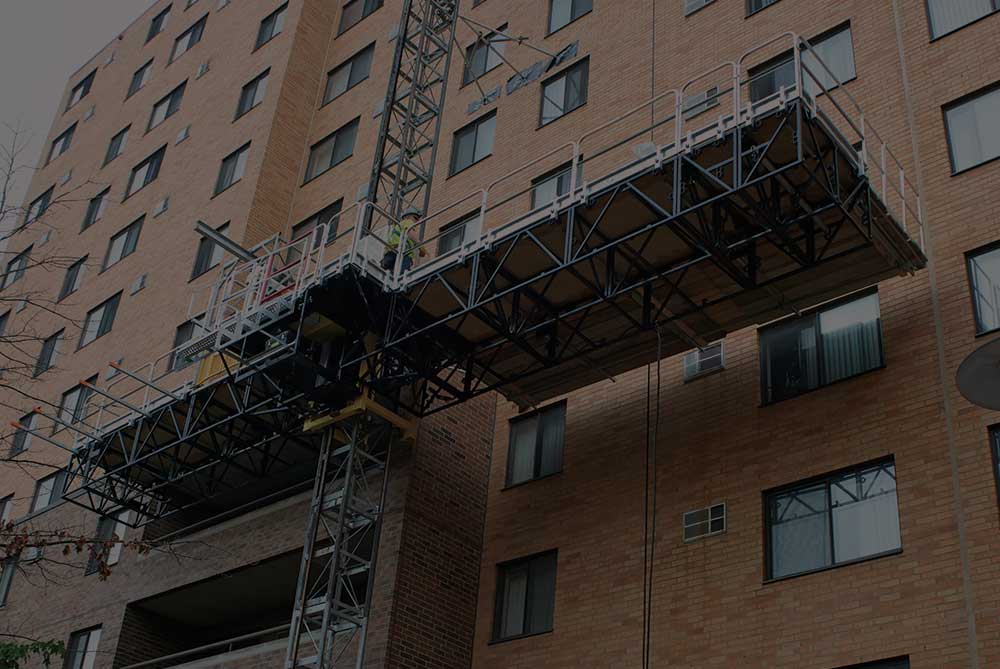
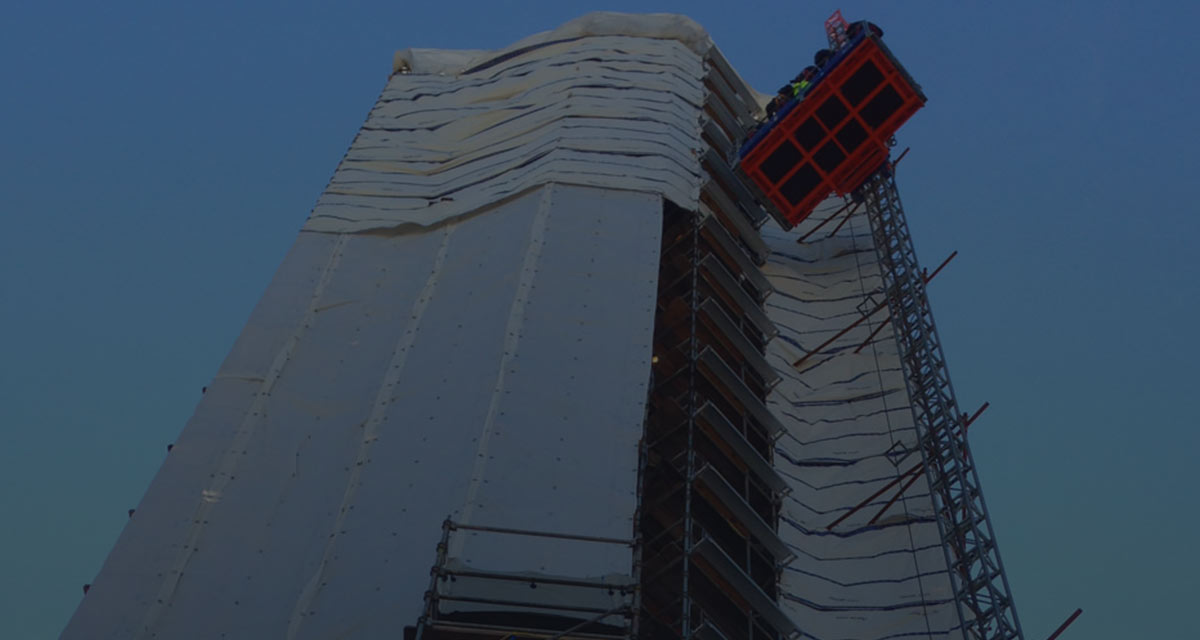
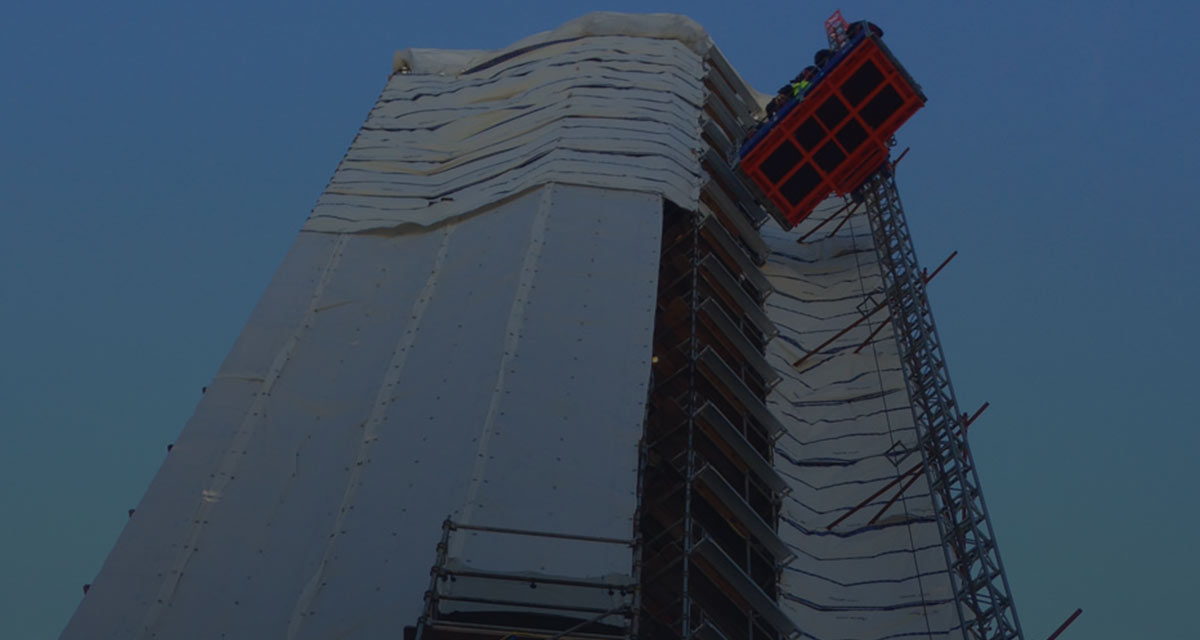
A mast climbing work platform (MCWP) is a powered, temporary access system consisting of a work deck that travels vertically along one or more fixed masts attached to a building or structure. These platforms provide mobile, elevated work surfaces for construction, renovation, and maintenance tasks on building facades and vertical surfaces. The rental industry commonly refers to them as mast climbers, climbing platforms, or transport platforms.
Cómo funciona
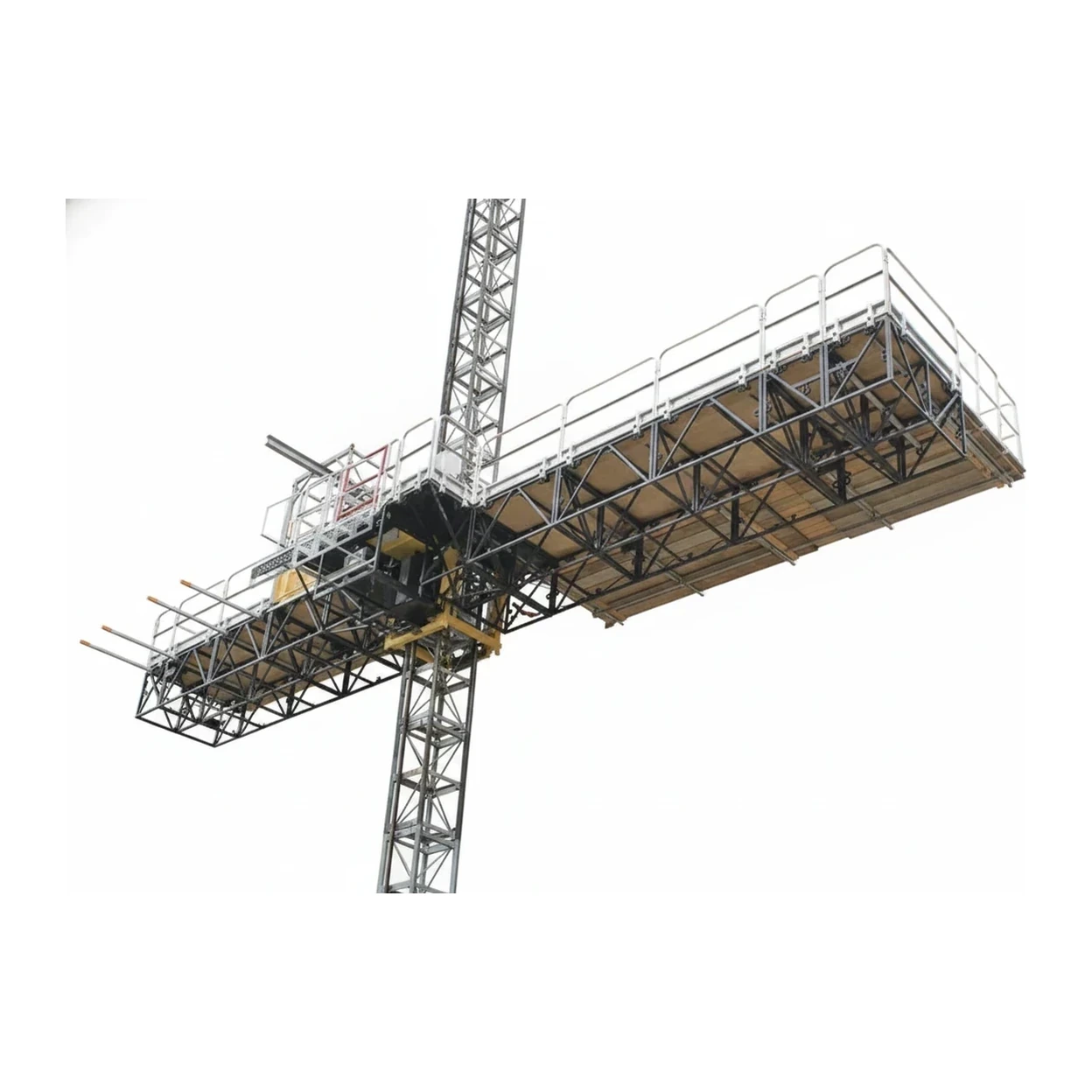
Mast climbing work platforms operate through a rack-and-pinion or cable-driven drive system that propels the platform deck up and down vertical aluminum or steel masts. The masts are erected from ground level and secured to the structure at designated intervals, with the platform itself powered by electric or pneumatic motors controlled from the deck. Operators raise or lower the platform to the desired working height, where it locks in place to provide a stable work surface. As work progresses vertically, masts can be added or removed in sections, allowing the platform to reach varying heights. The system includes guardrails, toeboards, and safety devices such as secondary braking systems and overload protection. Multiple platforms can be deployed on a single project, traveling independently or in synchronized groups along shared or separate mast runs.
Tipos y variantes
- Single-Mast Platform
- Compact unit with one vertical mast, typically used for narrow work areas, chimneys, or limited-access facades up to mid-rise heights.
- Twin-Mast Platform
- Most common configuration featuring two masts supporting a wider work deck, suitable for general facade work with crew and material capacity.
- Multi-Mast Platform
- Three or more masts supporting extended deck lengths for large-scale facade operations, allowing multiple crews to work simultaneously.
- Engineered High-Rise System
- Custom-designed mast climber for buildings over 200 ft, requiring structural engineering analysis and frequent tie-in points to the building.
- Transport Platform
- Heavy-duty configuration designed to carry significant material loads vertically, functioning as a construction hoist integrated with work platform capability.
Especificaciones clave
| Especificación | Rango típico | Qué significa |
|---|---|---|
| Maximum Height | Single-mast to 100 ft; twin-mast to 200 ft; engineered systems 200+ ft | Vertical reach capacity, determined by mast sections and structural tie-in requirements. |
| Platform Width | 4 ft to 10 ft typical; up to 20+ ft on multi-mast systems | Deck dimension perpendicular to the building face, defines work area and crew capacity. |
| Platform Length | 10 ft to 50+ ft depending on mast count | Deck dimension parallel to the building face, expandable with additional mast sections. |
| Load Capacity | 1,000 lbs to 5,000+ lbs per platform | Combined weight limit for personnel, tools, and materials on the work deck. |
| Climb Speed | 20 ft/min to 40 ft/min | Vertical travel rate when raising or lowering the platform under power. |
Cómo la industria lo dimensiona
The industry sizes mast climbing work platforms primarily by maximum operational height in feet, which correlates to the building elevation and project scope. Platforms serving low-rise structures to approximately 100 ft typically use single-mast configurations, while mid-rise applications from 100 to 200 ft employ twin-mast systems with increased capacity. High-rise projects exceeding 200 ft require engineered mast climbers with structural tie-ins and custom design. Secondary sizing considerations include platform deck dimensions (width and length) and load capacity, which determine crew size and material handling capability for specific facade work requirements.
Aplicaciones
- Building facade installation and cladding work on commercial and residential structures
- Masonry, brick, and stone veneer installation on vertical building surfaces
- Window and curtain wall installation, glazing, and exterior panel systems
- Exterior insulation and finish systems (EIFS) application and stucco work
- Building restoration, tuckpointing, and facade repair on existing structures
- Painting, coating, and weatherproofing operations on building exteriors
Seguridad y operación
- Platform must be operated only by trained personnel familiar with manufacturer instructions and load limits
- Structural tie-ins to the building must be installed at intervals specified by engineering calculations and manufacturer guidelines
- Guardrails, toeboards, and midrails must be installed on all open sides of the platform deck before operation
- Secondary braking and safety arrest systems must be functional and inspected before each use
- Wind speed limits and weather conditions must be monitored, with operations ceased when manufacturer-specified thresholds are exceeded
Normas y certificaciones
- ANSI · A92.9
- American National Standard for mast climbing work platforms, covering design, construction, testing, and use requirements.
- OSHA · 29 CFR 1926.452(t)
- Federal regulations governing the use of supported scaffolds including mast climbing work platforms on construction sites.
- CSA · Z-91.2
- Canadian standard for mast climbing work platforms, addressing safety and operational requirements.
- SAIA
- Scaffold and Access Industry Association provides training, certification, and best practice guidelines for mast climber operations.
Preguntas frecuentes
How is a mast climbing work platform different from traditional scaffolding?
What determines the tie-in frequency for mast climbers on a building?
Can mast climbing work platforms be used on sloped or irregular facades?
What power sources are used for mast climbing work platforms?
Equipos relacionados
Explorar por fabricante
Fuentes
Cada especificación se verifica con los datos publicados por el fabricante, con la fuente enlazada como referencia.
Todos los modelos
3 modelos · Cada especificación citada a la fuente