

Rolling Tower (Baker) Scaffold
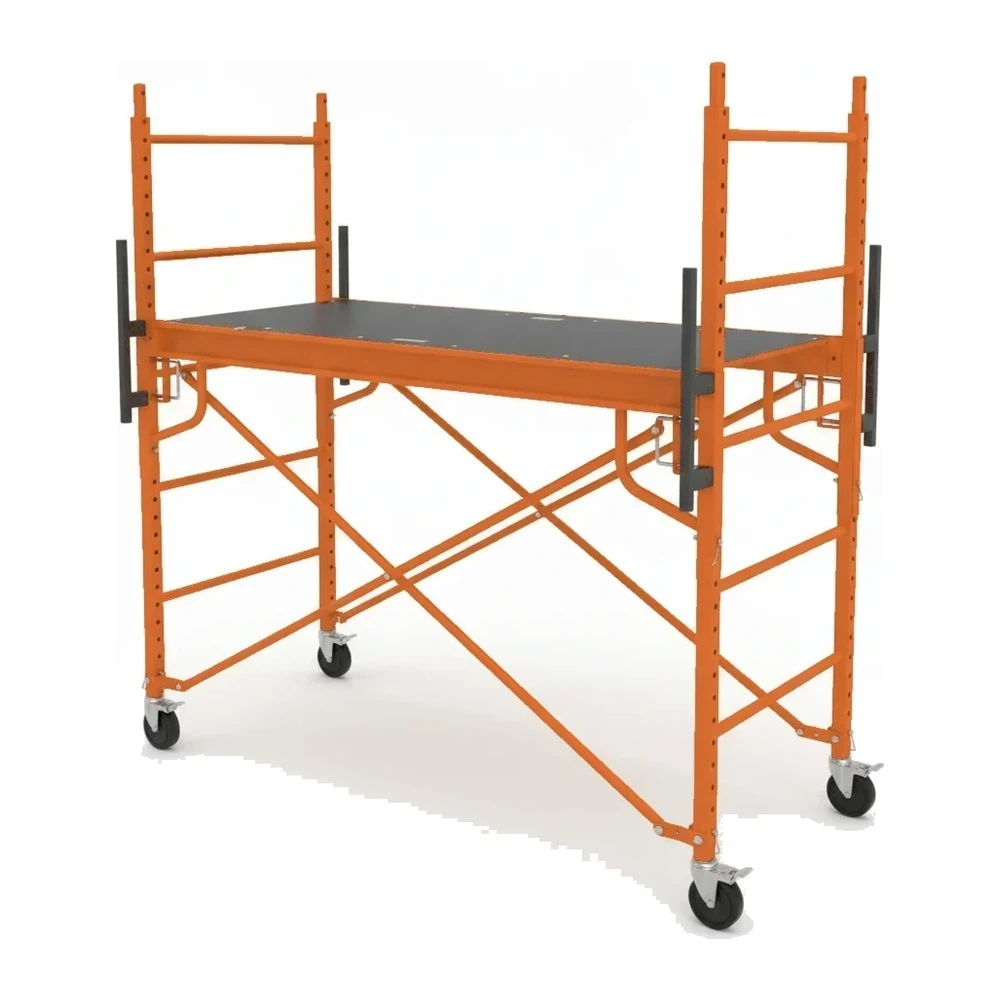
A rolling tower scaffold, commonly called a baker scaffold, is a mobile aluminum or steel work platform supported by a rectangular frame with locking casters at the base. These scaffolds provide elevated access for interior construction, maintenance, and finishing tasks where portability and repositioning are required. The modular frame design allows vertical stacking to reach various working heights while maintaining mobility.
Cat classes
Elija una clase de tamaño: la capacidad y el alcance varían en la gama.
Cómo funciona
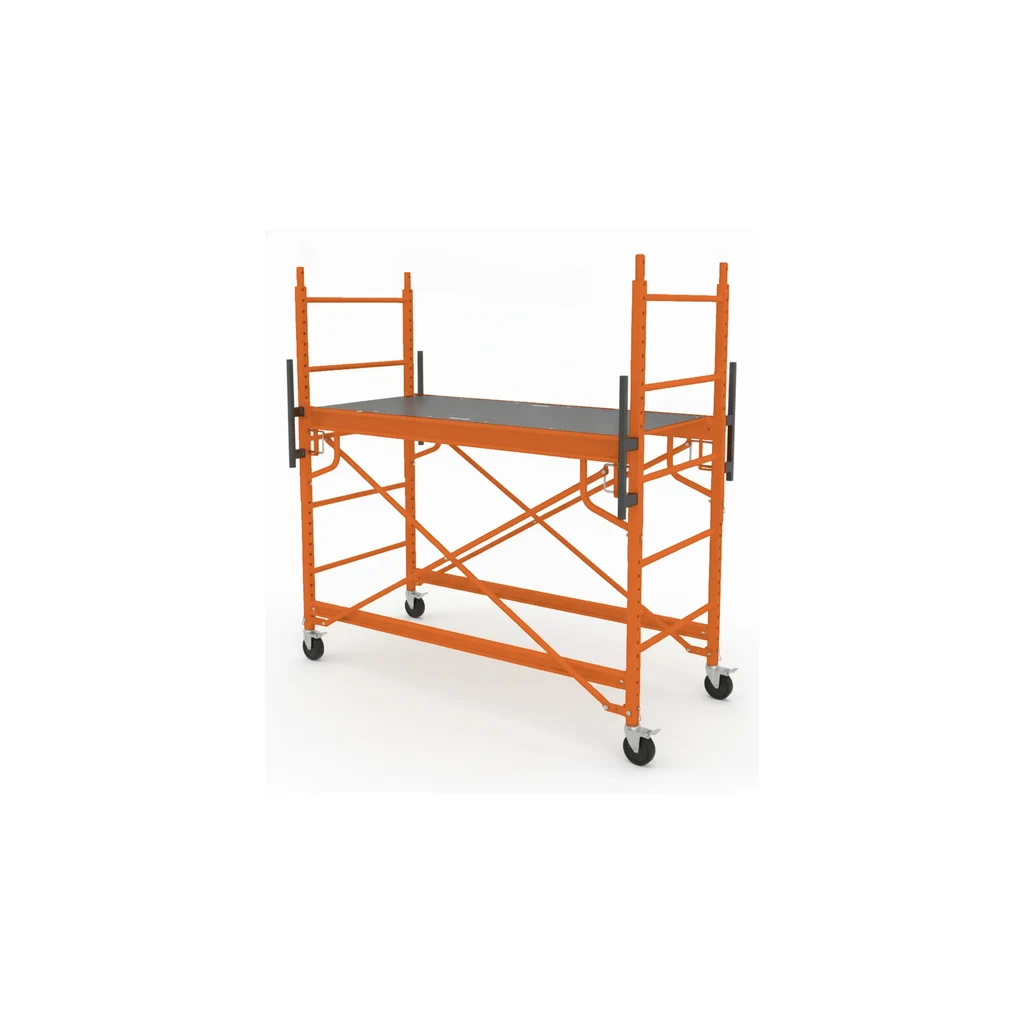
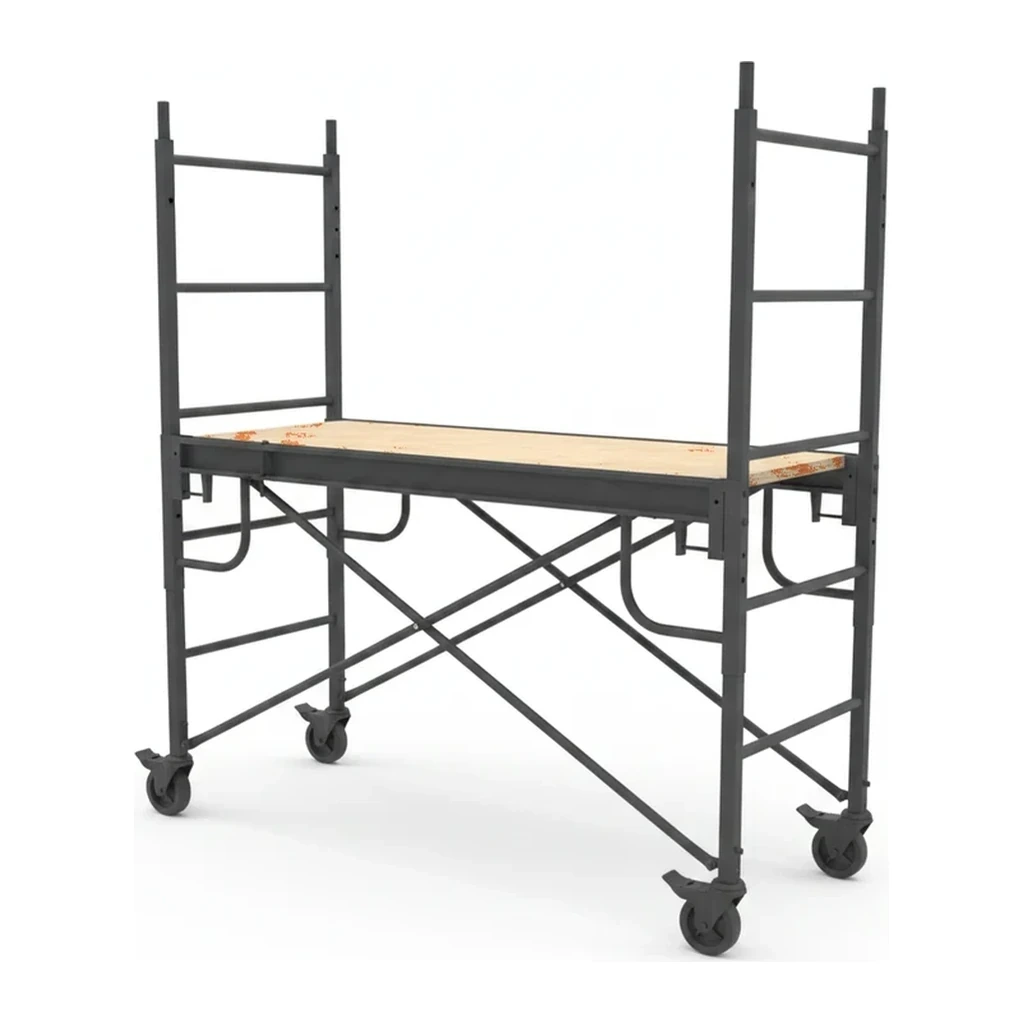
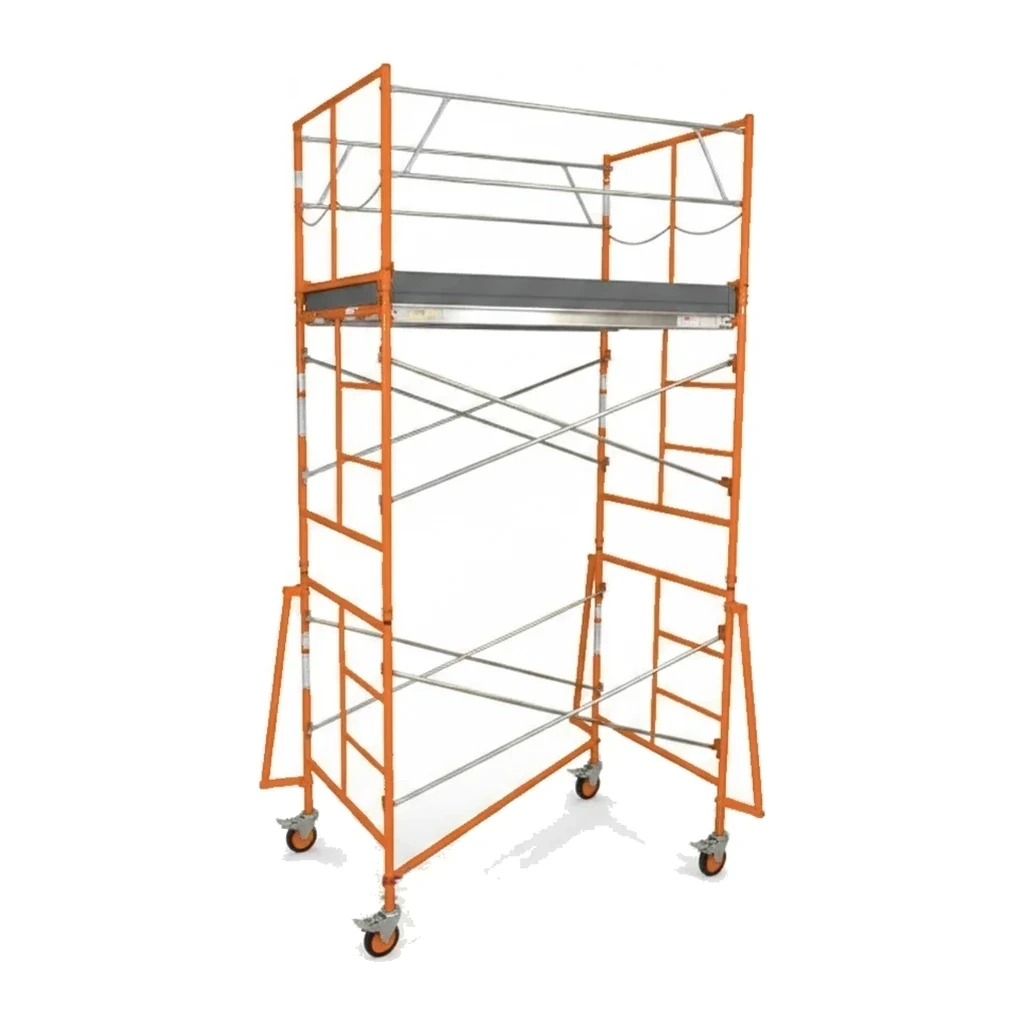
The scaffold consists of one or more interlocking frame sections that stack vertically and lock together with pins or clip mechanisms. Each section typically includes side frames, cross braces, and a platform deck. Locking casters at the base allow the unit to be rolled into position, then secured in place by engaging wheel locks or brakes. Guardrails attach to the upper section to provide fall protection at the working level. For heights beyond two sections, outriggers extend from the base to increase stability and meet tip-over safety requirements. Workers access the platform via integrated ladder rungs on the end frames or attached ladder assemblies. The narrow profile of most units permits passage through standard doorways and movement within confined interior spaces.
Tipos y variantes
- Single-Section Baker Scaffold
- Non-stackable base unit, typically 3-6 ft platform height, designed for low-level interior work and doorway passage.
- Multi-Section Stackable Tower
- Modular frames that interlock vertically, reaching 12-27 ft, with guardrails and outriggers for extended height applications.
- Narrow Frame Scaffold
- Compact width design (typically 29-30 in.) specifically engineered to fit through residential and commercial doorways.
- Wide-Base Utility Scaffold
- Broader footprint for increased stability in open areas, often with larger work platforms for material handling.
- Fold-Up Rolling Tower
- Hinged frame sections that collapse for transport and storage, commonly used in facilities maintenance operations.
Especificaciones clave
| Especificación | Rango típico | Qué significa |
|---|---|---|
| Maximum Height | 3.6–27 ft (1.1–8.2 m) | Maximum platform height achievable with available frame sections; taller configurations require outriggers. |
| Platform Size | 29 × 72 in. (narrow frame) | Work surface dimensions; narrow frames pass through 36 in. doorways, wider models offer more workspace. |
| Load Capacity | 500–1,000 lbs (227–454 kg) | Combined weight rating for workers, tools, and materials on the platform deck. |
| Frame Material | Aluminum or steel | Aluminum units offer lighter weight for frequent repositioning; steel provides durability for heavy-duty use. |
| Caster Size | 5-8 in. diameter | Wheel diameter affects rolling ease and floor protection; larger casters navigate uneven surfaces more effectively. |
Cómo la industria lo dimensiona
The industry sizes rolling tower scaffolds by maximum platform height in feet, corresponding to the number of frame sections stacked. Single-section units (3-6 ft) serve standard room heights and pass through doorways for interior access. Two-section configurations (6-12 ft) address commercial ceiling heights and elevated mechanical work. Three-section and taller towers (12+ ft) require outrigger stabilization and are specified for tall interior spaces, atriums, and theatrical rigging. Width classification distinguishes narrow-frame models (approximately 29 in.) designed for doorway passage from wider utility models prioritizing platform area.
Aplicaciones
- Interior drywall installation, taping, and finishing in residential and commercial construction
- Ceiling tile installation, HVAC ductwork, and electrical fixture mounting in commercial spaces
- Interior painting and coating application on walls, ceilings, and high trim work
- Maintenance access to lighting, sprinkler systems, and building equipment in occupied facilities
- Theatrical rigging, lighting adjustments, and event setup in auditoriums and convention spaces
- Warehouse and retail fixture installation, signage mounting, and inventory access
Seguridad y operación
- Engage all wheel locks before ascending; ensure casters are on firm, level surfaces free of debris and obstructions.
- Never move the scaffold while workers or materials are on the platform; all personnel must descend before repositioning.
- Install outriggers and comply with height-to-base ratio requirements (typically 4:1) when stacking sections beyond manufacturer specifications.
- Inspect frame connections, locking pins, and platform decks before each use; verify guardrails are properly installed at working height.
- Maintain three-point contact when climbing; do not overload the platform or lean beyond the guardrail perimeter.
Normas y certificaciones
- ANSI · A92.5
- American National Standard for mobile scaffolding towers, covering design, construction, and safe use requirements.
- OSHA · 29 CFR 1926.452
- Federal regulations for mobile scaffolds including platform construction, guardrails, and stability criteria.
- ANSI · A10.8
- Safety requirements for scaffolding used in construction, demolition, and maintenance operations.
- CSA · S269.2
- Canadian standard for access scaffolding, applicable to rolling towers used in Canadian jurisdictions.
Preguntas frecuentes
What distinguishes a baker scaffold from other mobile scaffold types?
How many frame sections can be safely stacked without outriggers?
What floor conditions are unsuitable for rolling tower scaffolds?
Are rolling scaffolds permitted for exterior building work?
Comparar modelos populares
Buscar por especificación →Normalizado a las mismas unidades. Un guion significa que el valor no fue publicado.
| Modelo | Altura máx | Capacidad de carga |
|---|---|---|
| Bil-Jax Pro-Jax Utility Scaffold | 10.5 ft (3.2 m) | 1,001 lb (454 kg) |
| Metaltech 12ft Complete Fiberglass Baker Scaffold Tower Set | 12 ft (3.7 m) | 642 lb (291 kg) |
| Metaltech 18ft Complete Fiberglass Baker Scaffold Tower Set | 18 ft (5.5 m) | 560 lb (254 kg) |
Equipos relacionados
Explorar por fabricante
Fuentes
Cada especificación se verifica con los datos publicados por el fabricante, con la fuente enlazada como referencia.