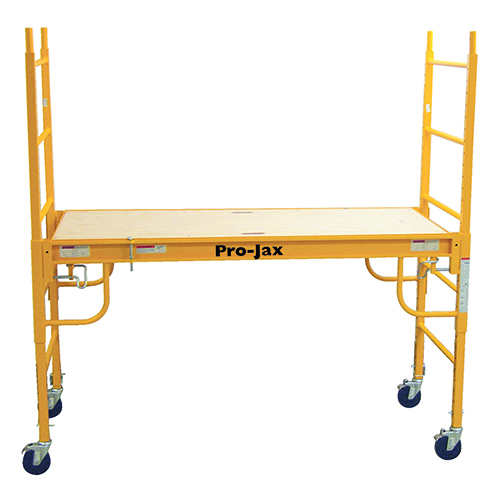
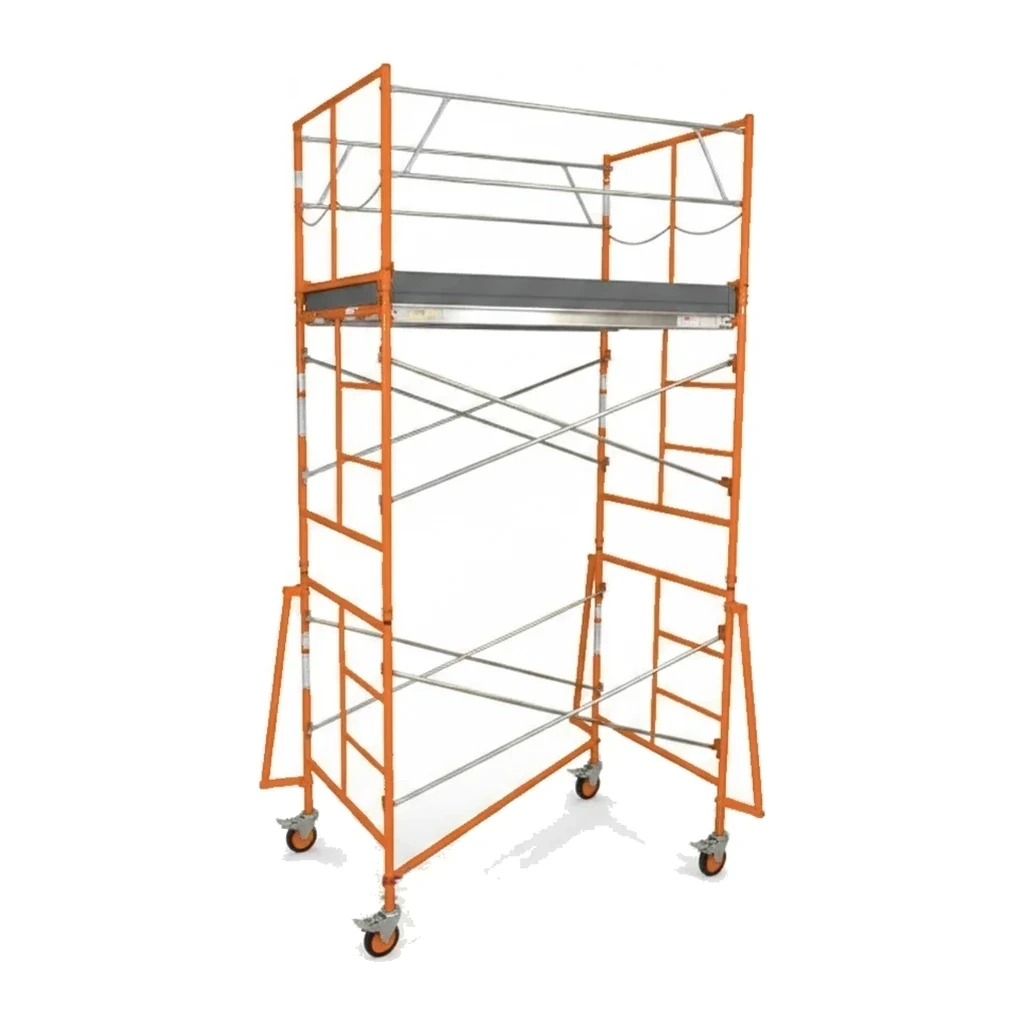
6-12 ft Rolling Tower (Baker) Scaffold
The 6-12 ft Rolling Tower (Baker) Scaffold is a two-section stacked configuration designed for work on commercial ceilings, ductwork, and high interior walls. This mid-height class bridges the gap between single-section platforms and taller industrial towers, offering working heights typically around 10-14 feet when fully assembled with guardrails. It represents the second rung in the rolling tower scaffold ladder.
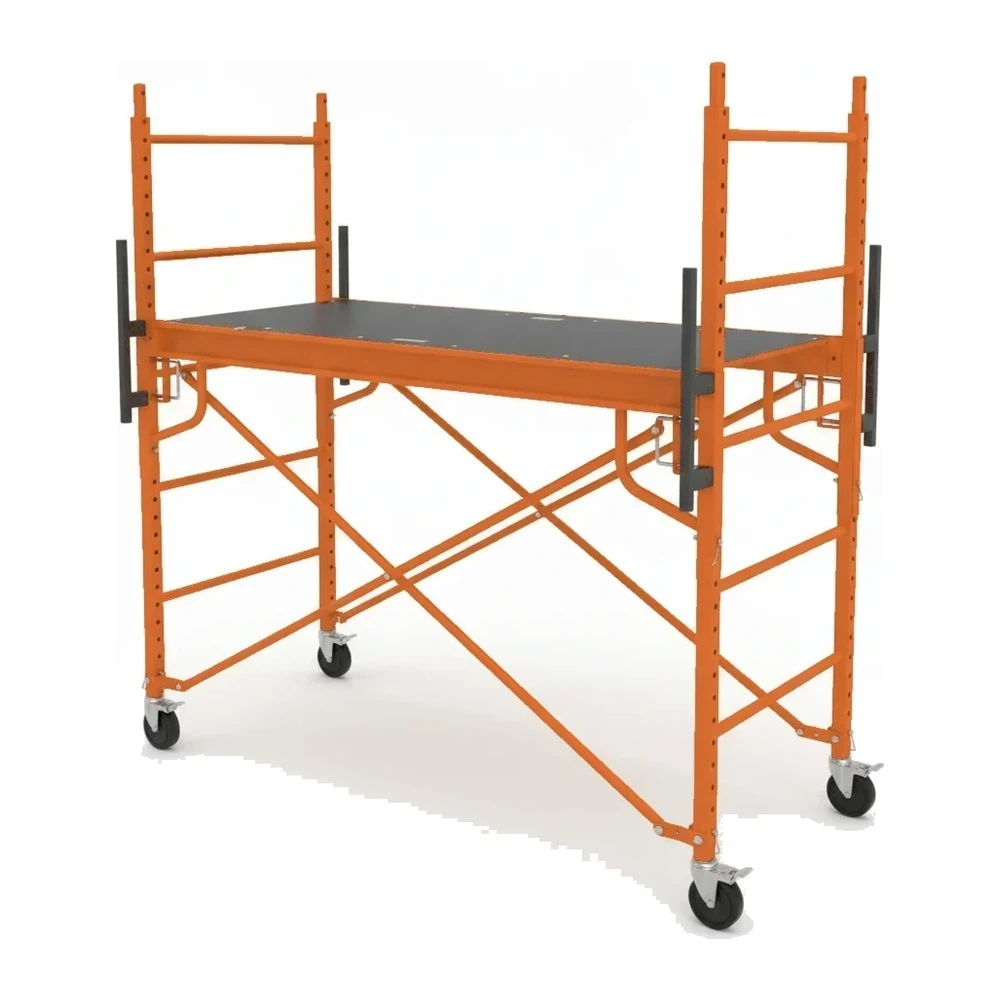
Cat classes
Elija una clase de tamaño: la capacidad y el alcance varían en la gama.
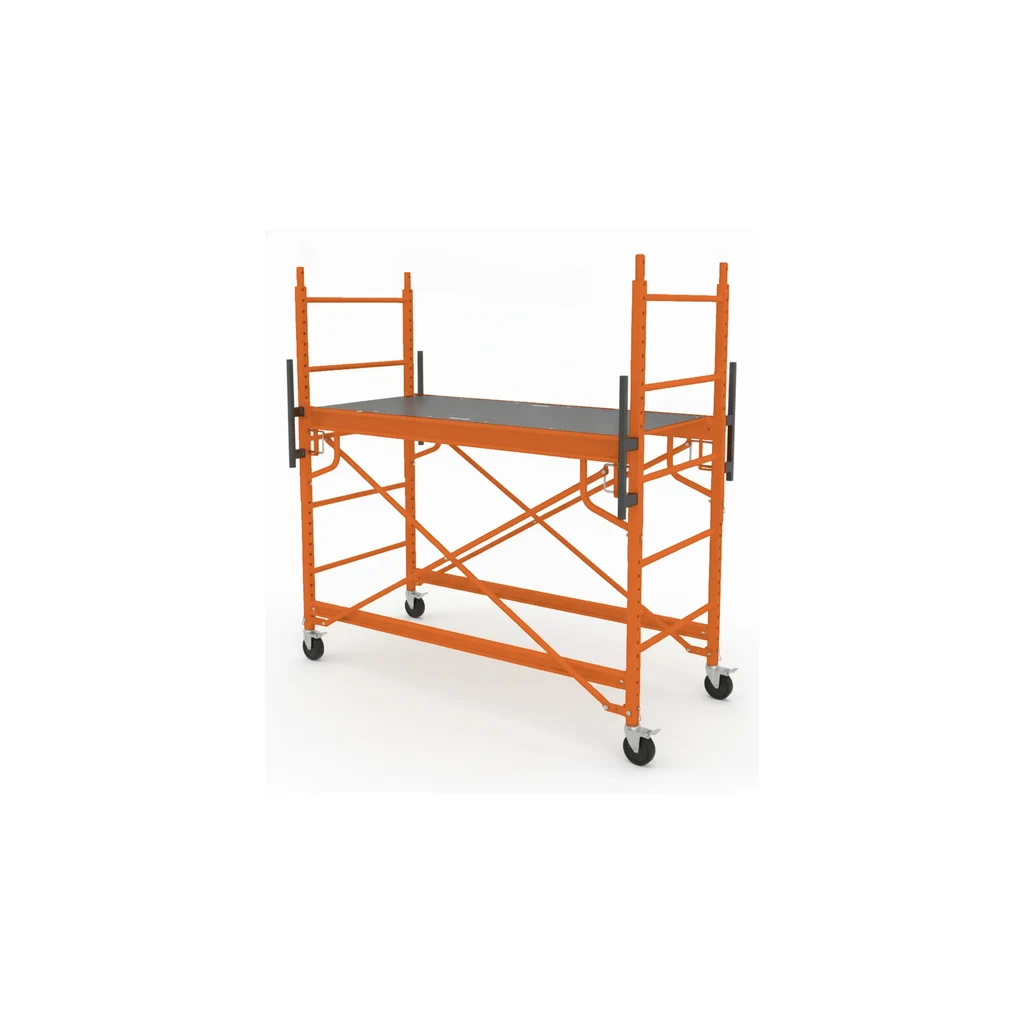
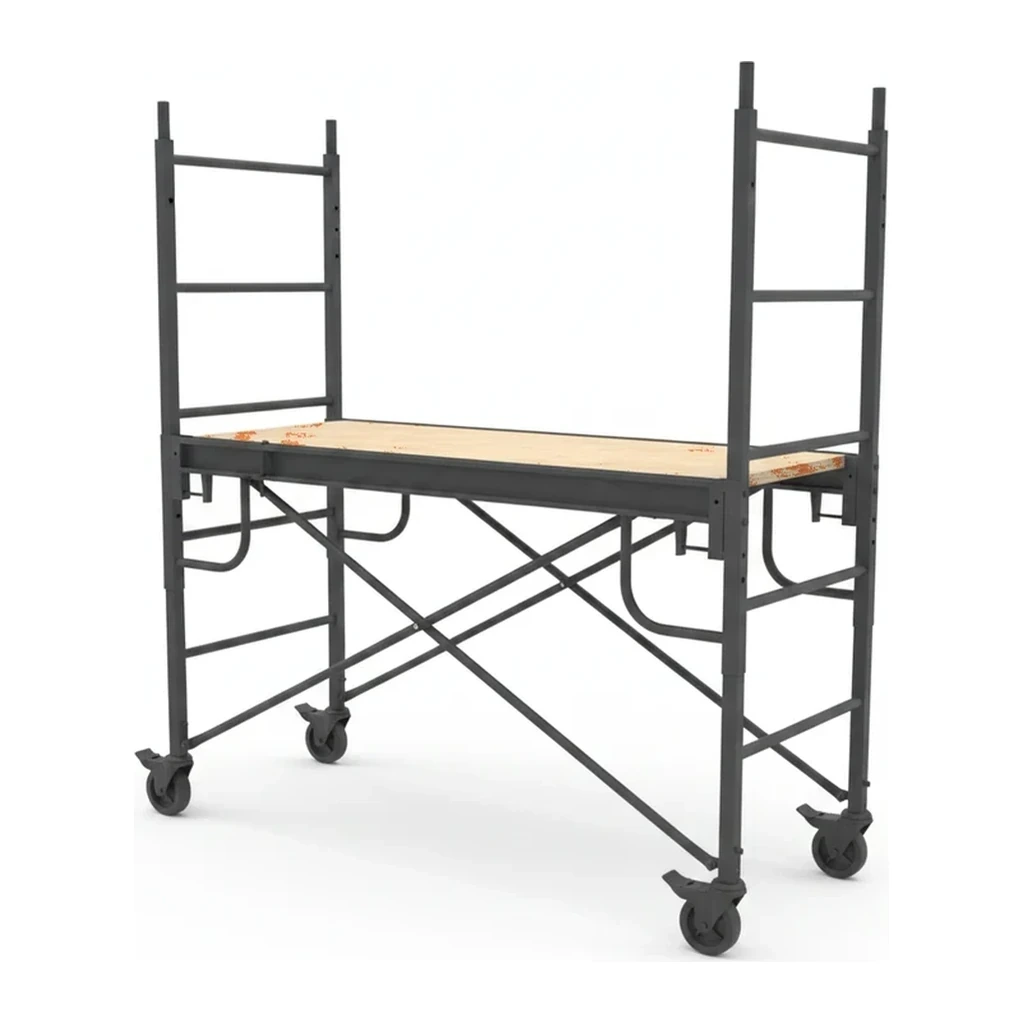
Especificaciones clave
| Especificación | Rango típico | Qué significa |
|---|---|---|
| Maximum height | 6 ft per section | Each frame section measures 6 feet; two sections stack to create the platform height before adding guardrail components |
| Stacked configuration | 2 sections | Two frame sections locked together provide the elevation needed for commercial ceiling work while maintaining mobility |
| Working height | 10–14 ft (3.0–4.3 m) | Platform height plus average worker reach; sufficient for standard commercial drop ceilings and HVAC rough-in |
Cómo elegir
The 6-12 ft class is appropriate when work occurs at commercial ceiling heights (9-12 feet) or when installing high-wall fixtures, ductwork, and electrical conduit in spaces with standard commercial clearances. For residential work, light fixture changes, or spaces with 8-10 foot ceilings, the Up to 6 ft Rolling Tower (Baker) Scaffold single-section configuration offers easier setup and transport. When platform heights above 12 feet are required, warehouse racking, mezzanine access, or industrial mechanical systems, the 12+ ft Rolling Tower (Baker) Scaffold three-section or taller assemblies become necessary.
Lo que maneja este tamaño
- Installing suspended acoustical tile ceilings in office build-outs
- Rough-in and finishing of HVAC ductwork at 10-12 foot elevations
- Electrical conduit runs and junction box installation along high interior walls
- Painting and drywall finishing in commercial lobbies with elevated ceilings
- Sprinkler head installation and fire suppression system fitment
- Security camera and access control device mounting in retail and institutional spaces
Seguridad y operación
- Outriggers or stabilizers must be deployed before ascending; two-section towers increase tip risk compared to single-section units if base support is inadequate
- Guardrails on all open sides are required at this height; confirm all locking pins and couplers engage fully when stacking frame sections
- Never reposition the tower with workers or materials on the platform; descend, move the unit, and re-check level and stability before re-boarding
- Interior use only on firm, level surfaces; caster wheels must lock before work begins and weight capacity must account for workers, tools, and materials combined
Transporte y logística
- Individual frame sections and platform decks disassemble for pickup truck or cargo van transport; 6-foot sections typically fit in standard cargo areas
- Casters lock for stationary work but allow repositioning across finished floors without disassembly; units roll through standard doorways when collapsed
Alimentación
- No power or fuel required; rolling tower scaffolds are manual-positioning work platforms
- Separate temporary lighting or corded power tools draw from building circuits or portable generators positioned at ground level
Preguntas frecuentes
How does the two-section 6-12 ft tower differ from a single 6-foot unit?
What floor conditions support safe operation of a 6-12 ft rolling tower?
Can additional sections be added to a 6-12 ft tower for taller work?
Equipos relacionados
Explorar por fabricante
Fuentes
Cada especificación se verifica con los datos publicados por el fabricante, con la fuente enlazada como referencia.
6-12 ft Rolling Tower (Baker) Scaffold
5 modelos · Cada especificación citada a la fuente