

Secondary Containment Berm
A secondary containment berm is a portable, flexible barrier system designed to contain spills and leaks from tanks, equipment, and liquid storage operations. These berms provide a critical safety layer to prevent hazardous materials, fuels, oils, and chemicals from contaminating soil, groundwater, or stormwater systems. Widely used across construction, industrial, and environmental remediation sites, secondary containment berms ensure regulatory compliance with spill prevention requirements.
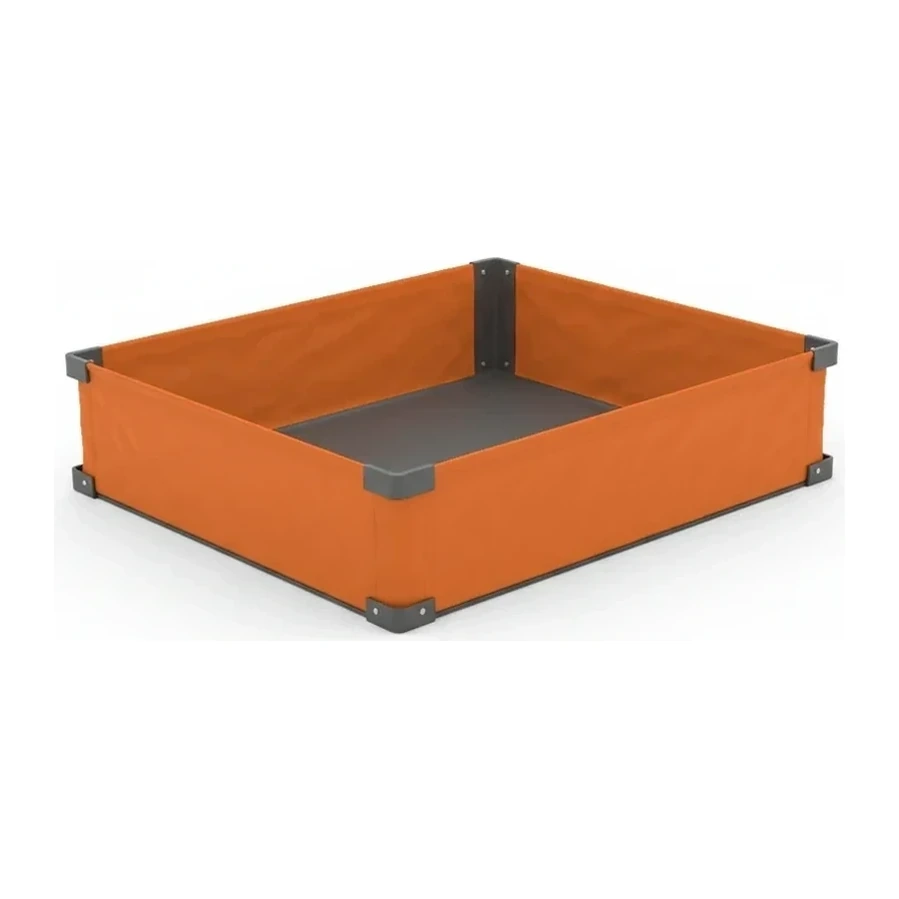
Cómo funciona
The berm consists of an impermeable liner material, typically reinforced polyurethane, PVC, or polyethylene fabric, that forms a basin or enclosure around tanks, drums, equipment, or storage areas. Sidewalls are supported by either foam-filled perimeter walls, rigid frames, or the berm's own structural design, creating a continuous containment zone. When a spill or leak occurs, the liquid is captured within the berm's volume rather than spreading across the ground. Many designs feature drive-over or roll-up access points that allow vehicles and equipment to enter and exit the containment area while maintaining a sealed perimeter. The berm remains in place throughout storage or transfer operations, and captured material can be pumped out or cleaned following spill protocols. Collapsed or folded berms are transported and deployed as needed, providing temporary or semi-permanent containment solutions.
Tipos y variantes
- Standard Foam-Wall Berm
- Features foam-filled sidewalls that maintain shape and provide height; most common portable design for drum and small tank containment
- Drive-Over Berm
- Incorporates low-profile ramps or collapsible entry points allowing vehicles and heavy equipment to drive into the containment area without breaching the barrier
- Rigid-Frame Berm
- Uses aluminum or steel support frames for higher sidewalls and larger containment volumes; suitable for large tanks and extended-duration projects
- Pop-Up Berm
- Self-deploying design that springs into shape when unfolded; provides rapid deployment for emergency spill response or temporary containment
- Modular Berm System
- Interlocking sections that can be connected to customize containment area shape and size for irregular layouts or large-scale operations
Especificaciones clave
| Especificación | Rango típico | Qué significa |
|---|---|---|
| Containment Capacity | Varies by model from small to large volumes | Total volume of liquid the berm can contain; must meet or exceed regulatory requirements for stored material volume |
| Liner Material | Reinforced PVC, polyurethane, or polyethylene | Determines chemical resistance, durability, and temperature range; selected based on stored material compatibility |
| Sidewall Height | Varies by design and application | Vertical containment depth; higher walls provide greater capacity but may require access ramps for drive-over applications |
| Footprint Dimensions | Varies from compact to large-area configurations | Floor area available for equipment placement; must accommodate tanks, drums, or equipment with clearance for access |
Cómo la industria lo dimensiona
Secondary containment berms are sized based on the total volume and footprint required to contain the stored material and equipment. Regulatory standards typically mandate containment capacity of at least 110% of the largest tank volume or 10% of total aggregate storage volume, whichever is greater. Berms are selected by matching the footprint to the physical dimensions of tanks or equipment while ensuring the berm's rated capacity meets or exceeds the containment volume requirement. The industry does not use standardized size bands, as each application dictates unique dimensional and volumetric needs based on the specific storage configuration and regulatory jurisdiction.
Aplicaciones
- Fuel and diesel tank secondary containment at construction sites and remote work locations
- Chemical storage and transfer operations in industrial facilities and manufacturing plants
- Transformer and generator oil spill protection for utility and power generation equipment
- Drum storage and hazardous waste accumulation areas requiring spill prevention
- Vehicle wash and decontamination stations with effluent capture requirements
- Emergency spill response and temporary containment during environmental cleanup operations
Seguridad y operación
- Verify berm capacity meets or exceeds 110% of largest container volume or applicable regulatory requirement before use
- Inspect liner for tears, punctures, or chemical degradation prior to each deployment; damaged liners compromise containment integrity
- Ensure berm liner material is chemically compatible with stored substances to prevent degradation and leakage
- Maintain clear access and egress routes; avoid overfilling containment area to allow safe equipment operation and personnel movement
- Implement spill response procedures including pump-out equipment and absorbent materials for captured liquids
Normas y certificaciones
- EPA · 40 CFR 112 (SPCC)
- Spill Prevention, Control, and Countermeasure rule establishing secondary containment requirements for oil storage facilities
- EPA · 40 CFR 264/265
- RCRA hazardous waste management standards requiring secondary containment for certain hazardous material storage
- OSHA · 29 CFR 1910.106
- Flammable and combustible liquids standards addressing spill containment and leak prevention requirements
Preguntas frecuentes
How is required containment capacity calculated for multiple containers?
What liner materials are compatible with different stored liquids?
Can secondary containment berms be used on sloped or uneven ground?
How are drive-over berms different from standard foam-wall designs?
Equipos relacionados
Explorar por fabricante
Fuentes
Cada especificación se verifica con los datos publicados por el fabricante, con la fuente enlazada como referencia.
Todos los modelos
1 modelos · Cada especificación citada a la fuente