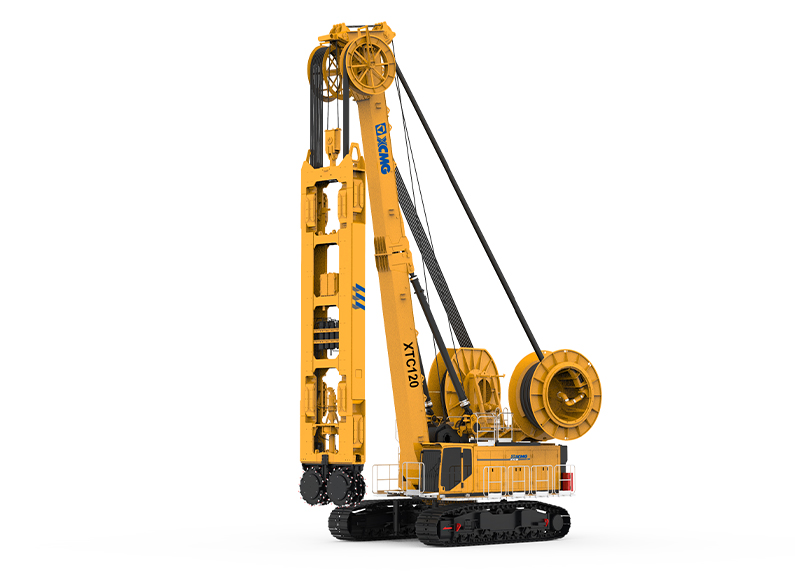

Ride-On Trencher
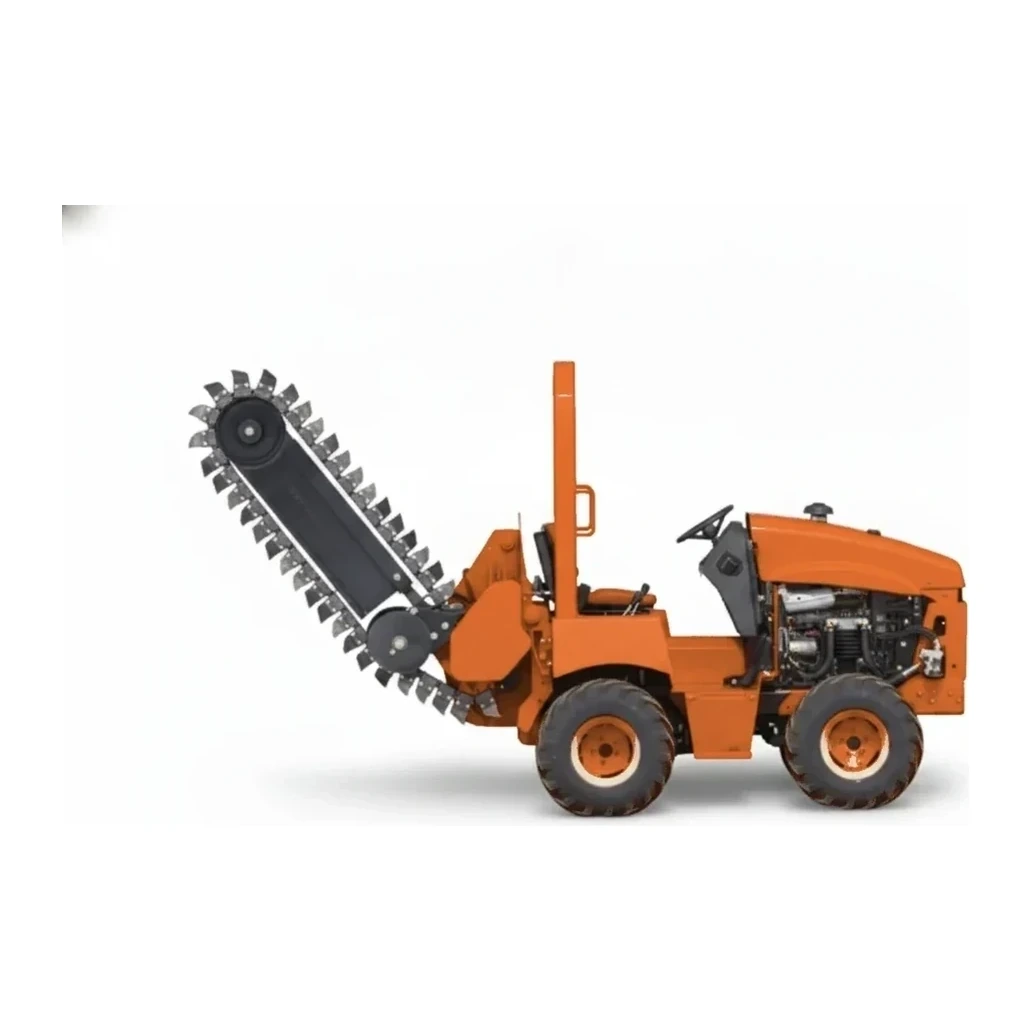
A ride-on trencher is a self-propelled machine with an operator station and a boom-mounted digging chain or wheel that cuts continuous trenches for utilities and drainage. It digs faster and deeper than walk-behind units and maintains consistent depth over long runs. Larger models accept attachments such as backfill blades, reels, and rock wheels.
Cómo funciona
The engine drives both ground propulsion and the digging attachment. A digging chain fitted with cup teeth rotates around the boom, cutting soil and carrying spoil up to an auger or conveyor that windrows it beside the trench. The operator controls boom depth, chain speed, and creep speed to match soil conditions. Trench depth is set by boom angle and length; production comes from balancing chain speed against forward travel. Wheel-type machines substitute a toothed digging wheel for the chain, excelling in shallow, consistent cuts and road crossings.
Tipos y variantes
- Chain trenchers
- The standard configuration; a toothed chain on a boom digs to the machine's rated depth.
- Wheel trenchers
- A rotating toothed wheel cuts fast, uniform shallow trenches, including hard surfaces.
- Rock trenchers
- Heavy carbide-toothed chains or wheels cut rock and frozen ground.
- Multi-attachment tractors
- Trencher tractors that also run backhoes, plows, and reel carriers for utility installation.
Especificaciones clave
| Especificación | Rango típico | Qué significa |
|---|---|---|
| Maximum dig depth (in) | 0-48, 48-72, 72+ | The controlling spec: the machine must reach design trench depth with margin. |
| Trench width (in) | Model-specific; set by chain and teeth configuration | Wider cuts fit larger pipe but move more spoil and slow production. |
| Engine power (hp) | Model-specific across the class | Drives both travel and chain; power governs production in harder soils. |
Cómo la industria lo dimensiona
Ride-on trenchers are sized by required trench depth and width, then by ground conditions: soft soil, compacted fill, or rock each dictate different chain and power combinations. Machines 0-48 in handle utility mainline in open ground for runs a walk-behind cannot sustain. The 48-72 in range covers everyday water, sewer, and conduit work below frost at production speed. Machines 72 in and deeper serve mainline pipe, drainage, and pipeline work. Transport capacity to move the machine between sites is part of the selection.
Aplicaciones
- Water, sewer, gas, and electrical utility installation
- Fiber and telecom line burial over long runs
- Agricultural and sports-field drainage systems
- Irrigation mainline trenching
- Road-crossing and service-lateral cuts
Seguridad y operación
- Call 811 and confirm utility locates before any cut; striking buried lines is the class's defining hazard.
- Keep ground personnel clear of the digging chain and spoil auger at all times.
- Operate on stable ground; boom-down travel on slopes follows the manufacturer's limits.
- Lower the boom and set the parking brake before dismounting.
Normas y certificaciones
- OSHA · 29 CFR 1926 Subpart P
- Open trenches produced by the machine fall under excavation protection rules once workers enter.
- OSHA · 29 CFR 1926.651(b)
- Underground installations must be located and protected before and during trenching operations.
Preguntas frecuentes
When does a job need a ride-on rather than a walk-behind trencher?
Chain or wheel: which digs better?
Can workers enter the trench behind the machine?
Equipos relacionados
Explorar por fabricante
Fuentes
Cada especificación se verifica con los datos publicados por el fabricante, con la fuente enlazada como referencia.
Todos los modelos
30 modelos · Cada especificación citada a la fuente