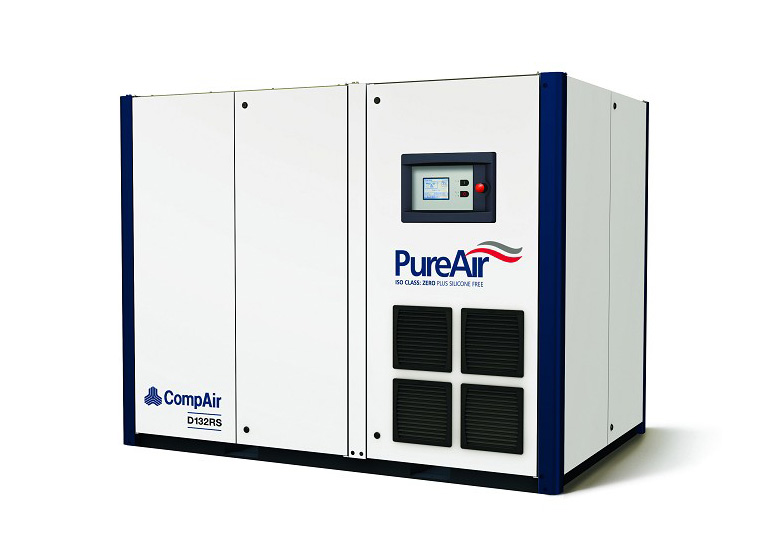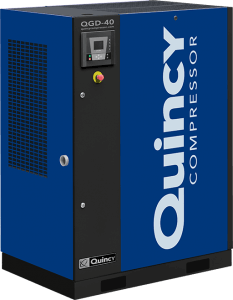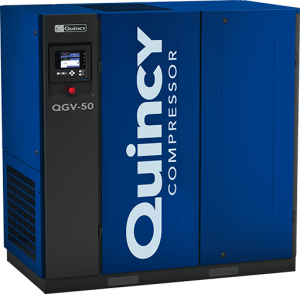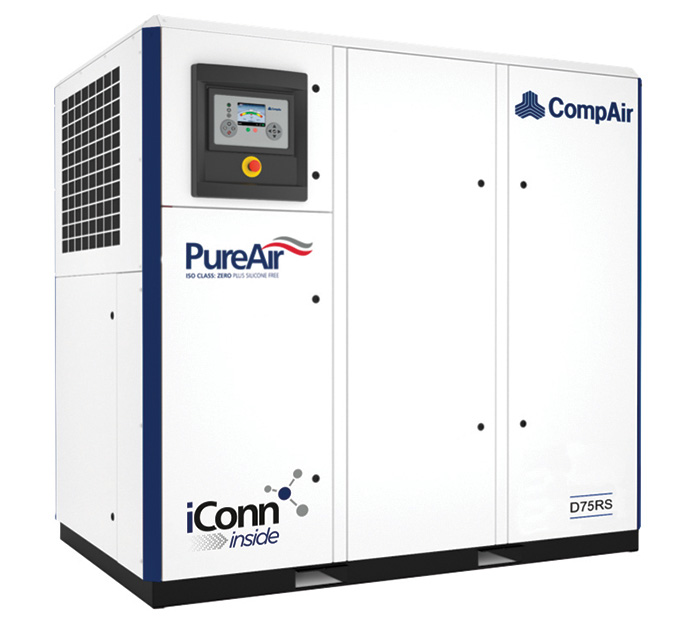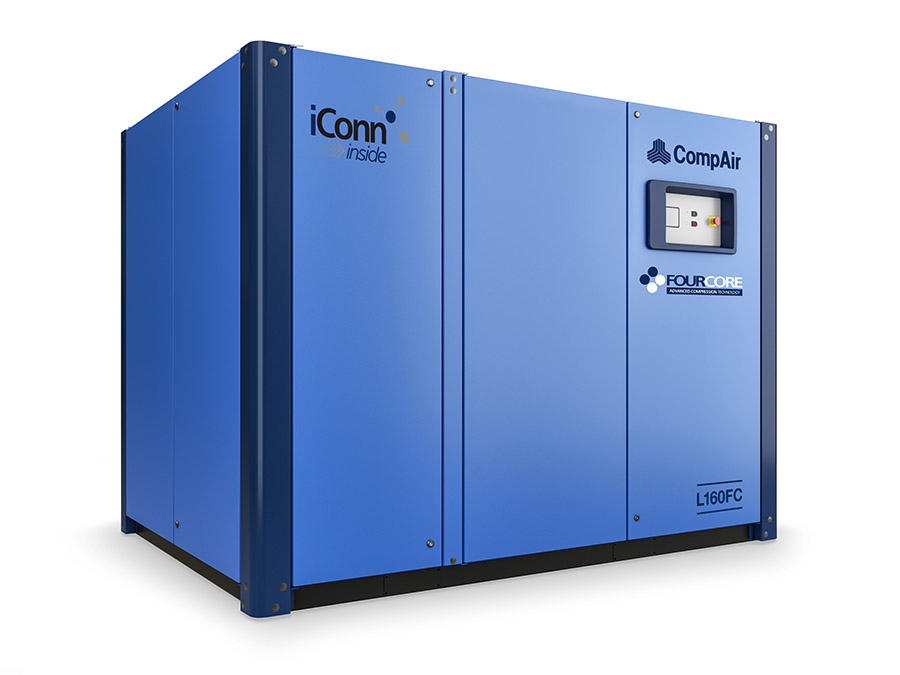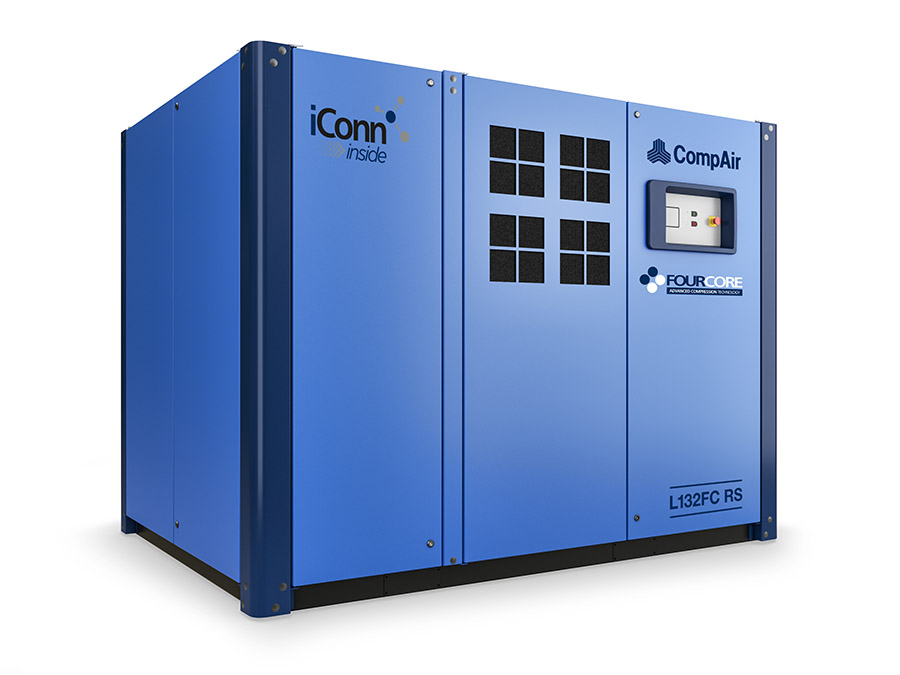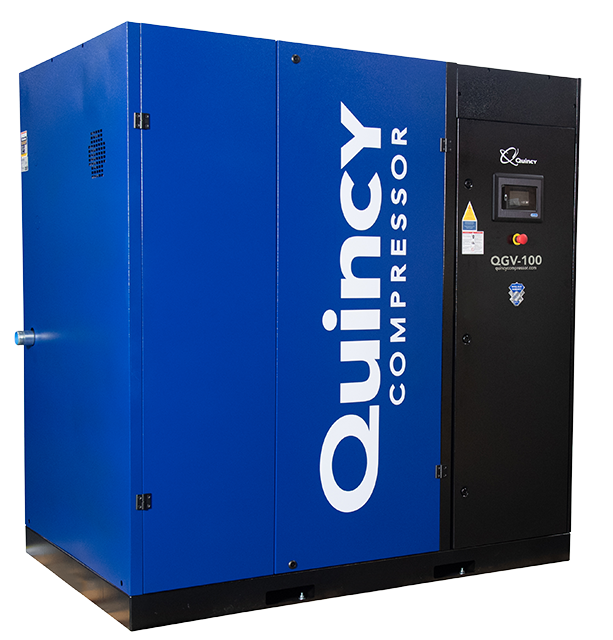

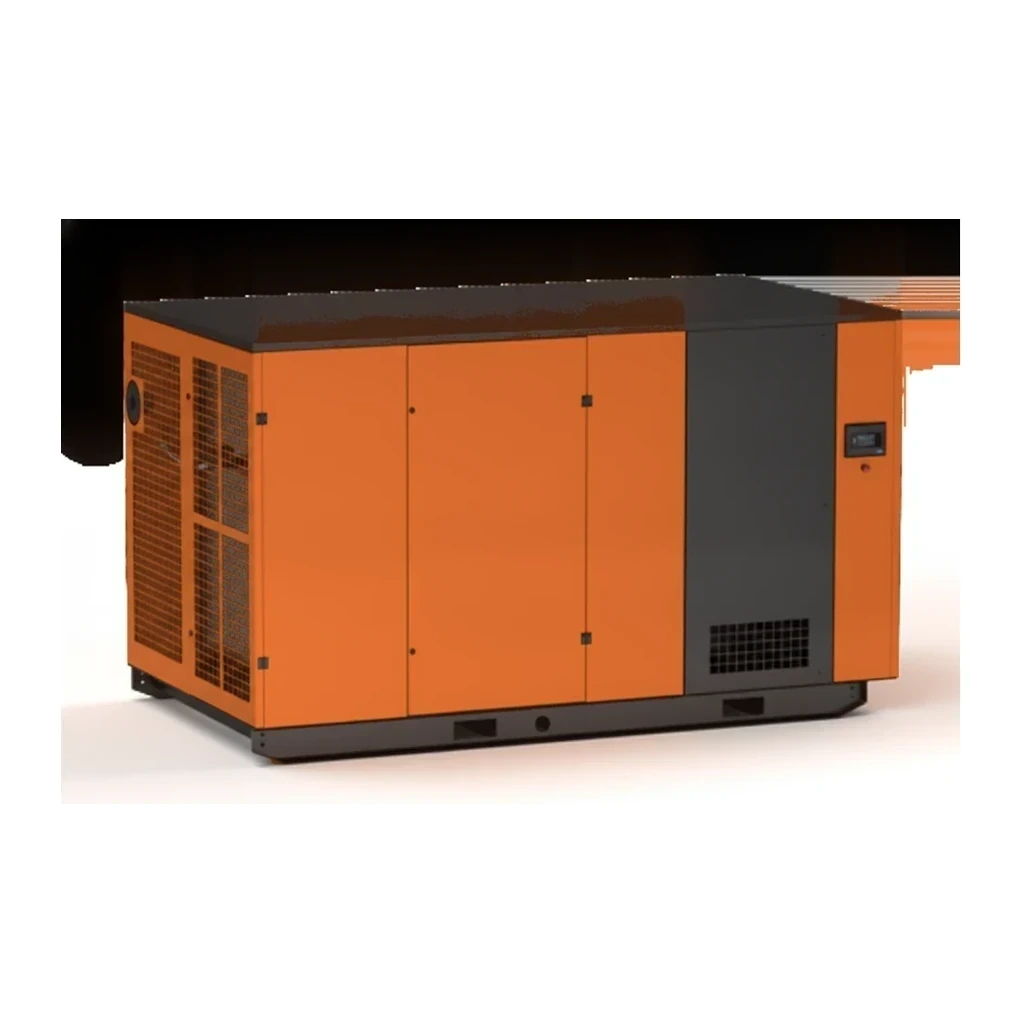
Stationary Rotary Screw Air Compressor
A stationary rotary screw air compressor is a fixed-installation compressed air system that uses twin intermeshing helical rotors to continuously compress air for industrial applications. These units serve as primary air supply for manufacturing facilities, fabrication shops, and process operations requiring consistent, high-volume compressed air. The class spans from small-shop systems delivering under 100 cfm to large-plant installations exceeding 1,500 cfm.
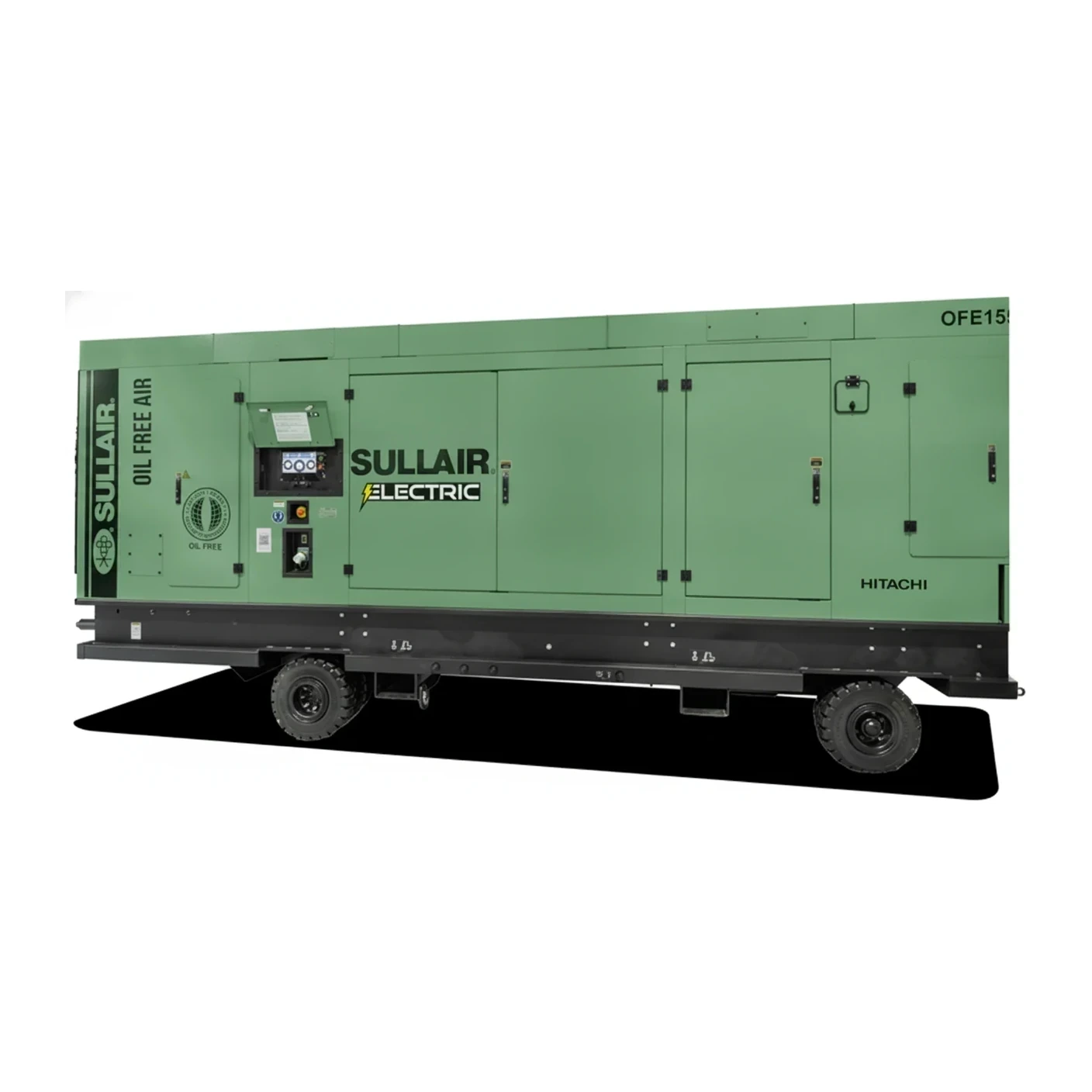
Cat classes
Choisissez une classe de taille — la capacité et la portée varient selon la gamme.
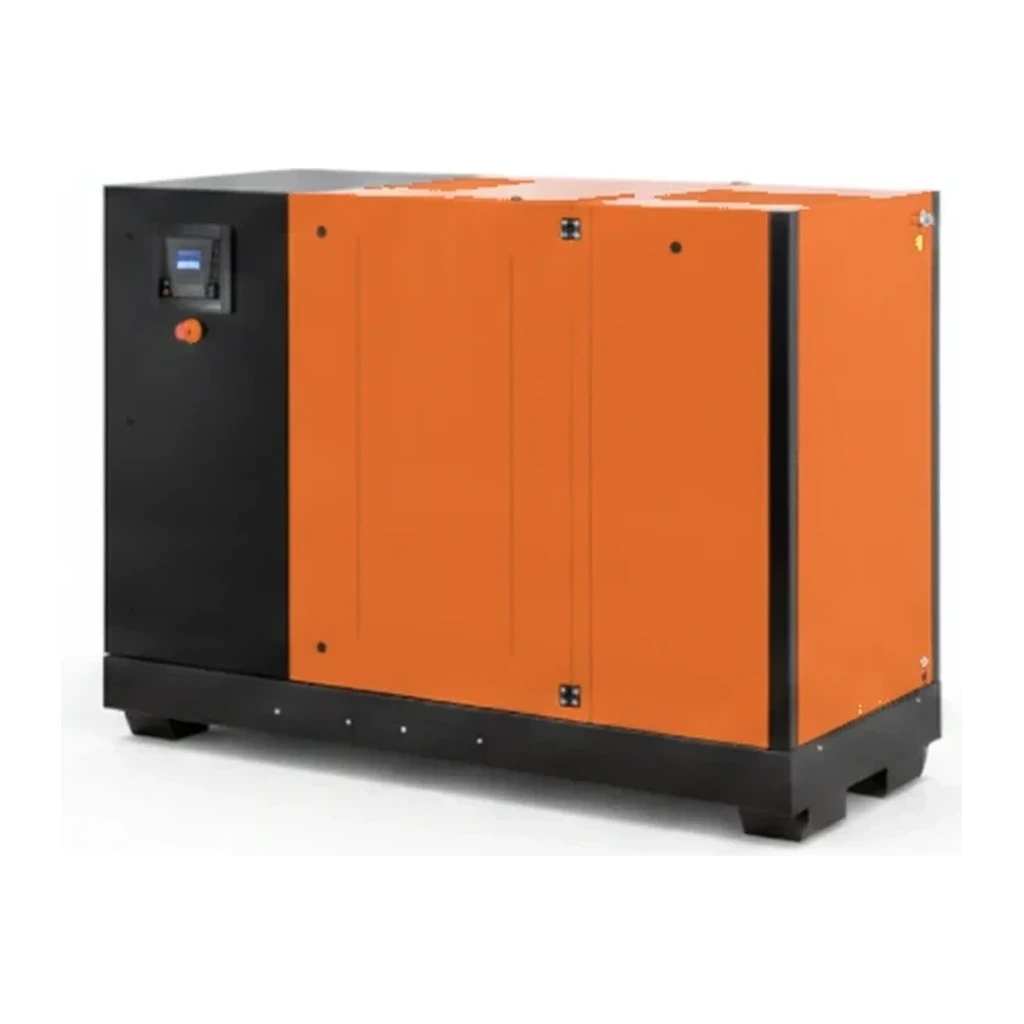
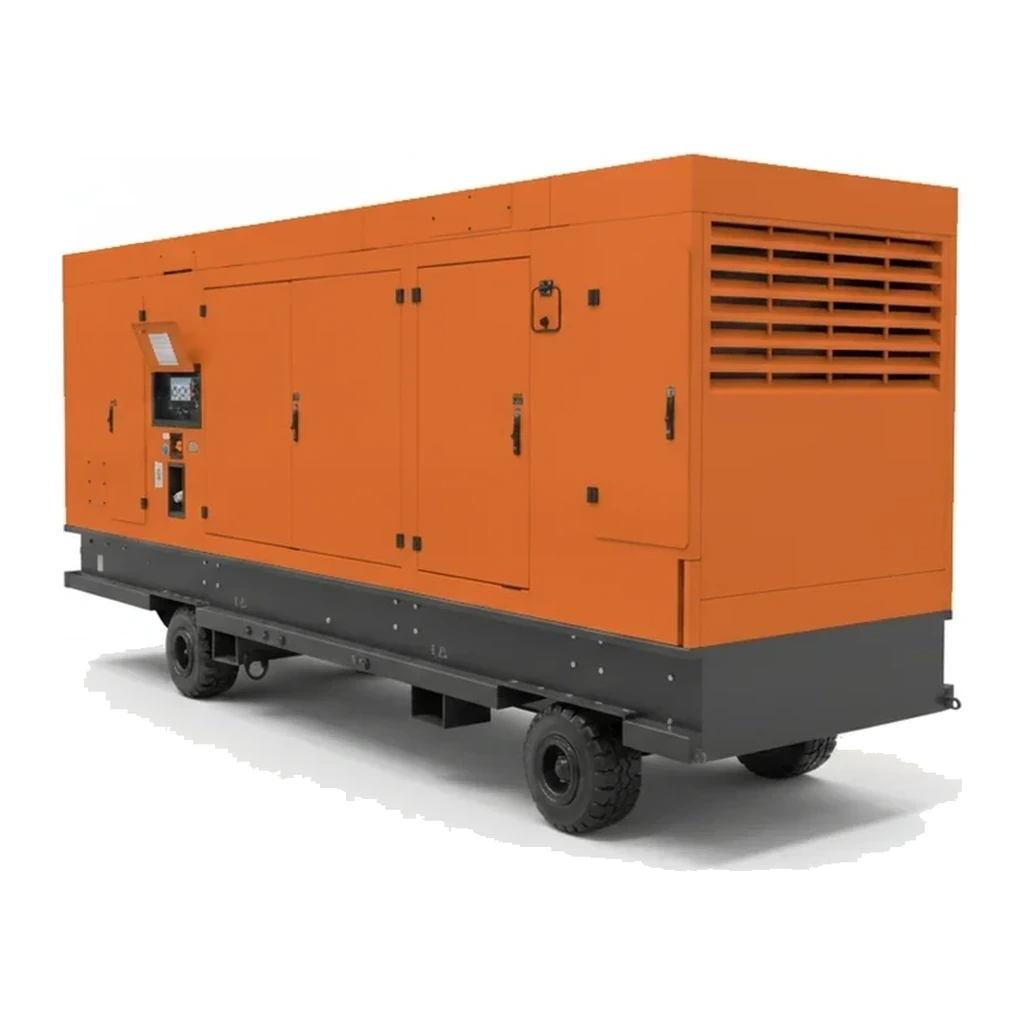
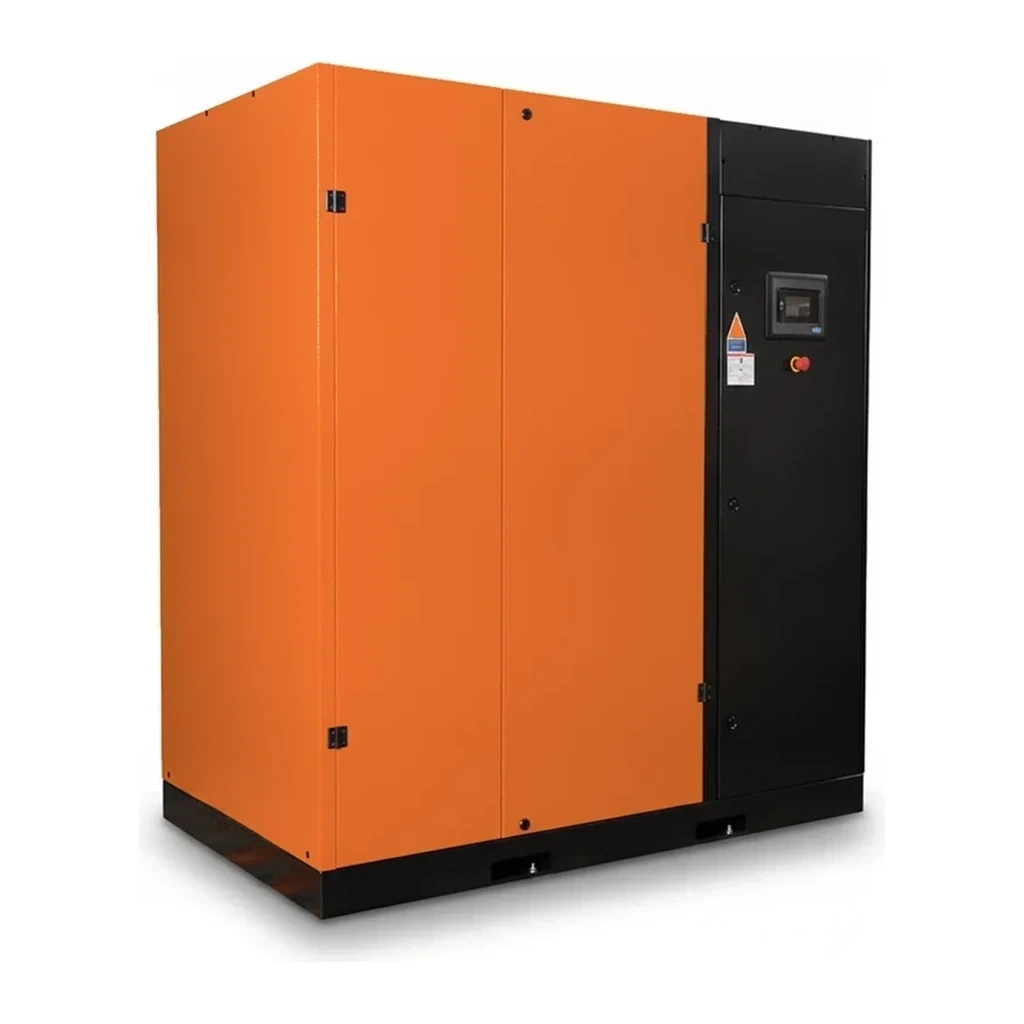
Fonctionnement
Two helical rotors—a male and female screw—rotate in opposite directions within a sealed chamber. As the rotors mesh, air enters through the intake, becomes trapped between the rotor lobes and the housing, and is progressively compressed as the rotors turn and the volume decreases. The compressed air exits at the discharge port at the specified pressure, typically between 100 and 200 psi. Unlike reciprocating compressors, rotary screw designs deliver continuous, pulse-free airflow. Most units employ an electric motor driving the rotor assembly, with power ranging from 5 to 700 hp across the class. Advanced models incorporate variable-speed drive (VSD) technology to modulate motor speed based on demand, improving efficiency at partial loads. Integrated cooling systems, oil separators, and aftercoolers manage heat and moisture, while receiver tanks and air dryers are often installed downstream to condition the compressed air for end use.
Types et variantes
- Fixed-Speed
- Constant-speed motor operation with load/unload or modulation control; simpler design suited to steady demand profiles
- Variable-Speed Drive (VSD)
- Motor speed adjusts to match air demand in real time, reducing energy consumption during low-demand periods by 20–35%
- Oil-Flooded
- Oil lubricates and seals the rotors while absorbing compression heat; requires oil separation and filtration systems
- Oil-Free (Dry Screw)
- No oil in the compression chamber, using timing gears and specialized coatings; required for pharmaceutical, food, and electronics applications
- Two-Stage
- Air compressed sequentially through low- and high-pressure rotors with intercooling, improving efficiency in higher-pressure applications
Spécifications clés
| Spécification | Plage typique | Signification |
|---|---|---|
| Free Air Delivery (cfm) | 11.3–3,000 cfm | Volume of air delivered at rated pressure; primary sizing parameter for matching compressor capacity to facility demand |
| Maximum Operating Pressure | 100–500 psig | Highest sustainable discharge pressure; most industrial applications operate between 100–200 psi |
| Drive Motor Power | 5–700 hp | Installed motor rating; correlates directly with airflow capacity and influences electrical service requirements |
| Noise Level | 57–70 dB(A) | Sound pressure at one meter; enclosures and acoustic treatments reduce noise in occupied areas |
| Operating Weight | 2,833–16,755 lb (1,285–7,600 kg) | Total installed mass; affects foundation requirements and building floor load calculations |
Comment l'industrie le dimensionne
The industry sizes stationary rotary screw air compressors by free air delivery measured in cubic feet per minute (cfm). The class divides into four tiers: up to 100 cfm for small-shop continuous air feeding a fab shop or service bay off single or light three-phase power, the tier below towable diesel territory; 100–500 cfm for mid-size plant air running a production line, sandblast cabinet bank, or several simultaneous air stations, representing the most common industrial tier; 500–1,500 cfm for full plant supply on manufacturing floors and process air, usually fixed-installed with dryers and receiver tanks; and 1,500+ cfm for large-plant and process-scale air with multiple compressor rooms and VSD-controlled banks, specified by engineers rather than counter staff. Selection also accounts for pressure requirements, duty cycle, and downstream air quality needs, with oil-free variants specified where contamination is unacceptable.
Applications
- Manufacturing plant compressed air systems for pneumatic tools, automation, and process controls
- Fabrication and machine shop operation of air-powered tools, CNC equipment, and material handling
- Automotive service facilities supplying lifts, impact wrenches, spray booths, and tire service
- Food and beverage processing where oil-free air quality is mandated for product contact applications
- Sandblasting and surface preparation operations requiring high-volume sustained airflow
- Pharmaceutical and electronics manufacturing with cleanroom air quality standards
Sécurité et opération
- Electrical service must match motor voltage and phase requirements; installations typically require dedicated circuits and disconnect switches per NEC
- Compressed air systems operate at high pressure; all piping, fittings, and receivers must be rated for maximum system pressure with appropriate safety factors
- Adequate ventilation is required to dissipate heat from the compressor and prevent buildup of any oil mist or vapors in enclosed compressor rooms
- Condensate drains discharge water and may contain oil; proper collection and disposal procedures prevent environmental contamination
- Routine maintenance includes pressure relief valve testing, belt and coupling inspection, and oil/filter changes per manufacturer schedules to prevent system failures
Normes et certifications
- ASME · ASME Boiler and Pressure Vessel Code Section VIII
- Governs design and construction of pressure vessels including air receivers used with stationary compressors
- CAGI · Compressed Air & Gas Institute Performance Standards
- Establishes standardized testing and rating methods for air compressor capacity, power consumption, and efficiency claims
- NFPA · NFPA 70 (National Electrical Code)
- Specifies electrical installation requirements for motors, disconnects, and branch circuits serving stationary compressors
- OSHA · 29 CFR 1910.169
- Addresses air receiver installation, inspection, and safety relief devices for compressed air systems in industrial settings
Questions fréquentes
What is the difference between fixed-speed and VSD rotary screw compressors?
How is required compressor capacity calculated?
When is oil-free compression required?
What maintenance intervals apply to rotary screw compressors?
Comparer les modèles populaires
Chercher par spécification →Normalisé aux mêmes unités. Un tiret signifie que la valeur n'a pas été publiée.
| Modèle | Débit d’air libre | Pression max | Puissance moteur |
|---|---|---|---|
| Atlas Copco G 2-7 VSD | 104 cfm | 131 psi | 65 hp |
| Atlas Copco 900 | 750 cfm | - | 250 hp |
| Sullair 1600 | 1,600 cfm | - | 524 hp |
| Sullair 375H | 374 cfm | - | 139 hp |
| Sullair 375HH | 375 cfm | - | 139 hp |
| Sullair TS20-100L | 575 acfm | - | 100 hp |
Équipements connexes
Parcourir par fabricant
Sources
Chaque spécification est vérifiée par rapport aux données publiées par le fabricant, avec la source liée pour référence.
Tous les modèles
353 modèles · Page 5 sur 8 · Chaque spécification citée à la source