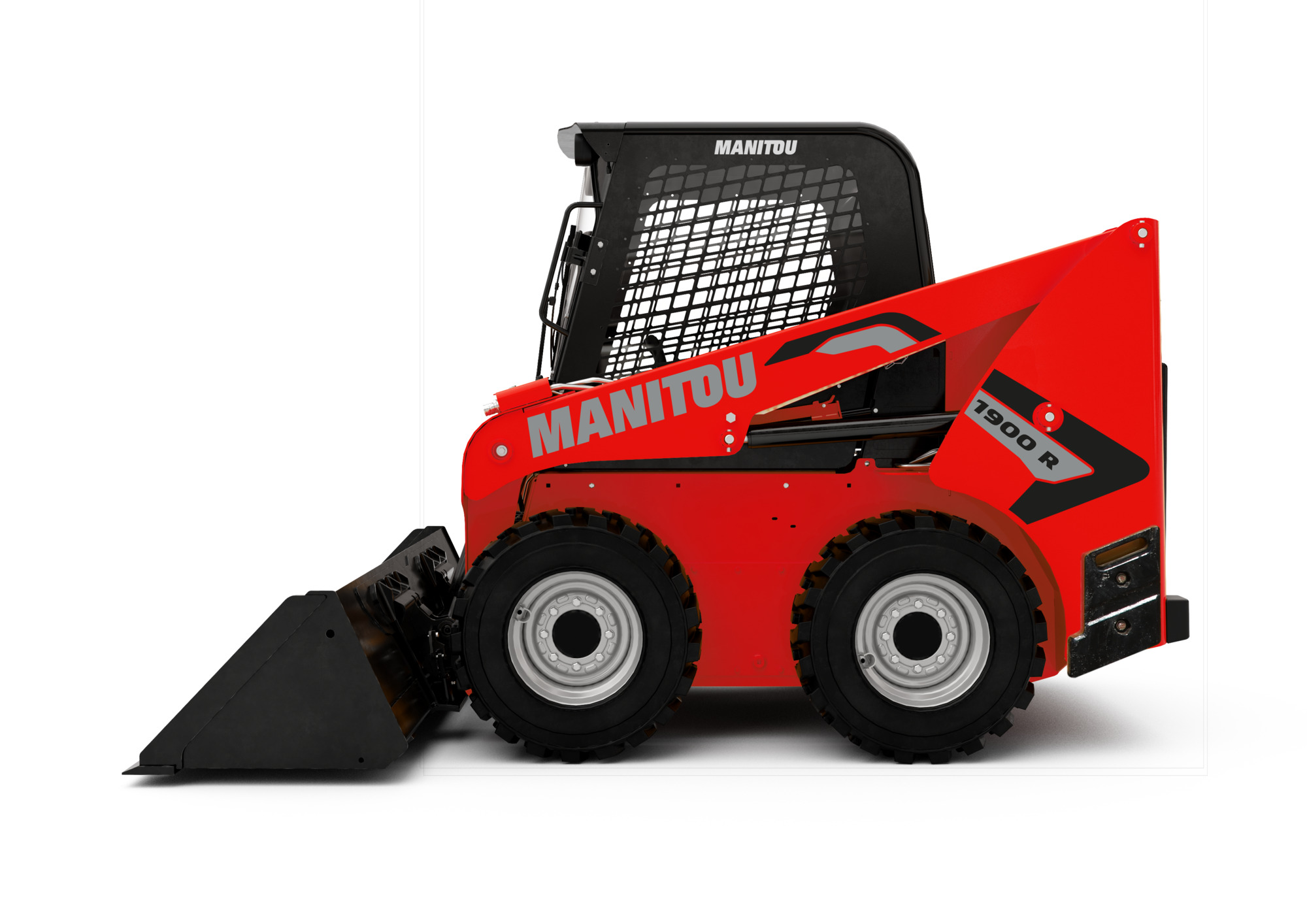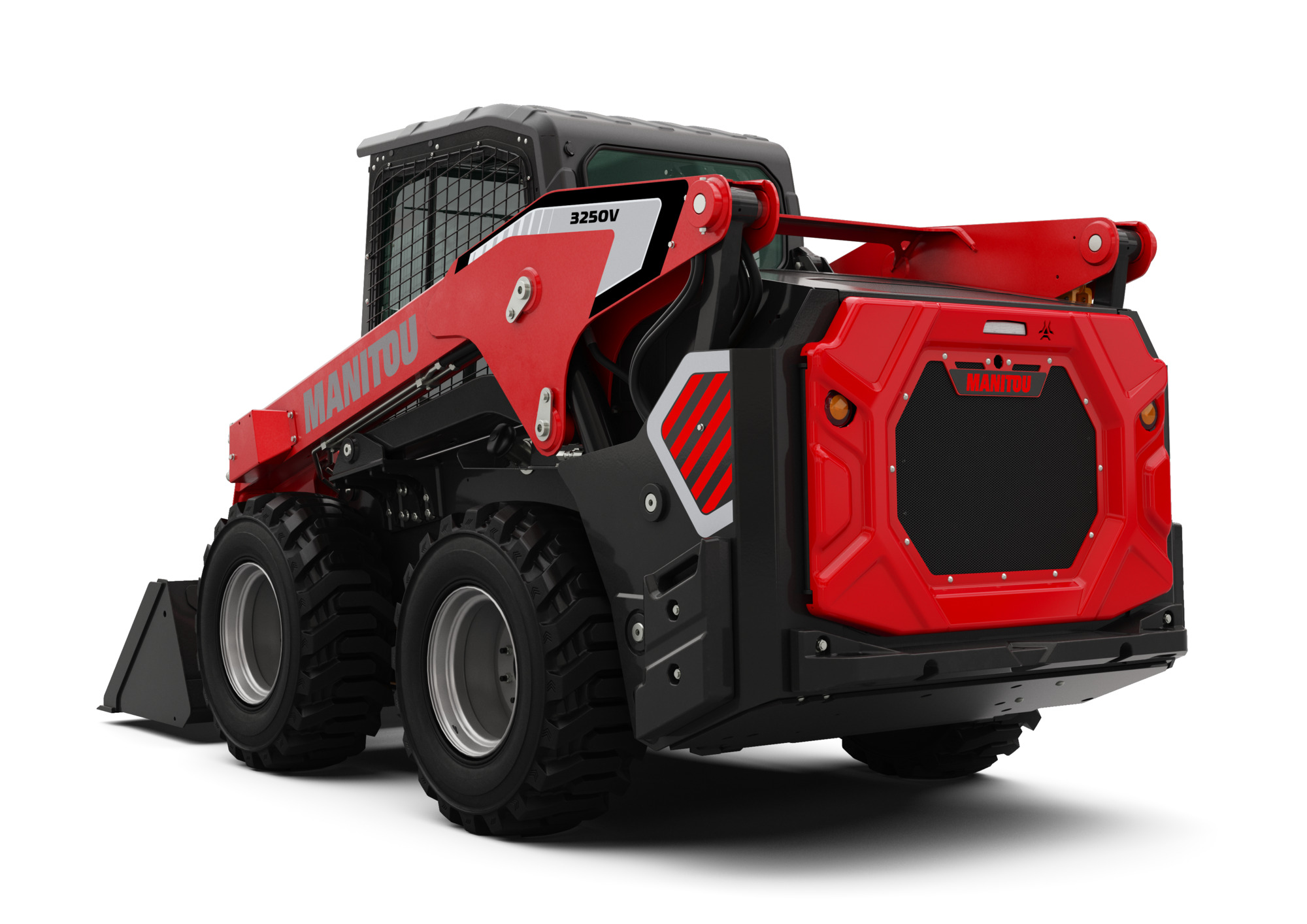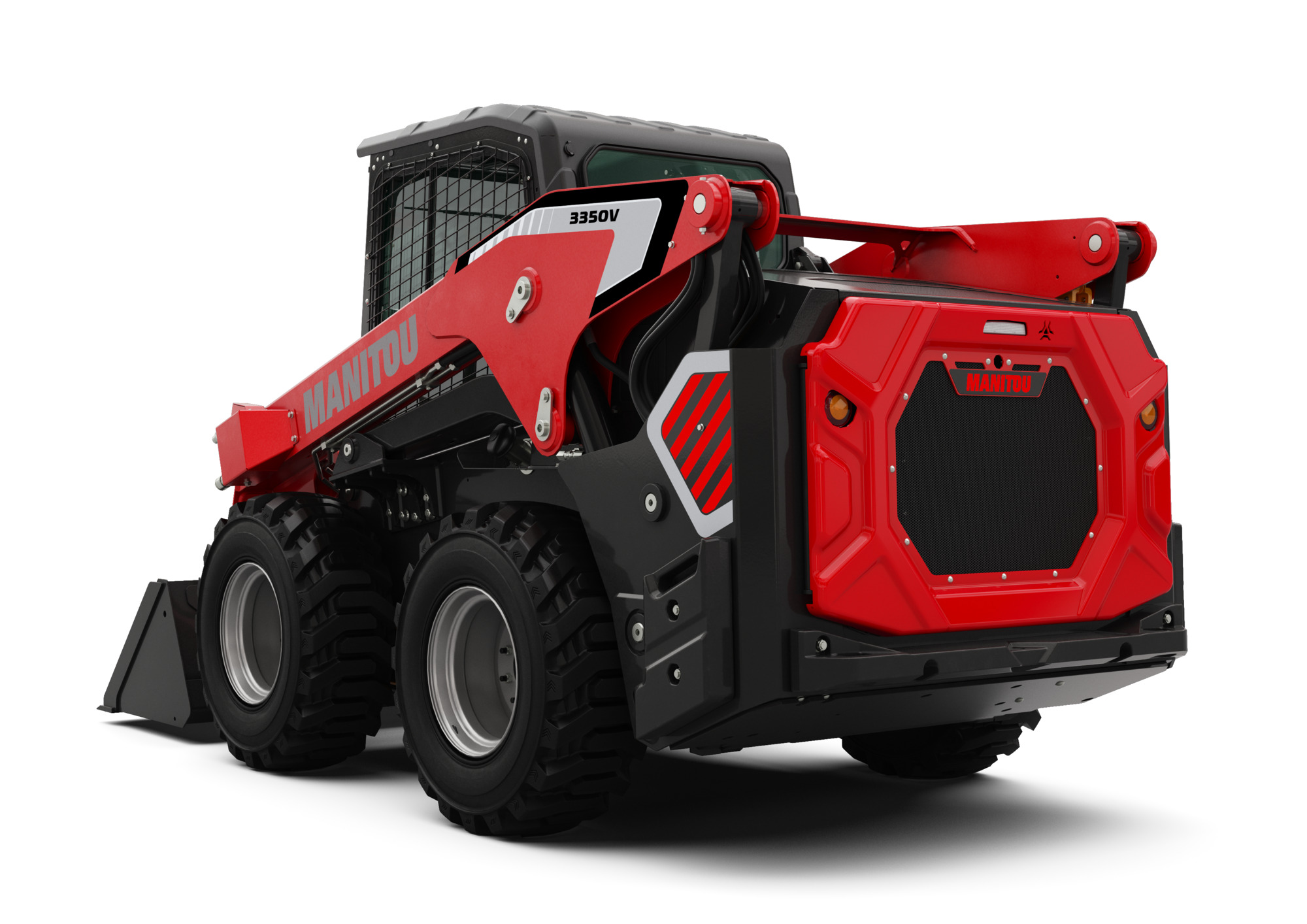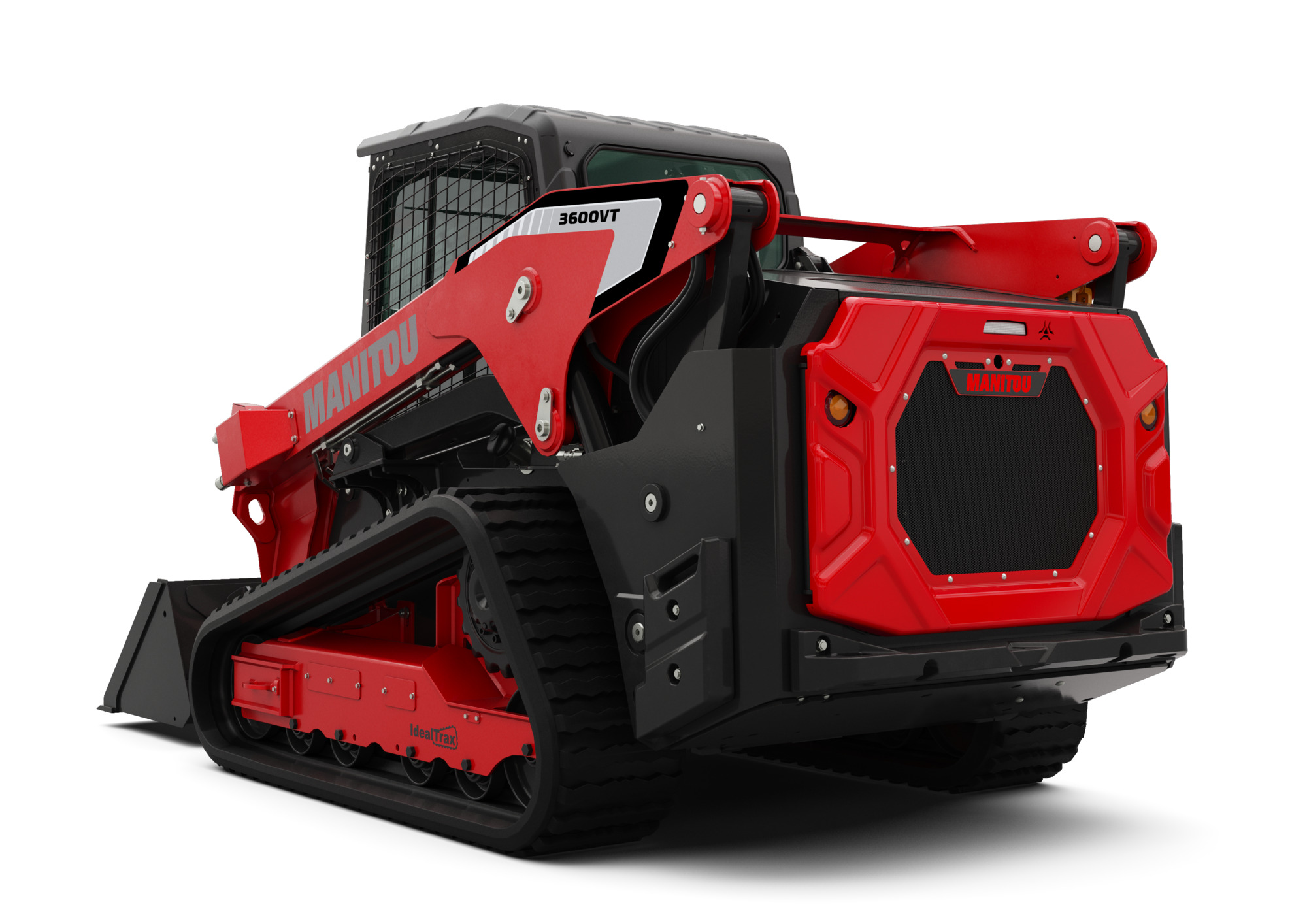

Skid Steer Loader
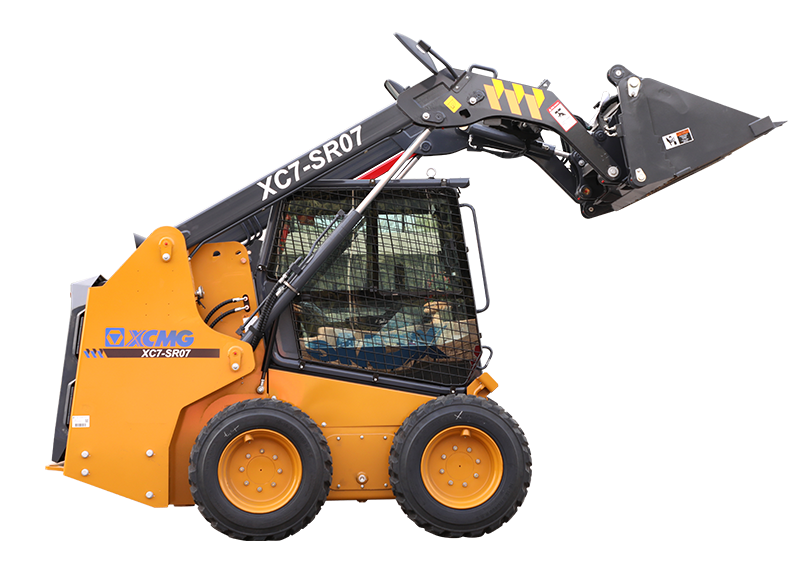
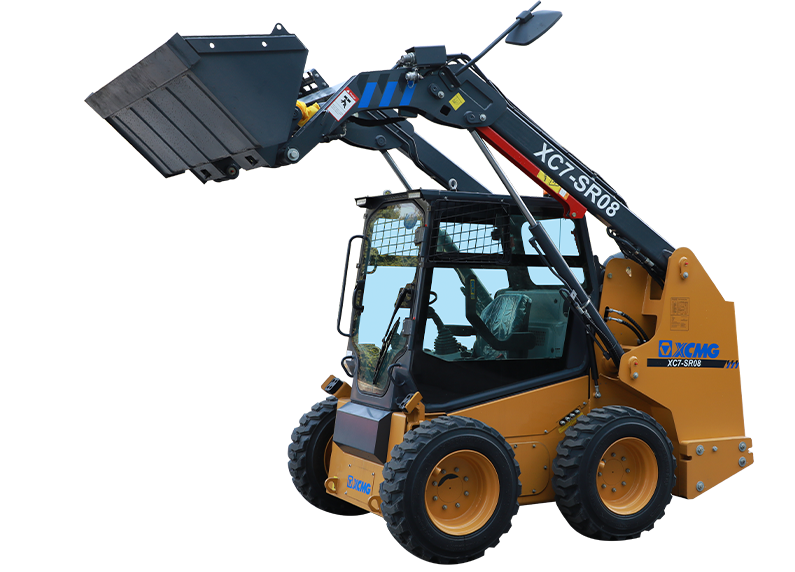
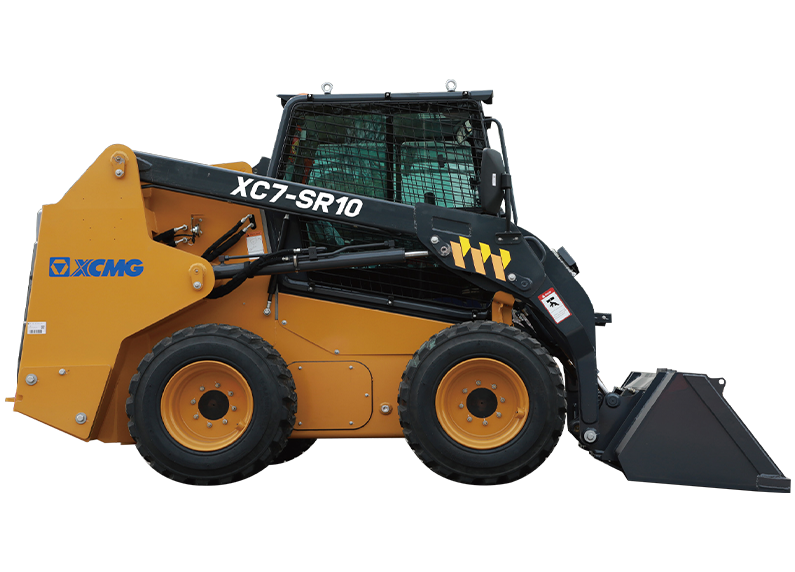
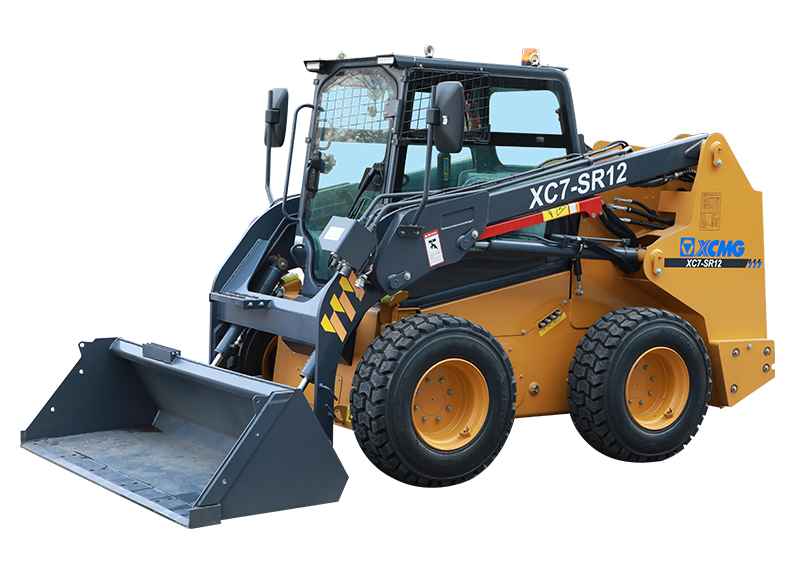
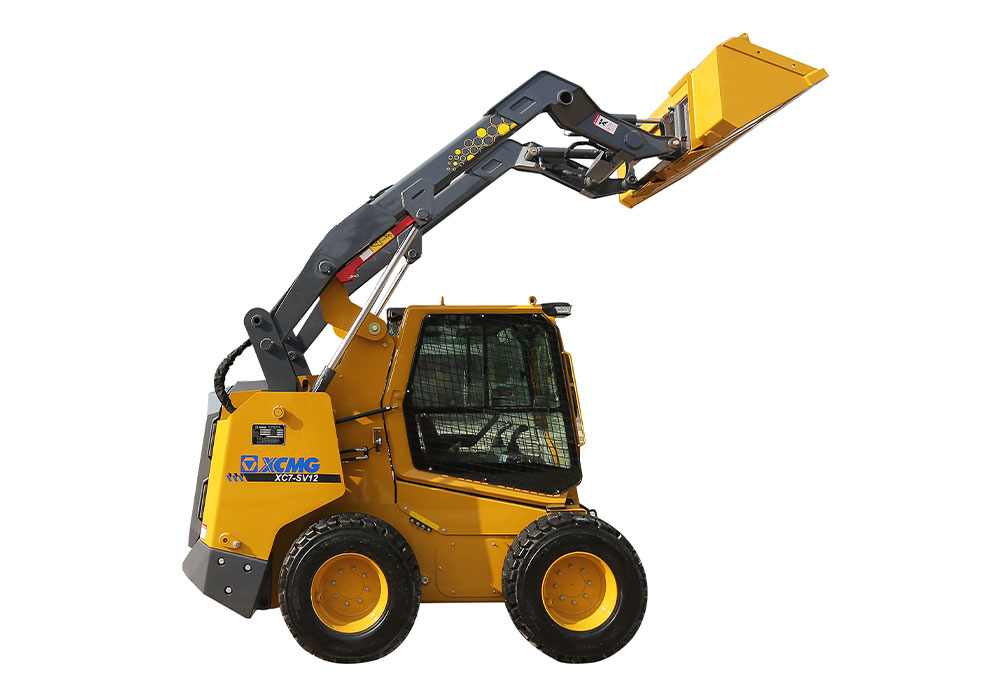
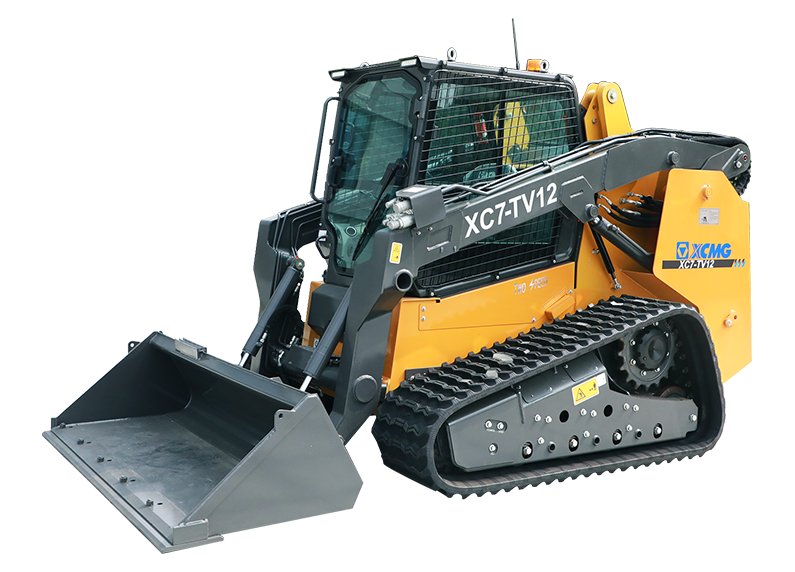
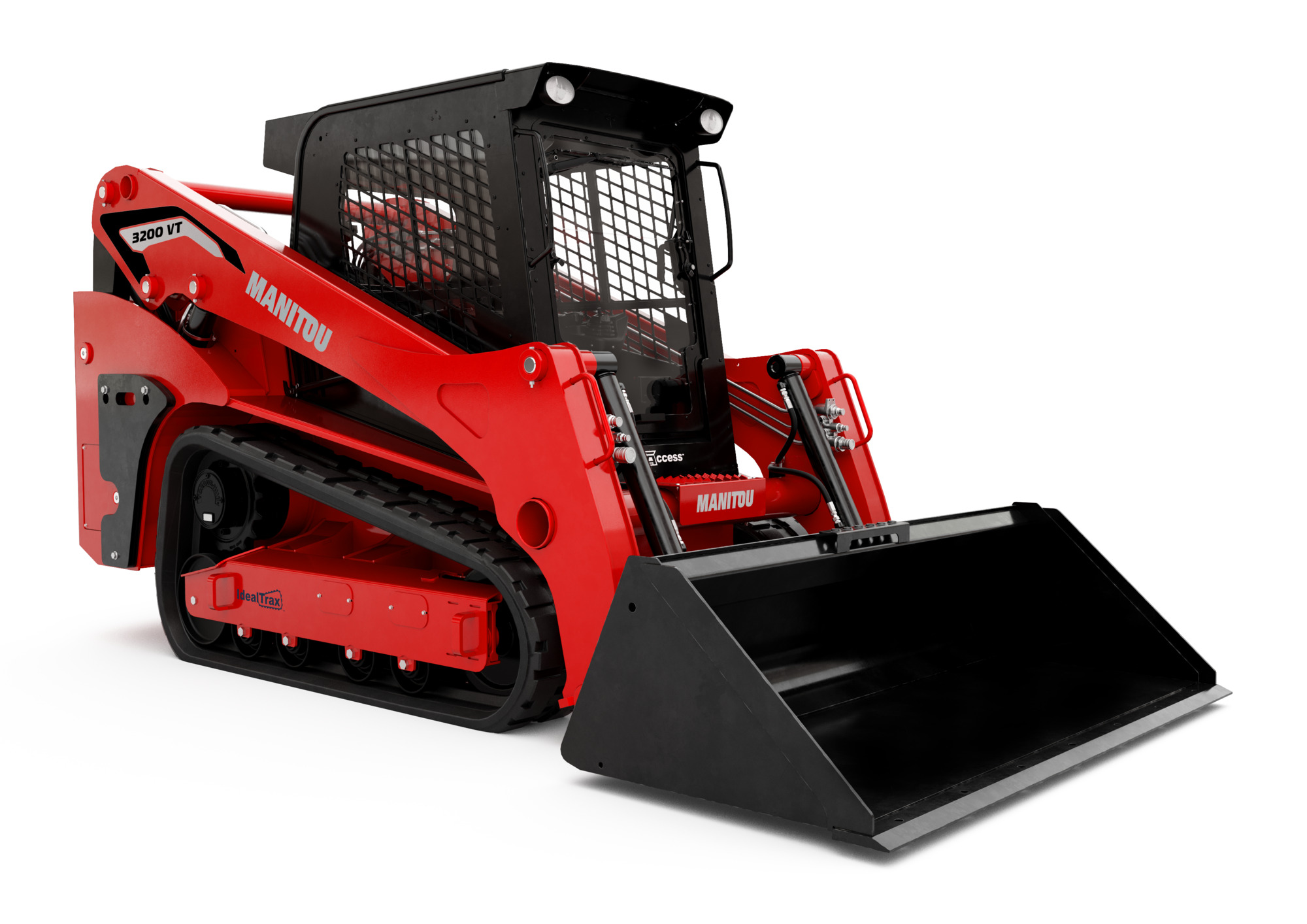
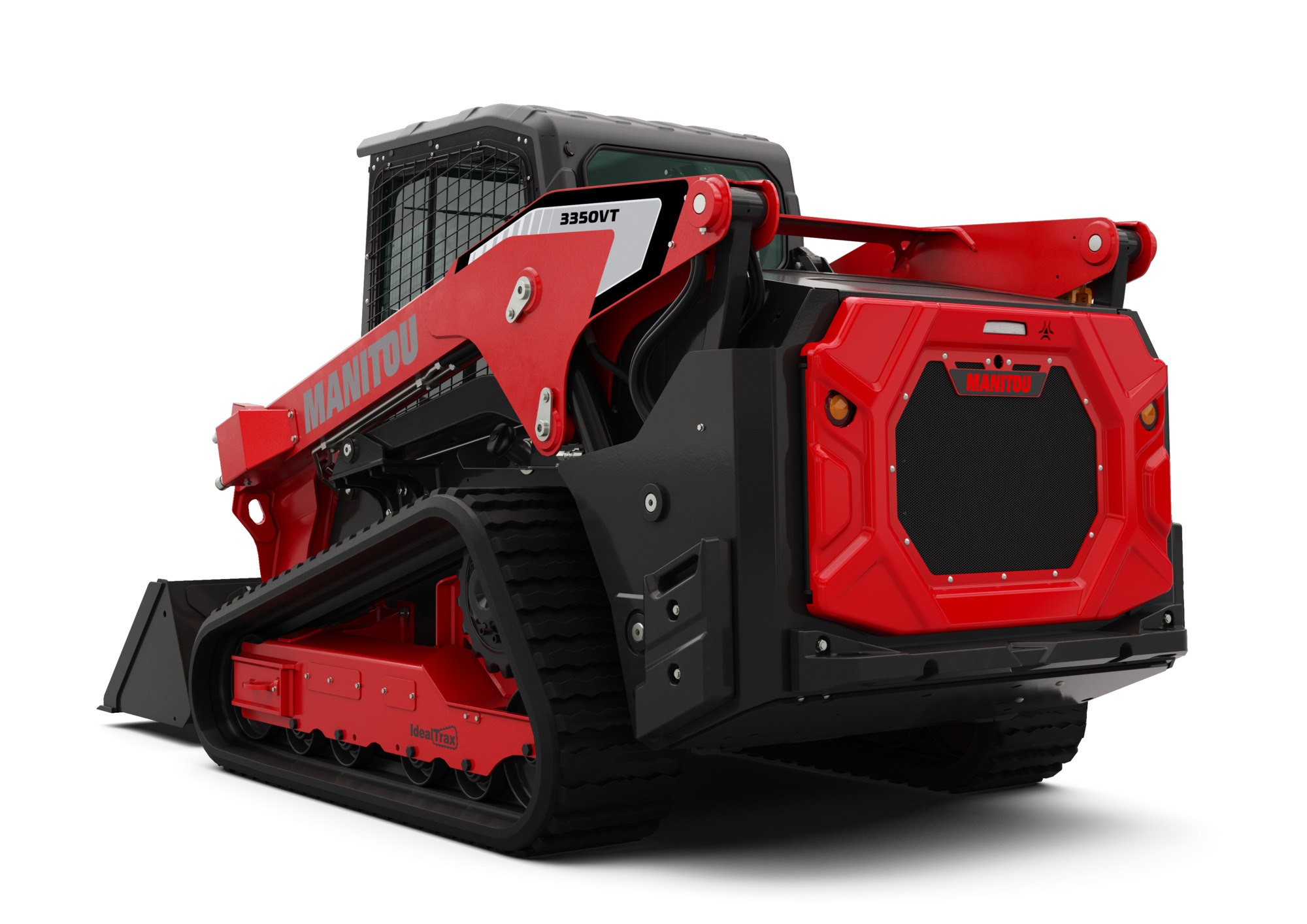
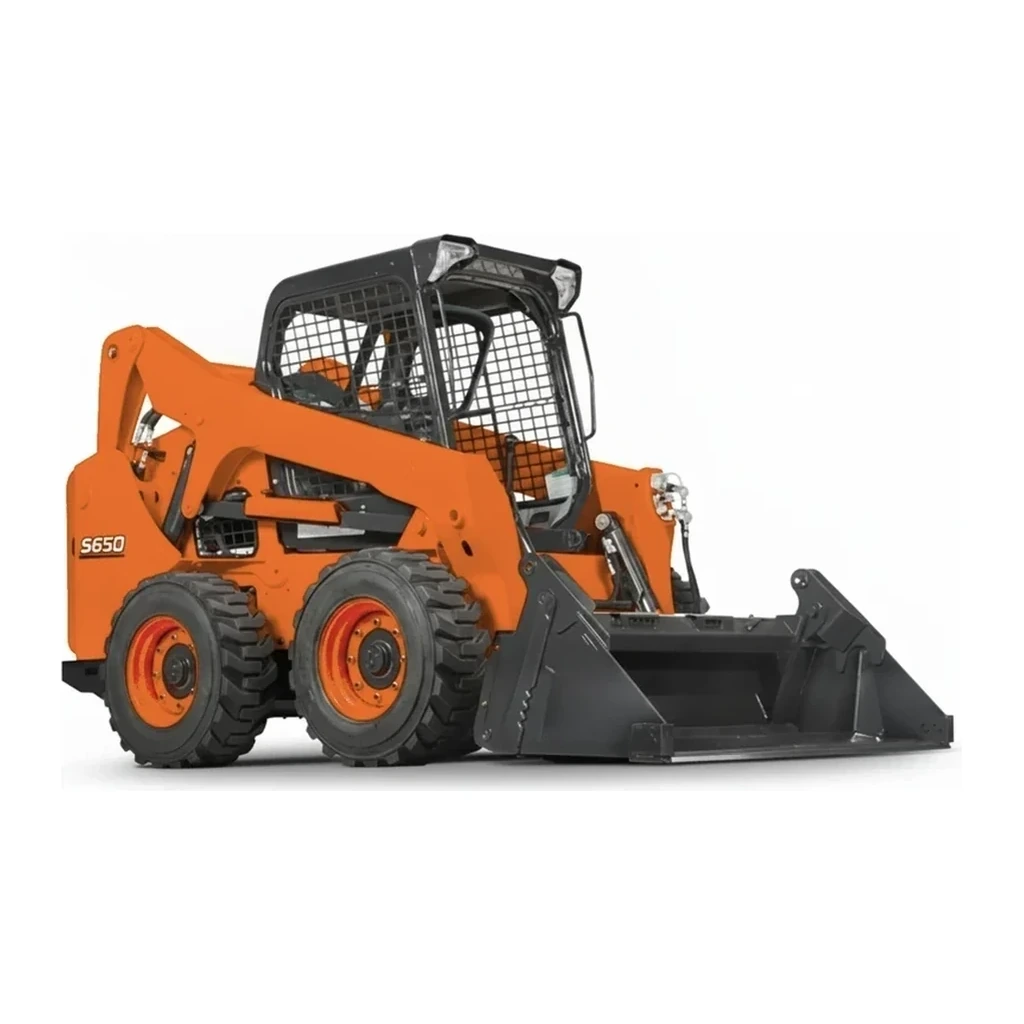
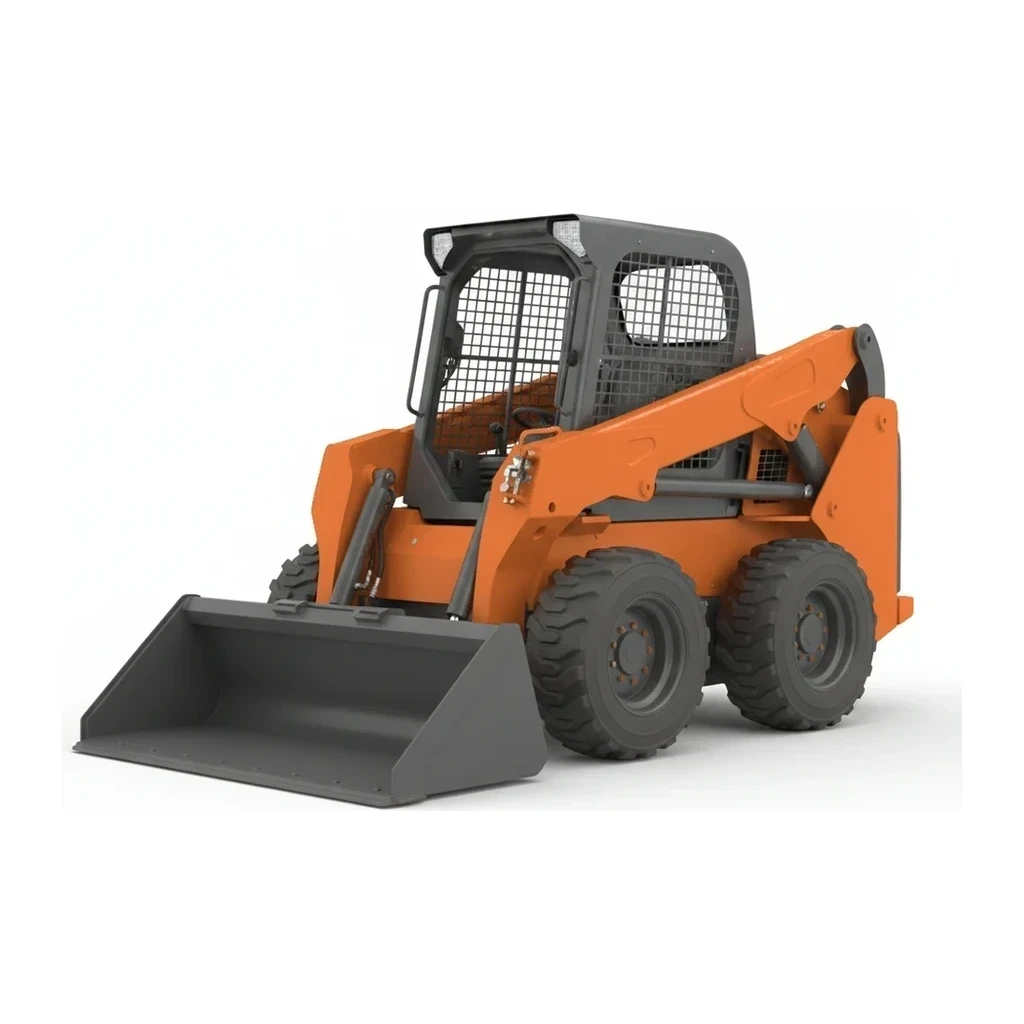
A skid steer loader is a compact, rigid-frame wheeled loader steered by driving the left and right wheel pairs at different speeds, skidding through turns to rotate within its own length. Its small footprint, quick attachment interface and hard-surface speed make it the standard compact loader for paved and firm-ground work.
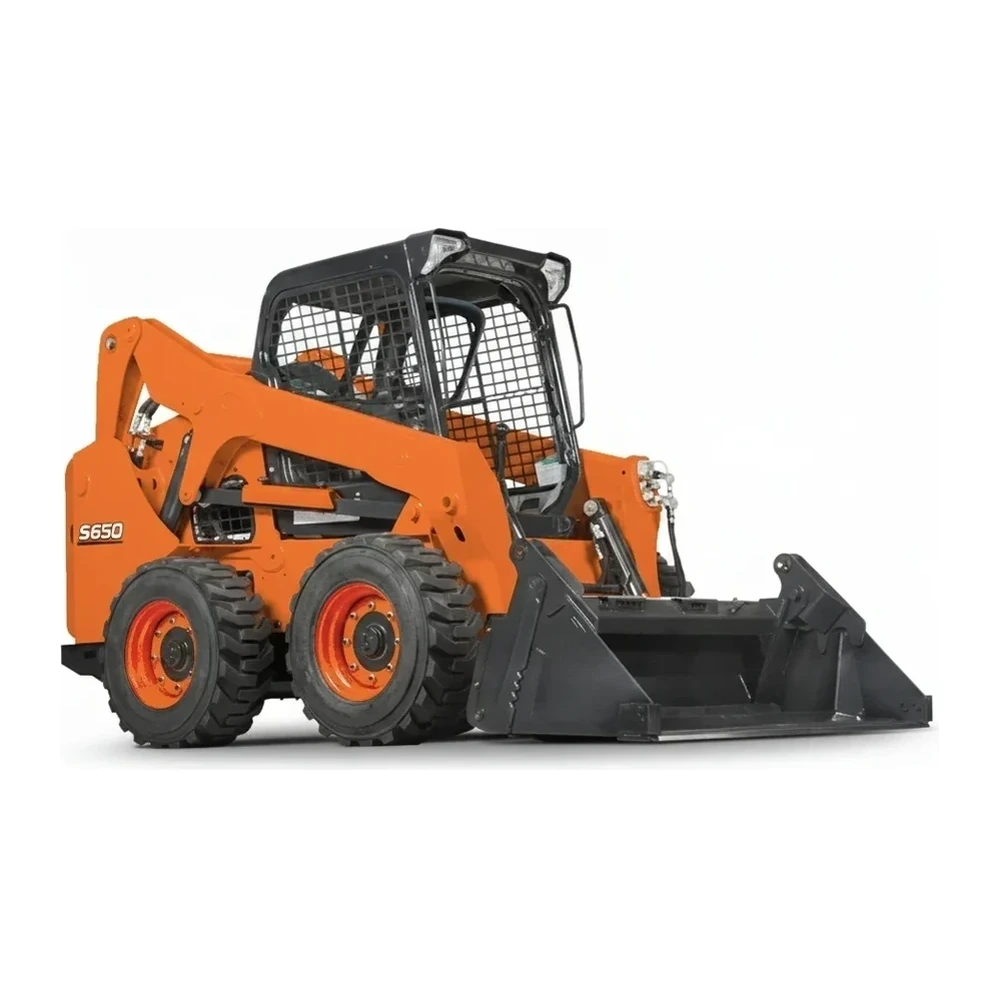
Cat classes
Choisissez une classe de taille — la capacité et la portée varient selon la gamme.
Fonctionnement
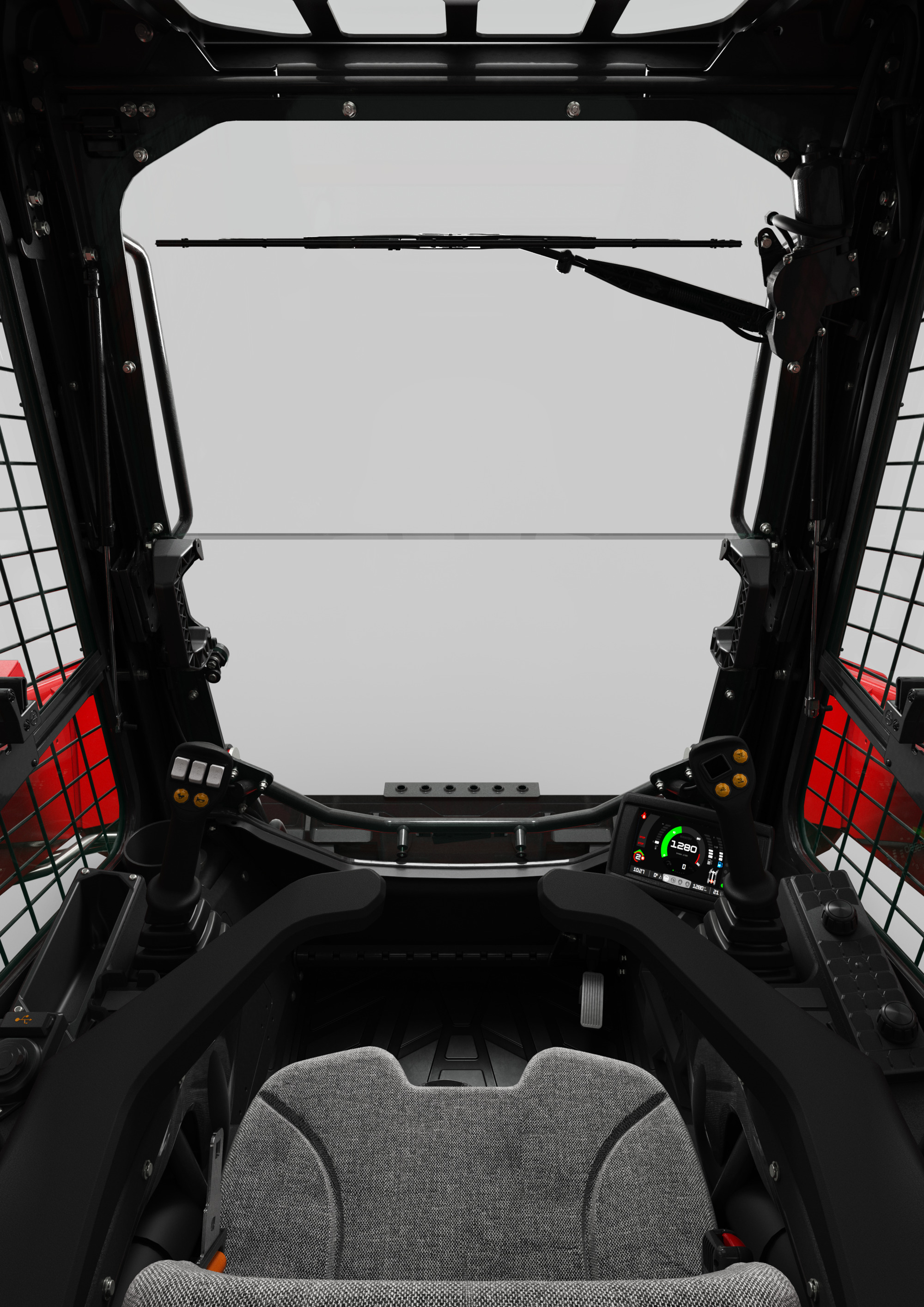
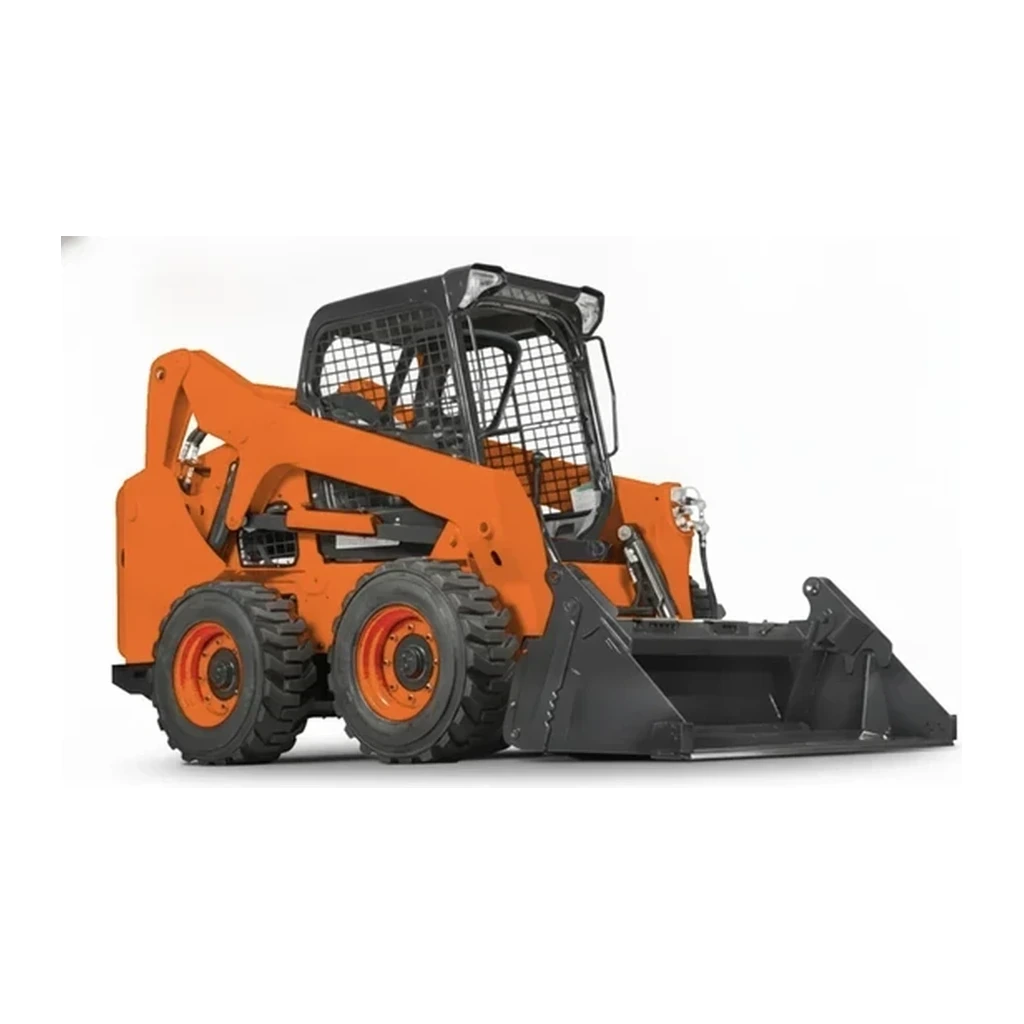
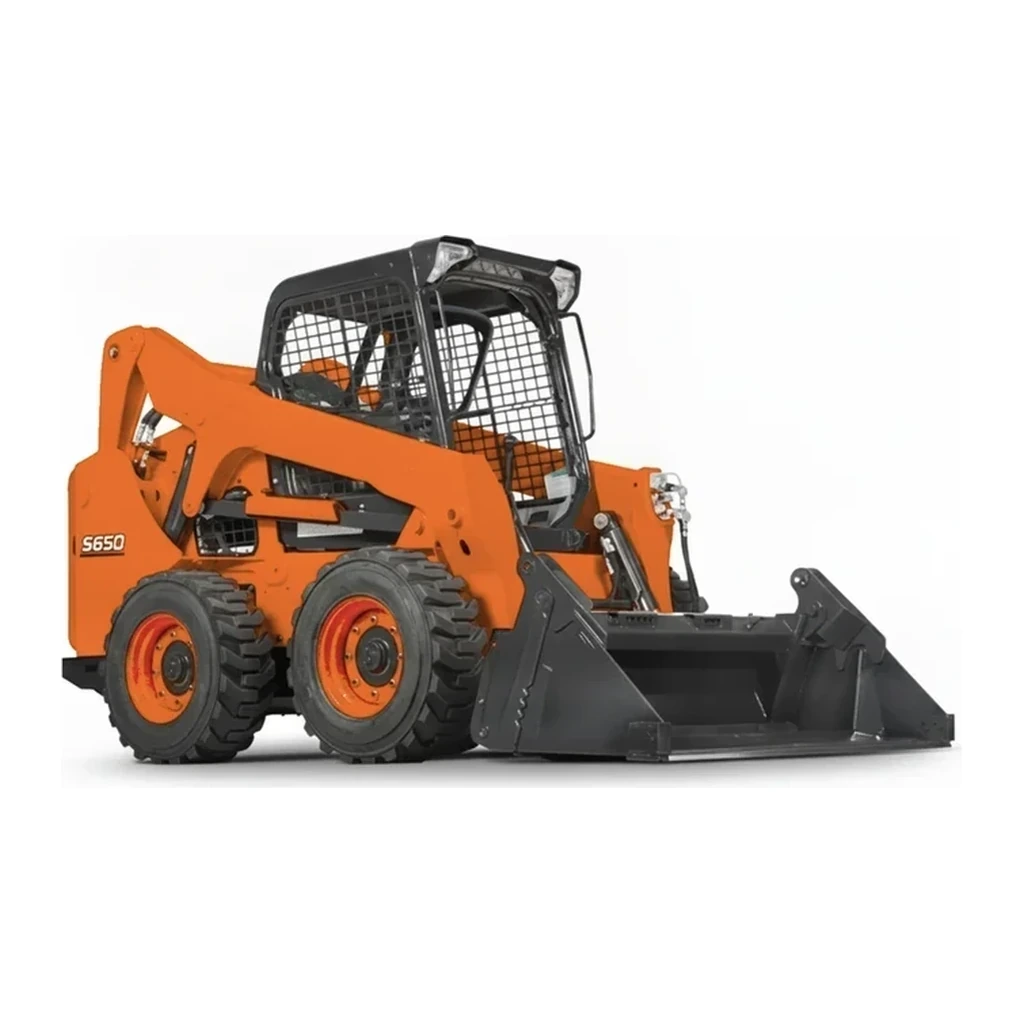
A diesel engine drives hydrostatic pumps feeding independent left and right wheel motors — there is no steering axle; the machine turns by differential wheel speed, including full counter-rotation in place. The loader arms lift through either a radial arc (best mid-height reach and breakout) or a vertical path (best full-height lift for truck loading). The front plate carries the universal quick-attach interface, and auxiliary hydraulic couplers power the attachment ecosystem the platform is known for. Operator controls are dual-hand (and foot) or joystick-based, with the cab entered from the front over the attachment.
Types et variantes
- Radial-lift machines
- Single-pivot arms swinging an arc — stronger breakout and digging feel, preferred for ground-engaging work.
- Vertical-lift machines
- Multi-link arms holding a vertical load path — more lift height and capacity at full height for loading trucks and hoppers.
- Small-frame machines
- Lighter, narrower units for confined and finish work at the bottom of the weight range.
- Large-frame high-flow machines
- The top of the class, running high-demand hydraulic attachments and heavier lift duty.
- Walk-behind / ultra-compact units
- The catalog's sub-1,300 lb entries, bridging toward the mini skid steer class.
Spécifications clés
| Spécification | Plage typique | Signification |
|---|---|---|
| Rated operating capacity | 885–1,367 kg (1,950–3,015 lb) | Working load limit recorded across models; wheeled machines conventionally set ROC at 50% of tipping load. |
| Tipping load | 1,455–6,200 kg (3,207–13,668 lb) | The stability ceiling from which ROC is derived. |
| Engine power | 33.1–114.0 hp | Across the small-frame through large-frame range. |
| Lift capacity | 680–3,100 kg (1,499–6,834 lb) | Varies by lift path, frame size and configuration. |
| Bucket width | 1.5–1.9 m (59–75 in) | Sets the machine's clearing width and the door or gate openings it can pass. |
| Fuel tank capacity | 23.9–120.0 L | Sized for a full shift of hydrostatic drive and attachment duty. |
Comment l'industrie le dimensionne
Skid steers are sized by rated operating capacity and operating weight. The industry groups machines into small-, mid- and large-frame classes. Catalog bands run from sub-1,300 lb (small frame, fits through a gate), through 1,300–1,750 lb (everyday landscape and hardscape), 1,750–2,200 lb (medium frame, the standard), 2,200–3,000 lb (large frame with high flow), to 3,000+ lb (the biggest frames for production loading and the heaviest attachments). Frame size determines trailer class, doorway access and which attachments run at rated performance.
Applications
- Material handling and truck loading on firm and paved surfaces
- Site cleanup, grading and back-dragging on residential and commercial jobs
- Attachment work: augers, breakers, trenchers, planers, sweepers and snow tools
- Demolition support and debris removal in confined areas
- Agricultural yard work — feed, manure and bale handling
- Winter services: plowing, pushing and blowing snow on pavement
Sécurité et opération
- Travel and turn with the bucket low — raised-load travel on the short wheelbase is the class's dominant tip-over mode.
- Enter and exit only through the front with the arms down or resting on the arm stops; never climb under raised, unsupported arms.
- Keep ground personnel out of the work zone; rear and side visibility is limited and counter-rotation moves the machine unpredictably for bystanders.
- Stay within rated operating capacity — 50% of tipping load for wheeled machines — including attachment weight.
- Use the seat belt and restraint bar; the ROPS/FOPS station protects only a restrained operator.
Normes et certifications
- ISO · ISO 14397-1
- Rated operating capacity determination for loaders.
- ISO · ISO 3471 / ISO 3449
- ROPS and FOPS performance requirements for the operator enclosure.
- OSHA · 29 CFR 1926.602
- Material handling equipment rules for construction use.
- EPA · Tier 4 Final (40 CFR Part 1039)
- Nonroad diesel emissions certification for current engines.
Questions fréquentes
Why is it called a skid steer?
Skid steer or compact track loader — which fits the work?
What does rated operating capacity mean?
What is the difference between radial and vertical lift?
Comparer les modèles populaires
Chercher par spécification →Normalisé aux mêmes unités. Un tiret signifie que la valeur n'a pas été publiée.
| Modèle | Poids en service | Profondeur d’excavation max | Portée max | Puissance moteur |
|---|---|---|---|---|
| Bobcat S740 | 8,794 lb (3,989 kg) | - | - | 74 hp |
| Case SR150B | 5,357 lb (2,430 kg) | - | - | 60 hp |
| Case SV185B | 6,570 lb (2,980 kg) | - | 3.1 ft (0.9 m) | 60 hp |
| Case SR270B | 8,115 lb (3,681 kg) | - | - | 90 hp |
| Case SV280B | 8,003 lb (3,630 kg) | - | - | 74 hp |
| Case SR210B | 6,967 lb (3,160 kg) | - | - | 74 hp |
Équipements connexes
Parcourir par fabricant
Sources
Chaque spécification est vérifiée par rapport aux données publiées par le fabricant, avec la source liée pour référence.
Tous les modèles
88 modèles · Page 2 sur 2 · Chaque spécification citée à la source