

500-1,200 gal Vacuum Excavator
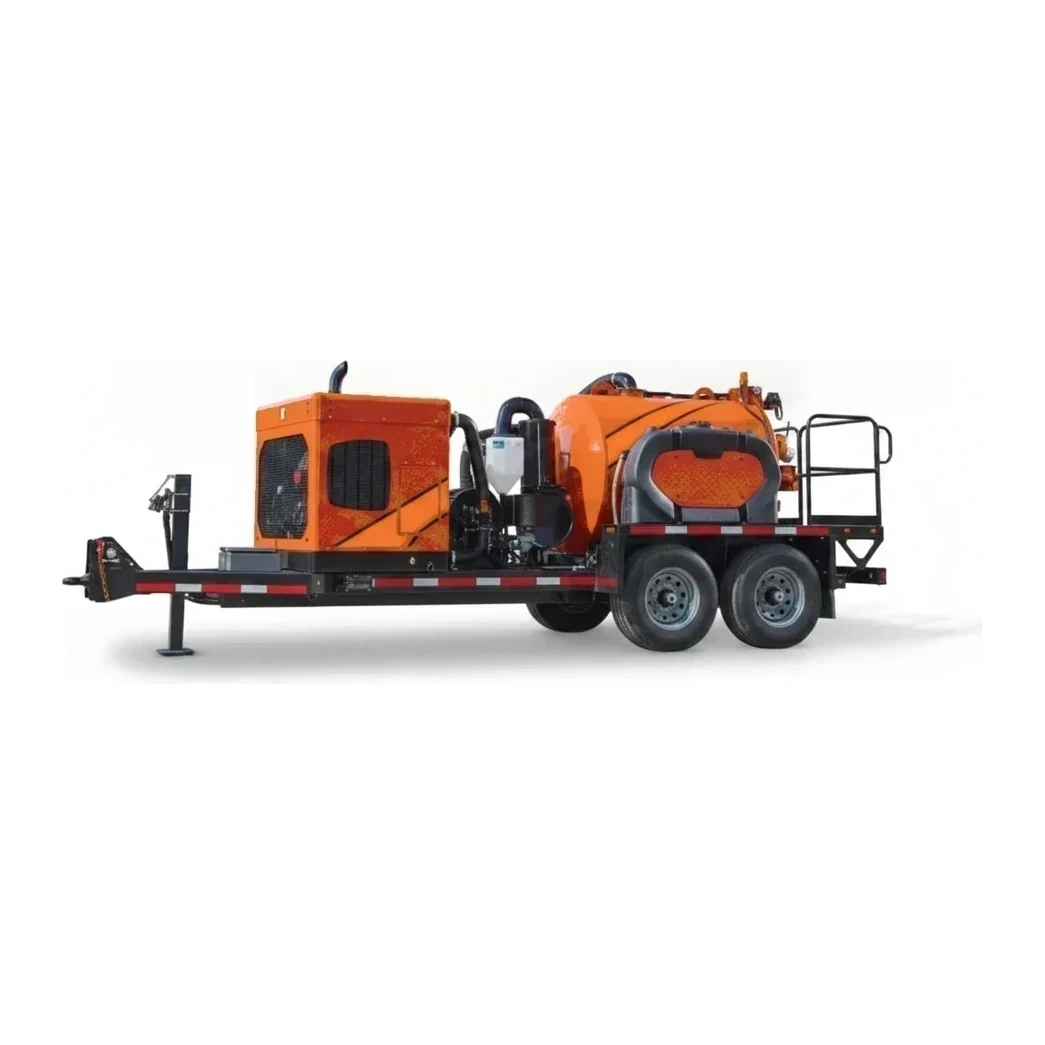
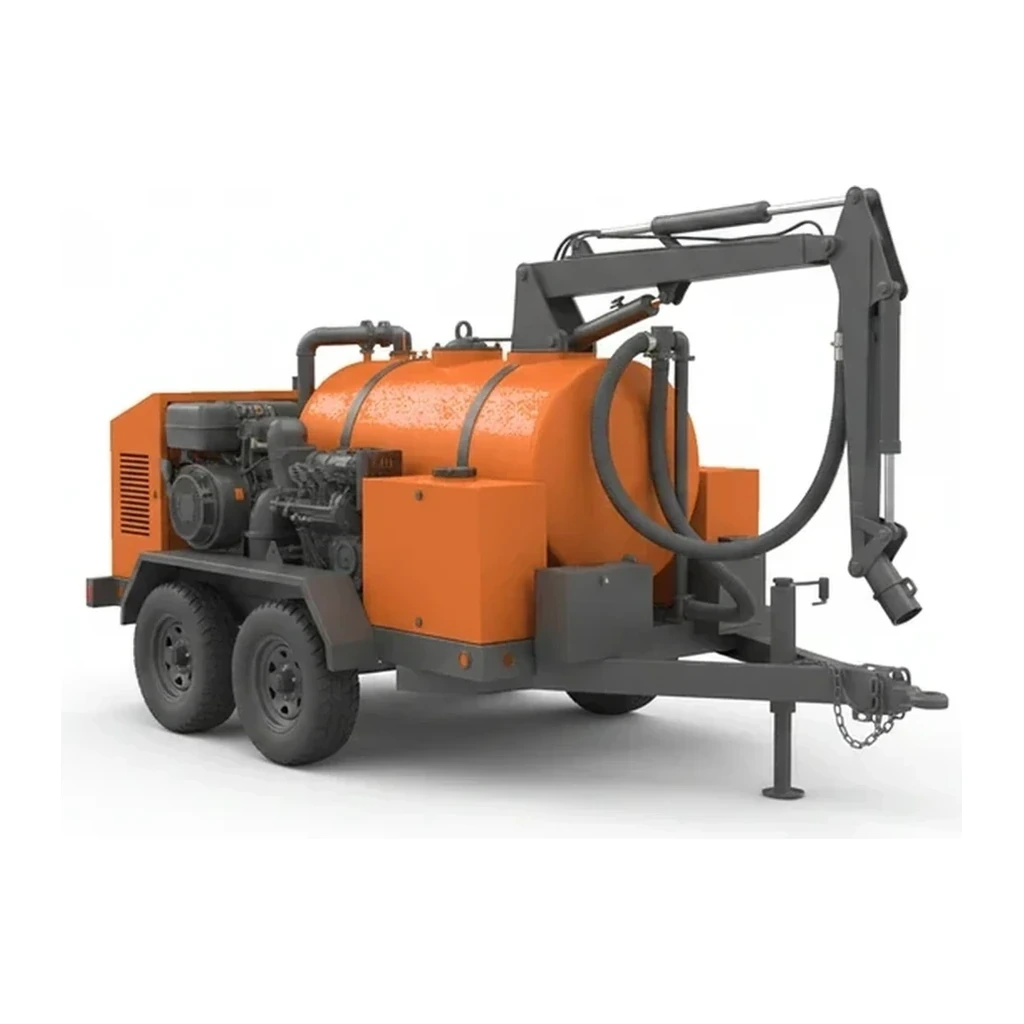
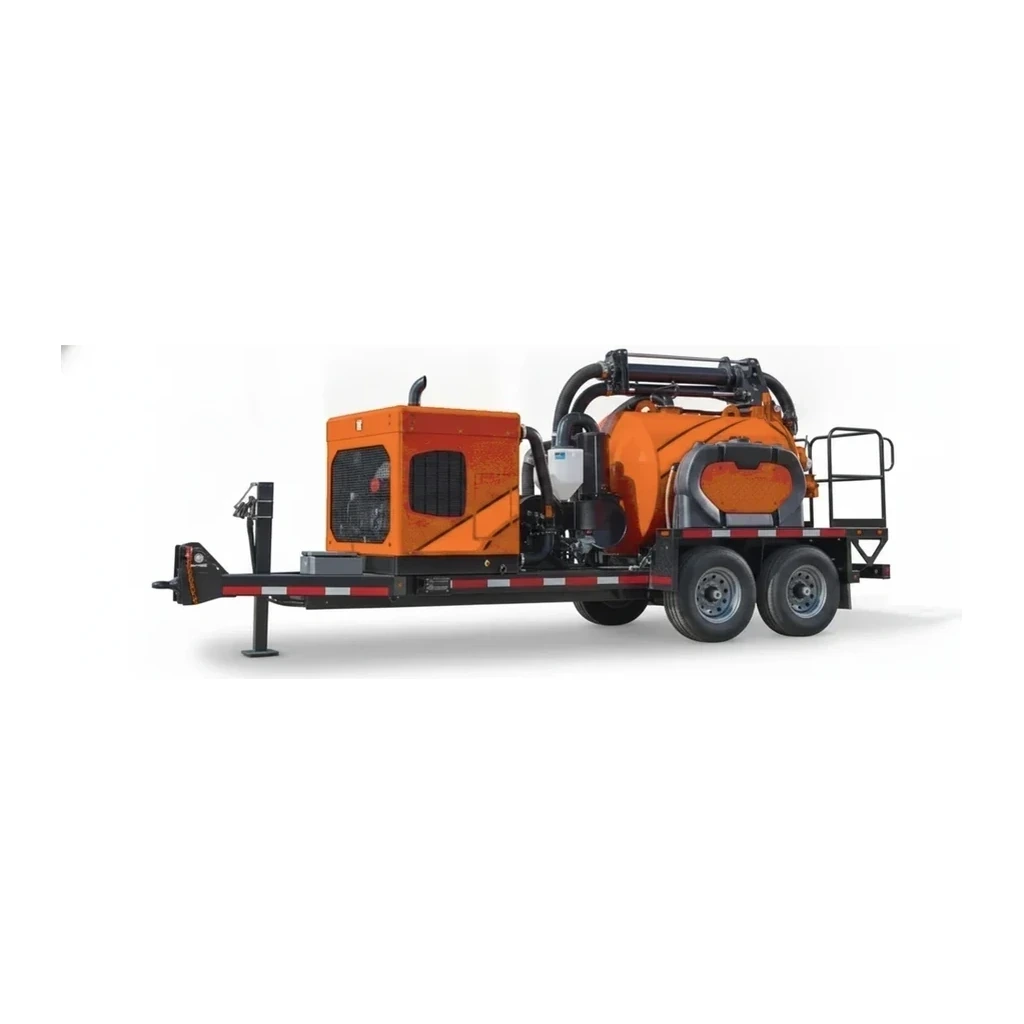
The 500-1,200 gallon vacuum excavator represents the standard hydrovac trailer or skid configuration, designed for a full day of daylighting work before requiring a dump run. This size class combines spoil tank capacities of 500 to 1,200 gallons with water tanks holding 200 to 1,550 gallons, delivering airflow between 580 and 1,740 CFM. Operating weights range from 1,860 to 6,370 kg, making these units suitable for trailer-mounted or skid-mounted deployment on job sites requiring sustained hydro excavation.
Cat classes
Choisissez une classe de taille : la capacité et la portée varient selon la gamme.
Spécifications clés
| Spécification | Plage typique | Signification |
|---|---|---|
| Spoil tank capacity | 500-1,200 gal | Determines hours of continuous excavation before dump runs are required |
| Water tank capacity | 200-1,550 gal | Supports sustained soil cutting and loosening throughout the work day |
| Airflow | 580-1,740 CFM | Vacuum suction power to lift slurry and debris from excavation depth |
| Engine power | 20-49 hp | Drives vacuum blower, high-pressure water pump, and auxiliary systems |
| Operating weight | 4,101–14,043 lb (1,860–6,370 kg) | Defines trailer class, towing requirements, and road transport limits |
Comment choisir
The 500-1,200 gallon class is the appropriate choice for full-day utility locating, potholing, and daylighting operations where productivity depends on minimizing dump runs. Crews working on extended linear projects or multiple locate sites benefit from the balance of tank capacity and mobility. For smaller jobs with limited excavation volume, such as single-pole installations or short utility exposures, the Up to 500 gal Vacuum Excavator class offers easier transport and faster mobilization. This size class currently represents the top rung of the vacuum excavator ladder and is well-suited to contractors needing maximum on-site capacity without stepping up to truck-mounted hydrovac units.
Ce que cette taille peut gérer
- Daylighting buried utilities along municipal street improvement corridors
- Potholing fiber optic and telecommunications lines across campus or subdivision developments
- Exposing gas, water, and sewer mains for connection or repair work
- Excavating around sensitive electrical conduit and signal cables at substations
- Clearing soil around bridge abutments and foundation piles for inspection
- Removing soil from around tree roots for air-spading and root-pruning operations
Sécurité et opération
- Vacuum hose lengths of 9 to 30 feet establish safe standoff distance from overhead lines and congested work zones
- High-pressure water jets (up to 3,000 PSI) require operator training and protective equipment to prevent injection injuries
- Vacuum systems generating up to 15 inches of mercury must be monitored to avoid hose collapse and ensure safe material conveyance
- Tank weight increases significantly as spoil accumulates; operators must account for load distribution and towing stability during transport to dump sites
Transport et logistique
- Trailer-mounted units typically require a 3/4-ton or 1-ton pickup with appropriate hitch rating for weights up to 6,370 kg
- Skid-mounted configurations can be loaded onto flatbed trailers or transported in service truck beds, depending on weight distribution
- Road transport requires compliance with local weight and width regulations; larger units may approach or exceed gross vehicle weight limits on standard single-axle trailers
Alimentation
- Self-contained diesel or gasoline engines (20-49 hp) power vacuum blower and high-pressure water pump independently of external sources
- Fuel tank capacities of 14 to 83 gallons support full-day operation without refueling on most jobs
- High-pressure water pumps deliver up to 3,000 PSI for soil cutting; water temperature may be ambient or heated depending on model and optional equipment
Questions fréquentes
How many utility locates can this size typically complete before requiring a dump run?
What towing vehicle is required for trailer-mounted units in this class?
Can this size class operate in residential neighborhoods with restricted access?
Comparer les modèles populaires
Chercher par spécification →Normalisé aux mêmes unités. Un tiret signifie que la valeur n'a pas été publiée.
| Modèle | Poids en service | Profondeur d’excavation max | Portée max | Puissance moteur |
|---|---|---|---|---|
| Vermeer LP SDT Vacuum Excavator | 399 lb (181 kg) | - | - | 49 hp |
| Vermeer LP XDT Vacuum Excavator | 7,500 lb (3,402 kg) | - | - | 24 hp |
| Vermeer CS GT Vacuum Excavator | 4,101 lb (1,860 kg) | - | - | 27 hp |
| Vermeer CV GT Vacuum Excavator | 4,799 lb (2,177 kg) | - | - | 27 hp |
| Vermeer CV SGT Vacuum Excavator | 5,351 lb (2,427 kg) | - | - | 38 hp |
| Vermeer ECO50 Vacuum Excavator | 1,199 lb (544 kg) | - | - | 50 hp |
Équipements connexes
Parcourir par fabricant
Sources
Chaque spécification est vérifiée par rapport aux données publiées par le fabricant, avec la source liée pour référence.
500-1,200 gal Vacuum Excavator
7 modèles · Chaque spécification citée à la source