

Vacuum Excavator
A vacuum excavator digs by suction: high-velocity airflow lifts soil that has been loosened by pressurized water (hydro excavation) or compressed air (air excavation) into a debris tank. Because nothing mechanical strikes the ground, it is the industry's standard method for exposing buried utilities without damage — soft digging — and for cleanout work no bucket can reach.
Cat classes
Choisissez une classe de taille — la capacité et la portée varient selon la gamme.
Fonctionnement
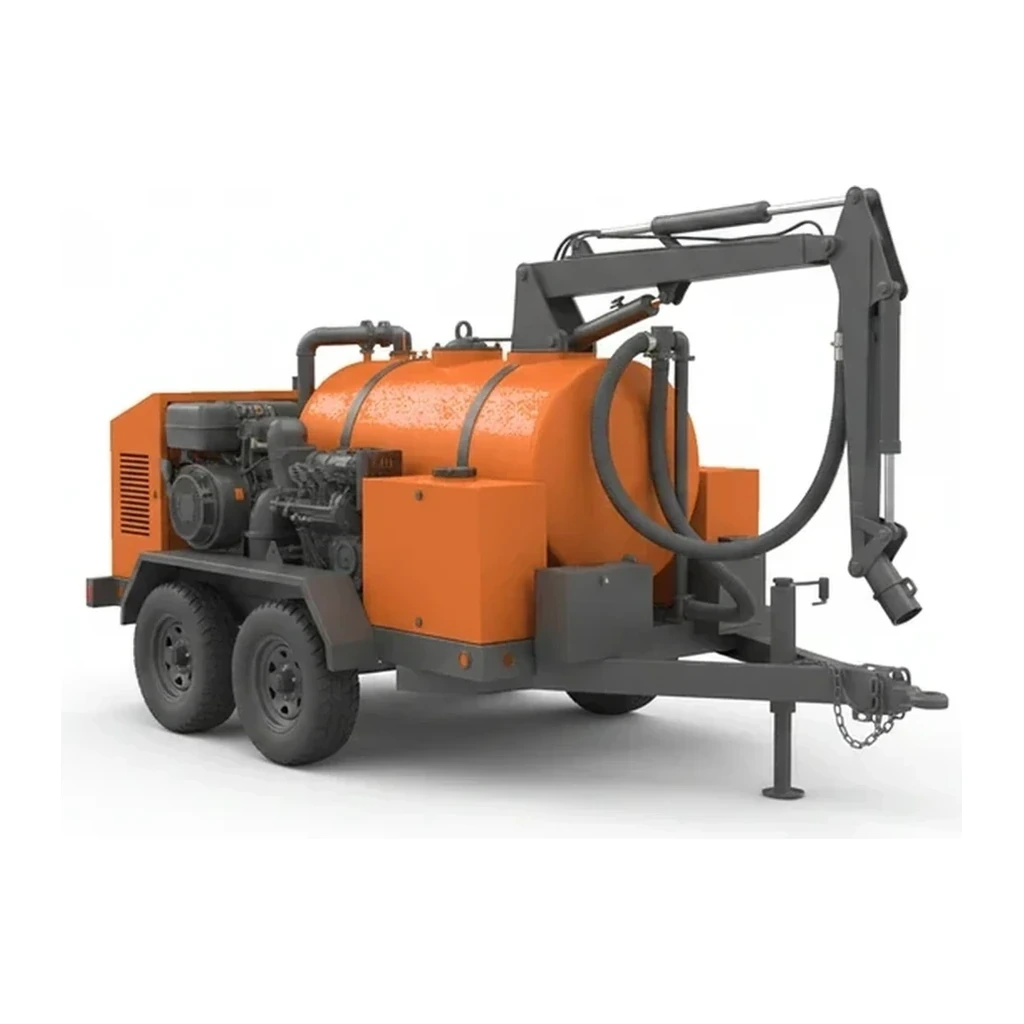
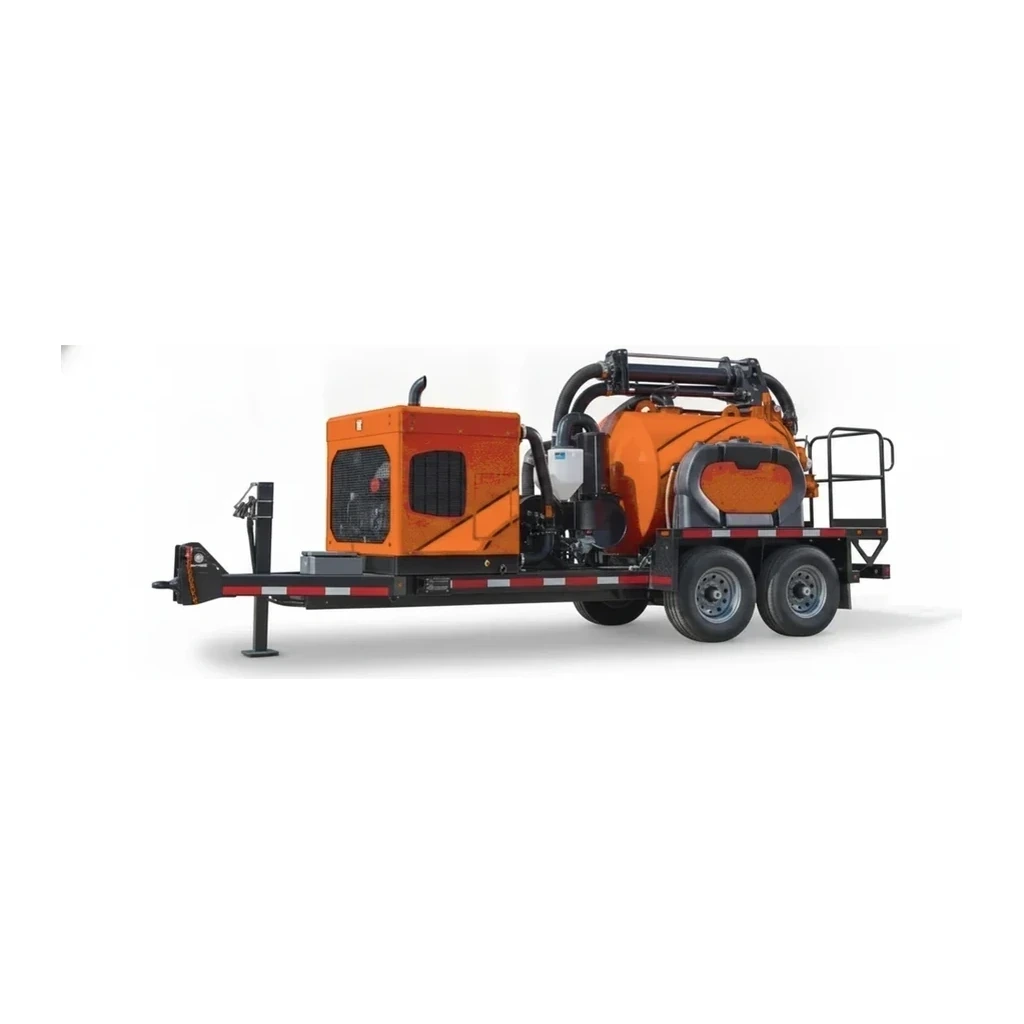
A blower or fan driven by the chassis engine or a dedicated auxiliary engine generates airflow — catalog records run 580–4,800 CFM — that pulls material through a hand-held suction hose into the spoil (debris) tank, where cyclones and filters drop the material out before air exhausts. In hydro mode, an onboard water pump (catalog records 3,000 psi) feeds a hand lance that cuts and slurries the soil; in air mode, compressed air fractures the soil dry so spoil can be reused as backfill. The machine digs precise, small-diameter holes (potholes/daylights) straight down to a utility, or slot trenches along its route, with the operator working the lance and hose at the hole while the unit idles alongside. When the spoil tank fills, the machine travels to an approved disposal point and tips or pressure-ejects the load.
Types et variantes
- Trailer-mounted vacs
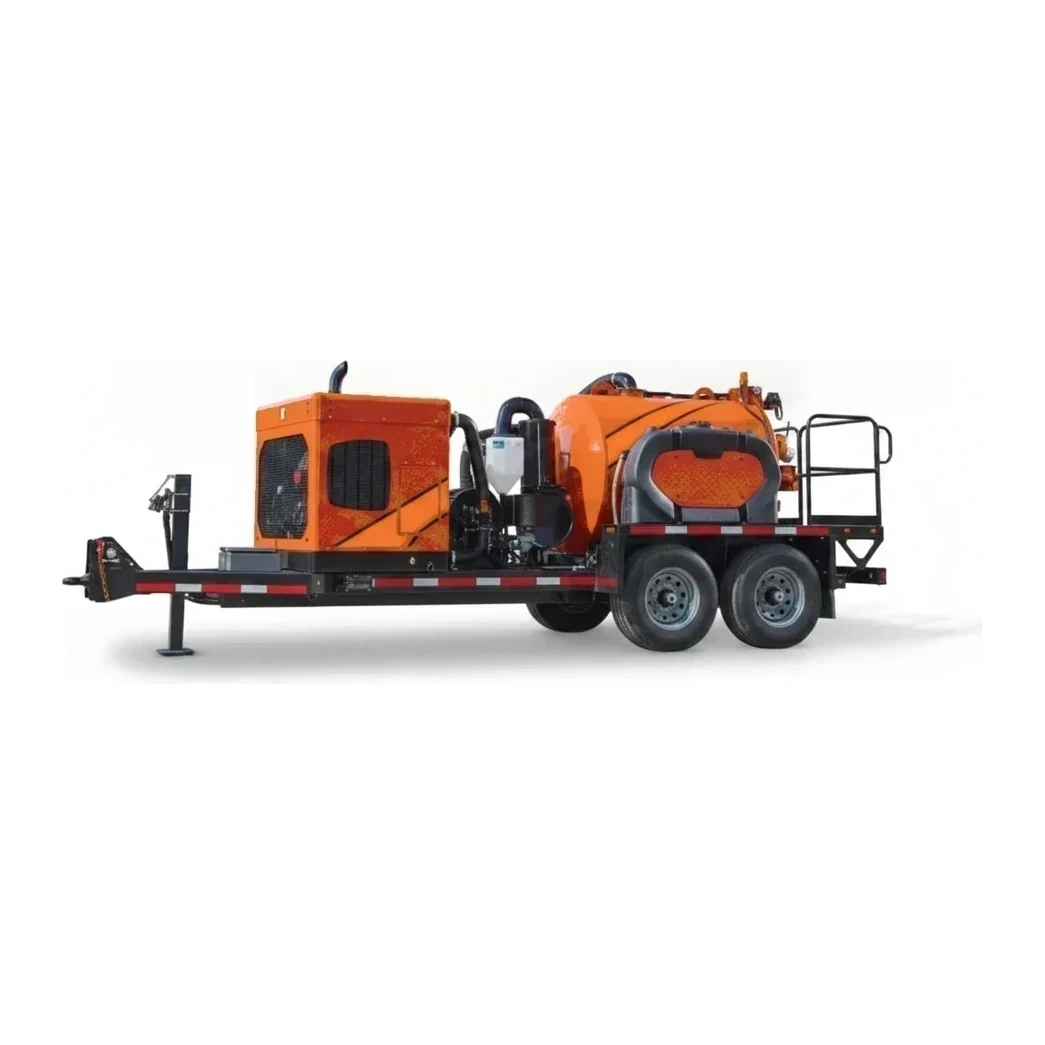
- Towable units concentrated in the smaller capacity bands, sized for potholing and service-location work.
- Truck-mounted hydrovacs
- Chassis-integrated machines with full water systems for production daylighting and slot trenching.
- Air-excavation units
- Machines using compressed air instead of water, keeping spoil dry and reusable as backfill.
- Industrial vacuum loaders
- High-airflow units biased to cleanout duty — pits, catch basins, spill recovery — over digging.
Spécifications clés
| Spécification | Plage typique | Signification |
|---|---|---|
| Spoil (debris) tank capacity | 378.5–3,028 L | The class's sizing dimension; the catalog bands units at up to 500 gal and 500–1,200 gal. |
| Water tank capacity | 189.3–4,542 L | Governs how long a hydrovac digs between refills; water use is the practical limit on production. |
| Vacuum airflow | 580–4,800 CFM | Suction capacity that sets lift height, hose length and material-size capability. |
| Water pressure | 3,000 psi | Catalog pump records for hydro digging — enough to cut native soil while remaining utility-safe practice. |
| Engine power | 17.9–380 kW | From small trailer-unit auxiliary engines to full truck-chassis powertrains. |
Comment l'industrie le dimensionne
Vacuum excavators are sized by spoil-tank capacity, with water capacity and airflow scaling alongside — the catalog's bands run up to 500 gal and 500–1,200 gal. Trailer vacs up to 500 gal handle service locates and short pothole lists; 500–1,200 gal truck units serve daily daylighting crews; units above 1,200 gal support slot trenching and industrial cleanout where haul-off distance makes tank volume the productivity limit. Loaded weight rises steeply with tank size — spoil slurry is heavy — so chassis class and disposal logistics size the machine as much as the digging itself.
Applications
- Potholing / daylighting to visually verify buried utilities before excavation
- Slot trenching across congested utility corridors
- Hydro excavation around live gas, fiber and electrical infrastructure
- Catch basin, manhole and lift-station cleanout
- Pole and anchor hole excavation in developed areas
- Industrial spill and pit cleanup with vacuum-loader configurations
Sécurité et opération
- Treat every exposure as live-utility work: water pressure and wand practice must follow utility-owner soft-dig rules to avoid cutting the very line being protected.
- Ground the boom/hose system and keep exclusion distances near electrical infrastructure; slurry and airflow can conduct and static can build.
- Never work a hand into the suction hose zone — airflow at these capacities entraps gloves, tools and hands instantly.
- Manage loaded weight: spoil slurry pushes axle loads up fast, and tanks must be emptied before road travel where limits apply.
- Follow confined-space procedure for basin and manhole cleanout; the vac removes material but not atmospheric hazard.
Normes et certifications
- CGA · Best Practices 2.0
- Vacuum excavation is the referenced method for positive utility verification.
- OSHA · 29 CFR 1926.651
- Requires determining the exact location of underground installations by safe means before excavation.
Questions fréquentes
Hydro or air excavation — which is better?
What does daylighting mean?
What size vacuum excavator fits utility locating work?
Why does tank size matter so much?
Comparer les modèles populaires
Chercher par spécification →Normalisé aux mêmes unités. Un tiret signifie que la valeur n'a pas été publiée.
| Modèle | Poids en service | Profondeur d’excavation max | Portée max | Puissance moteur |
|---|---|---|---|---|
| Vermeer EV150 Vacuum Excavator | 1,799 lb (816 kg) | - | - | 27 hp |
| Vermeer LP SDT Vacuum Excavator | 6,400 lb (2,903 kg) | - | - | 49 hp |
| Vermeer LP SGT Vacuum Excavator | 7,599 lb (3,447 kg) | - | - | 38 hp |
| Vermeer LP XDT Vacuum Excavator | 7,500 lb (3,402 kg) | - | - | 24 hp |
| Vermeer VXT600 Vacuum Truck | 40,001 lb (18,144 kg) | - | - | 510 hp |
| Vermeer CS GT Vacuum Excavator | 4,101 lb (1,860 kg) | - | - | 27 hp |
Parcourir par fabricant
Sources
Chaque spécification est vérifiée par rapport aux données publiées par le fabricant, avec la source liée pour référence.
Tous les modèles
59 modèles · Page 2 sur 2 · Chaque spécification citée à la source