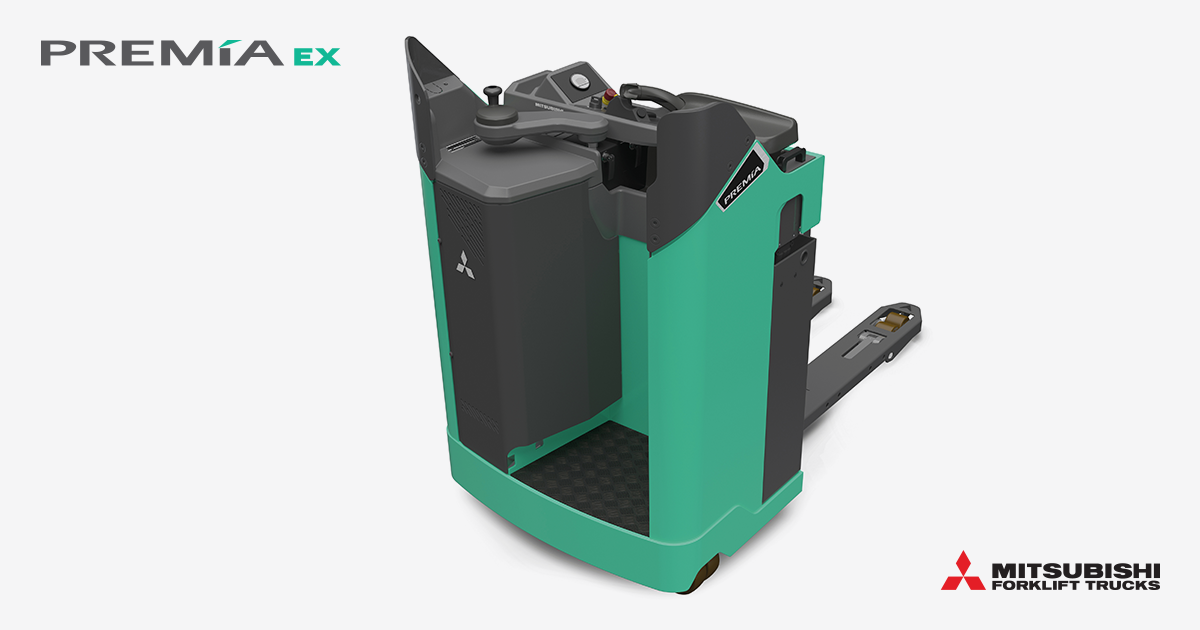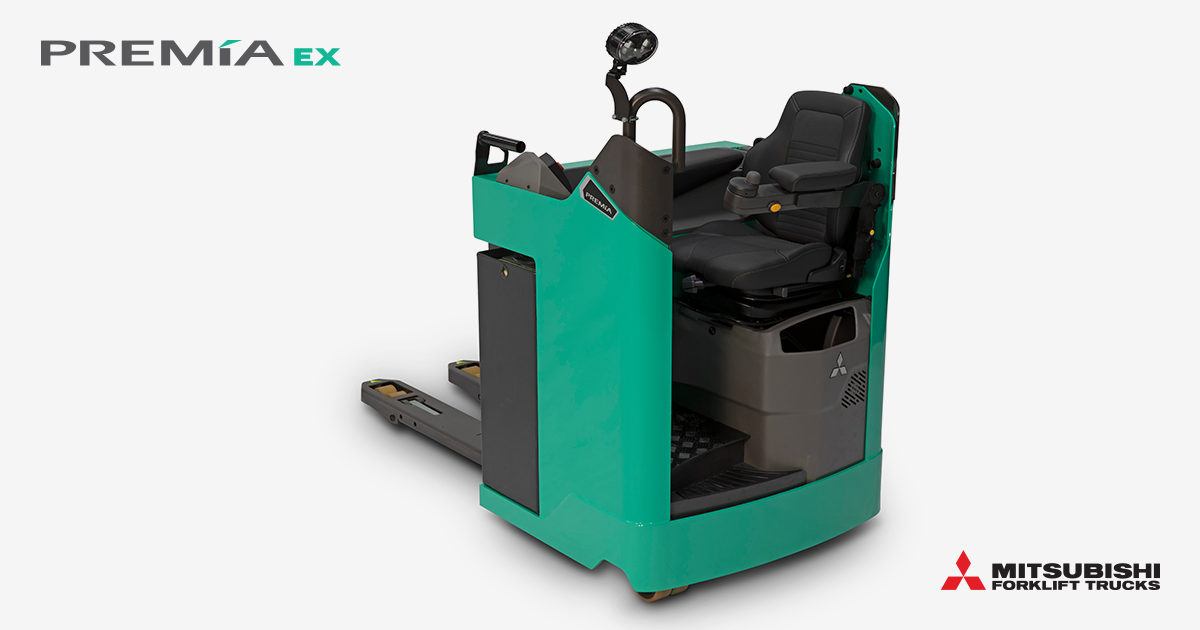

Manual Pallet Jack
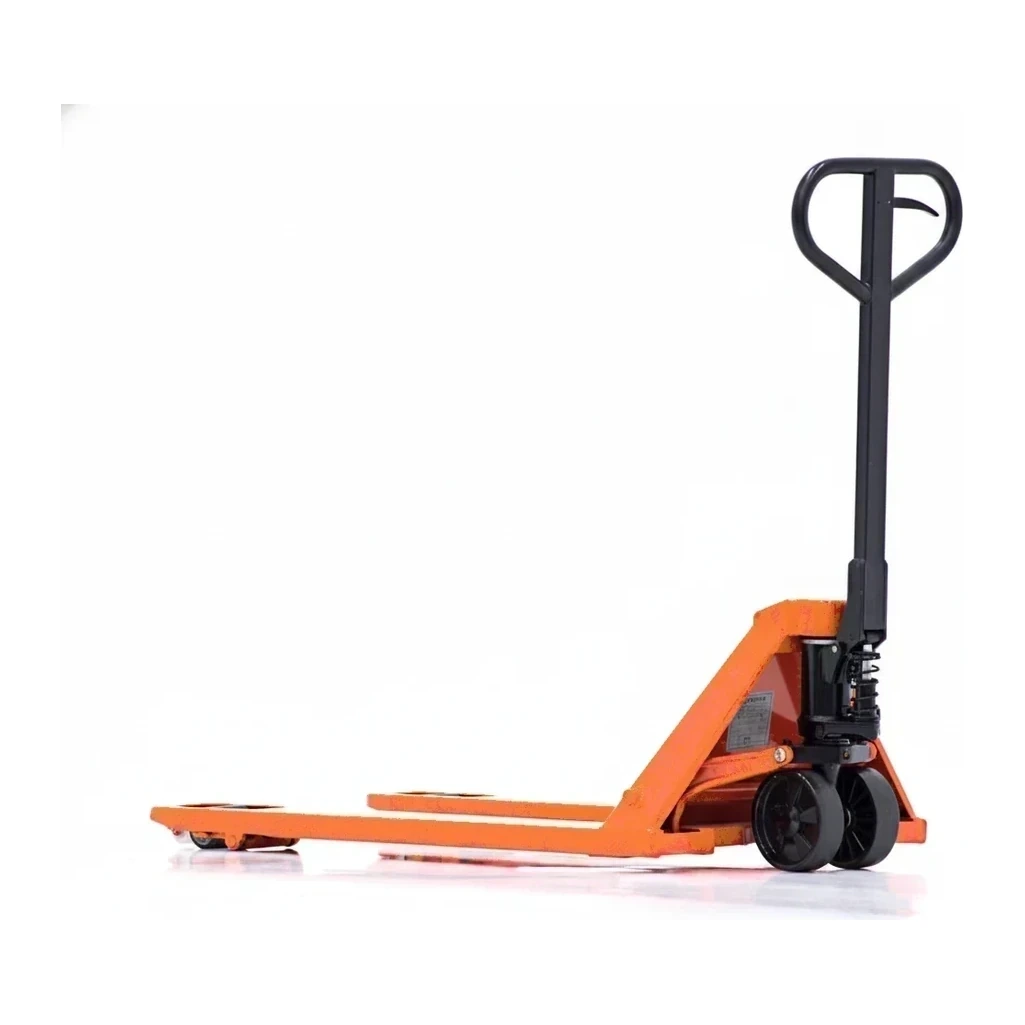
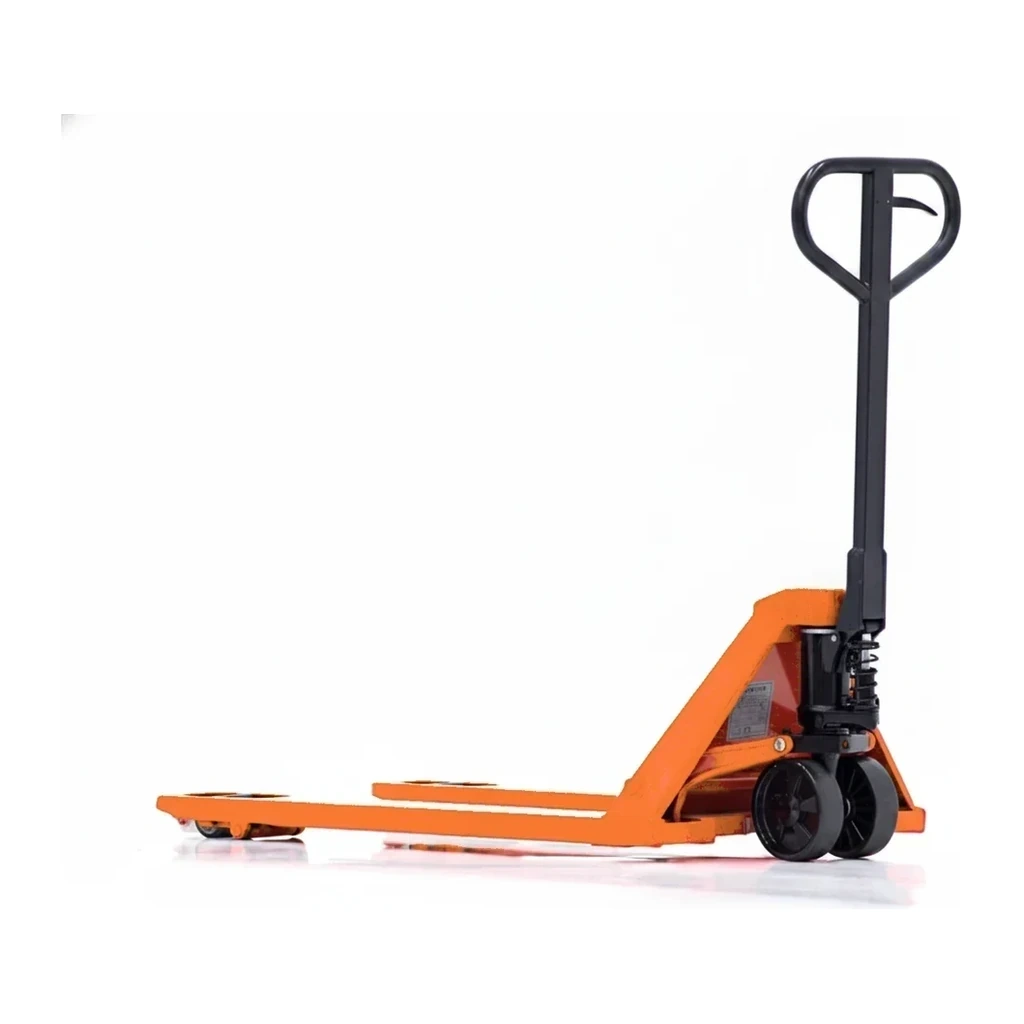
A manual pallet jack is a hand-operated hydraulic lifting device designed to raise and transport palletized loads short distances across warehouse and loading dock floors. Also known as a pallet truck, pump truck, or hand pallet truck, it serves as the most basic and widely used tool for horizontal material movement in logistics, warehousing, and light manufacturing. The equipment relies on human power for both propulsion and hydraulic pumping.
Cat classes
Choisissez une classe de taille — la capacité et la portée varient selon la gamme.
Fonctionnement
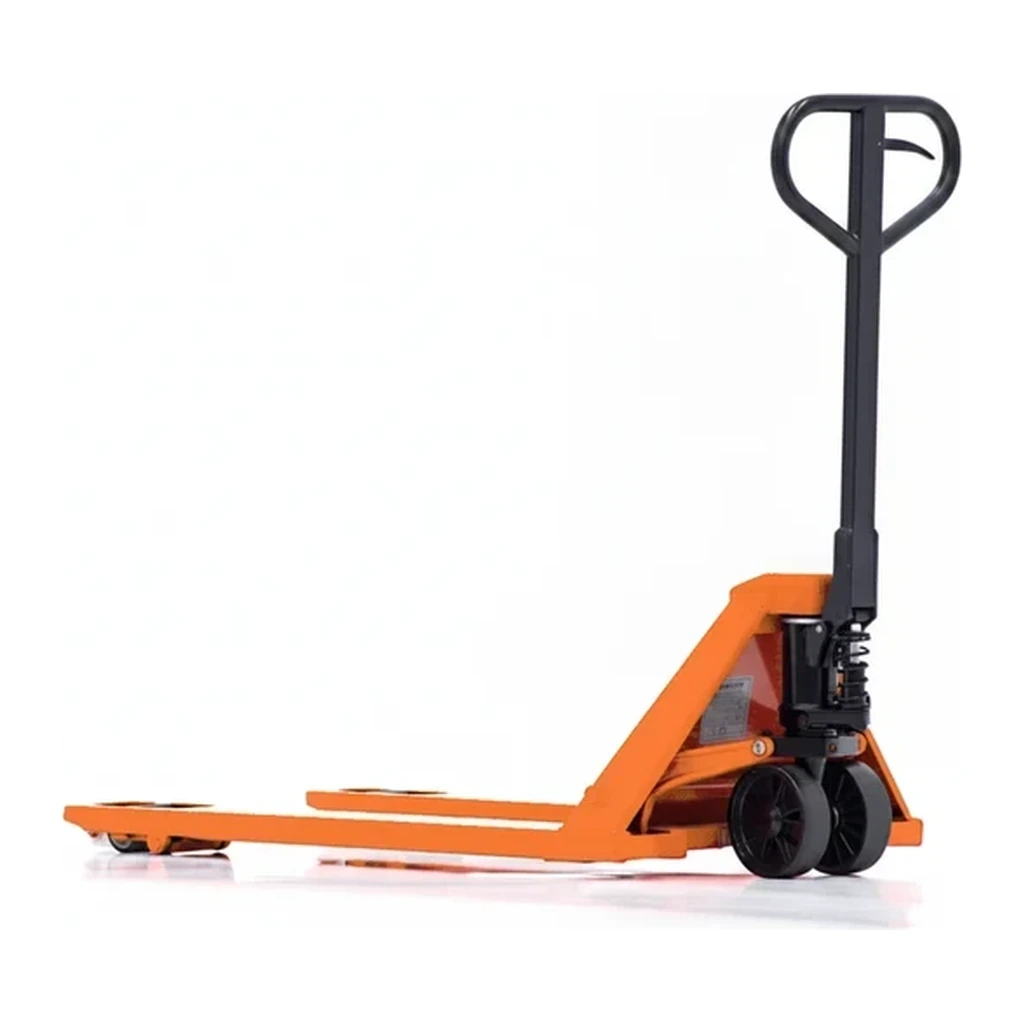
The operator inserts the jack's two parallel forks beneath a pallet, then repeatedly pumps a hydraulic handle to raise the load a few inches off the ground—just enough to clear floor obstacles. The hydraulic system uses a small cylinder and pump mechanism actuated by the handle's up-and-down motion, which pressurizes fluid to lift a ram connected to the fork assembly. Once elevated, the operator steers by pushing or pulling the handle, maneuvering the load to its destination. To lower the load, the operator activates a release lever or twist mechanism on the handle that opens a valve, allowing hydraulic fluid to return to the reservoir and the forks to descend under the weight of the load. The simplicity of this purely mechanical-hydraulic system requires no external power source, making manual pallet jacks highly reliable and maintenance-friendly for facilities without access to charging infrastructure.
Types et variantes
- Standard Manual Pallet Jack
- General-purpose unit with fixed-width forks, typically 27" wide by 48" long, matching standard pallet dimensions for everyday warehouse use.
- Low-Profile Pallet Jack
- Features thinner fork construction to fit under pallets with minimal ground clearance or specialized racking systems.
- Narrow Aisle Pallet Jack
- Compact frame and fork width designed for maneuvering in tight warehouse aisles and confined loading areas.
- Galvanized or Stainless Steel Pallet Jack
- Corrosion-resistant construction for food processing, pharmaceutical, or outdoor environments where moisture and chemicals are present.
- Long Fork Pallet Jack
- Extended fork lengths, often 60" or longer, for handling oversized loads, carpet rolls, steel bundles, or double-stacked pallets.
- Scale Pallet Jack
- Integrated weighing system built into the frame to measure load weight during transport, useful for inventory and shipping verification.
Spécifications clés
| Spécification | Plage typique | Signification |
|---|---|---|
| Load Capacity | 726–21,546 kg (1,600–47,500 lb) | Maximum rated weight the jack can safely lift and transport; standard models cluster around 2,000–2,500 kg, while heavy-duty versions exceed 5,500 lb. |
| Lift Height | 3.2–19.7 ft (1.0–6.0 m) | Vertical travel from fully lowered to maximum fork elevation; most standard jacks lift only 3–8 inches, while high-lift models can raise loads several feet. |
| Fork Length | 36–60 in (900–1,500 mm) | Distance from fork tip to heel determines which pallet sizes the jack can support; 48" is the industry standard for North American pallets. |
| Fork Width | 20.5–27 in (520–685 mm) | Inside measurement between forks; must match pallet stringer spacing to provide stable support across the load's base. |
| Overall Width | 20–28 in (500–710 mm) | Total width of the jack including wheels and frame; critical for determining minimum aisle clearance requirements in storage facilities. |
Comment l'industrie le dimensionne
The industry sizes manual pallet jacks primarily by load capacity measured in pounds, with two dominant size bands: up to 5,500 lb units for standard pallets up to about 2.5 tons on level floors, and 5,500+ lb heavy-duty models for heavy or oversized loads such as steel, stone slabs, and long pallets that overhang standard forks. Fork dimensions serve as a secondary sizing factor, as longer or wider forks accommodate non-standard pallet configurations. Manufacturers produce 111 distinct models across brands including Mitsubishi, Crown, Jungheinrich, Hyster, and Big Joe, with capacity ratings extending as high as 21,546 kg for specialized industrial applications.
Applications
- Loading and unloading delivery trucks at warehouse docks and shipping bays
- Moving palletized goods between storage racks in warehouses and distribution centers
- Transferring materials within manufacturing facilities for production line replenishment
- Positioning heavy loads for inventory counting, inspection, and quality control operations
- Short-distance horizontal transport in retail stockrooms and grocery receiving areas
- Supporting order-picking operations by repositioning pallets for case-level access
Sécurité et opération
- Operators should inspect hydraulic function, wheel condition, and fork integrity before each use to identify leaks, cracks, or damage that could cause load failure.
- Load weight must remain within the jack's rated capacity, with the center of gravity positioned over the forks to prevent tipping during transport.
- Smooth, level floor surfaces are essential; manual jacks are not designed for ramps, inclines, or rough terrain where loads can shift or roll.
- Operators should keep hands and feet clear of the lifting mechanism and avoid placing any body parts under elevated loads or between the jack and fixed objects.
- Proper ergonomic technique when pumping and steering reduces repetitive strain injuries, particularly in high-volume operations involving extended pushing or pulling distances.
Normes et certifications
- ASME · B56.1
- Safety Standard for Low Lift and High Lift Trucks, covering design, construction, operation, and maintenance requirements for powered and non-powered industrial trucks including manual pallet jacks.
- ANSI/ITSDF · B56.10
- Manually Propelled High Lift Industrial Trucks standard, addressing specific safety requirements for hand-operated lifting and transporting equipment.
- OSHA · 1910.178
- Powered Industrial Trucks regulation; while focused on powered equipment, many safe operating practices apply to manual jacks used in warehouse environments.
Questions fréquentes
What is the difference between a manual pallet jack and a powered pallet jack?
How does load capacity sizing account for uneven weight distribution?
Can manual pallet jacks operate on inclines or loading ramps?
What maintenance intervals do manual pallet jacks typically require?
Comparer les modèles populaires
Chercher par spécification →Normalisé aux mêmes unités. Un tiret signifie que la valeur n'a pas été publiée.
| Modèle | Capacité de charge | Hauteur de levage | Puissance moteur |
|---|---|---|---|
| Multiquip MB25HD | - | - | - |
| Crown CDV160S | 35,999 lb (16,329 kg) | 19.7 ft (6.0 m) | - |
| Crown CDV180 | 47,501 lb (21,546 kg) | 19.7 ft (6.0 m) | - |
| EP Equipment EPT12-F3H | 2,646 lb (1,200 kg) | 3.2 ft (1.0 m) | - |
| Hyster B60ZAC2 | 6,001 lb (2,722 kg) | 9.3 ft (2.8 m) | - |
| Hyster B60ZHD2 | 6,001 lb (2,722 kg) | 9.3 ft (2.8 m) | - |
Équipements connexes
Parcourir par fabricant
Sources
Chaque spécification est vérifiée par rapport aux données publiées par le fabricant, avec la source liée pour référence.
Tous les modèles
111 modèles · Page 3 sur 3 · Chaque spécification citée à la source