
Line and Point Laser
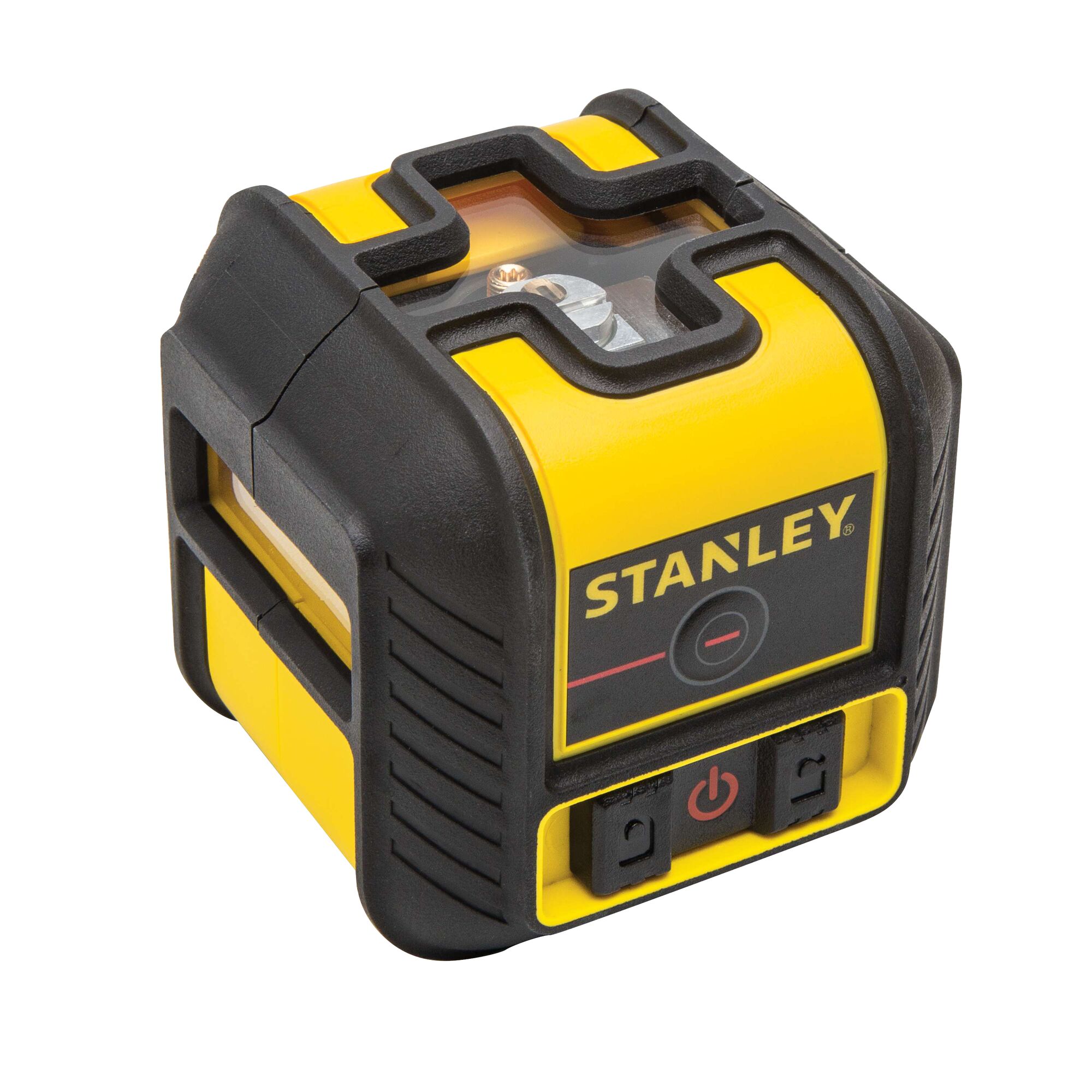
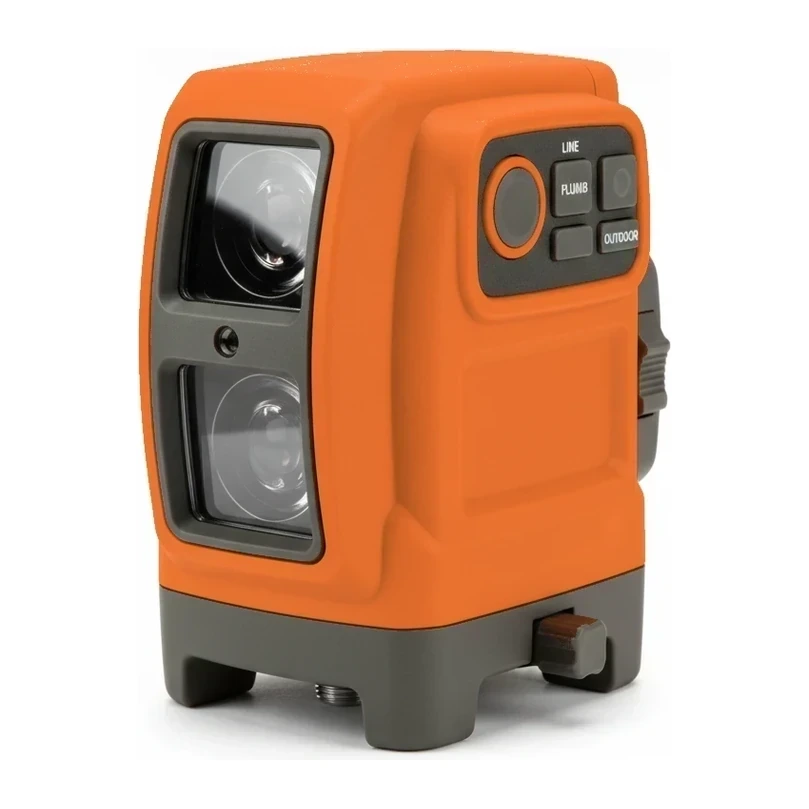
Line and point lasers are precision optical instruments that project visible laser beams in straight lines or fixed points to establish plumb, level, and square references on jobsite surfaces. These tools enable accurate layout and alignment work in construction, renovation, and installation applications. The equipment typically features self-leveling mechanisms and projects one or more planes of light to guide positioning tasks.
Fonctionnement
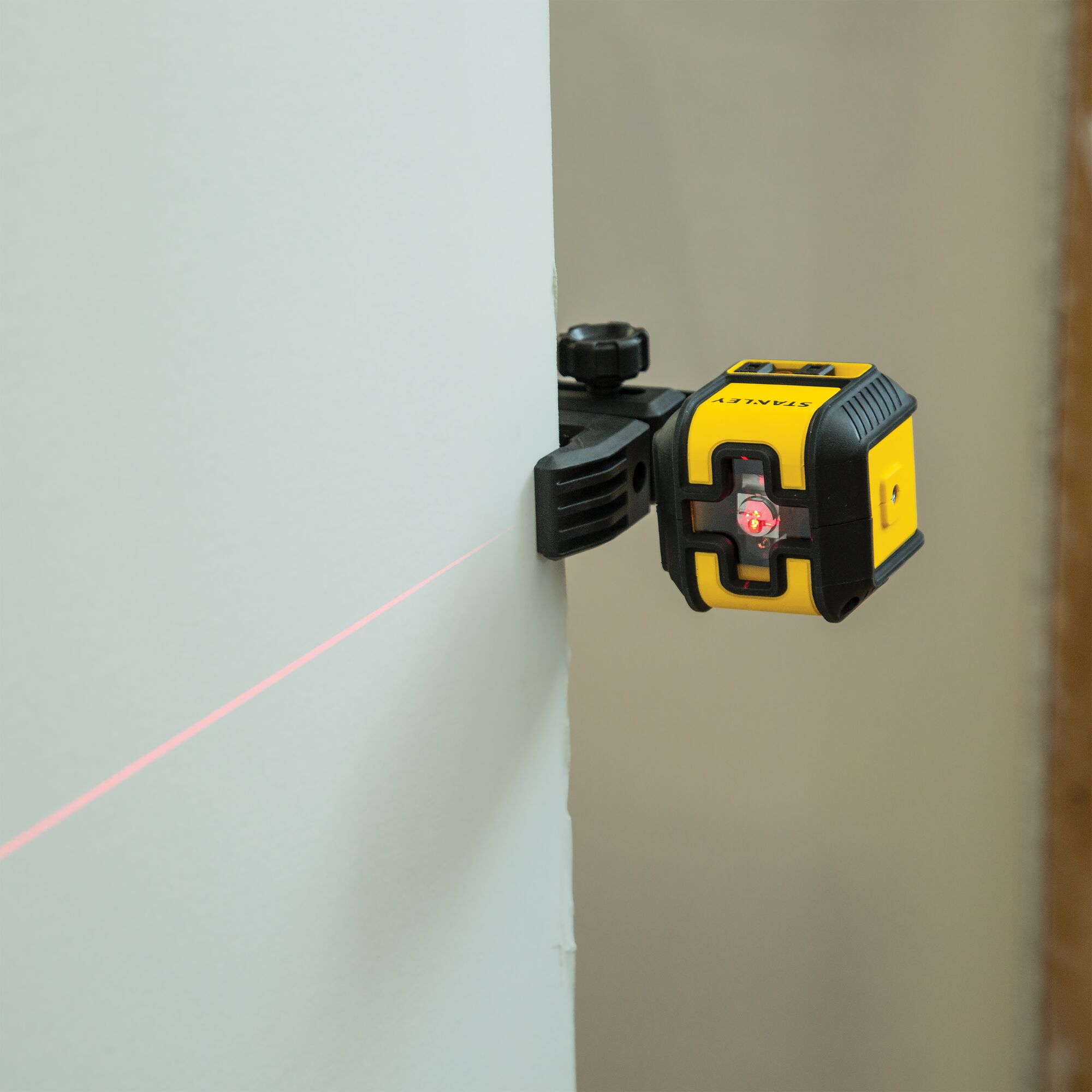
Line and point lasers use a laser diode and optical system to generate a visible beam, which passes through a prism or lens assembly that expands the beam into a line or projects it as a point. Most models incorporate a pendulum-based self-leveling system that uses gravity and magnets or electronic servo motors to automatically orient the laser module to true level and plumb within a specified range, typically ±4 degrees. When the unit is tilted beyond this range, the self-leveling function typically disengages and the laser flashes or shuts off to indicate out-of-level conditions. The projected lines may be horizontal, vertical, or both (cross-line configuration), with some models adding additional planes to create 360-degree coverage or three-plane projection. The laser module is housed in a protective case with mounting options such as tripod threads, magnetic bases, or bracket attachments. Battery-powered operation is standard, with visible red or green laser diodes depending on the model.
Types et variantes
- Cross Line Laser
- Projects one horizontal and one vertical line in a perpendicular cross pattern, used for general layout and alignment tasks on walls and floors.
- Point Laser
- Projects a fixed number of laser dots (typically five: up, down, forward, left, right) to establish plumb and square reference points without continuous lines.
- 3-Plane Laser
- Projects three intersecting laser planes (two vertical, one horizontal) to create comprehensive layout references around a room or workspace.
- 360-Degree Line Laser
- Projects horizontal and/or vertical lines in a full 360-degree sweep around the unit, providing continuous reference lines on all surrounding surfaces.
- Green Beam Laser
- Uses green laser diodes instead of red for enhanced visibility in bright ambient lighting conditions, though typically at higher power consumption.
Spécifications clés
| Spécification | Plage typique | Signification |
|---|---|---|
| Leveling Accuracy | ±0.3-3.0 mm/m | Maximum deviation from true level or plumb over a one-meter distance; tighter tolerances indicate higher precision. |
| Self-Leveling Range | ±4° | Maximum tilt angle from level within which the automatic leveling mechanism can compensate and establish true reference. |
| Working Range | 32.8–98.4 ft (10–30 m) | Maximum distance at which the laser line or point remains visible to the unaided eye under typical indoor lighting conditions. |
| Weight | 1.1–2.0 lb (0.5–0.9 kg) | Unit weight affects portability and stability on various mounting surfaces or tripods. |
Comment l'industrie le dimensionne
The industry does not size line and point lasers into distinct bands, as these tools perform a single primary function: projecting plumb and level reference lines or points within a defined workspace. Models are differentiated by features such as the number of projected planes, beam color (red or green), and whether they include point projection or continuous lines. Working range specifications indicate the visible distance of the laser under typical conditions, but extended ranges require separate laser detectors rather than representing different size classes. Selection is based on the specific layout geometry required and environmental visibility needs.
Applications
- Interior wall framing and partition layout to establish plumb vertical references
- Ceiling grid installation and suspended system alignment
- Tile setting and floor covering installation for maintaining level courses
- Electrical and plumbing fixture positioning and alignment
- Cabinetry and millwork installation to establish level and plumb references
- Door and window frame installation and squaring
Sécurité et opération
- Avoid direct eye exposure to the laser beam; Class II and IIIa lasers can cause eye discomfort or temporary vision impairment with prolonged viewing
- Mount the laser on stable surfaces or tripods to prevent tipping and maintain accurate reference during operation
- Verify self-leveling function is engaged and operational before relying on projected lines for critical layout work
- Use only manufacturer-specified batteries and chargers to prevent electrical hazards or damage to leveling mechanisms
- Store and transport the unit in protective cases to prevent damage to the pendulum and optical components
Normes et certifications
- IEC 60825-1 · Safety of Laser Products
- Classifies laser equipment by hazard level and establishes labeling, design, and operational safety requirements for laser-emitting devices.
- FDA · 21 CFR 1040.10 & 1040.11
- U.S. federal performance standards for laser products, requiring classification labels and safety features on commercially distributed laser equipment.
- ISO 12858-1 · Lasers and Laser-Related Equipment for Construction Work
- Specifies accuracy testing methods and performance requirements for construction lasers, including line and point projection systems.
- ANSI Z136.1 · Safe Use of Lasers
- Provides guidelines for safe laser use in occupational settings, including control measures and hazard evaluation procedures.
Questions fréquentes
What is the difference between working range and detector range?
Why do some models use green lasers instead of red?
How does self-leveling accuracy differ from leveling accuracy?
Can line lasers be used outdoors?
Équipements connexes
Parcourir par fabricant
Sources
Chaque spécification est vérifiée par rapport aux données publiées par le fabricant, avec la source liée pour référence.
Tous les modèles
11 modèles · Chaque spécification citée à la source